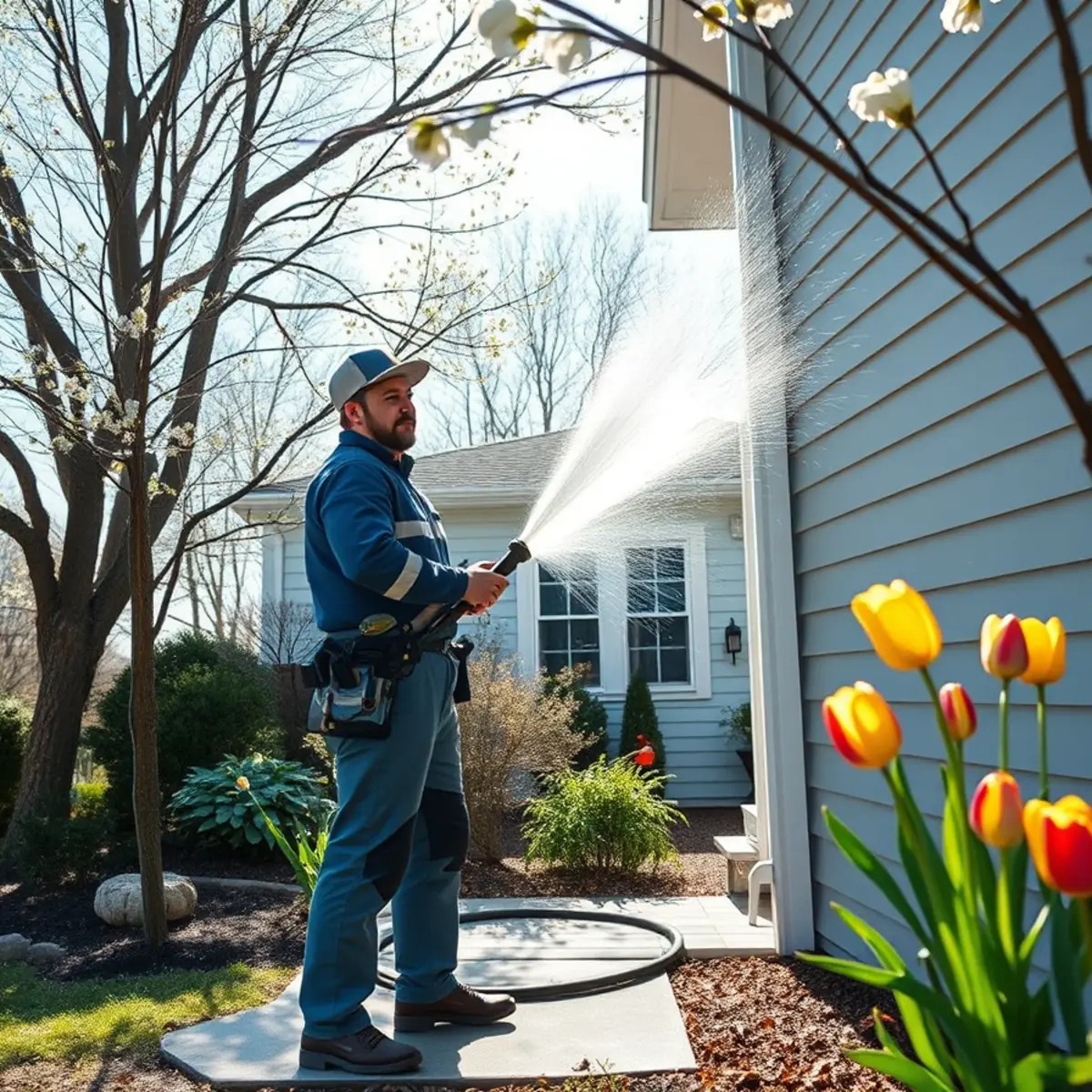
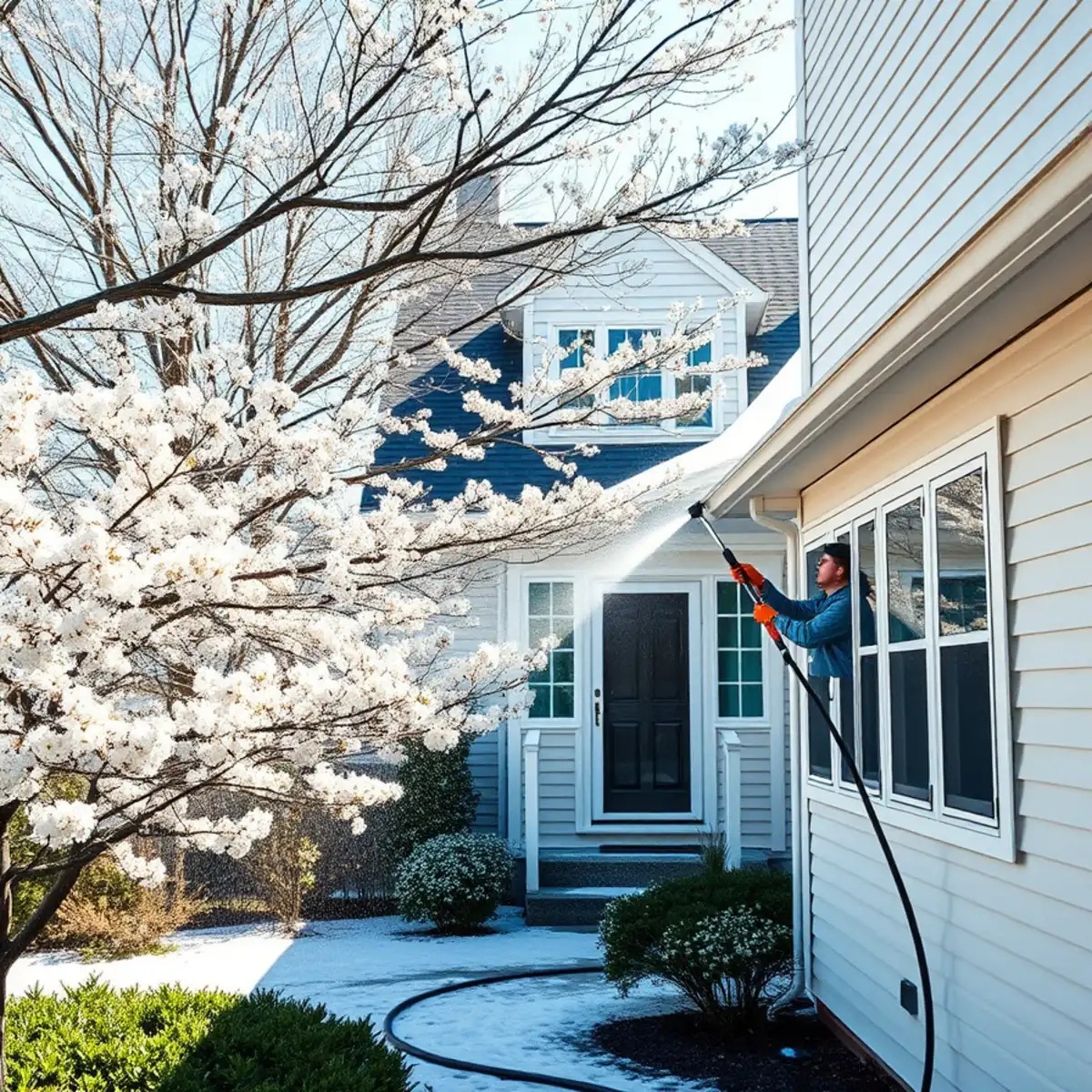
A step-by-step spring exterior cleaning checklist for Massachusetts homeowners, with correct order, timing, PSI by surface, and a printable list.
After a New England winter of road salt, snow load, ice dams, and relentless freeze-thaw, your home's exterior takes damage that only shows once the snow finally clears. This is the most complete spring exterior cleaning checklist written specifically for Massachusetts homeowners: what to clean, in what order, with which method, and when to start so the work actually holds. Skim the headings, follow the sequence, and use the printable list at the end.
Why Spring Is the Critical Time to Clean Your Home's Exterior in Massachusetts
Spring is the single most important exterior-cleaning window of the year here, and the reason is simple: Massachusetts winters are hard on buildings in ways milder climates never deal with. Salt spray, trapped moisture, organic growth, and freeze-thaw stress all peak by the time the snow melts. Clean too late and you've let that damage compound through another wet season.
There's a practical payoff too. A spring wash resets curb appeal right as the landscape greens up, which matters if you're listing during the spring real estate market. Buyers notice a clean roof and bright siding before they notice anything inside. Even if you're staying put, an early-season wash lets surfaces dry out and gives you a clear look at cracked caulk, loose gutters, and foundation movement before summer storms arrive. For the broader seasonal picture, our guide on the best time of year to pressure wash a house in Massachusetts breaks it down month by month.
What Winter Does to a Massachusetts Home's Exterior
Before you grab a hose, it helps to understand what you're actually cleaning off. Winter leaves a specific set of problems on New England homes.
- Road salt and de-icing residue. Plow spray and driveway ice melt coat the lower courses of siding, foundations, walkways, and concrete. Salt is hygroscopic, meaning it pulls moisture toward whatever it sits on, accelerating corrosion on metal and pitting on concrete.
- Snow and ice dam debris. Ice dams force water under shingles and leave roofs and gutters packed with grit, granules, and rotting leaf matter. Melting snow piles deposit a fine film of dirt on everything it touched.
- Freeze-thaw cycling. Water seeps into hairline cracks, freezes, expands, and widens them. Over a Massachusetts winter that cycle runs dozens of times, spalling brick, cracking concrete joints, lifting decking, and breaking the seal on caulk and paint.
- Mold, mildew, and algae. Months of snow cover and shade trap moisture against siding and trim. By March, organic growth is well established, especially on north-facing walls and shaded, wooded lots.
In short, winter doesn't just make your house look dirty. It leaves behind salt, biological growth, and structural stress that all want attention at the same time.
When to Start Spring Cleaning in MA: Wait for 40 Degrees and Above
This is where most homeowners get the timing wrong. Cleaning solutions and rinse water need warmth to work and to dry. The rule of thumb: wait for ambient temperatures consistently above 40 degrees Fahrenheit, with no overnight freeze in the forecast. Below that, surfactants lose effectiveness and any water left on a surface can refreeze and cause its own damage.
In practice that means April and May for most of Massachusetts, with March usually too cold and unpredictable. A rough timeline:
- March: Inspect, plan, and book. Too cold and too wet to wash reliably.
- April: Driveways, concrete, and salt removal become workable as days warm. Roof and gutter work can begin once nights stay above freezing.
- Late April through May: Prime house-washing season. Tree pollen is peaking, so many homeowners do a thorough rinse late in this window and a final house wash in late May or early June once pollen subsides.
Coastal towns like Quincy and the South Shore often warm a touch later than inland areas, and shaded north-facing surfaces dry slowest anywhere. One more reason to plan early: peak demand for Massachusetts pressure washing hits in April and May, and good crews book out fast. Reserve your slot before the rush.
The Complete Spring Exterior Cleaning Checklist for Massachusetts Homeowners
Here's the full checklist, broken into steps. The steps are ordered intentionally so you never wash grime back down onto something you already cleaned. Read the order-of-operations section below if you want the reasoning, then work top to bottom.
Step 1: House Washing / Siding
Your siding holds the most visible winter grime: salt film along the bottom courses, mildew on shaded walls, and a chalky gray haze of general dirt. Most Massachusetts homes wear vinyl, wood, fiber cement, or brick, and every one of them does best with a soft wash rather than a high-pressure blast.
Soft washing uses low pressure plus biodegradable surfactants and a controlled dose of sodium hypochlorite to kill mold, mildew, and algae at the root, then rinse them away. Here's the key message every honest contractor will tell you: you don't need more pressure, you need the right chemistry. Pressure knocks growth off the surface temporarily; chemistry kills it so it doesn't return in weeks.
PSI matters by material. Vinyl tolerates roughly 100 to 500 PSI but is far safer cleaned with chemistry at low pressure. Cedar and soft woods should stay under 200 PSI. Historic brick, common on older Massachusetts colonials and Victorians, should never exceed about 400 PSI, since aggressive water blows out aging mortar joints. Pay extra attention to the lower few feet of siding where salt spray collects, and to north and east walls where mildew thrives. Our soft washing and house washing services are built for exactly this, and if you want the deeper safety argument, see is soft washing safe for vinyl siding.
Step 2: Roof Cleaning
Those black streaks running down your roof aren't dirt. They're Gloeocapsa magma, a blue-green algae that feeds on the limestone filler in asphalt shingles and spreads fastest on shaded, damp roofs, exactly the conditions a Massachusetts spring provides. Left alone it traps heat and moisture, shortens shingle life, and invites moss and lichen, which lift shingle edges and pry into seams.
A roof is the one surface where pressure is genuinely dangerous. Asphalt shingles should be cleaned with a soft wash under 100 PSI, essentially applying cleaning solution and rinsing gently. High pressure strips the protective granules and voids many manufacturer warranties. Metal roofs tolerate a bit more, in the 500 to 800 PSI range, but still benefit from a chemistry-first approach. The algae and lichen die off in the days after treatment and weather away naturally. Read what causes black streaks on roofs and why roof cleaning is important for Massachusetts homes before you touch a ladder, and consider leaving roof work to an insured crew given the fall risk.
Step 3: Gutter Cleaning and Gutter Brightening
Ice dams and winter wind leave gutters packed with grit, granules, and decomposed leaves. Clogged gutters dump water against your foundation, the last thing you want heading into a wet New England spring.
Two separate tasks live here. Gutter cleaning clears the debris and flushes the downspouts so water drains away from the house. While you're up there, confirm drainage actually carries water several feet from the foundation. Gutter brightening is a different job: it removes the dark vertical "tiger stripes" of oxidation and grime streaking the outside face of the gutters, restoring the bright finish a house wash can't reach. See gutter cleaning vs gutter brightening for the distinction. Our gutter cleaning and gutter brightening services handle both.
Step 4: Driveways, Walkways and Concrete
Concrete and asphalt hold a full winter of road salt, sand, tire grime, and slick organic film. This is where Massachusetts-specific damage shows up most: road salt residue and de-icing salt draw moisture into the concrete and feed the freeze-thaw cycle that pits and spalls the surface. You may also see efflorescence, the chalky white mineral bloom that pushes through concrete, pavers, and brick when salts migrate to the surface.
Concrete is durable enough for true pressure washing, typically 2,000 to 3,000 PSI with a surface cleaner for an even finish. Salt removal usually needs a neutralizing wash, not just water, to lift chloride out of the pores. Efflorescence responds to a specific acidic treatment rather than brute force. Our driveway cleaning and concrete cleaning services cover this, and how salt and snow impact concrete surfaces explains why prompt spring cleaning protects your hardscape before summer sealing season.
Step 5: Decks, Patios, Pavers and Pool Decks
Wood decks gray out and grow mildew under winter snow cover. Pavers and patios collect moss and algae in the joints, and pool decks turn slick with biological film. All of it makes these surfaces hazardous in spring rain.
Match the method to the material. Composite decking cleans at 500 to 1,000 PSI; natural wood decking should stay low, under 200 PSI on cedar, to avoid furring the grain. Pavers clean well but high pressure blasts out the joint sand, so a controlled approach plus the right cleaner is smarter. Spring is also the ideal time to clean and dry wood before re-staining or sealing later in the season. See our deck cleaning, patio cleaning, paver cleaning, and pool deck cleaning services, plus best way to clean pavers without damage.
Step 6: Windows, Screens and Trim
Exterior glass, frames, sills, and screens collect pollen, salt haze, and winter spotting that dull the whole house even when the siding is clean. Rinse the glass and frames, pull and rinse the screens (winter traps grime in the mesh), and wipe down trim and the front-entry area. These are high-visibility, high-touch surfaces, so they pay back the effort. A soft-wash house cleaning handles most of this in one pass.
Step 7: Fences, Outdoor Furniture and Hardscapes
Finish the vertical and ground-level extras: fences, gates, railings, retaining walls, outdoor furniture, and stone hardscapes. Fences and furniture grow mildew and algae on shaded faces over winter, and wood fencing benefits from the same gentle treatment as decking. Stone and brick hardscapes can show efflorescence and moss. Clean these last so any overspray from earlier steps gets rinsed off too.
Step 8: Pollen Removal
Massachusetts has a punishing pollen season. Tree pollen peaks in March and April, coating every exterior surface in a yellow-green film, followed by grass pollen in May and June. For allergy sufferers, that film on siding, windows, and decks isn't just ugly, it keeps allergens at the doorstep all season.
This is why timing your final house wash matters. A thorough rinse in mid-spring knocks down the worst of the tree-pollen film, but many homeowners schedule the season's main soft wash for late May or June, after pollen subsides, so it stays clean longer. Pressure washing and soft washing both remove pollen effectively; the chemistry in a soft wash also lifts the oils that make pollen cling. See how pollen affects your home's exterior for the full rundown.
Recommended Order: Why You Should House Wash First (Top to Bottom)
The golden rule is work top to bottom so gravity carries dirt and runoff downward onto surfaces you haven't cleaned yet, never the reverse. Clean a driveway first and you'll spray roof and siding grime right back across it.
The correct sequence:
- Roof (highest point, soft wash only)
- Gutters and downspouts (debris and brightening)
- Siding and house exterior (soft wash, top courses to bottom)
- Windows, screens, and trim
- Driveways, walkways, and concrete
- Decks, patios, fences, and furniture
Following this order means you only clean each surface once. It's the difference between an efficient afternoon and washing the same spot twice.
Soft Washing vs Pressure Washing: Choosing the Right Method for Each Surface
The most expensive spring mistake is putting too much pressure on the wrong surface. High pressure carves grooves into wood, blows out old mortar, forces water behind siding, and strips granules off shingles. None of that damage is cheap to fix.
- Soft washing pairs low pressure with biodegradable surfactants to kill and remove algae, mold, mildew, and lichen on delicate surfaces. It's the correct method for roofs, all siding types, screens, and painted trim.
- Pressure washing uses higher-pressure water on hard, durable surfaces, concrete driveways, sidewalks, and most masonry, where it lifts embedded grime fast.
The deciding factor is always the surface. Quick reference: asphalt shingles under 100 PSI, vinyl 100 to 500, cedar under 200, historic brick under 400, stucco and EIFS under 150, composite deck 500 to 1,000, metal roof 500 to 800, and concrete driveways 2,000 to 3,000. When unsure, default gentler, because adding pressure is easy and repairing damage is not. Our pressure washing vs soft washing guide goes deeper.
DIY vs Hiring a Professional Pressure Washing Company in Massachusetts
Plenty of spring tasks are genuinely DIY-friendly: rinsing patio furniture, sweeping and washing a small walkway, tidying ground-level entryways. If you're equipped and comfortable, take the weekend wins.
Call a professional when the job involves:
- Roof or second-story work, where ladders and low-slope footing mean real fall risk.
- Full siding elevations, where the wrong pressure or wrong chemistry causes lasting damage.
- Stubborn winter staining, deep algae, oxidation, salt scaling, or efflorescence that rental equipment won't fully resolve.
- Equipment and time gaps, when renting a machine and learning it safely costs more than hiring out.
A few things to verify before hiring anyone in Massachusetts: confirm they're fully insured and ask for a certificate of insurance, ask whether they pre-soak landscaping and contain runoff (important on well water and near gardens), and check that they match method to surface rather than blasting everything at one pressure. Wash Bros is fully insured with a certificate available on request, and we serve homeowners from Boston and the metro suburbs out to Worcester County. See DIY pressure washing vs hiring a professional for an honest cost breakdown.
Inspecting for Winter Damage While You Clean
Cleaning is the perfect time to inspect, because a clean surface hides nothing. Walk the perimeter with your phone and photograph anything that looks like more than dirt. The freeze-thaw cycle does specific damage worth catching early:
- Caulk and paint: check window and door seams for cracked or shrunken caulk and lifting paint. Failed caulk lets water in; spring is the time to reseal.
- Foundation and concrete: look for new cracks, heaving, and spalling from freeze-thaw and salt. Hairline cracks are normal; widening or stepped cracks deserve a pro's eye.
- Siding: note loose, cracked, or buckled panels and any persistent staining that doesn't rinse away.
- Roof and gutters: flag lifted or missing shingles, granule loss in the gutters, and separated gutter seams.
Surface staining is a cleaning job. Structural movement is a repair job. Knowing the difference before you start tells you where to spend your money.
How Often Massachusetts Homes Need Exterior Cleaning
For most Massachusetts homes, plan a full house wash once a year, ideally in late spring or early summer after pollen settles. Roofs generally need cleaning every two to three years, sooner if you see black streaks returning or your lot is heavily shaded and wooded. Gutters want at least twice-yearly attention, spring and fall.
Local conditions push that schedule faster. Coastal properties facing salt-air corrosion in towns like Salem and along the South Shore often need more frequent washing. So do shaded, north-facing, and wooded inland lots where humidity and algae thrive. Driveways and concrete benefit from a spring salt-removal wash every year, followed by sealing before the next road-salt season. For the full cadence, see how often should you pressure wash your house in Massachusetts.
Printable Spring Exterior Cleaning Checklist
Print this, clip it to the fridge, and check off as you go. It follows the correct top-to-bottom order.
- Wait for temps consistently above 40°F with no overnight freeze
- Walk the perimeter and photograph any winter damage
- Soft wash the roof if black streaks, moss, or lichen are present (under 100 PSI on shingles)
- Clean gutters, flush downspouts, confirm drainage away from foundation
- Brighten gutter faces to remove oxidation streaks
- Soft wash siding top to bottom, focusing on salt-prone lower courses and shaded walls
- Rinse windows, frames, sills, and screens
- Wipe down trim, doors, porch, and railings
- Pressure wash driveways and walkways, neutralizing road-salt residue
- Treat efflorescence and oil stains as needed
- Clean decks, patios, and pavers (match PSI to material)
- Clean fences, hardscapes, and outdoor furniture
- Plan main house wash for late May/June after pollen subsides
- Schedule concrete sealing before next winter's salt season
Book Your Spring Exterior Cleaning with Wash Bros
If your checklist is longer than your free weekends, let an insured crew handle the heavy lifting and the ladder work. Wash Bros is a fully insured, family-run exterior cleaning company started by brothers Louis and Dominic, serving homeowners across Massachusetts with a 5.0 rating across 130 reviews. We match the right method and the right chemistry to every surface, pre-soak your landscaping, and mind the runoff, so your home gets cleaner without any risk of damage.
Contact us for a free estimate, or call +1 (351) 242-0666 to lock in a spring slot before the April-May rush fills up. We'll walk your property, answer your questions, and give you a clear, no-pressure quote.
Frequently Asked Questions
Need Professional Exterior Cleaning?
Wash Bros provides affordable, dependable pressure washing across Massachusetts. Get your free estimate today.
Get a Free Estimate