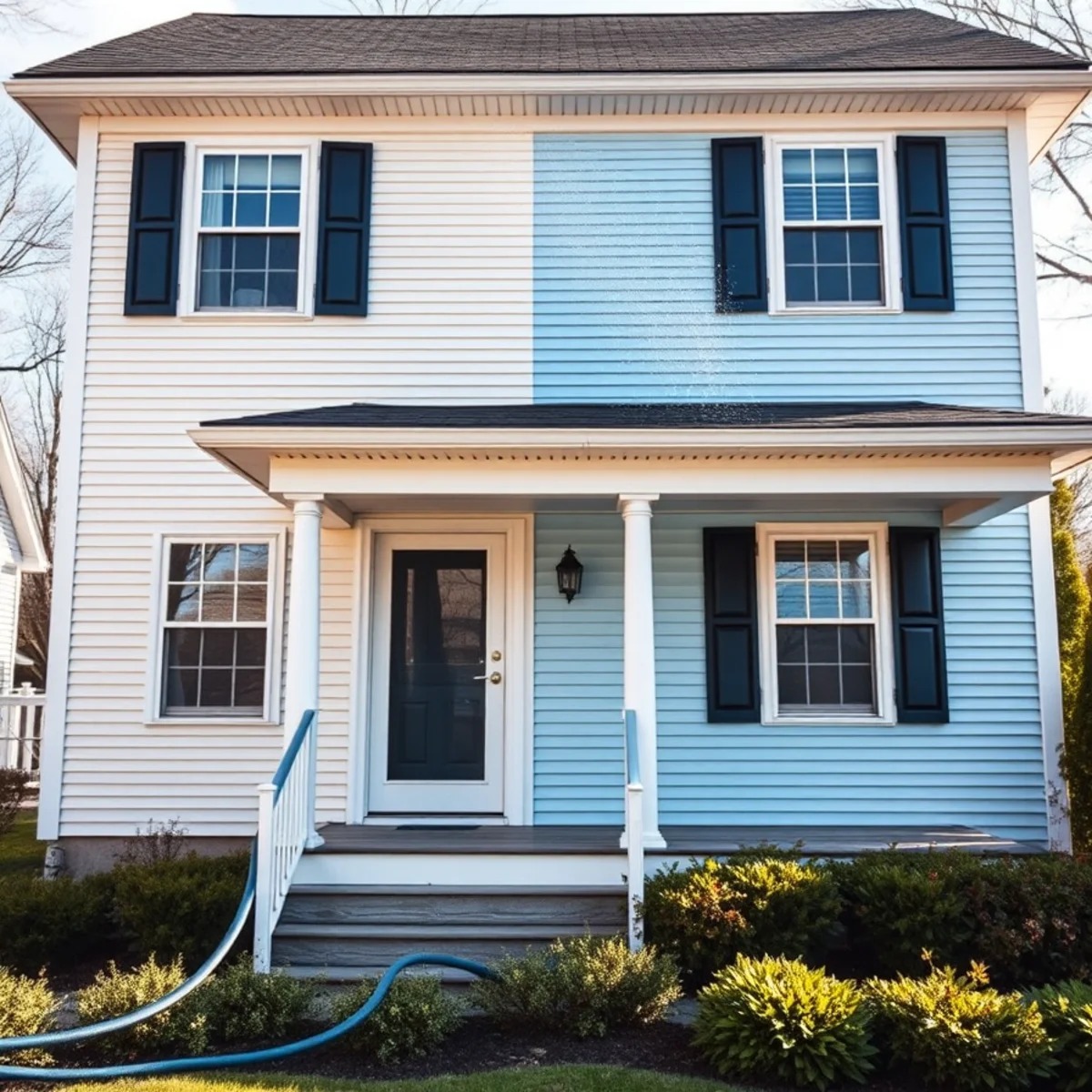
Most Massachusetts homes need a wash once a year, twice if shaded or coastal. A local guide to frequency by siding, surface, and season.
Pressure washing is one of the highest-return maintenance jobs a Massachusetts homeowner can do, but timing matters as much as the cleaning itself. Wash too rarely and algae, mildew, road salt, and pollen quietly degrade your siding and roof. Wash too often, or with too much pressure, and you risk forcing water behind panels or stripping finishes. This guide gives you a clear, New England-specific answer to how often to wash your home, what makes our climate so hard on exteriors, and how to build a schedule that protects your biggest investment.
The Short Answer: Once a Year for Most Massachusetts Homes
For the majority of homes across the Commonwealth, a full exterior wash once per year is the sweet spot. Many homes need it twice a year if they sit in heavy shade, near the coast, or under mature tree cover. A small number of well-exposed inland homes can stretch to every 18 to 24 months for siding while still cleaning horizontal surfaces annually.
A yearly wash keeps mold, mildew, algae, and pollen from ever getting a real foothold. It is also the cadence most siding and roofing manufacturers reference in their care guidelines, which matters for keeping a siding warranty intact. If you only do one exterior project a year, an annual house washing should be it.
The key word is baseline. "Once a year" is a starting point, not a rule. The right frequency depends on where your home sits, what it is made of, and how much shade and moisture it gets. The rest of this guide gets specific so you can dial in your own schedule.
Why Massachusetts Homes Get Dirty Faster: The New England Climate Factor
New England weather is uniquely tough on exteriors, and it is the single biggest reason local homes need more attention than a house in a dry, sunny climate. Five forces work against your siding here.
- Road salt and de-icing sand. Winter plowing splashes a corrosive slurry of salt and sand onto siding, foundations, and driveways. That residue sits there until you remove it. A spring wash is the only reliable way to clear salt-air corrosion and road grime before it pits surfaces and feeds rust.
- The freeze-thaw cycle. Massachusetts swings above and below freezing dozens of times each winter. Water seeps into porous brick, concrete, mortar, and pavers, then expands as it freezes, spalling brick faces and cracking joints. Algae and moss that hold extra moisture against those surfaces accelerate the damage, which is why annual cleaning is protective, not just cosmetic.
- Humidity. Our humid summers keep walls damp long after rain, and damp walls are exactly what mold, mildew, and green algae need to spread.
- Tree cover. MetroWest and the leafy suburbs around Boston are full of mature oaks, maples, and pines. They drop pollen, sap, leaf tannins, and constant shade that keeps walls from drying.
- Pollen. Spring tree pollen from birch, oak, maple, ash, and elm peaks in April and May, coating everything in a yellow-green film that clings to textured siding and feeds algae when it mixes with dew.
This combination is why generic national advice ("wash once a year") undersells what many MA homes actually need.
Factors That Change How Often YOUR Home Needs Washing
Two identical houses on the same street can need different schedules. The variables that matter most are siding material, sun exposure, and surroundings.
Siding Material and How It Affects Frequency
Your siding largely dictates both how often to wash and how much pressure is safe. The headline: most residential siding should be soft washed, not blasted at high pressure.
- Vinyl siding holds mildew and pollen in its texture and is not sealed tight, so high pressure can drive water behind the panels. Clean it annually using low pressure, roughly 100 to 500 PSI, with the right chemistry doing the work. See vinyl siding cleaning.
- Aluminum siding cleans on a similar annual schedule but is prone to oxidation and chalking. A gentle wash removes the chalky film; aggressive scrubbing only spreads it.
- Wood and cedar siding is the most delicate. Keep pressure under about 200 PSI and clean every one to two years. Cedar in shade grows mildew quickly and needs a gentle hand to avoid raising the grain.
- Fiber cement siding (HardiePlank and similar) is durable but the manufacturer specifically calls for low-pressure cleaning. Annual soft washing keeps it looking new without chasing paint off the boards.
- Brick is durable but porous. Historic Massachusetts brick should be washed under roughly 400 PSI to protect soft mortar joints. Every one to two years is plenty. See brick cleaning.
- Stucco and EISS are very porous and easily damaged; keep pressure under about 150 PSI and clean gently every one to two years.
- Painted wood needs gentle washing every one to two years; too much pressure strips paint and shortens the life of the finish.
The takeaway: you do not need more pressure, you need the right chemistry. Pressure does not kill algae at the root. Biodegradable surfactants and a measured amount of sodium hypochlorite do, which is why soft washing is the safe, warranty-friendly method for most Massachusetts homes.
Sun Exposure and Orientation
Algae and mildew are living organisms that thrive in shade and moisture. North-facing walls get the least direct sun, stay damp the longest, and almost always green up first. If you have ever wondered why one wall is covered in green or black streaks while the rest of the house looks fine, orientation is the answer. Shaded walls, walls under deep eaves, and walls behind dense landscaping may need attention twice as often as the sunny south side.
Surroundings: Trees, Pollen, Coast, Roads, and Humidity
Where your home sits changes the math.
- Heavy tree cover means more pollen, sap, leaf tannins, and shade, all of which speed up growth.
- Coastal exposure along Cape Cod, the South Shore, the North Shore, and the Islands brings salt air that accumulates on siding and windows and accelerates grime. Coastal homes often need twice-a-year washing.
- Busy roads coat the front of a house with dust and exhaust film.
- High humidity and poor drainage keep walls wet, feeding algae and mildew growth.
How Often to Wash Other Exterior Surfaces
Your home is more than its siding. Each surface ages on its own timeline.
- Roof: Asphalt shingle roofs across New England develop black streaks from Gloeocapsa magma algae. Clean every two to four years, or sooner if streaking appears. This is always a soft-wash job at under 100 PSI; high pressure tears off the protective granules and voids many shingle warranties. See roof cleaning.
- Driveway and concrete: Horizontal surfaces collect the most road salt, oil, leaf tannins, and organic film. Clean annually. Concrete tolerates 2,000 to 3,000 PSI, so this is one of the few true power-washing surfaces. See driveway cleaning.
- Deck and patio: Wood decks clean every one to two years and benefit from cleaning before resealing. Composite decking should stay between 500 and 1,000 PSI. See deck cleaning and patio cleaning.
- Pool deck: Clean annually before opening season for traction and appearance. See pool deck cleaning.
- Fence: Wood and vinyl fencing greens up on shaded sides and cleans every one to two years. See fence cleaning.
- Gutters: Clear and brighten gutters at least once a year. Black "tiger stripes" are oxidized grime that responds to gutter brightening, not just rinsing.
Recommended Pressure Washing Frequency by Surface
| Surface | How often | Method / safe pressure |
|---|---|---|
| House siding (vinyl) | Once a year | Soft wash, 100–500 PSI |
| Cedar / wood siding | Every 1–2 years | Soft wash, under 200 PSI |
| Fiber cement siding | Once a year | Soft wash, low pressure |
| Brick (historic) | Every 1–2 years | Under 400 PSI |
| Stucco / EIFS | Every 1–2 years | Under 150 PSI |
| Asphalt shingle roof | Every 2–4 years | Soft wash, under 100 PSI |
| Driveway / concrete | Once a year | 2,000–3,000 PSI |
| Composite deck | Every 1–2 years | 500–1,000 PSI |
| Gutters (brightening) | Once a year | Soft wash + detergent |
| Coastal / heavily shaded homes | Twice a year | Soft wash |
Estimates reflect typical Massachusetts conditions; your home may vary based on shade, exposure, and material.
Best Time of Year to Pressure Wash a House in Massachusetts
Timing is half the job here. Two windows work best.
Late spring, after pollen drops (late May into June). This is the single best window for a house wash. By late May the heavy tree pollen has finished falling, and washing then clears off the season's pollen coating, the winter's road salt, and any green growth in one pass. Most homeowners book their annual wash here.
Fall, before the snow (September into November). A fall wash removes leaf-stain tannins and organic debris so grime does not sit against your siding under snow for months. It also makes spring maintenance easier. Fall is the last good window before winter, and it pairs well with gutter cleaning ahead of leaf drop.
If you choose to wash twice a year, the classic MA rhythm is a thorough late-spring wash plus a lighter fall refresh.
Why You Should NOT Pressure Wash in Massachusetts Winter
Skip winter. When temperatures hover near or below freezing, cleaning solutions and rinse water freeze on siding, walkways, and steps, creating a real slip-and-ice hazard. Cold also prevents detergents from working the way they should, so you get a worse clean and a dangerous surface. Winter is for planning and booking an early spring slot, not washing.
Signs Your House Needs to Be Pressure Washed Now
You do not need a calendar to know it is time. Watch for these, especially on north-facing and shaded walls:
- Green algae streaks or a green film, usually on the shaded sides.
- Black streaks on the roof or siding from Gloeocapsa magma algae.
- Mildew or mold spotting in damp, shaded corners.
- A chalky or filmy residue that rubs off on your hand, a sign of oxidation on vinyl or aluminum.
- Dull, flat-looking siding that has lost its color depth under a layer of grime.
- A heavy pollen coating in spring.
- Spider webs, wasp nests, and dirt building up under eaves and around entryways.
If you can spot any of these from the curb, your home has already passed the point where a wash is purely cosmetic.
Pressure Washing vs. Soft Washing: Which Your Home Actually Needs
This is the distinction most articles bury, and it matters more than frequency. Pressure washing uses high-pressure water and is right for hard, durable surfaces: concrete driveways, sidewalks, and pavers. Soft washing uses low pressure plus biodegradable surfactants and a measured amount of sodium hypochlorite to kill organic growth at the root, then rinse it away. It is the correct method for siding, roofs, and anything painted or delicate.
The reason matters. Pressure alone does not kill algae, moss, or lichen; it just knocks the visible layer off while the roots survive and regrow within months. The right chemistry kills the organism so it stays gone longer, which actually lets you wash less often. Given that most MA homes have vinyl or cedar siding and asphalt shingle roofs, soft washing is the safe, warranty-friendly default for the region's housing stock. Our power washing is reserved for the hard surfaces that can take it.
Risks of Washing Too Often or With Too Much Pressure
More is not better. Blasting your home with excessive pressure does more harm than a missed wash:
- Water intrusion behind vinyl siding, where trapped moisture feeds mold inside the wall.
- Cracked or chipped surfaces on stucco, and eroded mortar on historic brick.
- Stripped paint and raised wood grain on cedar and painted clapboard.
- Lost shingle granules and a voided warranty on roofs hit with high pressure.
Frequency should never mean force. The goal is regular, gentle cleaning, not aggressive, occasional blasting.
Risks of Waiting Too Long
The other extreme is just as costly. Let growth take hold and you risk:
- Permanent staining. Algae and tannin stains can etch into porous siding and concrete and never fully come out.
- Algae and moss damage. These organisms hold moisture against siding and shingles, leading to rot and premature failure long before a surface should wear out.
- Accelerated freeze-thaw damage. Moisture-holding growth on brick and concrete worsens spalling and cracking through MA winters.
- Lower curb appeal and home value. A streaked, dingy exterior reads as deferred maintenance to buyers and appraisers, and first impressions are hard to undo.
Washing on a consistent schedule is far cheaper than replacing siding, shingles, or a deck years early. Think of it the way you think of changing the oil in your car: a small, regular cost that prevents a large, sudden one.
DIY vs. Hiring a Professional in Massachusetts
You can rent a pressure washer, and for a small concrete patio that may be fine. But for siding and roofs, DIY is where most damage happens. Homeowners reach for too much pressure, use the wrong nozzle, and drive water behind panels or strip paint without realizing it. Ladders and roofs add real fall risk.
A professional brings surface-appropriate PSI, the right biodegradable cleaning solutions, landscaping pre-soak to protect plants, and runoff and well-water awareness. When you do hire, choose a company that is fully insured and can provide a certificate of insurance on request, and confirm they carry proper HIC registration for any work that requires it. That protects you if anything goes wrong on your property.
How a Regular Schedule Protects Your Home and Saves Money
A standing wash schedule does three things at once. It keeps manufacturer warranties valid, since many siding and roofing warranties require routine cleaning. It stops small problems, like a patch of north-side algae, before they become rot or permanent stains. And it preserves resale value and curb appeal year-round instead of forcing a frantic, expensive deep-clean right before listing. Soft washing also kills growth at the root, so each cleaning lasts longer and the long-run cost stays low.
How Much Does Pressure Washing Cost in Massachusetts
Cost depends on factors, not a flat number, so be skeptical of any quote given sight-unseen. The main drivers are home size and number of stories, how many surfaces you bundle (siding, roof, driveway, deck), the level of buildup, access and landscaping, and coastal versus inland location. Bundling services into one annual visit almost always costs less per surface than calling for each job separately. Spreading washing across the year on a schedule also tends to keep each visit lighter and more affordable than waiting for years of buildup that needs an intensive restoration clean. For an exact figure, get a written estimate after an on-site assessment.
Massachusetts Service Area
Wash Bros serves homeowners across the Commonwealth, from Greater Boston and MetroWest to Worcester County, the South Shore, and the North Shore, including Boston, Worcester, and coastal communities like Gloucester. We tailor every schedule to local conditions: salt air on the coast, pollen and tree cover inland, and freeze-thaw everywhere in between.
Not sure whether your home needs an annual wash or something more frequent? We will walk your property, assess your siding, roof, shade, and exposure, and recommend a schedule that fits, with no pressure and no guesswork. Founded in 2023 by brothers Louis and Dominic, Wash Bros is a fully insured, family-run crew with a 5.0 average across 130 Google reviews and a satisfaction-focused approach to every job. Contact us for a free estimate or call +1 (351) 242-0666, and we will help you build a cleaning plan that keeps your home protected and looking great all year long.
Frequently Asked Questions
Need Professional Exterior Cleaning?
Wash Bros provides affordable, dependable pressure washing across Massachusetts. Get your free estimate today.
Get a Free Estimate