Concrete Cleaning Services in Massachusetts
Professional concrete cleaning from Wash Bros for Massachusetts homes and businesses — affordable, dependable, and designed to restore curb appeal safely.
Concrete looks bulletproof. It isn't. That gray slab is a sponge with a hard face, and every season in Massachusetts works to fill its pores with road salt, algae spores, motor oil, and mineral scale. Left alone, the dirt sets like a stain in grout. The surface darkens, gets slick where the shade lingers, and starts flaking at the edges once the salt and freeze-thaw cycle go to work.
A garden hose won't touch it. A rented machine in untrained hands will make it worse. What porous concrete actually needs is the right combination of heat, chemistry, and controlled flow to pull contaminants up and out of the texture instead of grinding them deeper or carving lines into the surface.
That's the work. Here's how we do it across Massachusetts.
Professional Concrete Cleaning Services in Massachusetts
Wash Bros cleans poured and finished concrete for homeowners, property managers, and businesses throughout the Commonwealth. We restore driveways, walkways, patios, pool decks, stairs, and foundations, and we handle the heavy-duty commercial work most exterior companies skip. Every job runs on the same principle: match the method to the surface and the contaminant, not the other way around.
Concrete is unforgiving of shortcuts. It's also one of the most rewarding surfaces to clean, because the difference between a tired, blotchy slab and a uniform, bright one is dramatic and immediate. We use commercial rotating surface cleaners for even coverage, hot water and industrial degreaser for petroleum stains, and biodegradable surfactants for the organic growth that makes New England concrete green and slick. The goal is honest curb appeal and a safer walking surface, achieved without etching the slab you're trying to protect.
Concrete Surfaces We Clean
If it's poured concrete and it's exposed to the weather, we clean it. The common ones around a Massachusetts property include:
- Driveways and aprons — the largest, most stained slab most homeowners own, and the first thing visitors judge. Pairs naturally with our dedicated driveway cleaning service.
- Sidewalks and walkways — public-facing, high-traffic, and a slip-and-fall liability when algae takes hold. See our sidewalk cleaning work.
- Patios and pool decks — entertaining space that collects pollen, grill grease, and waterline mineral scale. We also offer focused pool deck cleaning.
- Stairs, stoops, and retaining walls — north-facing concrete that stays damp and grows black streaks.
- Garage floors — oil, tire marks, and de-icer residue tracked in all winter.
- Dumpster pads and loading areas — the grimiest concrete on any commercial site.
- Parking lots and ramps — large flatwork where gum, oil drips, and faded striping accumulate.
Different slabs, different problems, different chemistry. A pool deck that's gone slick with algae gets treated very differently from a garage floor soaked in 40-weight.
Common Concrete Stains and Problems We Remove
Concrete's open, porous surface is exactly what makes staining so stubborn. Contaminants don't sit on top; they wick down into the capillaries. The stains we pull off Massachusetts concrete most often:
- Oil and grease stains — petroleum that has soaked deep into the slab. This is the one that needs heat and a real degreaser, not just pressure.
- Rust stains — orange bleed from fertilizer, metal furniture, or rebar. These respond to chemistry, not pressure, which is why we handle them with dedicated rust removal.
- Efflorescence and calcium deposits — the white, chalky mineral haze pushed to the surface by moisture moving through the slab.
- Algae and green growth — living organisms that turn shaded concrete green and dangerously slick.
- Mold and mildew — fed by New England humidity and shade, addressed with proper mildew and mold removal.
- Black streaks and organic staining — that gray-black film on north-facing walkways isn't dirt, it's biological, and it needs to be killed at the root.
- Dirt buildup, tire marks, and chewing gum — the everyday grime of a working surface.
The key truth behind all of it: you don't need more pressure; you need the right chemistry. Pressure rinses what chemistry has already released. Blast a living algae stain with raw water and you scatter it; it's back in a season. Treat it with biodegradable surfactants and it dies at the root.
Pressure Washing vs. Surface Cleaner vs. Soft Washing: Choosing the Right Method for Concrete
Concrete is one of the few exterior surfaces that genuinely wants real pressure. Unlike vinyl siding or cedar, sound concrete can take a power wash. But how that pressure is delivered is everything.
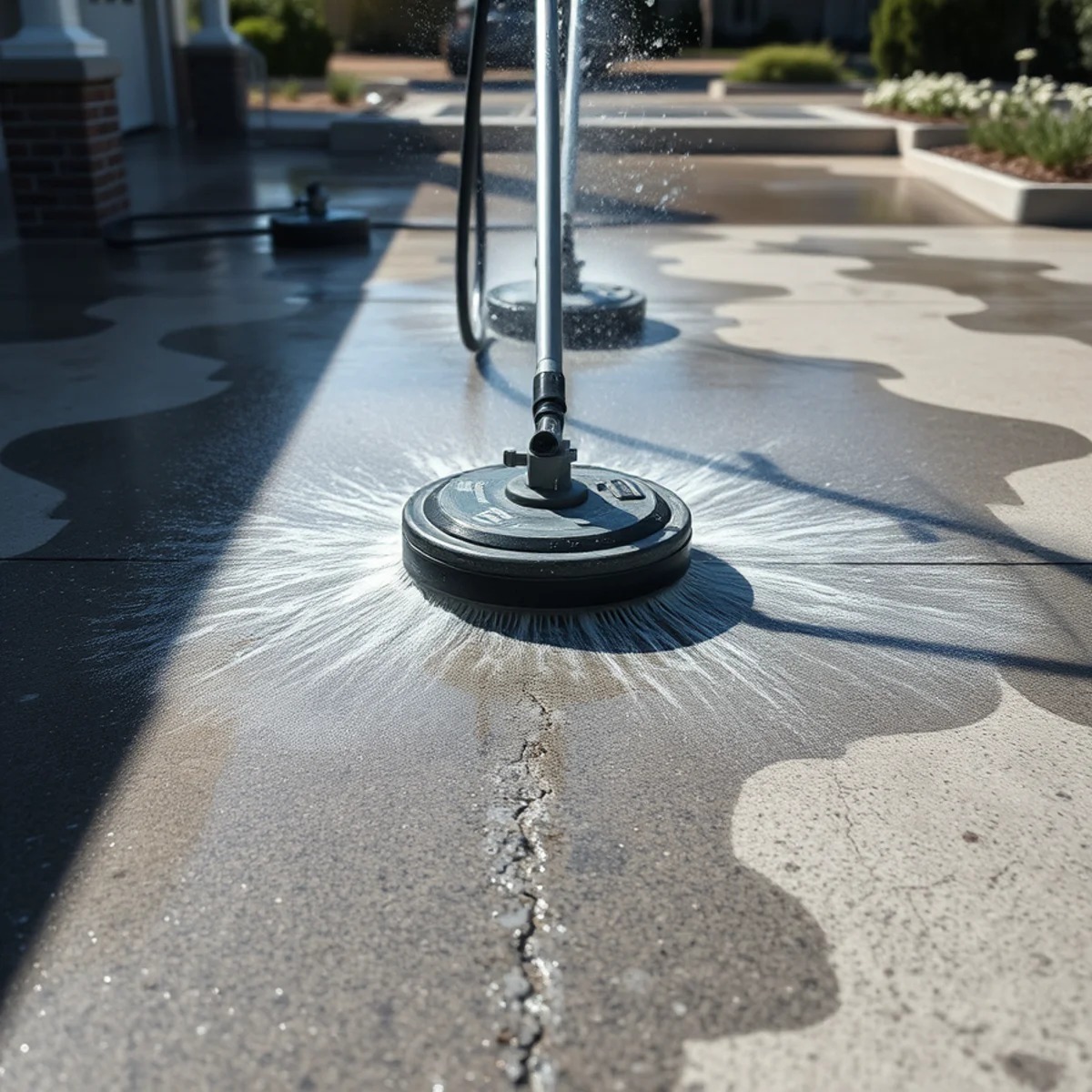
Rotating surface cleaner. This is the workhorse for flatwork. A surface cleaner is a shrouded disc with two or three pressure jets spinning under a hood. It delivers consistent, overlapping coverage at a controlled height, which is what gives you a clean, stripe-free finish. Cleaning a driveway with a bare wand instead leaves "zebra stripes" — the patchy banding that screams amateur. The surface cleaner is why our flatwork comes out uniform.
Power washing with the wand. Reserved for edges, transitions, stairs, and detail work the surface cleaner can't reach. Sound exterior concrete is typically cleaned in the 2,000 to 3,000 PSI range with the right tip and standoff distance. That's enough to clear embedded grime without etching, when it's controlled.
Soft washing. For aging, spalling, or decorative concrete that can't take aggressive pressure, and for killing biological growth, we drop to low pressure and let the cleaning solution do the work. Soft washing applies the chemistry, gives it dwell time, and rinses gently. It's the only method that actually kills algae and mildew at the root rather than just knocking the surface off.
Most concrete jobs use all three: chemistry to release the stain, a surface cleaner for the field, and the wand for detail.
Our Concrete Cleaning Process, Explained
Every slab gets an inspection first. We look for cracks, control joints, spalling, prior sealer, and the type of staining present, because a fertilizer rust stain and a motor-oil stain leave the rig at opposite ends of the chemistry shelf. That read determines the plan.
Next comes pre-treatment. Organic growth gets a biodegradable surfactant blend and dwell time so the algae, mildew, and black streaking die before water ever touches them. Petroleum-stained areas get an industrial degreaser worked into the pores. Skipping this step is the single most common mistake homeowners and low-ball crews make — they rinse the top and call it clean, and the stain bleeds back within weeks.
Then the surface cleaner makes its pass across the field, delivering even, overlapping coverage for a uniform finish. We detail the edges, joints, and transitions by hand with the wand so the perimeter matches the middle. For baked-in oil and grease, we bring heat (more on that below). Finally, a controlled rinse flushes lifted contaminants off the slab and into a managed flow path — not into your garden beds, not into the nearest storm drain.
We pre-soak landscaping, protect nearby siding from overspray, and stay mindful of runoff, storm-drain placement, and well-water systems on rural properties. Massachusetts municipalities have stormwater and wastewater ordinances governing where wash water can go, and we work to stay compliant with biodegradable detergents and responsible containment.
Hot Water Pressure Washing for Oil and Grease on Concrete
Cold water and pressure will not lift a deep oil stain. Petroleum bonds into the slab's pores, and cold rinsing just spreads it around. Heat changes the equation. Hot water lowers the oil's viscosity, breaks the bond between the petroleum and the concrete, and lets the degreaser emulsify and float the stain out of the surface.
That's why driveways, garage floors, dumpster pads, and restaurant back-of-house slabs get our hot water pressure washing. For ground-in petroleum we also offer targeted oil stain removal. Some stains are old enough to have permanently discolored the concrete, and we'll tell you that up front — but the vast majority of "permanent" oil stains come up clean once heat and the right degreaser go to work.
Correct PSI and Why We Don't Just Blast It
More pressure is not better. It's how slabs get ruined.
Hold a high-pressure tip too close, or use a turbo nozzle carelessly, and you etch the surface — carving visible lines, pitting the finish, and stripping the smooth cream coat off the top. Once concrete is etched, it's etched. It collects dirt faster afterward and there is no undo. On older or spalling slabs, reckless pressure tears the failing surface right off.
Sound concrete cleans in the 2,000 to 3,000 PSI range with the correct tip, the right standoff distance, and a surface cleaner that holds everything at a consistent height. We control flow rate (GPM) and dwell time so chemistry does the lifting and water does the rinsing. That's the difference between a slab that looks clean for years and one that wears a permanent record of a bad afternoon with a rental machine.
Efflorescence, Calcium, and Mineral Deposit Removal on Concrete
That white, powdery, chalky film is efflorescence — soluble salts carried to the surface by water moving through the slab, left behind as the water evaporates. It's extremely common on Massachusetts concrete, foundations, and retaining walls, especially where moisture is present.
You cannot pressure-wash efflorescence away. Blasting it just removes the bloom on the surface while the salts keep migrating up. It needs a specialized acidic treatment that dissolves the mineral deposit and neutralizes the reaction, followed by a controlled rinse. We handle this with dedicated efflorescence removal, and where the white residue is winter de-icer rather than true efflorescence, the same careful chemistry clears it.
Concrete Sealing After Cleaning
Cleaning opens the door; sealing keeps it closed. Bare concrete is porous, which is exactly why it stains and why salt and water soak in and drive freeze-thaw damage. A penetrating sealer — typically a silane/siloxane formula — soaks into the surface and creates a water-repellent barrier inside the pores without leaving a slick film on top. That barrier slows oil staining, blocks salt and moisture intrusion, and makes the next cleaning easier.
Sealing is optional, and it has rules. Concrete must be fully clean and bone dry first, which is why it follows cleaning rather than replacing it. New concrete needs to cure roughly 30 to 90 days before it can be sealed. And in Massachusetts, sealer goes down on mild, dry days in the 50 to 75°F range — not on a damp morning, and ideally before road-salt season. For coastal properties dealing with constant salt-air corrosion, a quality penetrating sealer is one of the best defenses a slab can have.
Massachusetts Winter Concrete Care: Road Salt, De-Icer Residue, and Freeze-Thaw Spalling
This is where local concrete really suffers, and it's where most competitors say nothing at all.
Picture a driveway in March. It's streaked white with rock salt and calcium chloride residue, the surface is starting to flake near the apron, and the whole slab looks chalky and tired. Here's the problem: those de-icing salts don't just stain. They soak into porous concrete and hold moisture against the surface. When that trapped water freezes, it expands; when it thaws, it contracts. That repeated freeze-thaw cycle is what causes spalling — the flaking and pitting that destroys the top layer of a slab one winter at a time.
Salt accelerates the whole process. The longer it sits in the pores, the more damage it does.
The fix is preventative maintenance on a New England schedule. A thorough spring cleaning pulls the winter's salt and de-icer load out of the concrete before it can do another year of harm. A fall cleaning, optionally followed by a penetrating sealer, gets the slab ready to shed water before the first freeze. Spring to remove, fall to protect. That two-window rhythm is the single most effective thing a Massachusetts property owner can do to extend the life of their concrete.
Add in our humid summers, heavy tree canopy, and shaded north-facing slabs, and you get the green algae and black organic streaking that make suburban walkways slick. Coastal towns on the South Shore and North Shore get salt-air corrosion on top of all of it. Local concrete takes a beating from every direction, which is exactly why generic, out-of-state cleaning advice falls short here.
Residential vs. Commercial Concrete Cleaning
Residential work is about curb appeal, safety, and protecting the investment — driveways, walkways, patios, and pool decks that homeowners want bright, uniform, and slip-resistant. Timing often lines up with selling a home, hosting an event, or knocking out spring cleanup. It pairs well with house washing for a whole-property refresh.
Commercial concrete is about liability, appearance, and code. Storefronts, sidewalks, dumpster pads, loading docks, and parking areas accumulate gum, oil, and organic growth that look neglected and create real slip-and-fall exposure. These jobs need scheduling around business hours, attention to wash-water runoff compliance, and equipment that can move serious square footage. We handle both ends with the same crew and the same standards.
How Much Does Concrete Cleaning Cost in Massachusetts?
Fair question, and most competitor pages dodge it entirely. We won't quote a number sight unseen, because honest pricing depends on the slab in front of us. But the factors that move a concrete cleaning estimate are straightforward:
- Square footage. Larger flatwork costs more in total but often less per square foot.
- Contaminant type. A lightly soiled patio is quick. Deep oil, rust, efflorescence, or heavy algae needs specialized chemistry and extra labor.
- Method required. Hot water for grease and dedicated stain treatments add to a straightforward surface-cleaner pass.
- Access and condition. Tight access, fragile spalling concrete, and detailed edging all factor in.
- Add-ons. Optional sealing is priced separately as a protective upgrade.
Concrete cleaning is typically quoted per square foot or as a per-project price with a reasonable minimum so a small walkway is worth our time and yours. We give you a clear, written estimate before any work starts — no surprises, no pressure.
How Often Should You Have Concrete Professionally Cleaned?
For most Massachusetts properties, once a year keeps concrete healthy and good-looking, with spring being the ideal window to clear winter's salt load. Properties with heavy shade, mature tree canopy, or a slab that stays damp may benefit from twice a year — spring and fall — because algae and organic growth come back faster on surfaces that never fully dry. Commercial sites with constant foot traffic, gum, and oil often run on a more frequent maintenance schedule. The honest answer: clean it before the staining sets and before the salt has a full year to work, and you'll spend far less over the life of the slab.
Before and After: Our Work Across Massachusetts
The before-and-after on concrete is some of the most satisfying work we do. A driveway that's gone uniform gray with embedded grime comes back bright and even. A walkway slick with black algae turns clean and safe to walk. A garage floor mapped with oil reads like new. We've restored tired slabs for homeowners and businesses from Boston and Cambridge out to Worcester County and the MetroWest towns around Framingham. Same standard every time, whether it's a single front walk or a full commercial lot.
A Word on DIY and Vetting a Contractor
A rented pressure washer is the fastest way to permanently mark your concrete. The wrong nozzle leaves zebra striping. Too much pressure too close etches the surface for good. And most homeowners spend a whole Saturday only to find the algae and salt come right back, because rinsing the surface never killed the growth at the root or pulled the salt from the pores. The chemistry, the heat, and the technique are what get results — and they're exactly what a rental machine doesn't come with.
If you hire it out, vet carefully. Ask whether the company carries insurance, and ask for proof. Wash Bros is fully insured, and we'll provide a certificate of insurance on request — protection that an uninsured weekend crew simply can't offer if something goes wrong on your property. Ask how they handle runoff and landscaping, what method they'll use for your specific stains, and whether they're set up for hot water and dedicated stain chemistry. The cheapest quote often comes from the crew with the least to lose.
Service Area in Massachusetts and Your Free Estimate
Wash Bros is a family-run exterior cleaning company started in 2023 by brothers Louis and Dominic, with a 5.0 average rating across 130 Google reviews. We're protective of the property we work on because we treat every slab like it's in front of our own home. We serve homeowners and businesses across the Commonwealth — Boston metro, Worcester County, the South Shore, MetroWest, the North Shore, and out to Western Massachusetts.
If your concrete is gray, green, streaked, or salt-stained, it's ready for a proper cleaning. We'll inspect it, tell you straight what it needs, and give you a clear estimate before any water runs.
Call Wash Bros today at +1 (351) 242-0666 for your free concrete cleaning estimate.
Problems We Solve
- Oil, grease, and tire marks soaked deep into porous concrete that cold water and a garden hose will never lift
- Green algae, black organic streaking, and mildew turning shaded walkways slick and unsafe
- White efflorescence, calcium deposits, and winter de-icer residue leaving a chalky haze on slabs
- Road salt and freeze-thaw cycles causing surface spalling, flaking, and pitting on Massachusetts driveways
- Rust stains bleeding from fertilizer, metal furniture, or rebar that pressure alone won't remove
- Zebra striping and etching damage left behind by rented machines and untrained DIY pressure washing
Our Cleaning Process
- 1
Inspect the surface and identify problem areas
- 2
Protect nearby landscaping, fixtures, and finishes
- 3
Apply the correct cleaning method for the surface
- 4
Wash and rinse thoroughly with professional equipment
- 5
Final quality check and walkthrough with you
Why Choose Wash Bros
- Affordable, upfront pricing
- Dependable scheduling
- Experienced exterior cleaning team
- Surface-safe process, every job
- Residential & commercial options
- 5.0 stars across 130 reviews
Concrete Cleaning Across Massachusetts
We provide concrete cleaning in 351 Massachusetts cities, including:
Concrete Cleaning FAQs
Related Services
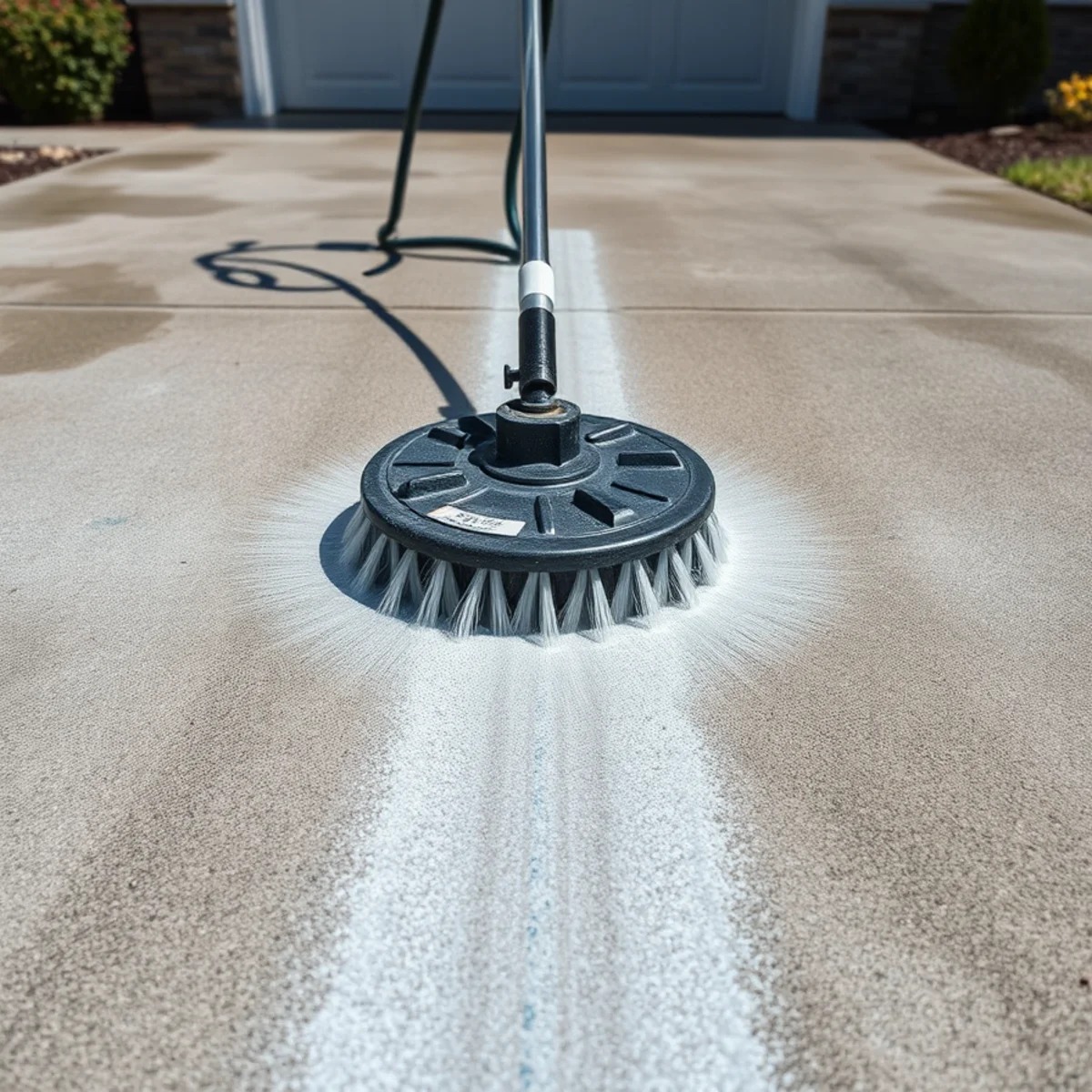
Driveway Cleaning
Expert Massachusetts driveway cleaning for concrete, asphalt, pavers and brick, removing oil, algae, moss and road salt safely.
Read More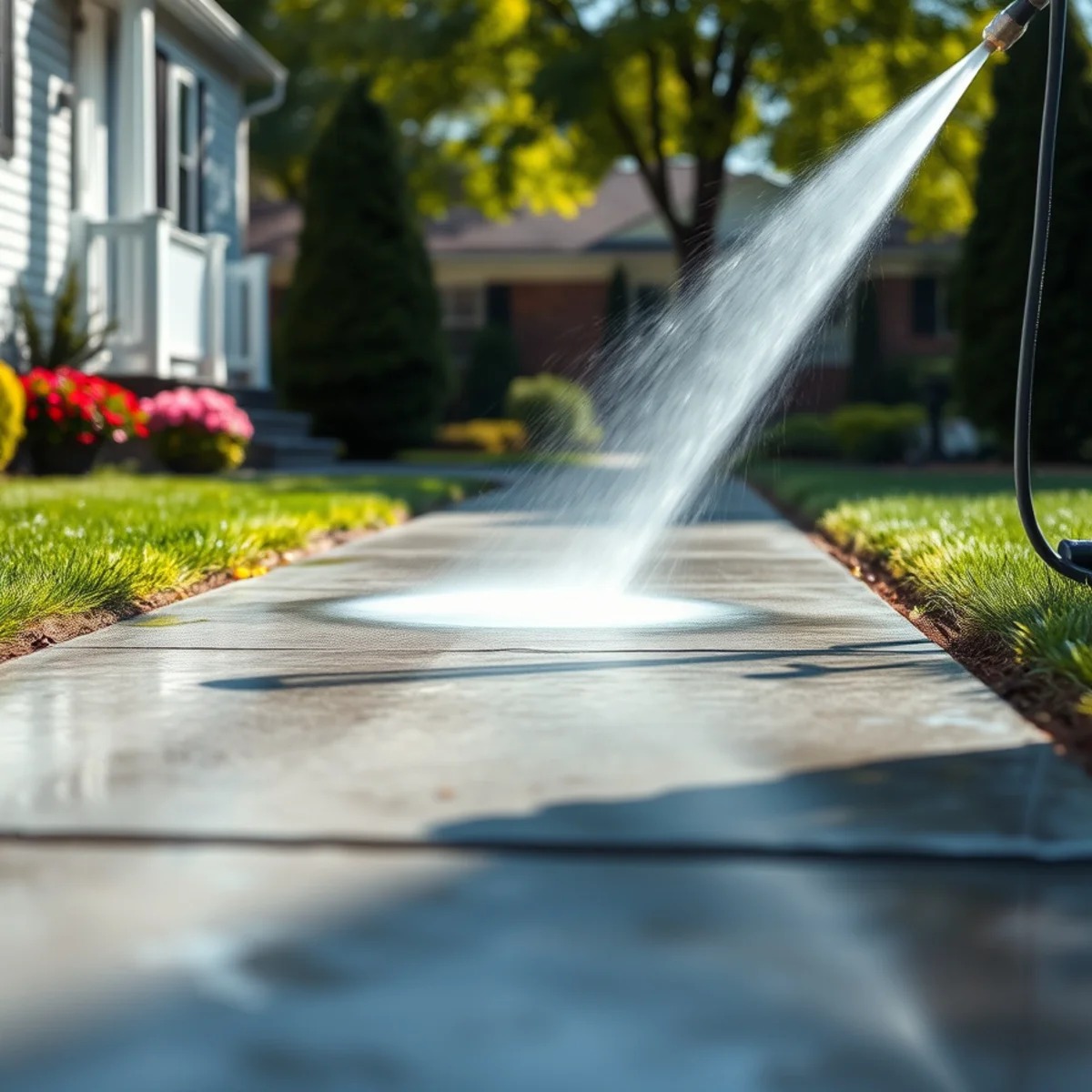
Sidewalk Cleaning
Expert Massachusetts sidewalk cleaning that lifts gum, black spots, algae, and road salt off concrete, pavers, and brick without etching.
Read More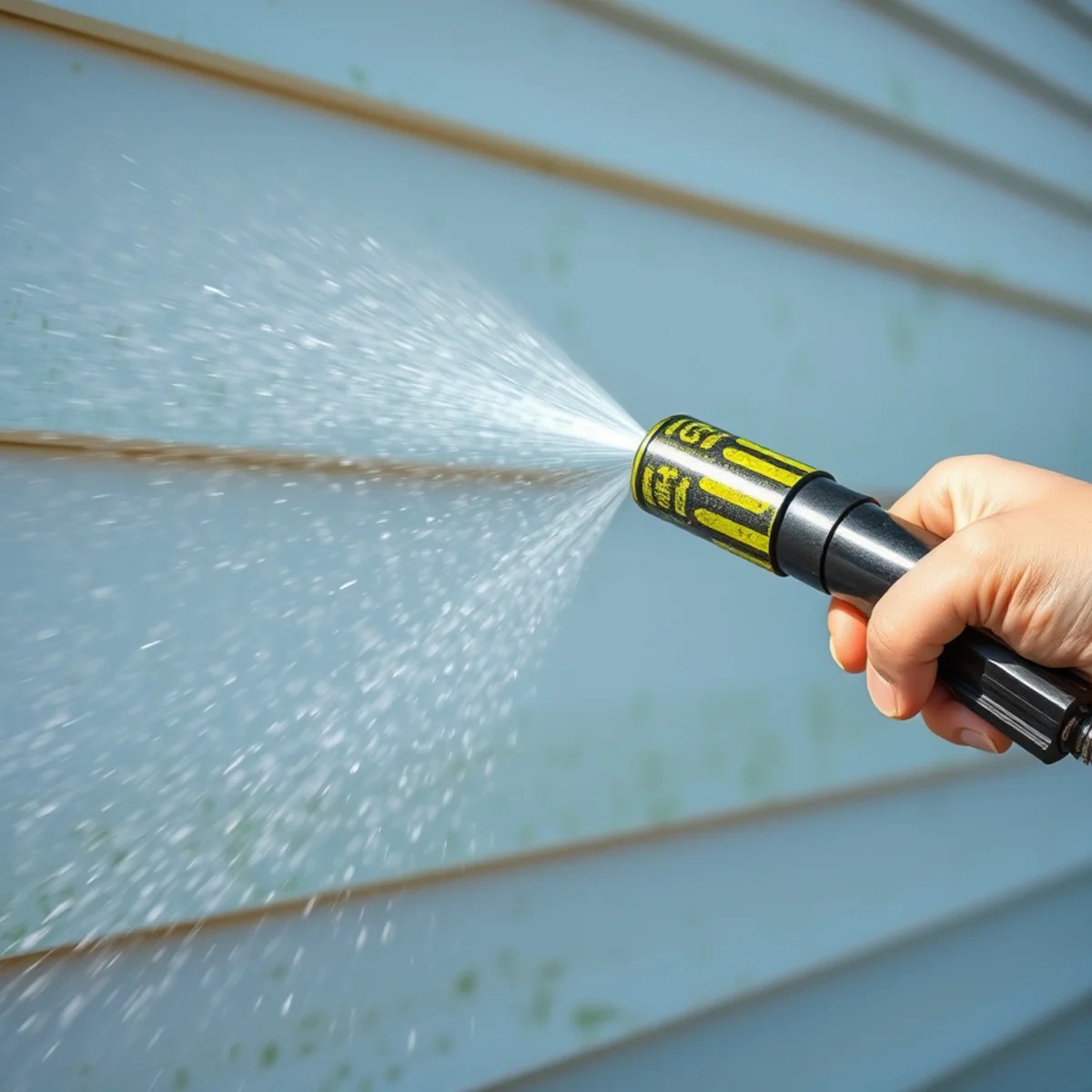
Soft Washing
Low-pressure soft washing that kills roof algae, mold, and black streaks at the root, safely cleaning MA roofs and siding.
Read More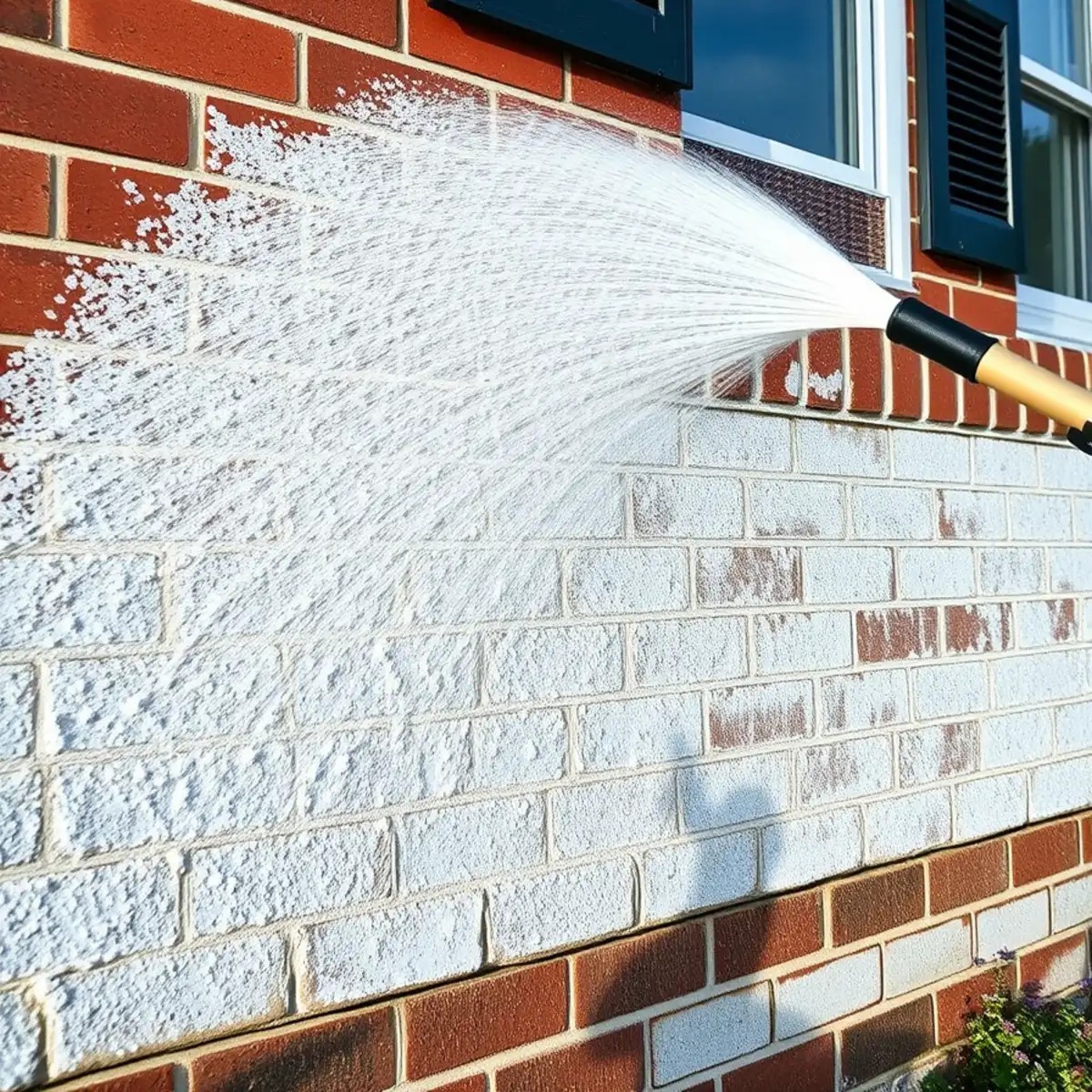
Efflorescence Removal
Wash Bros removes the white salt bloom from brick, pavers, and foundations with acid-free, low-pressure methods built for Massachusetts masonry.
Read More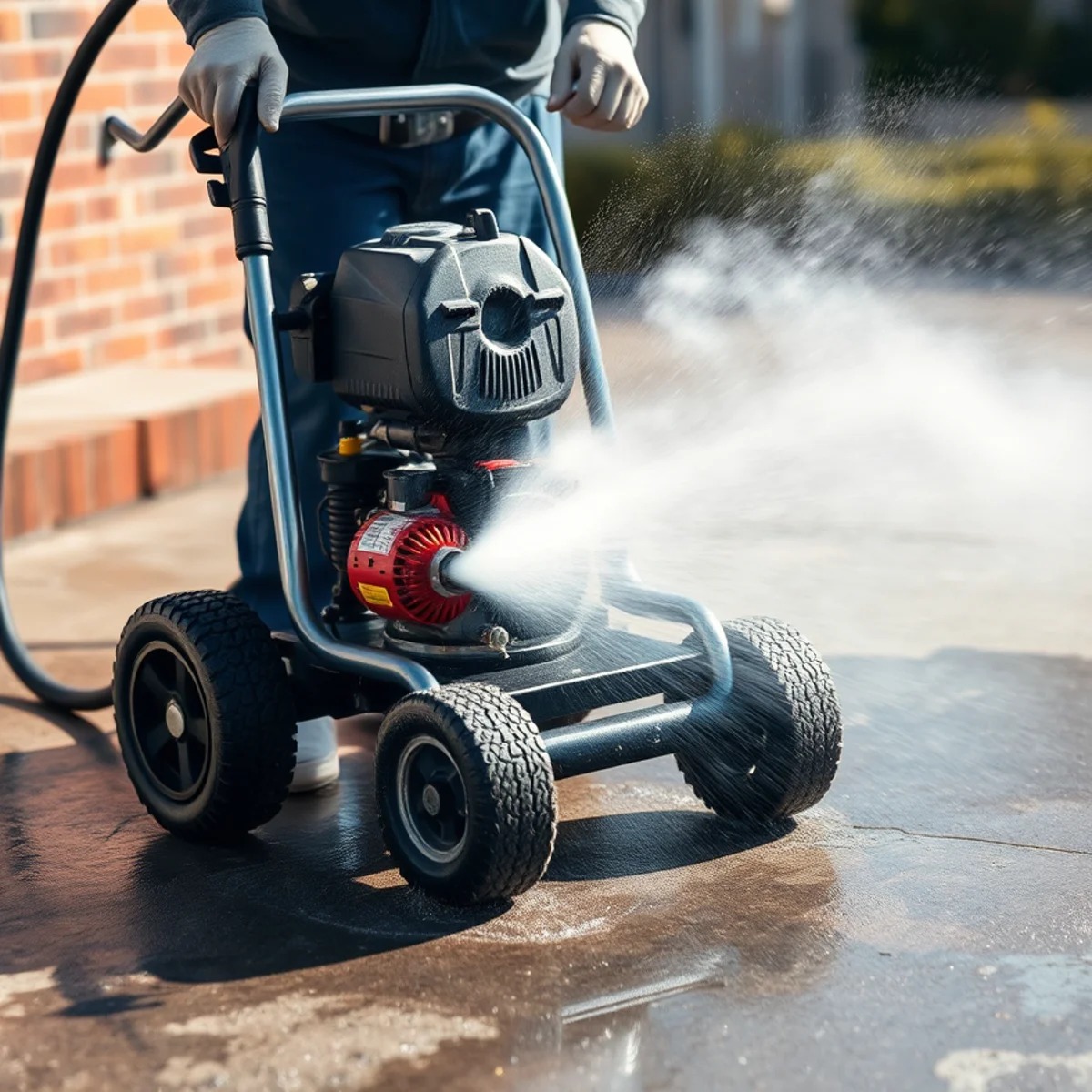
Hot Water Pressure Washing
Truck-mounted hot water pressure washing across Massachusetts that emulsifies grease, oil, gum, and sap on concrete and commercial flatwork.
Read MoreReady to Schedule Concrete Cleaning?
Contact Wash Bros today for a free concrete cleaning estimate anywhere in Massachusetts.