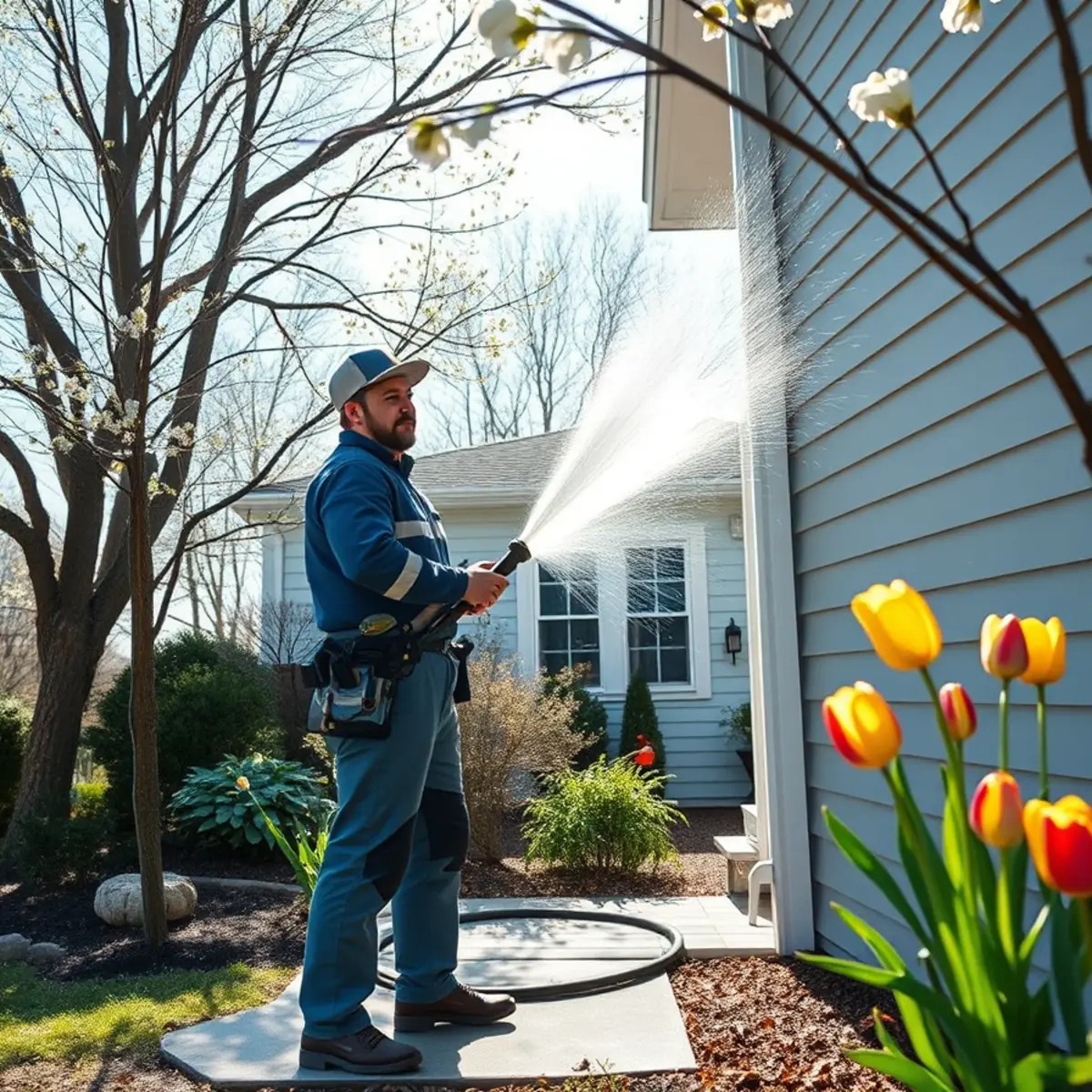
A Massachusetts month-by-month guide to the best time to pressure wash: ideal temperatures, spring vs. fall, freeze-thaw timing, and surface-by-surface scheduling.
Timing is the single biggest factor that separates a wash that lasts and one that grows back in a month. In Massachusetts, our four real seasons leave a narrow window where conditions are right, and washing at the wrong time can mean refreezing water, slow drying, or grime that returns within weeks. This guide gives you a month-by-month Massachusetts calendar, the exact temperatures the pros watch, and a surface-by-surface schedule so you wash once and stay clean.
Why Timing Matters for Pressure Washing in Massachusetts
Most homeowners treat pressure washing as a "do it when it looks dirty" job. In New England, that quietly costs you. Our weather runs the full gauntlet in twelve months: road salt and sand in winter, a heavy pollen wave in spring, humid algae-feeding heat in summer, and freeze-thaw cycles that pry at every joint by late fall. Each is a clock — wash too early and you fight frost, wash too late and salt film or organic growth has already worked on your siding, concrete, and roof for months. Timing also decides how well the clean works: the chemistry that kills mold, mildew, and algae needs a surface that stays wet long enough to dwell, then dries cleanly. There's a sweet spot, and in Massachusetts it's seasonal. Here's how to find it.
Quick Answer: The Best Time of Year to Pressure Wash (Spring & Fall)
For most Massachusetts homes, the best time of year to pressure wash is late spring (mid-May through June) and early fall (September through mid-October). Those two windows give you mild temperatures, longer daylight, dry breezy drying conditions, and no overnight freeze risk.
If you only wash once a year, pick based on your goal:
- Late spring (mid-May to June): Clears road salt, sand, and winter grime, and lands after the heavy April-May tree pollen so it actually stays clean. This is the most popular choice for curb appeal.
- Early fall (September to mid-October): Strips summer mold, mildew, and algae before they get trapped under snow, and removes the organic film that drives freeze-thaw damage.
The practical statewide washing window runs roughly mid-April through early November — whenever daytime temps hold above 50 degrees and overnight lows stay above freezing. Everything below explains how to fine-tune that for your home, your surfaces, and your town.
Ideal Temperature and Weather Conditions for Pressure Washing
Season sets the window. The weather in the few days around your wash decides the result. Here's the quick-reference table the pros work from:
| Temperature | Verdict | Why |
|---|---|---|
| Below 32 F | Avoid | Water freezes on contact; ice in cracks expands and damages surfaces |
| 32-40 F | Risky | Detergents work slowly; surfaces dry too slowly; refreeze risk overnight |
| 50-75 F | Ideal | Surfactants dwell and rinse cleanly; fast, even drying |
| 60 F and up (to ~85) | Optimal | Best chemistry performance with no flash-drying |
| Above 90 F, full sun | Risky | Solutions flash-dry and streak before rinse |
Beyond temperature, the ideal conditions are:
- A dry stretch ahead. Schedule when no rain is forecast for at least 24 hours after, so solutions can work and surfaces cure.
- Light wind and moderate sun. A little breeze speeds drying; harsh midday sun bakes detergent onto the surface.
- No overnight frost for 24-48 hours after washing. Trapped moisture that freezes is the main reason we won't wash on the shoulder of the season.
Sunny or cloudy? A mild, partly cloudy day is ideal — it keeps solutions from drying too fast. Time of day? Mid-morning is the sweet spot: surfaces have warmed off the overnight chill but you're ahead of peak afternoon heat. After rain? Washing after rain is fine and often better — damp surfaces help solutions spread — just let standing water sheet off first.
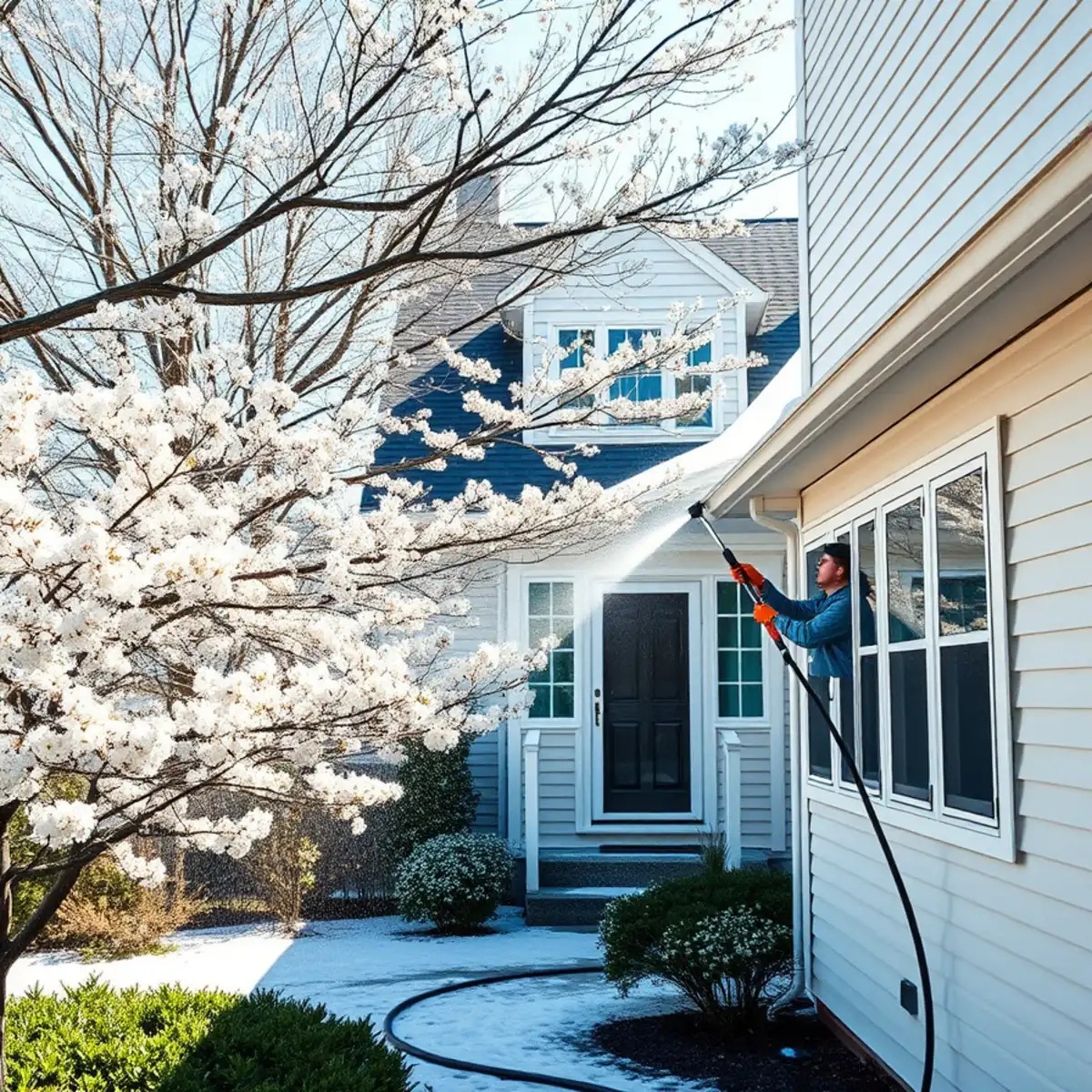
Spring (April-June): The Post-Winter Reset
Spring is the most popular time for exterior cleaning in New England, and for good reason. Massachusetts winters are punishing — months of plowing, salt, sand, ice melt, and freeze-thaw leave a dingy film on siding, walkways, and foundations. By the time the snow recedes, most homes look gray and tired.
The catch in spring is the calendar's two halves. Early spring still brings overnight frost — we wait until lows stay reliably above 40 degrees before touching exterior surfaces. And April-May is peak tree pollen (ash, birch, elm, maple), with grass pollen overlapping into June, coating everything yellow-green. Wash too early and the next pollen wave undoes it. That's why a house washing timed for mid-May through June, after the worst of the pollen, holds far longer. Our deeper look at how pollen affects your home's exterior explains the science.
What Spring Cleaning Removes
- Road salt and brine. Plow spray and brine mist leave a corrosive salt film on lower siding and foundations — rinse it off early before it works on finishes. See how salt and snow impact concrete.
- Sand and winter grit kicked up from treated roads onto driveways and walkways.
- Winter grime and exhaust film that dulls siding over the cold months.
- Mold and mildew that took hold in shaded, damp areas while everything stayed wet under snow.
- Early algae greening up on north-facing walls as temperatures climb.
A spring wash also doubles as an inspection — the easiest way to spot caulk failures, lifted shingles, or rot from winter while you can still plan repairs.
Summer (July-August): The Mid-Year Mold and Humidity Wave
Summer offers the most reliable, longest days of the year for exterior work, but humid Massachusetts summers are also when mold, mildew, and green and black algae explode — especially on shaded, north-facing siding and roofs that never fully dry out. A mid-year wash isn't just cosmetic; it removes the active growth before it spreads.
Summer is ideal for the surfaces you're actually using:
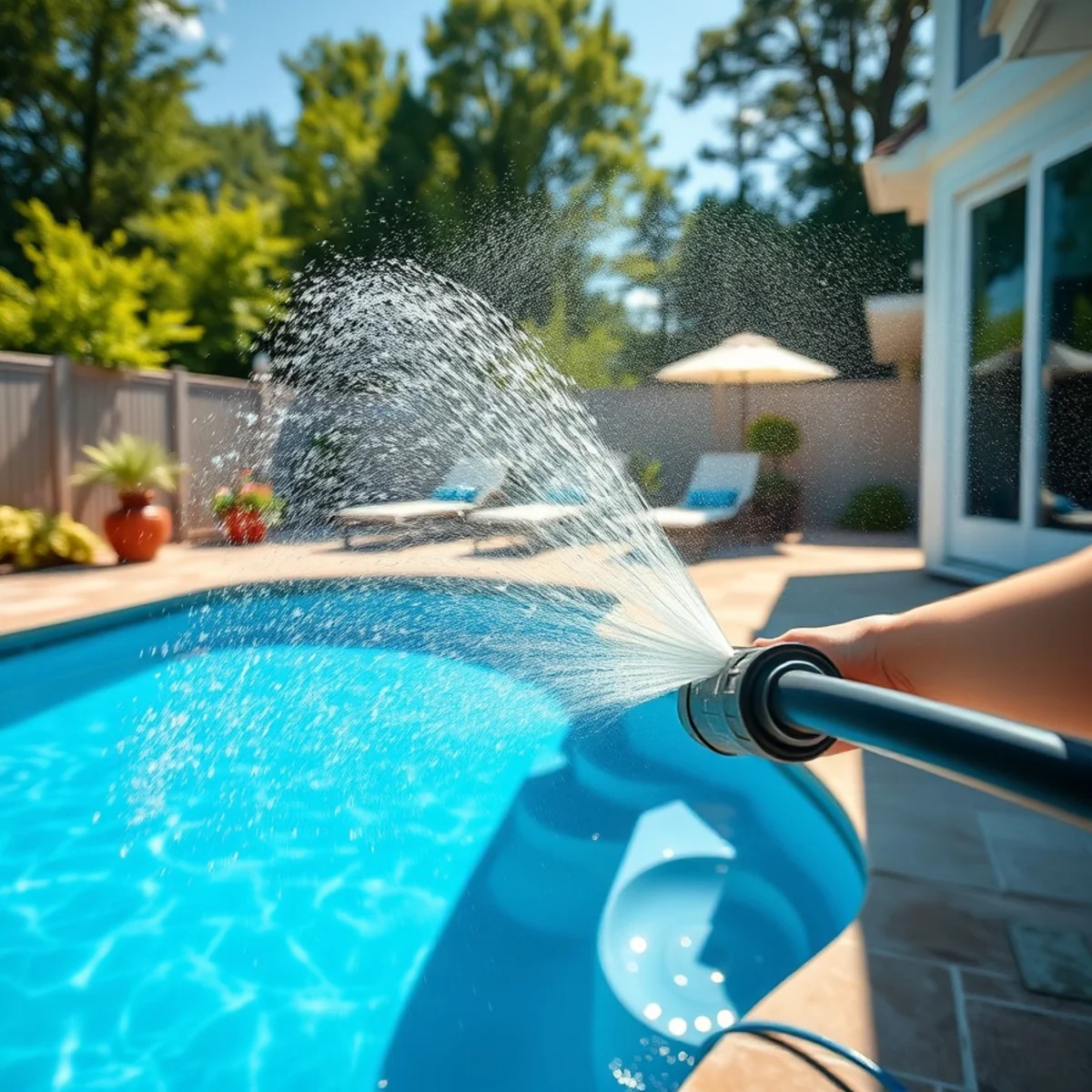
- Decks, patios, and pool areas. A clean pool deck is safer underfoot once slime and algae are gone, and deck cleaning is best done before you stain or seal.
- Driveways and concrete, where oil and tire marks lift more easily in the heat.
- Larger commercial jobs that benefit from dependable dry weather.
Two cautions: avoid the hottest, sunniest afternoons (detergents flash-dry and streak), and check your town's rules before you book — see the water-restriction section below.
Why Soft Washing Is Better Than High Pressure in Peak Summer Heat
Here's the core truth most homeowners miss: you don't need more pressure; you need the right chemistry. Pressure does not kill algae roots — biodegradable surfactants and biocides do. Blasting algae or mold off siding just scatters the surface growth; the colony stays and regrows in weeks.
That's why summer's algae wave is a soft washing job, not a high-pressure one. Soft washing uses low pressure plus solutions that kill the organism at the root, so it stays gone longer, and it's the only safe method for surfaces summer heat makes more vulnerable — vinyl (100-500 PSI), stucco and EIFS (under 150 PSI), cedar (under 200 PSI). For algae removal and mildew and mold removal, the chemistry does the work; the pressure just rinses.
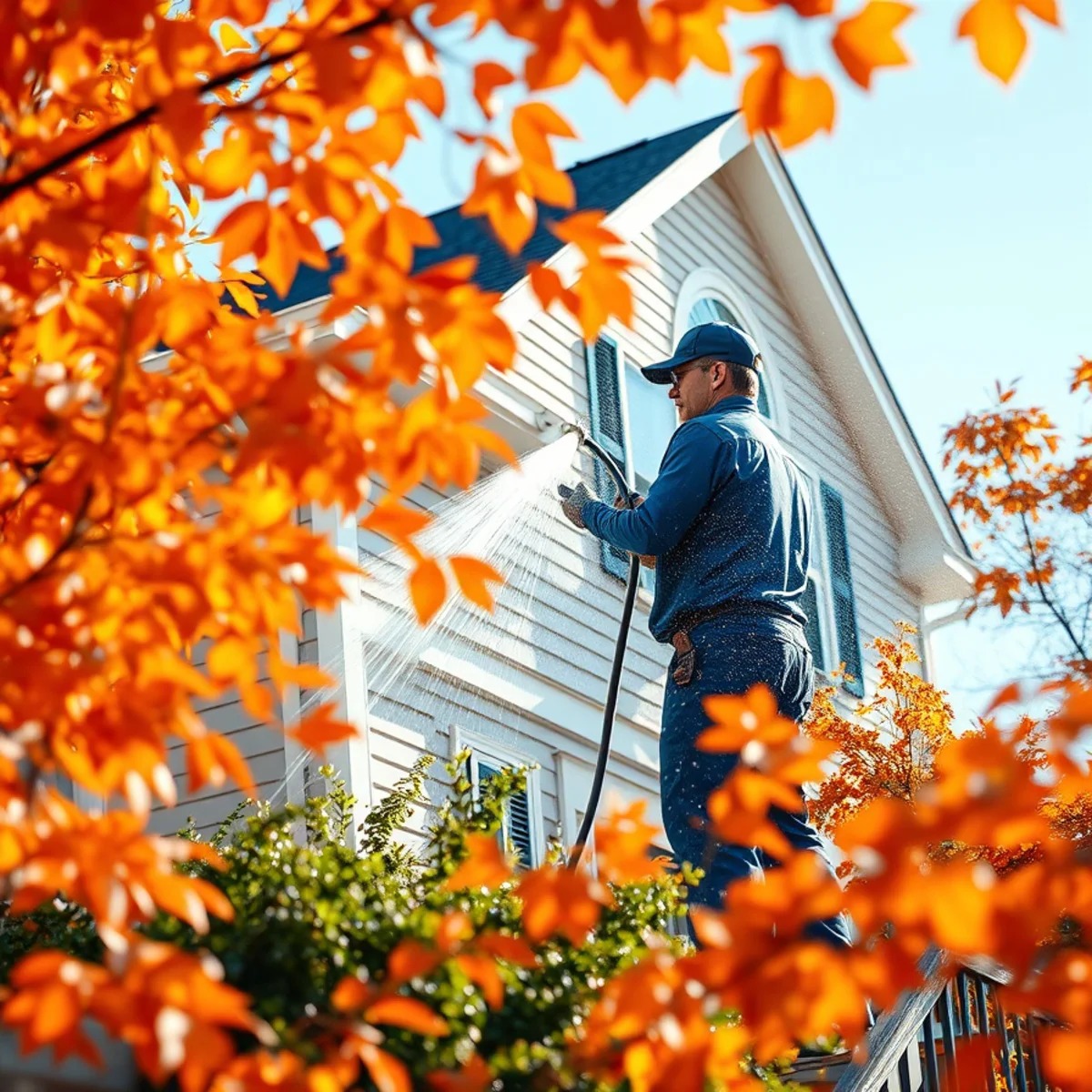
Fall (September-November): Pre-Winter Prep to Prevent Freeze-Thaw Damage
Fall is the second prime window and, in many ways, the most important wash of the year for protecting your home. Cleaning in September through mid-October removes a summer's worth of organic growth before it gets sealed under snow and ice for months.
Why fall washing pays off:
- You remove the food source. Mildew, algae, and moss feed on the dirt and pollen that built up all summer. Strip that away in fall and far less growth survives to spring.
- You stop freeze-thaw damage at the source. Organic growth and grime hold moisture against siding, decking, masonry, and concrete. When that trapped water freezes and expands — over and over through a New England winter — it cracks joints, lifts decking, and causes spalling (the flaking and chipping of brick, stone, and concrete). Removing the moisture-holding layer before the first freeze meaningfully reduces that wear.
- You pair it with gutter season. Fall leaf litter clogs gutters fast, so it's the natural time to bundle a wash with gutter cleaning. Clogged gutters trap water and feed ice dams during snowmelt. Our fall gutter cleaning and exterior washing guide shows how to combine the two.
The key is not waiting too long. In most of Massachusetts the first frost lands mid-to-late October, so wrap exterior washing by late October or early November depending on the year.
How Fall Washing Removes Pollen, Leaf Stains, and Organic Buildup Before Winter
A late-summer pollen flush, tannin stains from fallen leaves on decks and pavers, bird droppings, and the season's algae all pile up just before the cold locks them in place, and windy storms press wet leaves against siding where they stain over winter. A fall wash clears all of it — tannins off pavers and patios, organic film off siding, streaks off the roof — so you head into winter with nothing feeding new growth and nothing trapping moisture.
Winter (December-March): Why You Should Avoid Pressure Washing in Freezing Temps
Pressure washing in a Massachusetts winter is generally a bad idea, and the reason is simple physics. Water freezes. Spray it on siding, steps, or walkways below 32 degrees and it can turn to ice almost instantly — a slip hazard, and worse, water forced into cracks and seams where it expands and damages the surface. Cold detergents barely work, so you'd get a poor clean and risk damage. For most homeowners, winter is for planning, not washing.
What Can Still Be Done in Winter (Ice Dam Steaming, Commercial/Fleet Washing)
A few jobs do continue through the cold:
- Ice dam steaming uses controlled low-pressure steam, not cold-water pressure washing, to melt ice safely without damaging shingles or fascia.
- Commercial entrances and walkways that must stay safe year-round, often handled with hot water pressure washing that resists freezing far better than cold water.
- Fleet and vehicle washing. Salt is brutal on trucks; fleet washing protects the investment all winter.
- Urgent stain or graffiti removal, and mild stretches when temps climb well above freezing with time to dry.
To get ahead of spring, winter is the time — see our winter exterior cleaning preparation guide.
Spring vs. Fall: How to Choose If You Only Wash Once a Year
Both are excellent. The deciding factor is what you most want to fix:
- Choose spring if curb appeal is the priority — selling, hosting, or just tired of the post-winter gray. A late-spring wash removes salt film and winter grime and leaves the home looking its best for the warm season.
- Choose fall if protection is the priority. Removing organic growth before the freeze reduces spalling, cracking, and ice-dam risk over winter. Fall is the smarter choice for older and historic homes especially.
If you're prepping to paint or stain, schedule the wash first — see paint preparation washing. If you're prepping to sell or stage, time it close to listing day for maximum impact.
How often, and why twice a year wins. A full exterior wash once a year is the baseline for most Massachusetts homes — our humid summers, heavy pollen, and long wet winters feed growth that yearly washing keeps in check. Step up to twice a year (late spring and early fall) for homes with heavy tree cover, coastal salt-air exposure, or a north-facing wall that greens up fast. The spring wash clears winter's salt and pollen; the fall wash removes summer's growth before the freeze, so grime never gets a season-long head start. Dense urban homes near traffic, like in Boston, pick up exhaust film faster; coastal homes in Salem and the North Shore face constant salt-air corrosion. For both, twice a year is basic maintenance. Our guide to how often you should pressure wash in Massachusetts breaks it down by surface.
Surface-by-Surface Timing (Siding, Roof, Driveway, Deck, Patio, Pavers)
Different surfaces have different best windows and pressure needs. Here's how the pros sequence a year:
- Siding (vinyl/wood): Late spring after pollen, or early fall. Soft wash only — vinyl 100-500 PSI, cedar under 200 PSI, historic brick under 400 PSI. See vinyl siding cleaning.
- Roof: Warmer months, when roof cleaning chemistry kills black-streak algae (Gloeocapsa magma). Asphalt shingles soft washed under 100 PSI — never high pressure. Metal roof 500-800 PSI.
- Driveway/concrete: Spring (clear winter salt) and fall; seal concrete before road-salt season. Driveway cleaning runs 2,000-3,000 PSI.
- Deck: Early fall, before staining or sealing; composite 500-1,000 PSI, wood far lower.
- Patio and pavers: Late spring or early fall to lift leaf tannins; paver cleaning is followed by re-sanding joints. Stucco/EIFS: under 150 PSI, soft wash.
Choosing the Right Method by Season: Pressure vs. Soft Washing
Method should follow both the surface and the season. High-pressure (power) washing suits hard, durable surfaces — concrete driveways, sidewalks, masonry — best in spring and fall. Soft washing is the right call for siding, roofs, and anything fragile, and it's especially important in summer when heat-stressed materials and active algae demand chemistry over force. North-facing mold and roof algae are always soft-wash jobs. The rule of thumb: if it's organic growth (algae, mold, mildew, moss, lichen), the surfactant kills it and low pressure rinses it; if it's a stain in durable stone or concrete (oil, rust), higher pressure earns its place. Our pressure washing vs. soft washing guide covers the full decision.
Signs Your Home Needs Pressure Washing Now (Green Algae, Black Streaks, Salt Film)
Don't wait for the calendar if you see these:
- Green algae tinting siding, fences, or north-facing walls.
- Black streaks running down the roof — that's Gloeocapsa magma algae, and it thrives in the humid Northeast.
- A dull, chalky film on vinyl (oxidation) that rubs off on your hand.
- White salt film on lower siding and foundations after winter.
- Slick, green walkways or steps — a slip hazard as well as an eyesore.
- Moss or lichen clumping on the roof, shaded pavers, or the sidewalk.
Any of these means the growth is active and feeding. Earlier is cheaper and easier than waiting for it to spread.
DIY Timing Risks vs. Hiring a Local Massachusetts Pro
Renting a machine and picking a Saturday is where a lot of damage starts. The common DIY mistakes are timing and pressure: washing on a day that frosts overnight (trapped water cracks surfaces), washing in flash-drying afternoon heat (streaks), or using too much PSI on siding and shingles (driving water behind panels, stripping finishes, voiding roof warranties). A pro reads the local frost calendar, matches PSI to each surface, and uses biodegradable surfactants with proper landscaping pre-soak and runoff awareness — which matters on well water and near plantings.
There's a credential angle too. In Massachusetts, you should always confirm a contractor is fully insured with a certificate of insurance on request, and many exterior contractors carry HIC registration. (Wash Bros is fully insured, with a COI available anytime.) Hiring local also means the crew knows our seasons rather than guessing at pollen peaks or first-frost dates. See how to choose a pressure washing company in Massachusetts.
Booking Tips: Beat the Spring Rush and Avoid Water Restrictions
Two practical scheduling notes specific to Massachusetts:
Book spring early. Spring is peak demand for every reputable washer in the state, and spring weather is unpredictable. Calendars fill fast, so reserve your slot in late winter to land the window you want. Homeowners across the South Shore and Worcester County — towns like Pembroke, Weymouth, and Marshfield — see the rush every year.
Check local water restrictions. Many Massachusetts towns impose seasonal water-use or drought restrictions, usually in summer, that can limit outdoor washing and even carry fines. Check your town's current rules before booking a summer wash — another reason spring and fall are easier windows, since restrictions are far less likely outside peak summer drought. A local pro will know the current status and plan around it.
Conclusion & Free Estimate Call-to-Action
The best time to pressure wash in Massachusetts is whenever conditions are mild, dry, and frost-free — late spring after the pollen and early fall before the freeze, with the right method matched to each surface. Get the timing right and a single wash protects your home all season; get it wrong and you're fighting frost, streaks, or regrowth.
Wash Bros was founded in 2023 by brothers Louis and Dominic. We're a fully insured exterior cleaning company serving homeowners and businesses across Massachusetts, with a 5.0 average rating from 130 Google reviews and a certificate of insurance available on request. Whether it's a spring reset, a summer deck refresh, or a fall pre-winter clean, we'll help you pick the right window and approach. To schedule a free, no-obligation estimate, contact us or call +1 (351) 242-0666. Let's get your home looking its best, right on schedule.
Frequently Asked Questions
Need Professional Exterior Cleaning?
Wash Bros provides affordable, dependable pressure washing across Massachusetts. Get your free estimate today.
Get a Free Estimate