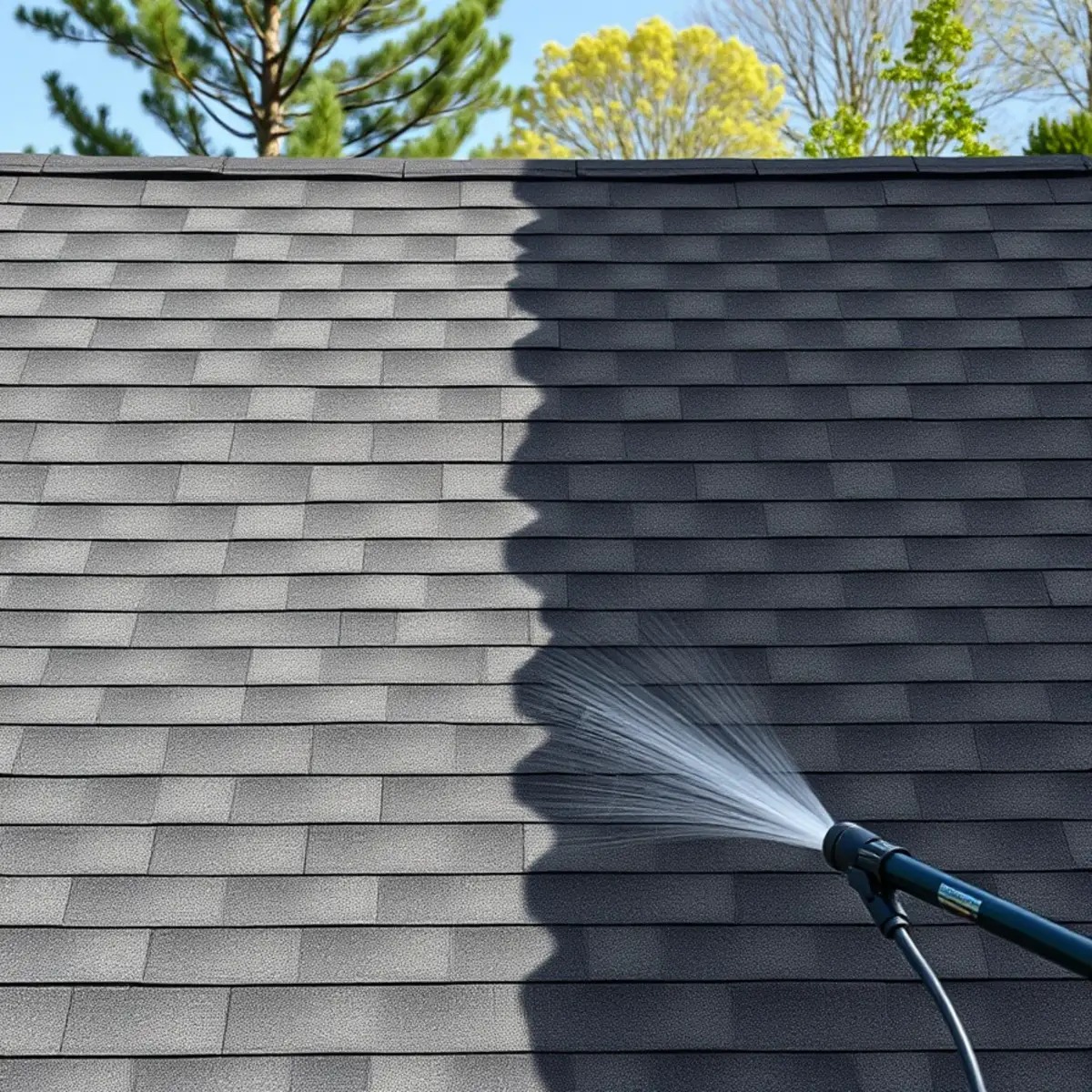
Black streaks, moss, and lichen shorten a Massachusetts roof's life. Here's the science, why soft washing beats pressure washing, and how often to clean.
Your roof is one of the most expensive components of your home, yet it's the surface homeowners think about least until a stain, a leak, or a sky-high replacement quote forces the issue. In Massachusetts, where humidity, snow load, heavy shade, and coastal salt air all conspire against asphalt shingles, a neglected roof ages faster and fails sooner than it should. This guide explains why routine roof cleaning matters here, what those dark streaks really are, and how the right cleaning protects both your shingles and your wallet.
Why Massachusetts Roofs Need Cleaning More Than Most
New England gives roofs a workout that drier climates never see. Long, humid summers feed algae and moss. Heavy winter snow sits on north-facing slopes for weeks, holding moisture against the shingles through repeated freeze-thaw cycles. Spring dumps pollen and tree debris into valleys, and coastal towns add salt-laden air that corrodes metal flashing and fasteners. The result is a roof that stays damp far longer than it should, which is exactly the environment organic growth needs to take hold.
That constant moisture is the real enemy. Shingles are designed to shed water fast, but when algae, moss, and lichen colonize the surface, they trap dampness against it. Add Massachusetts's aging housing stock to the picture and the stakes climb. Many homes across Greater Boston, MetroWest, the South Shore, and Worcester County still wear asphalt shingle roofs that are well into the back half of their service life. For those roofs, every season of trapped moisture is borrowed time, and proactive cleaning is one of the cheapest ways to push out the day you need a full replacement.
What Grows on Massachusetts Roofs (and Why Our Climate Makes It Worse)
Three organisms do the damage here, and they usually arrive in order. Spotting which one you have tells you how long the problem has been building.
- Algae: Appears as black or dark-green streaks, almost always starting on north-facing and shaded slopes. It's mostly cosmetic at first, but it's a reliable signal that the surface stays wet long enough for biology to thrive.
- Moss: A thick, green, carpet-like growth that holds water like a sponge. Moss lifts and curls shingle edges over time, and it's the most physically damaging of the three.
- Lichen: A crusty, gray-green organism (part algae, part fungus) that roots into the shingle surface and is notoriously stubborn to remove. Lichen on a roof is a strong sign it's been neglected for years.
Our climate accelerates all three. Humidity gives spores the moisture they need; tree coverage common in suburban Massachusetts keeps slopes shaded and slow to dry; and the freeze-thaw cycle works moisture deeper into any gap that moss has pried open. Homes ringed by mature trees, the norm in towns like Newton and Concord, almost always see the heaviest growth because shade and falling debris feed the cycle year-round.
Black Streaks Explained: Algae Feeding on Shingle Limestone
Those dark vertical stains running down your roof are not dirt, soot, or "aging." They're a blue-green algae called Gloeocapsa magma. It feeds on the limestone filler manufacturers blend into asphalt shingles, and it spreads on airborne spores. That's why one streaky roof in a neighborhood usually means several. The streaks run downward because rain carries spores and nutrients down the slope, seeding new colonies as the water travels.
A protective sheath lets the algae survive harsh sun and dry spells, which is exactly why a quick rinse does nothing lasting. You can wet the surface and it still grows back, because the colony isn't dead. Killing it requires the right chemistry, not more water. This is also why an algae stain that looks "merely cosmetic" deserves attention: it confirms your shingles hold moisture, and where algae lives, moss and lichen tend to follow.
Moss and Lichen: How They Lift Shingles and Trap Moisture
Moss is the organism that turns a cosmetic problem into a structural one. As it thickens, its root-like rhizoids work into the seams between shingles and physically lift the edges. Once an edge curls up, wind-driven rain and snowmelt get underneath, where shingles were never designed to keep water out. Moss also acts like a wet blanket, holding dampness against the roof deck long after the rest of the slope has dried, and that prolonged moisture is what rots wood and corrodes fasteners.
Lichen is even more tenacious. It anchors into the shingle mat and pulls away protective granules as it spreads. Because lichen is so deeply rooted, it's one of the clearest signs a roof has gone too long without care, and it's one of the reasons professional moss and lichen removal relies on dwell time and biology rather than scrubbing or blasting.
How Roof Contamination Shortens Your Roof's Lifespan
Asphalt shingles last because of two things: a sound asphalt mat and a tight layer of protective granules that shields that mat from UV and weather. Organic growth attacks both. Moss and lichen physically dislodge granules, algae keeps the surface wet enough to break down the mat, and trapped moisture cycles through every freeze and thaw all winter. Strip away granules and the asphalt underneath bakes, dries, and cracks years ahead of schedule.
The financial logic is hard to argue with. A periodic soft wash is a maintenance expense; a roof replacement is a major renovation that can run many thousands of dollars depending on square footage and roof pitch. Keeping growth in check is one of the few maintenance steps that genuinely buys back years of a roof's rated lifespan and delays premature aging, which makes it especially valuable on the older roofs so common across Massachusetts.
Roof Algae and Moss as a Cause of Leaks, Rot, and Water Damage
Once moss lifts a shingle edge, the failure path is predictable. Water finds the gap, soaks the underlayment, and reaches the wood decking. From there it migrates into the attic, raising attic moisture, feeding mold, and rotting framing and sheathing. By the time a homeowner notices a ceiling stain, the damage has usually been building quietly for a season or two. The repair is rarely just a few shingles at that point; it's decking, insulation, and sometimes drywall. Catching and killing growth early is the difference between a cleaning bill and a construction project.
Energy Efficiency: How a Dark, Algae-Stained Roof Raises Cooling Bills
Algae streaks are dark, and dark surfaces absorb solar heat. As stains spread, your roof reflects less and absorbs more, which pushes attic temperatures up during Massachusetts's humid summers. A hotter attic means your air conditioning works harder and runs longer to hold the same indoor temperature. Restoring the shingle surface closer to its original, more reflective color helps the roof shed heat the way it was designed to. We won't put a hard dollar figure on the savings because every home's insulation, ventilation, and HVAC setup differs, but the direction is clear: a clean roof runs cooler than a stained one.
Curb Appeal and Home Value Impact of a Clean Roof
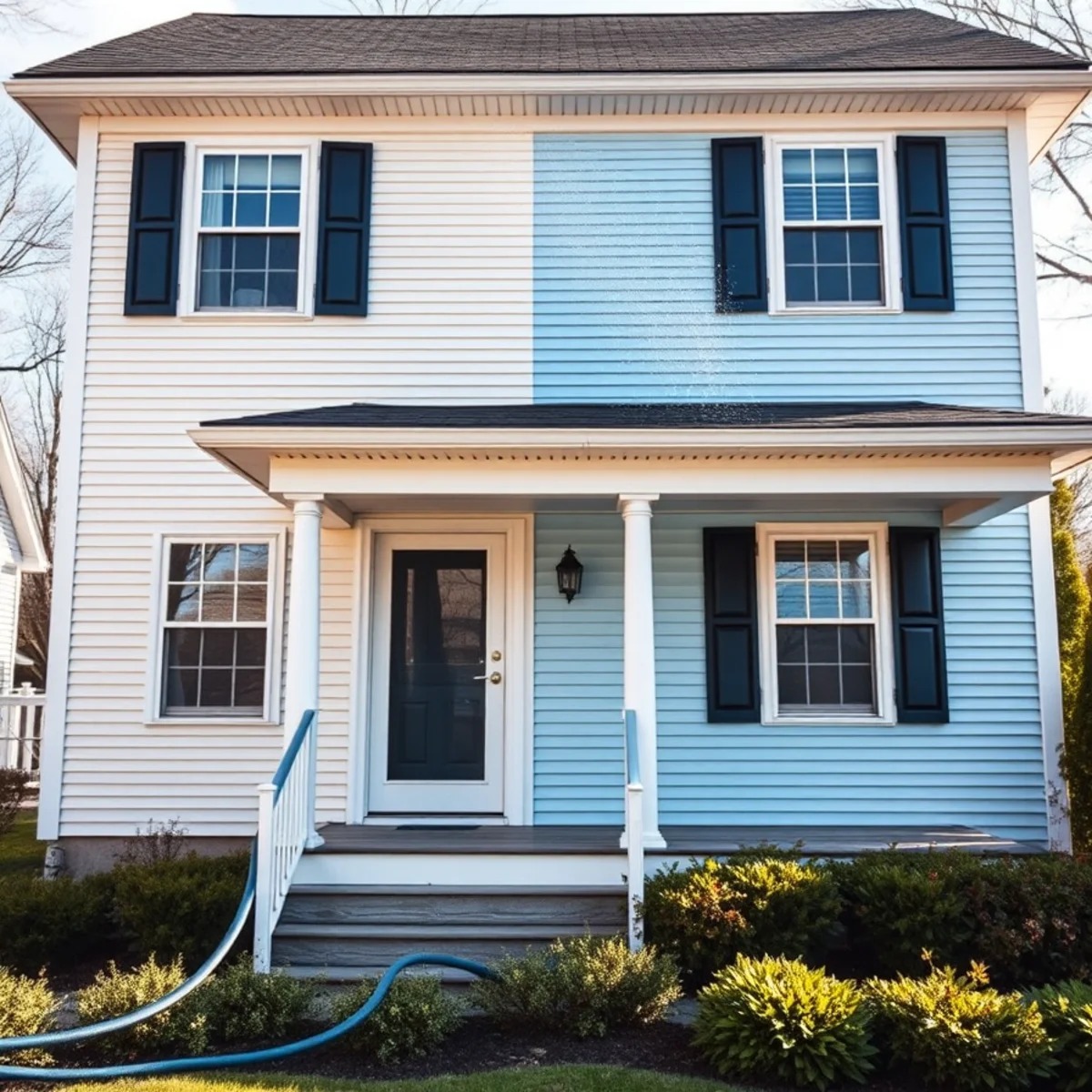
A roof is one of the largest visible surfaces on any house, so dark streaks drag down the whole property's appearance no matter how sharp everything else looks. For homeowners thinking about selling, a clean roof signals a maintained home and removes an easy negotiating point for buyers worried about the cost of replacement. Even if you're not selling, the roof sets the tone for the entire exterior. Pairing a roof treatment with a full house washing restores curb appeal across the whole home in a single visit, which matters in established Massachusetts neighborhoods and in communities with HOA appearance standards.
Health and Indoor Air: Mold, Mildew, and Spores From a Dirty Roof
The growth on your roof doesn't stay on your roof. Spores wash and blow onto siding, decks, and walkways, and the moisture moss traps can drive mold into the attic and wall cavities below. Once mold and mildew establish indoors, they degrade indoor air quality and become a health concern, not just a cosmetic one. Keeping the roof clean removes a major source of spores before they spread, which is one more reason roof cleaning belongs in the same conversation as broader exterior maintenance like mildew and mold removal.
Soft Washing vs Pressure Washing: Why Low-Pressure Wins
Here's the most important thing any Massachusetts homeowner can learn about roof cleaning: you don't need more pressure; you need the right chemistry. Pressure does not kill algae at the root. Biodegradable cleaning solutions do.
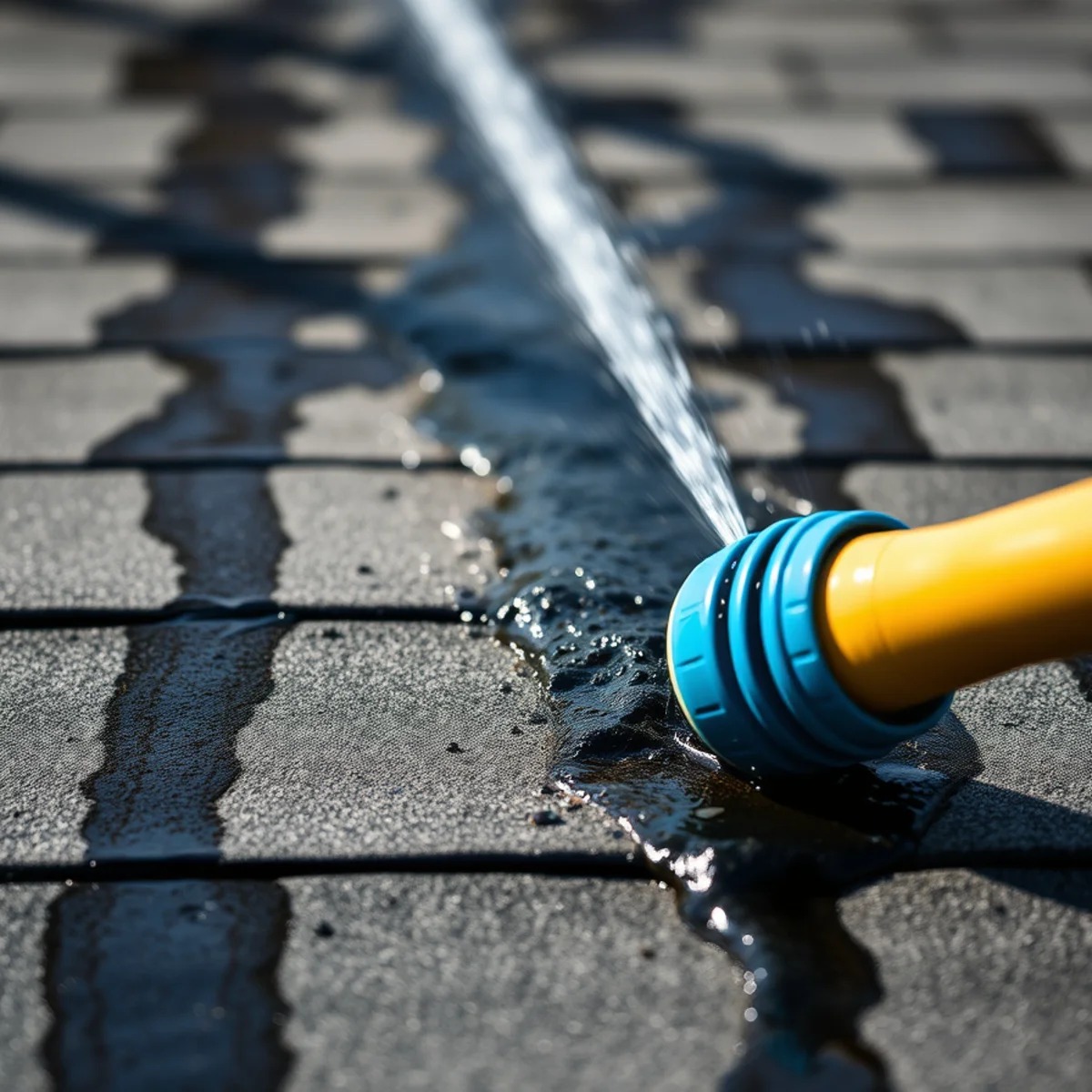
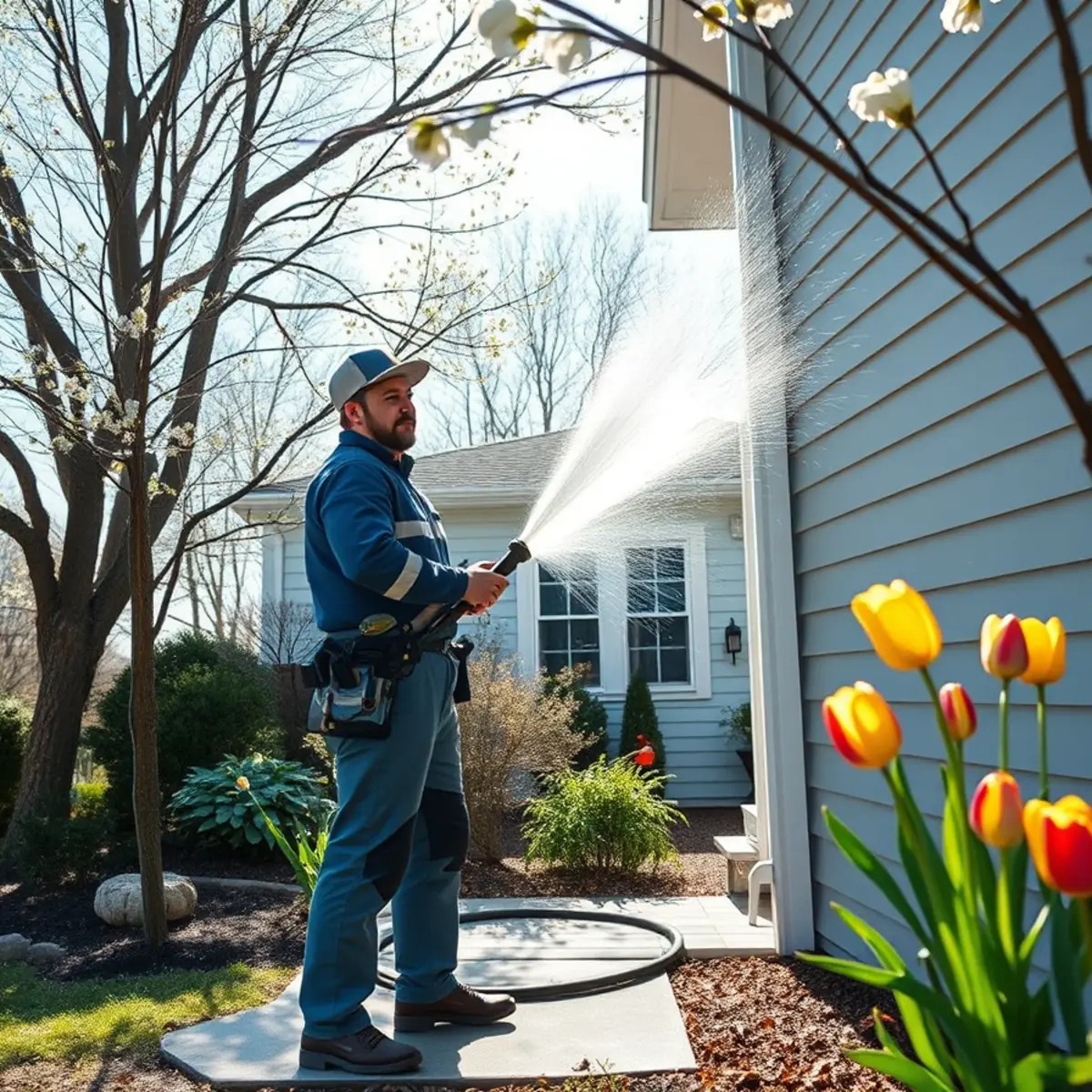
Soft washing is the low-pressure, non-pressure approach the industry recommends for asphalt shingles, and it's the method the Asphalt Roofing Manufacturers Association (ARMA) points to for cleaning shingle roofs. Instead of force, it uses a carefully diluted, bleach-based solution (sodium hypochlorite) combined with surfactants that let the biocide cling and dwell. The solution kills algae, moss, and lichen at the root, then a gentle rinse carries the dead growth away. Because the organisms are killed biologically rather than scraped off, results last far longer, often keeping a roof clear for years rather than the few months a surface blast might buy.
Why You Should Never Pressure Wash Asphalt Shingles
High-pressure water strips the protective granules that give shingles their lifespan and color, and it can force water up under the courses where it doesn't belong. A pressure-washed roof may look clean for a season, but you've traded years of service life for one quick result, and you may have voided your manufacturer warranty in the process. Most shingle warranties expect reasonable maintenance and explicitly prohibit high-pressure cleaning; pressure washing is one of the fastest ways to turn a covered roof into an uncovered one.
The right pressure for asphalt shingles is well under 100 PSI, essentially a soft rinse. For comparison, a concrete driveway tolerates 2,000 to 3,000 PSI, vinyl siding 100 to 500 PSI, and a metal roof 500 to 800 PSI. Asphalt shingles sit at the most delicate end of that scale, which is exactly why they get chemistry instead of force.
How Professional Soft Wash Roof Cleaning Works
A proper soft wash is a careful, staged process, not a job to improvise with a rented machine:
- A thorough inspection of slopes, valleys, and flashing before any product is applied
- A pre-soak and full protection of surrounding plants, shrubs, and landscaping, with attention to runoff and any well water on the property
- Application of a balanced, eco-conscious cleaning solution matched to the type and severity of growth
- Adequate dwell time so the biocide kills algae, moss, and lichen down to the root
- A controlled low-pressure rinse that won't disturb granules
- A final walk-around to confirm the roof is fully treated
The technique, the dilution, the dwell time, and the safety precautions all matter, which is why dedicated roof cleaning is a specialized service rather than a weekend DIY project.
Signs Your Massachusetts Roof Needs Cleaning Now
You don't need to climb up to assess most roofs. From the ground or an upstairs window, watch for:
- Visible black streaks, especially on north-facing and shaded slopes
- Green, fuzzy moss along shingle edges, in valleys, or where the roof meets a wall
- Crusty gray-green lichen spots that don't rinse away
- Granules collecting in gutters or at downspout outlets
- Organic buildup where the roof line meets the gutters
That last point is worth a note: roof cleaning pairs naturally with gutter cleaning. Debris loosened during a roof treatment needs somewhere to go, and clogged gutters trap moisture right at the roofline, which only feeds more growth.
How Often Should You Clean Your Roof in Massachusetts?
There's no single answer, because shade, tree cover, and roof orientation all play a role. As a general guide, most Massachusetts homes benefit from a professional roof inspection and cleaning every two to three years. Heavily shaded, tree-surrounded, or coastal properties may need attention more often, while a sunny, open lot can sometimes stretch a little longer. The honest answer is that your roof tells you: when streaks reappear or moss starts to thicken, it's time, regardless of the calendar.
Best Time of Year for Roof Cleaning in New England
Spring and fall are the sweet spots in New England. Early spring, once temperatures hold reliably above freezing, clears the algae and moss that built up over a damp winter and follows naturally on the heels of pollen season. Late fall, after the leaves drop and valleys fill with debris, sets the roof up to head into winter clean and dry. Aim for mild, dry days and avoid hard-freeze stretches and peak-storm windows, since cleaning solutions work best at moderate temperatures and the roof should be allowed to dry properly.
How Much Does Roof Cleaning Cost in Massachusetts?
Roof cleaning is priced by the job, and a handful of factors drive the number: the square footage of the roof, its pitch (steeper roofs are harder and slower to work safely), the type and severity of growth, the number of stories, and access. A lightly streaked single-story ranch is a very different job from a steep, heavily mossed colonial shaded by oaks. Nationally, soft wash roof cleaning is often quoted in the range of roughly a few hundred dollars on up, but the only number that means anything is the one tied to your specific roof after it's been looked at. Whatever the figure, it's a maintenance cost set against the much larger cost of premature replacement, which is what makes regular cleaning such a sound investment.
Preventing Regrowth: Zinc and Copper Strips and Maintenance Plans
Once a roof is clean, the goal is to keep it that way. Algae and moss are sensitive to trace metals, so installing zinc or copper strips along the ridge lets rainwater wash a small amount of metal down the slope, slowing regrowth between cleanings. Some homeowners also choose algae-resistant shingles when it's time to re-roof, which embed copper granules for the same reason. None of these are permanent fixes, but paired with a simple maintenance schedule, they extend the time between treatments and keep spore regrowth in check. Routine gutter brightening and seasonal exterior cleaning round out a plan that keeps the whole home ahead of the growth cycle.
DIY Roof Cleaning Risks vs Hiring a Professional
It's tempting to grab a ladder and a garden sprayer, but roof cleaning carries real risks. Wet shingles are slippery and genuinely dangerous to walk on. The wrong mix can damage shingles or kill the landscaping below, and getting the dilution and dwell time right takes experience. Use a product or method your manufacturer prohibits and you can void the warranty on the most expensive surface of your home. There's also the chemistry itself: sodium hypochlorite has to be diluted correctly and the surroundings pre-soaked and rinsed, or you trade a clean roof for dead shrubs.
A fully insured professional brings the right equipment, the correct biodegradable chemistry, runoff and landscaping protection, and the safety training to do the job without putting you on a roof. For most homeowners the longer-lasting result and the peace of mind make professional soft washing the smarter value.
Why Choose a Local Massachusetts Roof Cleaning Company
Roofs in Massachusetts face problems an out-of-state national brand simply doesn't plan for: coastal salt-air corrosion, inland humidity and pollen, freeze-thaw cycles, dense suburban tree canopies, and the older architecture that fills towns from the South Shore to Worcester County. A local company that works on these roofs every week understands regional roof types, seasonal timing, and HOA expectations, and shows up to stand behind the work. Wash Bros is a family-run, brothers-owned company, fully insured with a certificate of insurance available on request, and we treat your property the way we'd treat our own.
Protect Your Roof With Wash Bros
A clean roof lasts longer, looks better, runs cooler, and protects everything underneath it. At Wash Bros, founded in 2023 by brothers Louis and Dominic, we've built our reputation on careful, dependable exterior cleaning across Massachusetts, backed by a 5.0 average across 130 Google reviews. We're fully insured, and we use safe, low-pressure soft washing that kills algae and moss at the root rather than wearing your shingles out.
Ready to get those streaks gone for good? Contact us for a free, no-obligation estimate, or call directly at +1 (351) 242-0666. We'll inspect your roof, explain exactly what it needs, and give you an honest quote, no pressure, just clean results.
Frequently Asked Questions
Need Professional Exterior Cleaning?
Wash Bros provides affordable, dependable pressure washing across Massachusetts. Get your free estimate today.
Get a Free Estimate