Gutter cleaning protects drainage; gutter brightening removes black tiger stripes and oxidation. Here's the difference, the cost, and a Massachusetts schedule.
If your gutters look streaked and tired even right after a cleaning, you're not imagining it, and you didn't get ripped off. You ran into two different jobs that get confused for one. Gutter cleaning and gutter brightening solve separate problems, and knowing which one you actually need keeps Massachusetts homeowners from spending money on the wrong fix.
Gutter Cleaning vs Gutter Brightening: What's the Difference?
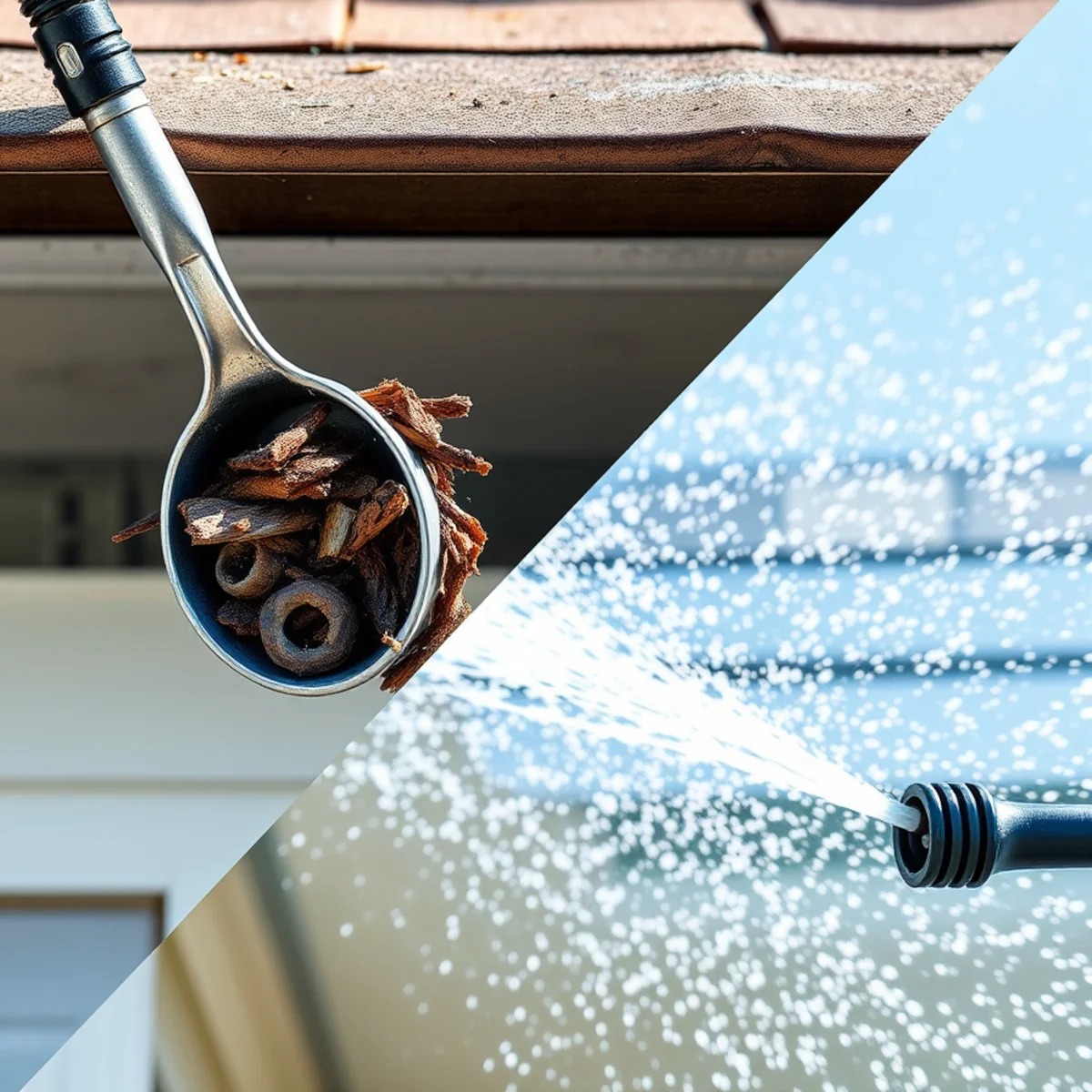
Here's the short version. Gutter cleaning is about function. Gutter brightening is about appearance. One keeps water moving away from your foundation; the other restores the look of the gutter's outer face. They sound interchangeable, but they happen in different places, use different methods, and run on different schedules.
You can have spotlessly clean troughs that still look filthy from the street. You can also have great-looking gutters that are quietly clogged and ready to overflow in the next nor'easter. That gap is exactly why these are billed as two services instead of one. Most homes around here, under heavy tree canopy and four hard seasons, end up needing both at some point.
The rest of this guide breaks down what each service does, what causes those black "tiger stripes," why pressure washing alone won't touch them, and how often you should be doing each one in the New England climate.
What Is Gutter Cleaning?
Gutter cleaning is the maintenance most homeowners already picture. It's interior debris removal: the goal is a clear channel so rainwater gets caught at the roofline and carried away from your foundation, siding, and landscaping. This is the functional job, the one that actually protects the structure of the house.
A thorough cleaning typically covers:
- Removing leaves, twigs, pine needles, seed pods, and shingle grit from inside the troughs by hand or with specialized tools.
- Flushing the gutters and downspouts with water to confirm drainage all the way to the ground.
- Clearing clogs at the downspout elbows, where wet debris loves to pack into a plug.
- Checking for sagging sections, loose fasteners, or separated seams that need attention before winter.
Why Drainage Matters in New England
This isn't cosmetic. When a gutter clogs, water overflows the back edge and runs straight down your fascia and behind the siding. Over a few seasons that's rotted fascia boards, stained siding, and water pooling against the foundation, the last thing you want before a Massachusetts freeze-thaw cycle. Clogged gutters that hold standing water in late fall freeze solid, and that trapped ice feeds the ice dams that pry up shingles and force meltwater under the roof deck.
That's why cleaning is a recurring functional need, not a one-time fix. It protects against water damage and foundation damage, and in our climate it's a real factor in preventing ice dams.
What Is Gutter Brightening?
Gutter brightening, sometimes called gutter whitening, handles something cleaning can't reach: the dark vertical streaks running down the outside face of your gutters. Scooping debris out of the trough does nothing for those stripes, because the stains live on the exterior, not inside.
Gutter brightening is exterior cosmetic restoration. The right cleaning solution and careful hand-detailing break down:
- Black and gray vertical streaking, the tiger stripes (also called zebra stripes), caused by roof runoff and airborne grime.
- Oxidation and chalky residue on aluminum, where the painted finish has started to break down.
- Mold and mildew, algae, tree sap, and pollen that bond to the gutter face.
Done correctly, the original finish comes back and the gutters look close to new without being repainted or replaced. It's one of the most dramatic before-and-after results in exterior cleaning because the change is visible from the curb.
Quick Comparison: Gutter Cleaning vs Gutter Brightening at a Glance
| Gutter Cleaning | Gutter Brightening | |
|---|---|---|
| Purpose | Function and drainage | Appearance and finish |
| What's treated | Debris, clogs, downspouts | Stains, oxidation, streaks |
| Inside vs outside | Inside the trough | Outside (the visible face) |
| Function vs appearance | Protects the house | Restores curb appeal |
| Method | Hand removal + flushing | Detergent + hand-scrub + low-pressure rinse |
| Frequency (MA) | Twice a year (spring + fall) | About once a year |
| Typical cost | Varies by size/stories/debris | Roughly $80-$240 (estimate) |
Bookmark this table. If you only remember one thing: cleaning is inside and functional, brightening is outside and cosmetic.
What Are Tiger Stripes (Zebra Stripes) and What Causes Them?
Tiger stripes are those black or gray vertical streaks that drip down the front of light-colored gutters. They're easily the most common gutter complaint we hear, and almost everyone assumes a clogged or dirty inside is the cause. It isn't.
Tiger striping is a two-part problem. First, the painted aluminum slowly oxidizes in the sun and weather, leaving a faint chalky residue of aluminum oxide on the surface. That chalky layer is slightly sticky on a microscopic level. Then roof runoff washes over the front lip every time it rains, carrying dirt, pollen, asphalt shingle residue and mineral granules, tar, tree sap, and mold and mildew. That gunk grabs onto the oxidized film in vertical runs, following the path the water takes off the roof edge. The result is striping that mirrors exactly where water sheets over the gutter.
So the stains aren't dirt sitting in your gutters. They're a chemical bond on the outside face, which is precisely why cleaning out the trough leaves them untouched.
Why Gutter Cleaning Alone Won't Remove the Black Streaks
This is the part that frustrates homeowners. You pay for a cleaning, the inside is spotless, and from the street the gutters look exactly as streaked as before. Nothing went wrong. Cleaning physically removes debris from inside the channel. It never touches the oxidation and bonded grime on the exterior surface.
And here's the bigger mistake people make next: blasting the streaks with a high-pressure nozzle. Pressure washing alone fails on tiger stripes, and it's worth understanding why. The stripes are a chemical-bonding problem, not a strength problem. You don't need more force to break a chemical bond, you need the right chemistry to dissolve it. High PSI can dent thin aluminum, etch the finish, or drive water up behind the gutter, all without lifting the actual stain. Brute force loses to oxidation removal chemistry every time. That's the same principle behind soft washing every delicate exterior surface: the detergent does the work, not the pressure.
How Professional Gutter Brightening Works Step by Step
Real brightening is a methodical process, not a quick rinse. Here's how a careful crew approaches it:
- Pre-rinse and inspect. Knock off loose surface dust and read the finish to gauge how heavy the oxidation is.
- Apply an aluminum-safe detergent. A purpose-built metal-safe chemistry with the right surfactant is brushed or applied onto the gutter face and given time to dwell so it can break the bond between the aluminum oxide layer and the bonded grime.
- Hand-scrub with non-marring pads. This is the heart of the job. Hand-scrubbing with non-marring pads lifts the tiger striping evenly without scratching or dulling the paint. There's no shortcut for this part; it's what makes the result uniform instead of blotchy.
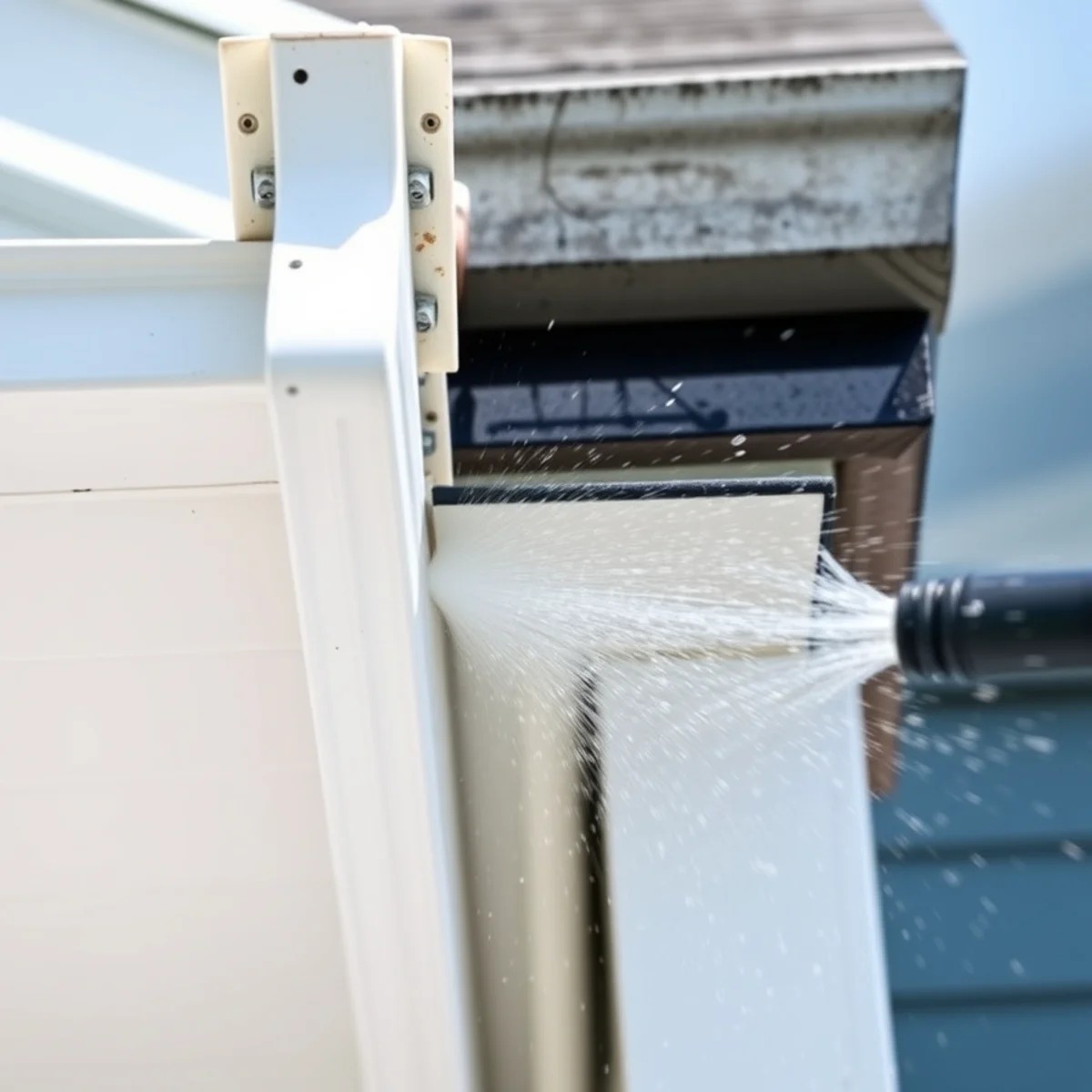
- Low-pressure soft-wash rinse. A low-pressure rinse flushes the dissolved residue away and reveals the restored finish. The soft wash approach protects the metal while still clearing everything off.
Because brightening is detail work done by hand at height, evenness is what separates a professional result from a DIY streak you can spot from the driveway.
Is Gutter Brightening Safe for Painted Aluminum Gutters?
Yes, when it's done with low pressure and the correct chemistry. The danger is never the cleaner; it's the pressure. Painted aluminum gutters are thin, and high PSI will bend, dent, or etch them, and it can blow water behind the fascia where you'll never see the rot starting.
The safe approach is the soft wash: an aluminum-safe detergent does the chemical work, hands and non-marring pads do the agitation, and only a gentle low-pressure rinse touches the metal. No aggressive tip, no ladder-mounted blasting. The same logic governs how we treat asphalt shingles (soft washed under 100 PSI) and vinyl siding (a careful 100-500 PSI). The surface dictates the method. For gutters, gentle wins.
If you're after the chemistry behind stubborn chalking and weathered finishes specifically, that's the focus of our oxidation removal work, and it carries straight over to gutters.
Do You Need Both Services?
For most Massachusetts homes, the honest answer is both, just not always on the same schedule.
Gutter cleaning protects function: drainage, foundation, fascia, and ice-dam prevention. Skip it and you risk real structural damage. Gutter brightening protects appearance and finish: it pulls the oxidation and streaks off the face and keeps the metal from getting that permanent chalky look. Skip it and the house just looks neglected from the street even when it's structurally fine.
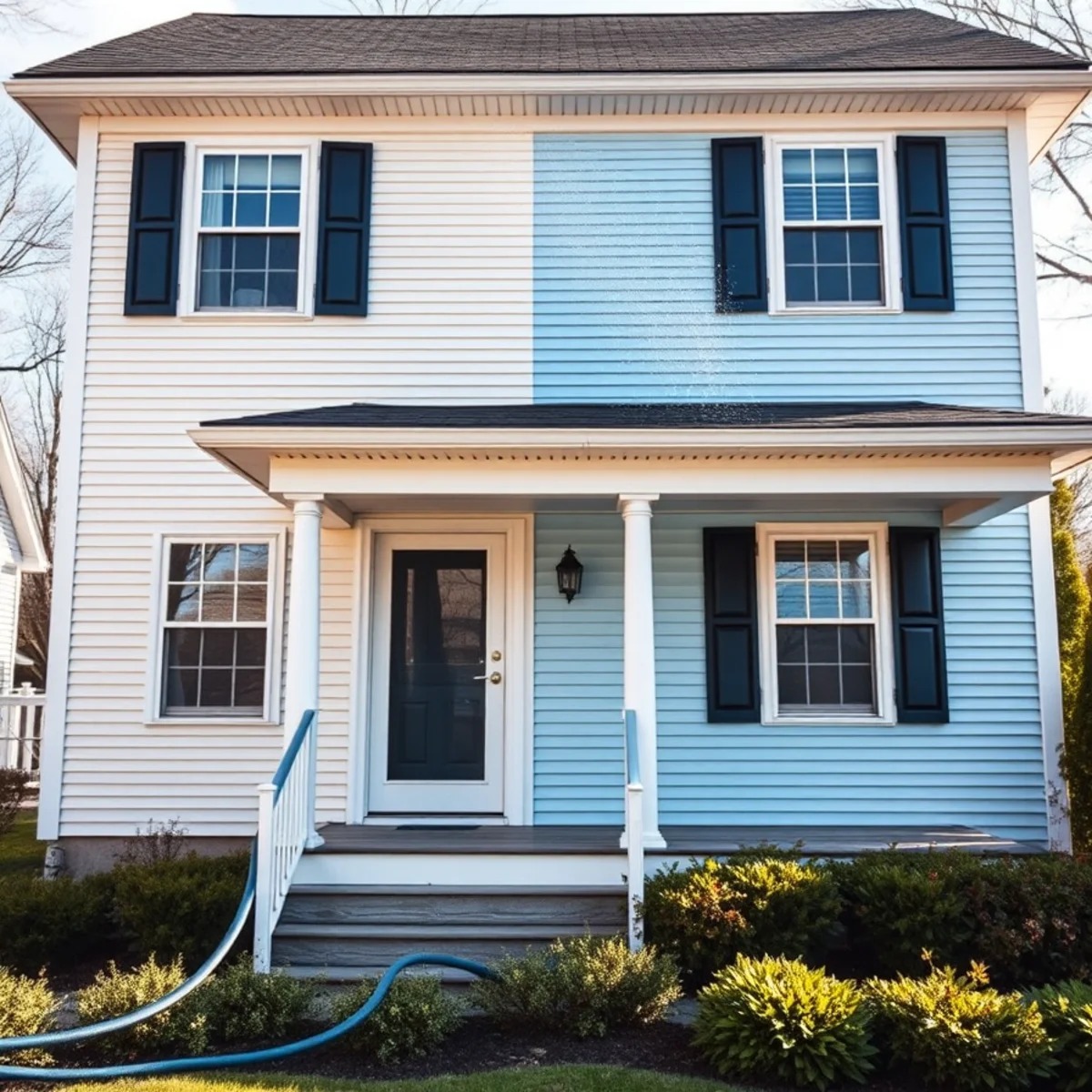
Because cleaning is non-negotiable and brightening is high-impact, most homes genuinely benefit from both. Pairing them with a full house washing makes the whole exterior read as cared-for, since fresh siding next to streaked gutters only makes the gutters look worse by contrast.
How Often Should You Clean vs Brighten Gutters in Massachusetts?
Frequency is where generic national articles fall apart. "Annually" doesn't survive a New England fall. Here's a realistic cadence for our climate:
- Clean twice a year: spring and fall. Spring clears the cement-like pollen sludge and seed pods. Fall is the critical one, a late-fall cleaning after the leaves drop is what keeps gutters draining through winter and helps prevent ice dams.
- Brighten about once a year. Oxidation and tiger striping build gradually, so an annual pass keeps the finish from chalking over permanently. Homes under heavy canopy or near the coast may want it a bit more often.
- Bundle the brightening with spring house washing. The most efficient move is to brighten when you're already having the exterior soft washed in late spring, after pollen season winds down.
Heavy tree cover changes the math. If oaks and pines hang over your roof, you may need an extra cleaning, full stop.
How Much Does Gutter Cleaning vs Gutter Brightening Cost?
Pricing depends on the house, so be skeptical of anyone quoting a flat number sight unseen. That said, here's honest guidance.
Gutter cleaning price drivers: the size of the home, the number of stories, total linear footage of gutters, roof pitch and access, and how much debris has packed in since the last cleaning. A single-story ranch with light leaf load is quick; a steep two-story colonial under oaks is a different job.
Gutter brightening tends to land in roughly the $80-$240 range as a general industry estimate, again scaling with footage, stories, and how heavy the oxidation is. Treat that as a ballpark, not a quote.
Bundling discounts are the real savings. When a crew is already set up along your roofline for a cleaning, or on site for house washing and roof cleaning, adding brightening costs far less than booking it as a separate trip. We don't publish flat prices because every home differs, but a quick look lets us give you an accurate number with no surprises.
DIY vs Hiring a Professional
Can you brighten gutters yourself? On a single-story garage you can reach safely, maybe. The home remedies people try, white vinegar, cream of tartar paste, dish soap, do have mild stain removal ability on light oxidation. But they have real limits. They're slow, they struggle with heavy tiger striping, and they tend to leave a blotchy, uneven result because you can't keep dwell time and scrubbing consistent across a whole run by hand from a wobbling ladder.
Then there's the safety math. Brightening means working along the entire roofline with a wet, slick surface and a cleaning solution in hand. On a two-story home that's genuinely dangerous ladder work, and ladder falls are among the most common serious home-improvement injuries. The downside of a slip badly outweighs the cost of a professional.
Pros get an even result because they control the chemistry, the dwell time, and the agitation across every foot of gutter, and they do it safely. When you hire, confirm the company is insured (we're fully insured, with a certificate of insurance available on request) and consider HIC registration for any larger contracting work. For exterior washing, insurance and surface-appropriate technique matter most.
Massachusetts-Specific Gutter Challenges
Our climate is hard on gutters in ways that out-of-state guides simply don't address:
- Heavy tree canopy. Tree-lined streets in Newton and the hardwoods and pines across Worcester County drop a steady load of leaves, sap, and acidic debris that both clog troughs and feed tiger striping.
- Distinct pollen waves. Spring tree pollen from April through June mixes with rain into a cement-like sludge that bonds fast. This is why a spring cleaning, then a late-spring brightening, lines up so well with the local calendar.
- Fall leaf load. The New England leaf drop is heavy and late. A fall cleaning before the first freeze is essential, not optional.
- Freeze-thaw and ice dams. Clogged gutters in winter trap ice. The freeze-thaw cycle turns a drainage problem into a roof-and-fascia problem fast.
- Asphalt shingle runoff. Most MA homes have asphalt roofs, which shed mineral granules and asphalt shingle residue that streak light-colored gutters.
- Coastal salt air. Along the South Shore and North Shore, salt-air corrosion and humidity speed aluminum oxidation, so homes near the water in towns like Quincy often need brightening more often.
Signs Your Gutters Need Cleaning vs Brightening
Quick self-assessment from the ground:
You need cleaning (function) if:
- Water spills over the edge during rain instead of running down the downspouts.
- Gutters look like they're sagging or pulling away from the fascia.
- You spot plants, saplings, or grass sprouting out of the trough.
- It's been more than six months, or a full season of leaf drop has passed.
You need brightening (appearance) if:
- The troughs are clear but the front face still shows black vertical streaks.
- The finish looks dull, faded, or chalky even though there's no clog.
- You're prepping to sell, list, or photograph the home.
Overflow and sagging are functional alarms. Streaks and chalk are cosmetic ones. They often show up together, which is why both services get bundled.
How Brightening Fits Into a Full House Washing Package
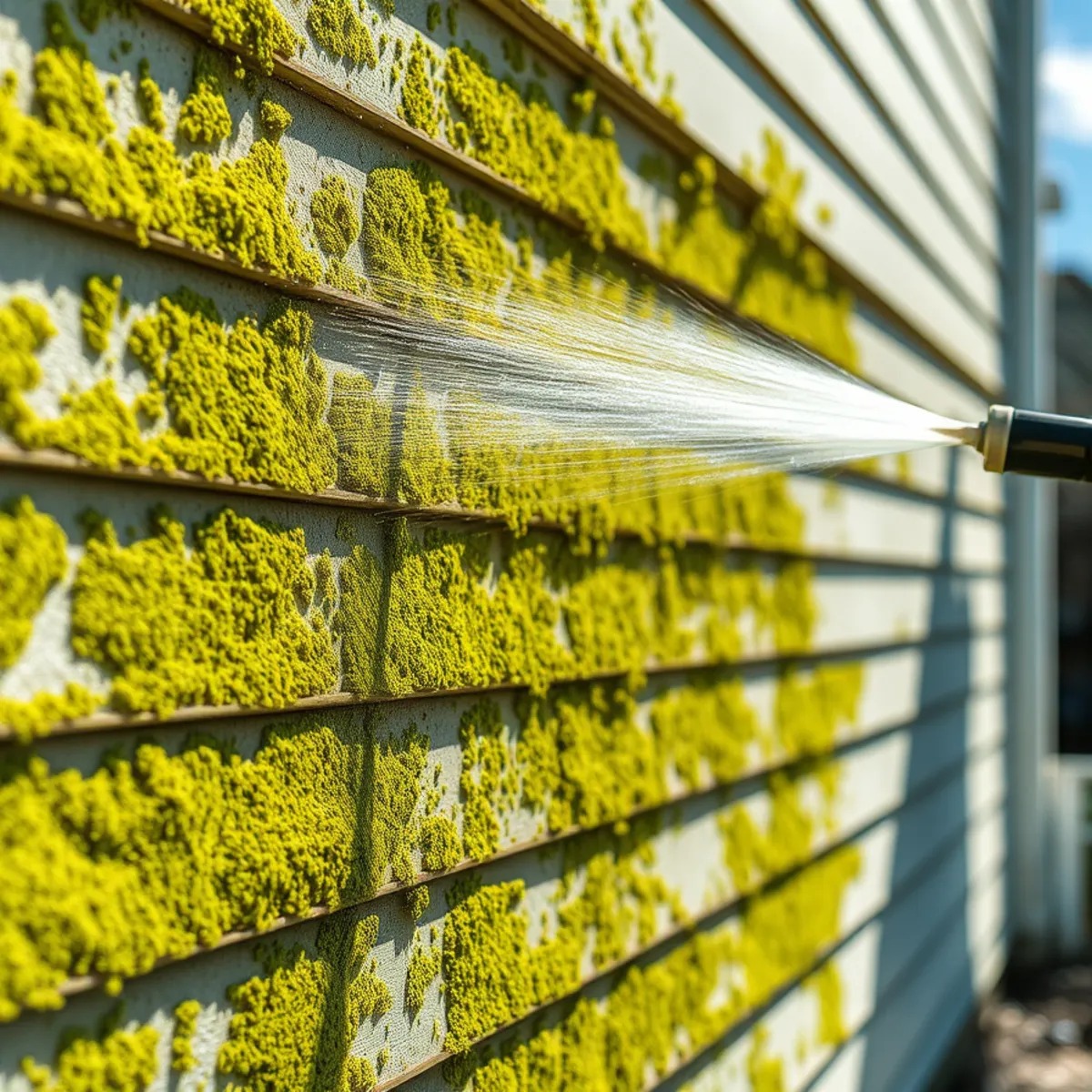
Brightening rarely makes sense as a lone trip. It shines as part of a top-down exterior refresh. When a crew is already on site, the natural package is soft washing the siding, roof cleaning to clear algae and moss, flushing and brightening the gutters, and detailing the downspouts and fascia in the same visit.
Doing it all at once isn't just convenient, it looks better. Clean siding next to streaked gutters draws the eye straight to the gutters. Handling everything together gives you a uniform result and spreads the setup and access cost across multiple services. Homeowners across coastal communities like Scituate and inland towns alike tend to schedule it this way.
Maintenance Tips to Prevent Clogs and Oxidation
You can stretch the time between services with a little upkeep:
- Install gutter guards if you're under heavy canopy. They won't make cleaning unnecessary, but they cut clog frequency and keep the big debris out.
- Stick to a schedule. A spring-and-fall cleaning calendar beats waiting for an overflow to remind you.
- Trim overhanging branches. Less canopy directly over the roof means less leaf load, less sap, and slower tiger striping.
- Rinse the gutter face occasionally. A gentle low-pressure rinse between brightenings slows the buildup of bonded grime, though it won't undo existing oxidation.
- Address oxidation early. Light chalky residue is far easier to bring back than years of baked-on aluminum oxide, so don't let it go too long.
None of this replaces a real cleaning or brightening, but it meaningfully extends the intervals and protects the finish.
Get Bright, Clean, Functioning Gutters with Wash Bros
Whether your gutters need a functional clean-out, a cosmetic brightening, or both, Wash Bros makes it straightforward. We're a family-run, fully insured crew founded by brothers Louis and Dominic, serving homes across Massachusetts from Boston to the South Shore, and we'll tell you honestly which service your home actually needs, no upsell on work you don't. Call +1 (351) 242-0666 or contact us for a free, no-pressure estimate, and let's get your gutters working and looking their best.
Frequently Asked Questions
Need Professional Exterior Cleaning?
Wash Bros provides affordable, dependable pressure washing across Massachusetts. Get your free estimate today.
Get a Free Estimate