Salt, snow, and freeze-thaw quietly wreck Massachusetts concrete by spring. Here's the science, the warning signs, and how to prevent and reverse the damage.
In Massachusetts, the worst damage to your concrete happens quietly, sealed under a foot of snow, and you don't see it until the driveway dries out in March. By then the salt has already done its work. This guide explains exactly how salt and snow break concrete apart at the chemical level, what the damage looks like, how to prevent it, and why a post-winter wash and reseal is the single best thing you can do for your driveway, sidewalks, and steps.
Why Massachusetts Winters Are Brutal on Concrete
New England hands concrete a punishing combination: heavy snow, repeated freeze-thaw swings, and an enormous volume of road salt. MassDOT crews spread huge quantities of de-icing salt every season, with figures cited in the range of 500,000 tons or more in heavy winters (an oft-quoted estimate, not a guarantee). That salt does not stay on the road. Plow trucks push a slurry of brine onto driveway aprons and sidewalks, and your own tires track salty snowmelt across the slab every time you pull in.
Stack that on top of our freeze-thaw climate, where the temperature crosses 32 degrees dozens of times between November and April, and you have close to a worst-case scenario for flatwork. A driveway in Worcester County or on the South Shore can run through more freeze-thaw cycles in one season than a slab in a milder state sees in several years. The result shows up as pitting, flaking, and crumbling edges that age a property fast.
The frustrating part is the timing. The damage is cumulative and hidden. You spread de-icer in January, the slab soaks up brine, and the harm doesn't reveal itself until the snow clears and everything dries out. That "spring reveal" is the moment most homeowners finally notice the problem, and it's also the ideal moment to act.
How Concrete Gets Damaged in Winter: The Science Explained Simply
Concrete looks like solid rock, but it isn't. It is a porous material laced with microscopic capillaries and pores. Those tiny channels absorb water like a sponge, and water is the agent behind almost every kind of winter concrete failure.
There are two separate attacks happening at once:
- Physical: Water seeps into the pores, freezes, expands, and pries the concrete apart from the inside. This is the freeze-thaw cycle.
- Chemical: Chloride from road salt and ice melt soaks into the slab, where it accelerates moisture intrusion and, in some cases, reacts with the cement paste itself to form destructive new compounds.
Both attacks exploit the same weakness, which is the concrete's ability to absorb and hold water. The more saturated the slab, the more damage each cold snap delivers. Understanding that chain, from porosity to water absorption to freeze-thaw expansion to surface failure, is the key to protecting your concrete instead of just reacting to the wreckage.
The Freeze-Thaw Cycle: Why Water Inside Concrete Cracks It Apart
When water freezes, it expands by roughly 9 percent. That's a fixed property of water, and it's the entire problem.
Here's the sequence. Snowmelt or rain soaks into the concrete's pores and capillaries. Overnight the temperature drops below freezing, and the trapped water turns to ice. As it expands, it pushes outward against the surrounding pore walls with real force. Come morning the sun warms the slab, the ice melts, the pressure releases, and the pore refills with water, ready to do it again.
One cycle rarely cracks anything visible. But Massachusetts delivers these cycles relentlessly, sometimes more than once in a single day during shoulder seasons. Over a winter, that constant push-release-push fatigues the concrete from within, exactly like bending a paperclip back and forth until it snaps. The internal pressure exceeds the concrete's tensile strength (its ability to resist being pulled apart), and the surface begins to fail.
This is why air-entrained concrete matters. Quality concrete is poured with billions of microscopic air bubbles deliberately mixed in. Those bubbles act as tiny pressure-relief chambers, giving freezing water somewhere to expand without stressing the slab. Older slabs, hand-mixed pours, and concrete that wasn't properly air-entrained have no such relief valves, which is why they scale and spall far faster in our climate.
How Road Salt and De-Icers Accelerate Concrete Damage
Snow alone is hard on concrete. Salt makes it dramatically worse. Here's what actually happens when you spread a de-icer.
Salt Keeps Concrete Wetter, Longer
Rock salt (sodium chloride) and most ice melts are hygroscopic, meaning they attract and hold moisture from the air. Salt residue sitting on your slab keeps the surface damp long after it would otherwise have dried. More moisture in the pores means more water available to freeze, expand, and crack the concrete during the next cold snap. In effect, salt loads the gun for freeze-thaw.
Chloride Intrusion
The chloride ions in de-icing salt are small and aggressive. They penetrate deep into the concrete through its capillaries, a process called chloride intrusion. Once inside, that chloride-laden brine lowers the freezing point of the trapped water unevenly, which can create more freeze-thaw events at different depths and increase internal stress. On reinforced concrete it also corrodes embedded steel, but for residential flatwork the bigger issue is surface destruction.
Calcium Oxychloride: The Hidden Chemical Attack
Here's the part most articles skip. Calcium chloride and magnesium chloride ice melts, often marketed as the "concrete-safe" fast-acting options, can chemically react with calcium hydroxide in cured concrete to form calcium oxychloride (CAOXY). This reaction creates an expansive crystal inside the concrete that physically forces the material apart, even at temperatures well above freezing. So a de-icer sold as gentle can, over time, drive its own form of internal cracking. No common de-icing salt is truly harmless to concrete; some are simply less harsh than others.
Spalling, Scaling, and Pitting: What Salt Damage Actually Looks Like
When homeowners across MetroWest and Central MA call us in spring, they usually describe the same handful of symptoms. Knowing the vocabulary helps you gauge severity.
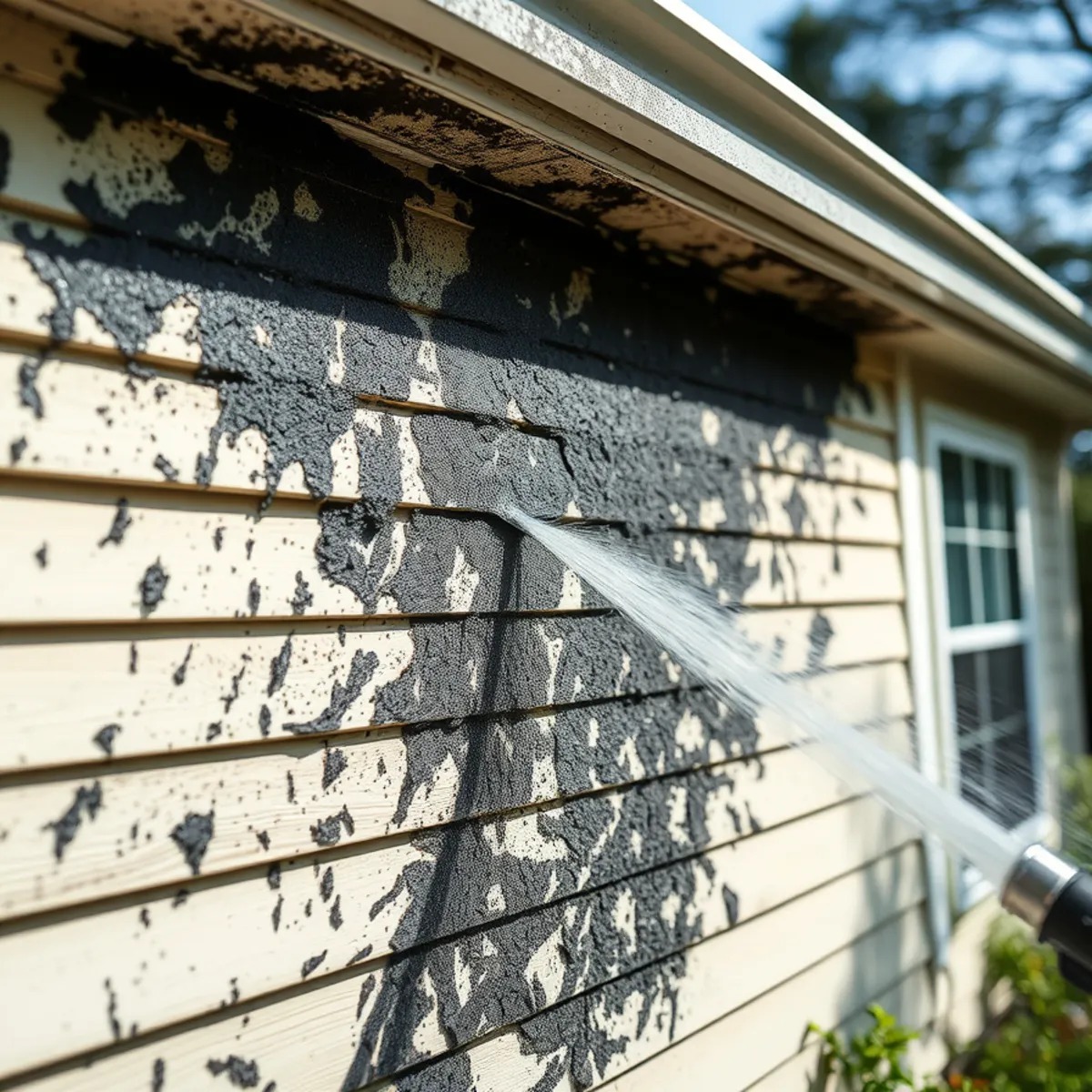
- Spalling: Chunks, chips, and flakes break off the surface, often exposing the rough stone aggregate underneath. Spalling is the most serious common form of freeze-thaw and salt damage, and once it starts it accelerates.
- Concrete scaling: The top layer peels and sloughs away in thin sheets, leaving a rough, sandy-looking surface. Concrete scaling is the classic signature of salt plus freeze-thaw on the wearing surface.
- Pitting: Small craters and divots pock the surface. If your driveway looks pitted or feels gritty and sandy in spring, that's de-icer damage eroding the cement paste between the aggregate.
- Surface flaking: Early, thin peeling that often precedes full scaling. Catching it here is far better than catching it later.
If your concrete looks pitted, sandy, or like the top skin is lifting off, you're seeing the combined work of absorbed water freezing and chloride chewing the paste. The aggregate showing through is the floor of how deep the damage already runs.
Efflorescence: The White Powdery Residue Salt Leaves Behind
That chalky white film blooming on your concrete, brick, or pavers after winter is efflorescence. It forms when water moves through the slab, dissolves natural salts and minerals inside, then evaporates at the surface and leaves the salt behind as a powdery crust. Road salt tracked into the concrete feeds the problem and leaves its own salt residue and salt stains.
Efflorescence is mostly cosmetic, but it's also a tell. It means water is moving through your concrete freely, which is precisely the condition that drives freeze-thaw and chloride damage. So while the white haze itself won't crack your slab, it's a flashing warning light that the surface is porous and unsealed. Light efflorescence can sometimes be dry-brushed off, but recurring or heavy deposits call for proper efflorescence removal and a follow-up sealer to stop water migration at the source.
Cracking and Surface Flaking: Early Warning Signs to Watch For
Catch these early and you can often prevent a full failure:
- Hairline cracks, especially in a map-like or web pattern across the surface
- Surface flaking or thin peeling, often starting near edges and joints
- A discoloration or dull, blotchy, white-stained look where de-icer sat
- A gritty, sandy feel when you run your hand across the slab
- Flaking concentrated along the garage apron and driveway edges where plow brine and tire-tracked salt collect
Hairline cracks matter because they're highways for water. Once a crack opens, it fills with snowmelt, freezes, and widens itself with each cycle. A hairline you ignore in April can be a structural crack by the next spring. The cheapest fix is always the one you make before the water gets in.
Which Concrete Surfaces Are Most at Risk
Not every slab takes winter the same way. The flatwork most exposed to salt, snow load, and standing meltwater suffers first:
- Concrete driveways: Ground zero. They catch plow brine, tracked-in salt, and pooled snowmelt, and they bear vehicle weight on top of it all.
- Sidewalks and walkways: Many MA towns have snow-and-ice removal ordinances, so homeowners salt their own public-facing concrete directly, season after season.
- Garage aprons: The transition strip at the garage mouth collects the saltiest slush dripping off your vehicle. It's almost always the first zone to spall.
- Steps and stoops: Salt pools on the treads, and the vertical risers shed water onto the step below, multiplying exposure.
- Pool decks and patios: Often older or decorative concrete, and frequently salted for winter foot traffic.
Driveways, walkways, and pool decks each have their own correct cleaning approach. Our driveway cleaning, sidewalk cleaning, and pool deck cleaning services are matched to the surface so salt gets flushed out without etching the concrete. Salt also attacks adjacent patio pavers, brick walkways, and steps that are common on Massachusetts properties, which is why we often pair concrete work with paver cleaning.
Why Some Areas Damage Faster: Shade, Downspouts, and Low Spots
Two driveways on the same street can age completely differently, and the reason is micro-location. Water that lingers is water that damages.
- North-facing shade: A north-facing, tree-canopied slab, extremely common in wooded suburbs like Concord, Sudbury, and the towns around Worcester, gets little winter sun. Snow and ice sit longer, the concrete stays saturated, and it scales noticeably faster than a sunny slab across the street.
- Downspout runoff: Anywhere downspout runoff dumps onto concrete creates a chronically wet zone that's primed for freeze-thaw. Diverting that water is one of the cheapest protective moves you can make.
- Low spots and poor drainage: Standing snowmelt in a low spot keeps the pores fully saturated, maximizing freeze-thaw damage exactly where water can't drain away.
- New concrete: Slabs poured the prior fall haven't fully cured and lack mature surface strength. Their first winter is the most dangerous of their life, which is why you should never apply de-icer to concrete in its first season.
Snow Itself vs. Salt: Which Causes More Harm to Concrete?
Honest answer: both matter, but salt is the bigger villain.
Snow's damage is indirect. It melts, soaks into the concrete, and feeds the freeze-thaw cycle. A well-cured, properly air-entrained, sealed slab can handle a lot of plain snow and meltwater without serious harm, because the freeze-thaw mechanism alone is something quality concrete is designed to resist.
Salt is the multiplier. It keeps the surface wetter, drives chloride deep into the slab, adds extra freeze-thaw events, and in the case of calcium and magnesium chloride can launch the calcium-oxychloride chemical attack. Snow loads the slab with water; salt makes every bit of that water far more destructive. Take the salt out of the equation and a healthy slab usually rides out a New England winter just fine. Add heavy salt to a porous, unsealed, shaded slab and you get spalling by spring.
Rock Salt vs. Concrete-Safe Ice Melts
No de-icer is perfectly safe for concrete, but the choices vary widely in how harsh they are.
- Rock salt (sodium chloride): The cheapest and the roughest on concrete. It drives heavy chloride intrusion and only works down to about 15-20 degrees. Hardest on a slab, especially new concrete.
- Calcium chloride and magnesium chloride: Work at lower temperatures and melt faster, and are often labeled "concrete-safe." Gentler than rock salt in some respects, but these are the chlorides implicated in the calcium-oxychloride reaction, so "safe" is relative.
- Calcium magnesium acetate (CMA): A chloride-free option that's far easier on concrete, though pricier and less aggressive at low temperatures.
- Sand and traction grit: Provides zero melting but excellent grip, and does no chemical harm at all. The right call for surfaces you most want to protect.
Practical rule for Massachusetts homeowners: use the least de-icer that keeps you safe, sweep up the leftover granules once the ice is gone so they're not sitting there pulling moisture, and lean on sand for traction on steps and walkways you care about. Piling on extra salt does not melt ice faster; it just leaves more chloride to attack the slab.
How to Prevent Salt and Snow Damage to Your Concrete
You can't change the weather, but you can dramatically cut the damage with a few disciplined habits.
- Shovel early and often. The less time snow and slush sit on the slab, the less meltwater soaks in. Use a plastic-edged shovel, not metal, so you don't gouge the surface.
- Don't let snow piles linger. A plowed mountain of snow on your driveway slowly melts and refreezes for weeks, maximizing freeze-thaw right where it sits.
- Choose de-icer wisely and use less of it. Reach for sand on protected surfaces, and sweep up salt granules after the melt.
- Fix drainage. Redirect downspouts off the concrete and address low spots that pond water.
- Never de-ice first-winter concrete. Give a fall pour a full season to cure before any salt touches it.
- Seal the slab. This is the single most effective protection, and it deserves its own section.
Sealing Concrete: Penetrating Sealers and When to Apply Them
A penetrating sealer is your concrete's best defense in this climate. Unlike a film-forming topcoat that sits on the surface and can peel, a penetrating silane or siloxane sealer soaks into the pores and lines them with a hydrophobic, water-repellent barrier. Water beads up and runs off instead of being absorbed. Less water absorption means less freeze-thaw, less chloride intrusion, and far less efflorescence.
Timing matters in Massachusetts:
- Seal in dry, mild weather, typically late spring through early fall, on a clean and fully dry slab.
- Always wash first. Sealing over embedded salt and grime just traps the damage inside. Clean, dry, then seal.
- Reseal every 2-3 years for most driveways in our salt belt, or sooner if water stops beading on the surface.
- Seal before road-salt season so the barrier is in place when the de-icer trucks roll out.
The ideal annual rhythm for a MA homeowner is simple: pressure wash and neutralize salt in spring, let it dry, and reseal on the recommended cadence before winter returns.
Why a Post-Winter (Spring) Pressure Wash Is Essential for New England Homes
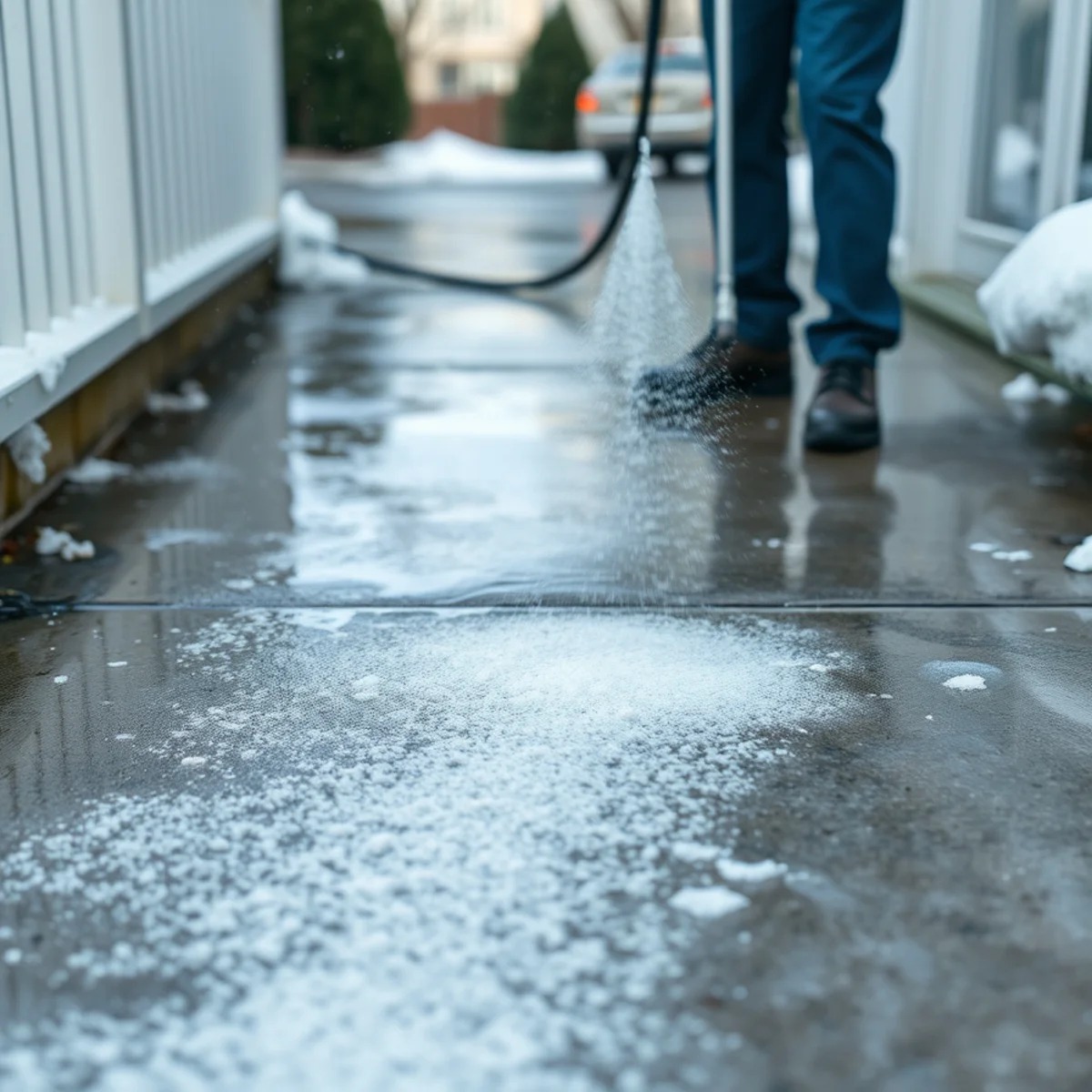
By the time the snow finally clears, your concrete has absorbed a full winter of salt, sand, brine, and de-icer residue. Spring is the reset. A thorough wash flushes chloride out of the pores before it can drive another season of damage, lifts the gray winter film, and reveals any spalling or cracking that needs attention while repairs are still small.
This is also where the "spring reveal" works in your favor. The pitting and flaking that surface in March and April are your cue to book a wash and reseal. Clean it, let it dry, seal it, and you've closed the loop on year-round protection. Homeowners from Boston and Cambridge to the South Shore see real benefits from making a post-winter concrete wash an annual ritual. A professional concrete cleaning does the heavy lifting and leaves a surface that's actually ready to seal.
How to Safely Remove Salt, Efflorescence, and Winter Grime
Getting salt out of concrete is about chemistry and rinsing, not brute force. The goal is to flush chloride out of the pores, not blast the surface or drive salt deeper into cracks.
- Neutralize the salt. What neutralizes salt on concrete? A specialized salt-neutralizing rinse is the professional answer. Mild DIY options people use include a diluted white vinegar rinse or a baking soda solution to help break down light salt residue before a thorough flush with clean water. Heavily soiled or pitted slabs need a dedicated treatment.
- Treat efflorescence directly. Light efflorescence can be dry-brushed; stubborn deposits sometimes call for a diluted acidic cleaner. Strong acids like muriatic acid can etch and discolor concrete and create handling hazards, so this is genuinely a job to leave to pros who know the right dilution and dwell time.
- Rinse, rinse, rinse. Whatever loosens the salt, the final step is always flushing it completely off the slab and away from your foundation and plantings so the chloride doesn't simply resettle.
Pressure Washing Concrete the Right Way: PSI and Mistakes to Avoid
Done correctly, pressure washing is the best way to deep-clean concrete. Done wrong, it etches the surface and drives salt deeper. The details matter.
What PSI Should You Use?
For a healthy concrete driveway, the working range is roughly 2,000-3,000 PSI. We typically start on the lower end, around 2,000, to test the surface, and only step up as needed. Older, spalling, or decorative concrete needs a gentler touch. The key tool is a surface cleaner attachment, a flat spinning head that distributes pressure evenly across the slab. It cleans faster, leaves no zebra-striping, and is far safer than a narrow turbo nozzle that can carve lines into the concrete.
Does Pressure Washing Damage Concrete?
Not when it's done right. Damage comes from misuse: a zero-degree tip held too close, pressure cranked past 3,000 PSI, or blasting a slab that's already spalling and driving water and salt deeper into open cracks. The principle we live by applies here too. You don't need more pressure; you need the right chemistry. A salt-neutralizing pretreatment does the real work, and the pressure simply rinses it away.
Common mistakes to avoid:
- Using a turbo or zero-degree nozzle instead of a surface cleaner
- Exceeding 3,000 PSI on residential concrete
- Power-washing already-spalled concrete and forcing water into cracks
- Skipping the salt-neutralizing step and just blasting water
- Letting salty, chemical-laden runoff flow onto lawns, gardens, or into a well
That last point is one we take seriously as a Massachusetts company. We pre-soak landscaping and manage runoff, which matters a great deal on properties with private wells or established plantings.
DIY vs. Professional: When to Call a Pressure Washing Company
Light surface dirt? Rent a machine and have at it, carefully. But several situations genuinely call for a pro:
- White efflorescence or salt stains that won't rinse away
- Surfaces that have started to spall, scale, or pit
- Set-in oil, rust, or organic staining layered on top of winter grime
- Prepping a slab properly for sealing
- Commercial properties with real safety and liability stakes
A professional brings matched pressure, the correct salt-neutralizing chemistry, a surface cleaner, and runoff awareness. The wrong rental-machine technique can accelerate the exact damage you're trying to reverse. Wash Bros has cleaned winter-weary concrete across Massachusetts since 2023, we're fully insured with a certificate of insurance available on request, and we hold a 5.0 average across 130 Google reviews. (Worth knowing as a homeowner: many MA exterior projects involve checking a contractor's insurance and registration, so always ask any company you hire for proof of coverage.)
Repairing Existing Salt Damage
Once the surface has failed, cleaning alone won't rebuild it. Your options depend on how deep the damage runs:
- Crack repair: Hairline and moderate cracks can be filled and sealed to stop water intrusion before they widen. Do this early.
- Resurfacing: When scaling and pitting are confined to the top layer, a resurfacing overlay can bond a fresh wearing surface onto the sound concrete beneath, restoring both function and curb appeal. The slab must be clean and structurally sound first, which is where a proper wash comes in.
- When it's too late: Deep spalling that exposes large areas of aggregate, or cracks that run full-depth, usually means full replacement. That's the expensive outcome, and it's exactly what prevention is designed to avoid.
The throughline: routine cleaning and sealing cost a fraction of resurfacing, and resurfacing costs a fraction of replacement. Maintenance is always the cheaper path.
Year-Round Concrete Care Calendar for Massachusetts Homeowners
A simple rhythm keeps MA concrete healthy:
- Spring (March-May): Inspect for the "spring reveal" damage. Pressure wash and neutralize salt. Repair any cracks. This is the most important step of the year.
- Summer (June-August): Let the slab fully dry, then apply or refresh a penetrating sealer in dry, mild weather. Reseal every 2-3 years.
- Fall (September-November): Final wash and a drainage check. Redirect downspouts off the concrete. Confirm fresh pours have cured before any salt season.
- Winter (December-February): Shovel promptly with a plastic blade. Use minimal, concrete-conscious de-icer or sand. Don't let snow piles linger, and keep de-icer off first-winter concrete entirely.
How Wash Bros Protects and Restores Concrete Across Massachusetts
Winter is hard on concrete, but cracked, pitted, salt-stained flatwork is not inevitable. Prompt snow removal, smart de-icer choices, an annual spring wash, and a quality penetrating sealer let your driveway, walkways, and steps shrug off New England winters for years.
When the snow clears and the spring reveal shows up on your slab, that's the moment to act. Wash Bros is a fully insured, family-run company started by brothers Louis and Dominic, and we treat every driveway, sidewalk, and patio across Massachusetts as if it were our own. We use surface-appropriate pressure, biodegradable surfactants, salt-neutralizing chemistry, and careful runoff containment to flush a winter's worth of salt out of your concrete and get it ready to seal.
Ready to undo the damage and protect your concrete for next winter? Reach out through our contact us page for a free estimate, or call us directly at +1 (351) 242-0666. We'd be glad to help your property look its best heading into the warm months.
Frequently Asked Questions
Need Professional Exterior Cleaning?
Wash Bros provides affordable, dependable pressure washing across Massachusetts. Get your free estimate today.
Get a Free Estimate