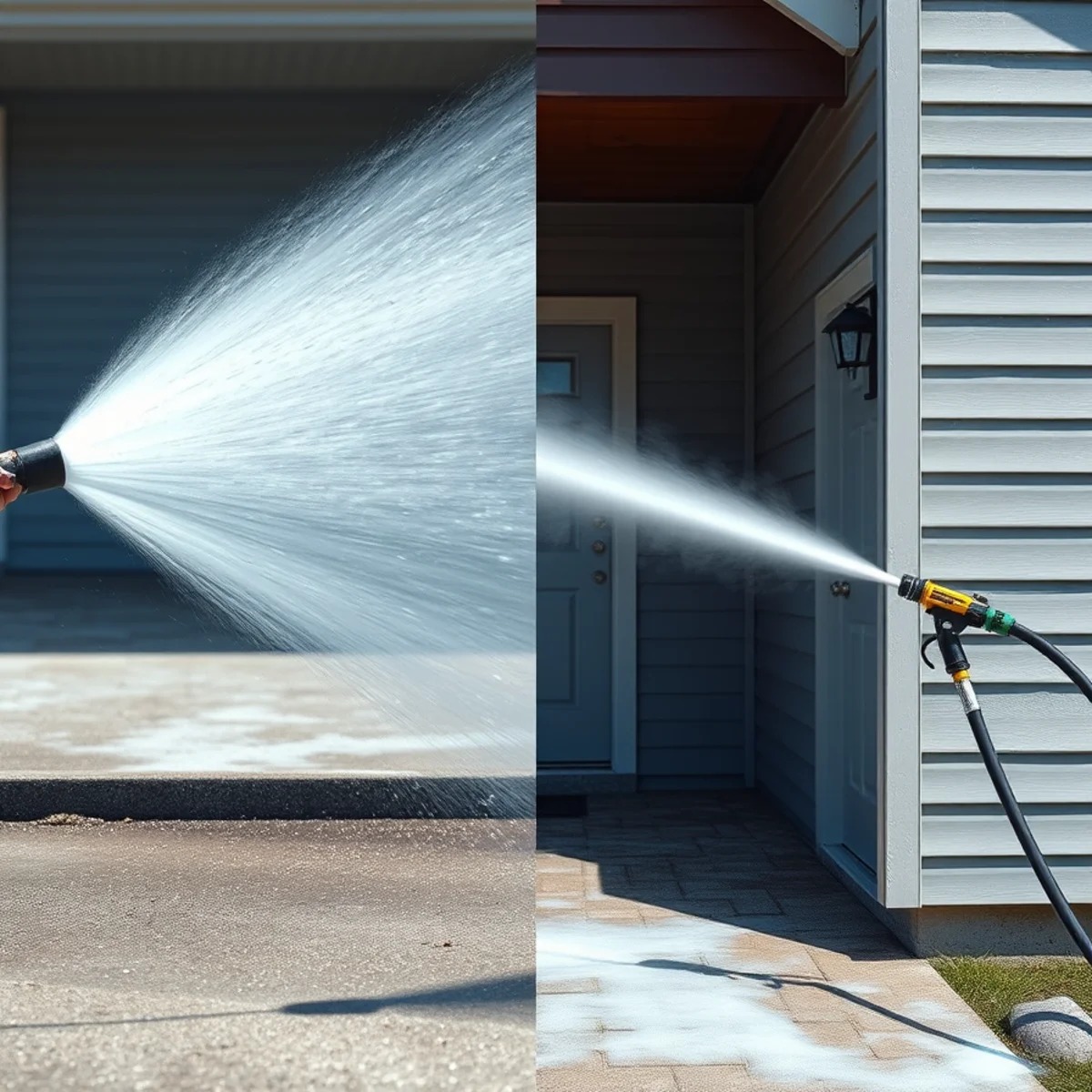
Pressure washing uses force; soft washing uses chemistry. Learn which method each surface needs, how long results last, and why MA homes often need both.
If you have shopped around for exterior cleaning, you have seen "pressure washing" and "soft washing" used as if they mean the same thing. They do not. Choosing the wrong one for a surface can strip paint, gouge cedar, blow granules off your shingles, or drive water behind your siding. This guide explains how each method actually works, which surface belongs to which, and how to make the right call on a Massachusetts home.
Pressure Washing vs Soft Washing: What's Best for Your Home?
Here is the honest answer most contractors bury: it is not one-or-the-other. The right method depends entirely on the surface you are cleaning. Pressure washing and soft washing are different tools for different jobs, and a competent crew uses both, often on the same property in the same visit.
The core idea to remember is this: you usually do not need more pressure, you need the right chemistry. Hard, durable surfaces can take mechanical force. Siding, roofs, stucco, and painted wood cannot. And the biological growth that makes a New England home look dirty, the algae, mold, mildew, and moss, is killed by cleaning solution, not by water pressure. Once you understand that, the decision for any surface becomes straightforward.
What Is Pressure Washing?
Pressure washing (often called power washing) uses high-pressure water to mechanically blast away dirt, grime, and buildup. A pump forces water through a narrow spray tip or nozzle, and the concentrated stream does the cleaning. Most residential machines run somewhere in the 1,300 to 4,000+ PSI (pounds per square inch) range, and a trained technician controls aggressiveness by swapping the nozzle, adjusting the angle, and changing the distance from the surface.
That mechanical force is exactly what some surfaces need. Embedded dirt, tire marks, gum, dried mud, and oily film on concrete come off with pressure when nothing else will touch them. The water is doing the work, so the surface has to be tough enough to take it.
Pressure washing earns its keep on:
- Concrete driveways, walkways, and garage floors
- Unpainted brick and masonry (at controlled pressure)
- Pavers and patios
- Metal surfaces and dumpster pads on commercial sites
Around here, this is the go-to after a long winter, when road salt, sand, and de-icer leave concrete gray and tired. Professional driveway cleaning and concrete cleaning use controlled pressure (typically 2,000 to 3,000 PSI on a driveway) to bring those surfaces back without etching them.
What Is Soft Washing?
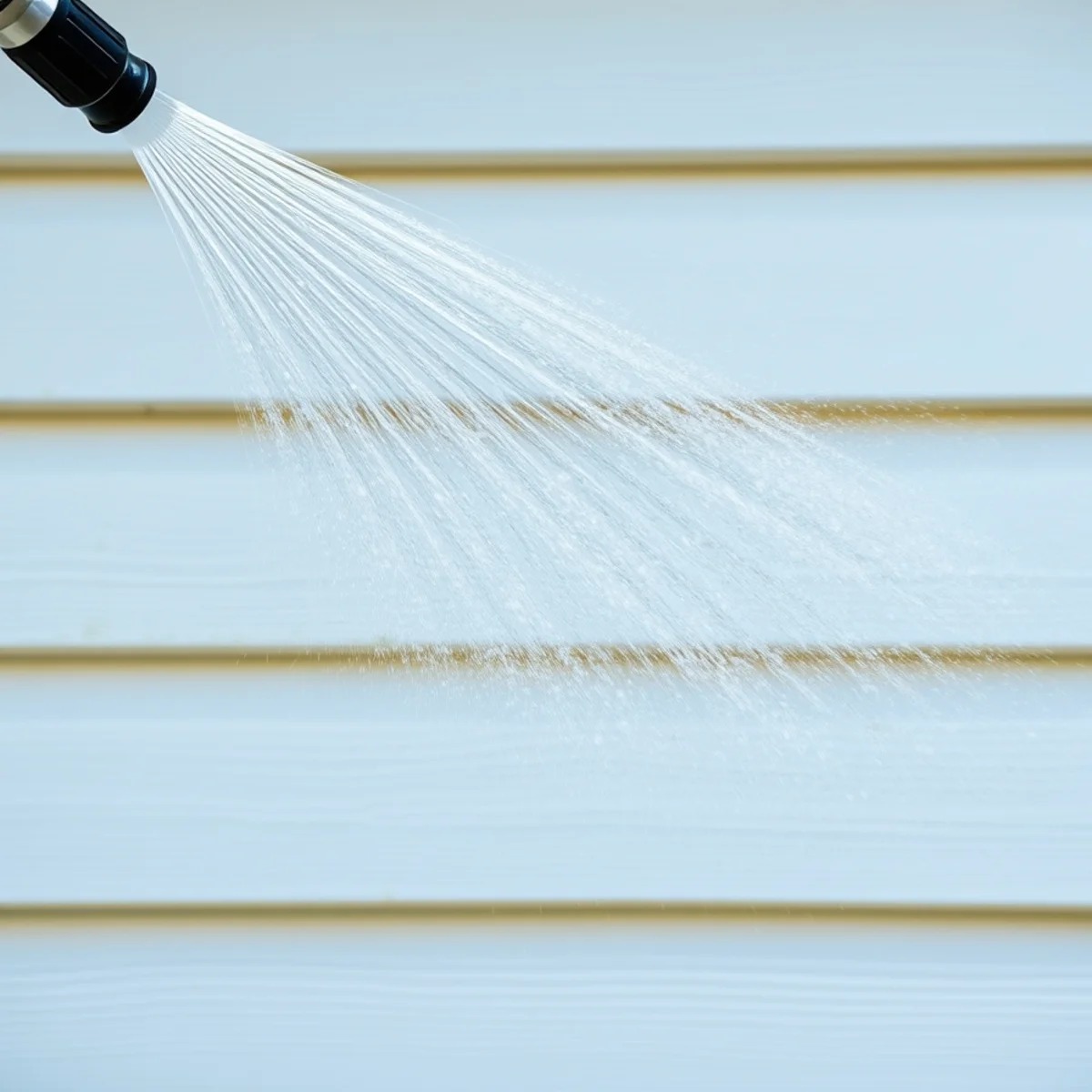
Soft washing flips the formula. Instead of relying on force, it relies on chemistry. Technicians apply a biodegradable cleaning solution at very low pressure, usually under 500 PSI and often closer to a garden-hose flow, let it dwell so it can break down living organisms, then rinse gently. The detergent does the cleaning. The water mostly rinses.
The reason this matters comes down to biology. Those black streaks and green patches on a home are living things: algae, mold, mildew, moss, and lichen. A high-pressure rinse knocks off the visible layer, but the organism's roots survive and it regrows within weeks. A proper soft wash solution, commonly a controlled mix of sodium hypochlorite and surfactants, kills the growth at the root so it stays gone far longer.
Soft washing is the correct method for most of your home's visible exterior:
- Vinyl, aluminum, fiber-cement (Hardie), and wood siding
- Roof shingles (asphalt, cedar, tile)
- Stucco and EIFS
- Screens, soffits, painted trim, and gutters
- Outdoor furniture and other delicate features
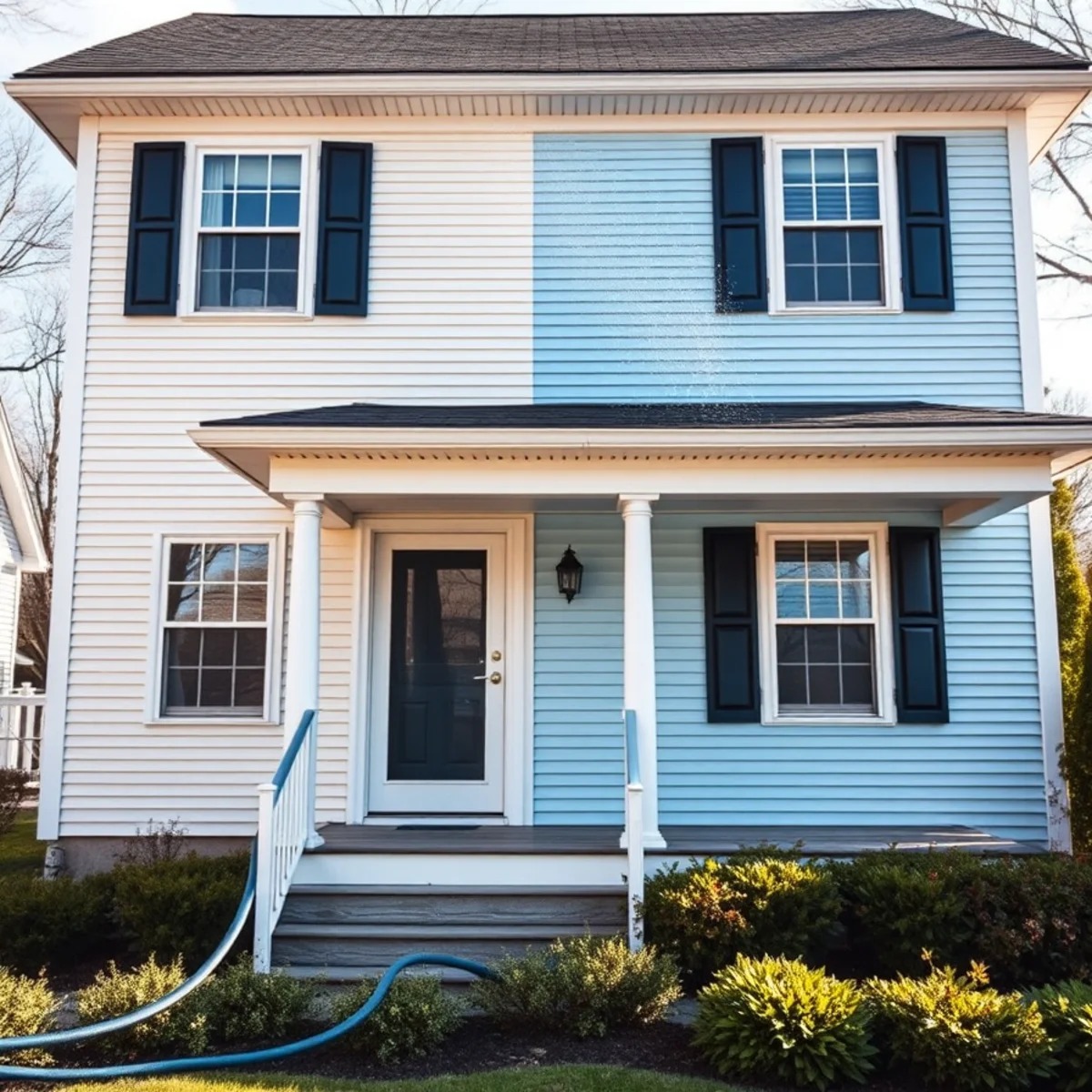
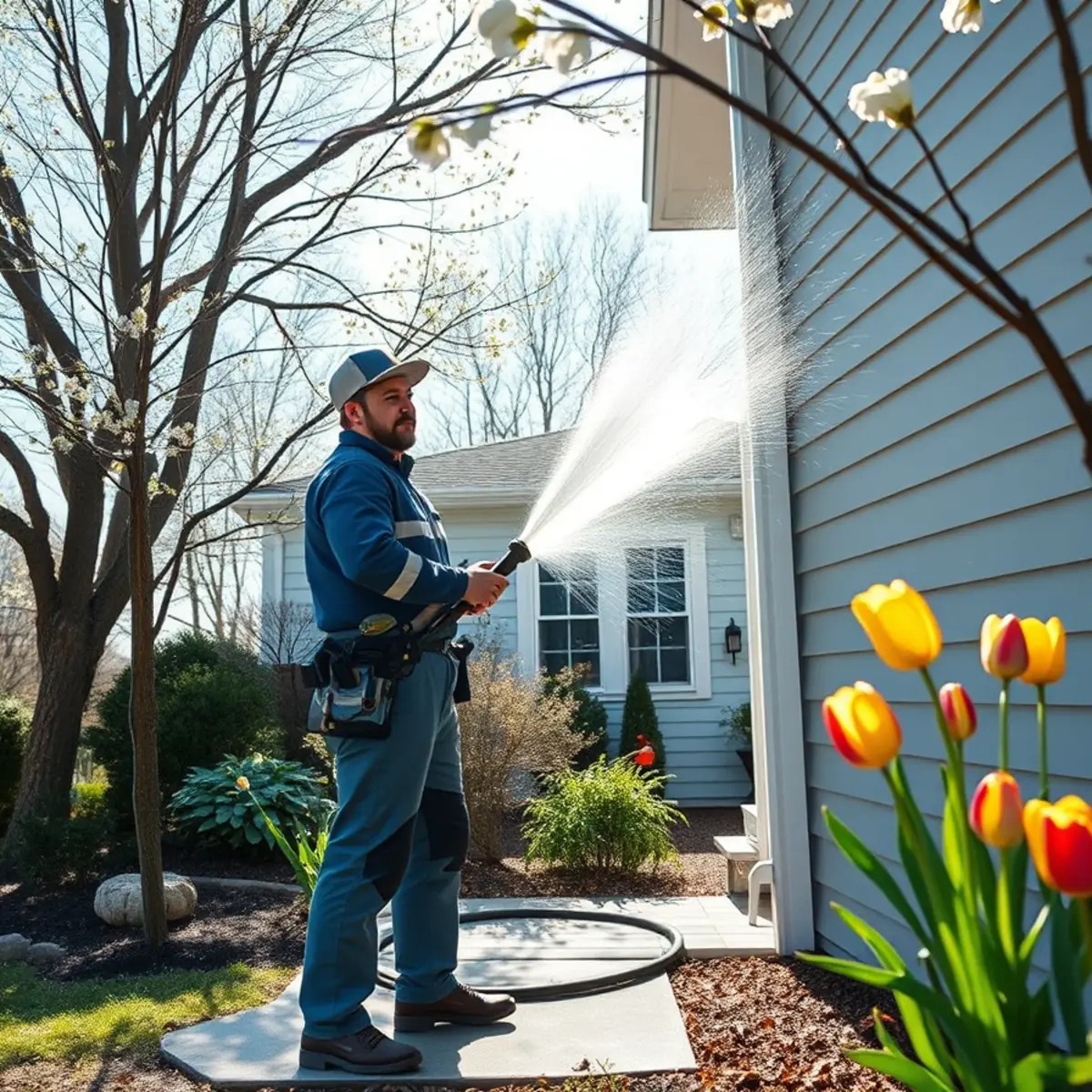
Our soft washing and house washing services use this low-pressure, solution-first method specifically because it cleans thoroughly without putting your siding or roof at risk.
The Core Difference: Force vs Chemistry
If you take away one mental model, make it this: pressure washing cleans with power, soft washing cleans with preservation.
Pressure washing removes what is on the surface by overwhelming it with mechanical energy. It is fast, effective on hard materials, and indifferent to what it is hitting, which is precisely why it damages anything softer than concrete. Soft washing removes what is living on the surface by dissolving and killing it, then rinsing the dead growth away. It is gentle on the material and lethal to the organism.
Force handles inert grime on tough surfaces. Chemistry handles biological growth on delicate surfaces. A high-pressure stream cannot kill an algae colony's roots no matter how much you crank it, and a soft wash solution cannot lift a year of caked road grime off concrete. Each method does something the other cannot, which is why the smart question is never "which is better," but "which does this surface need."
Pressure Washing vs Soft Washing Comparison Chart
| Factor | Pressure Washing | Soft Washing |
|---|---|---|
| Pressure (PSI) | ~1,300–4,000+ | Under 500 (often <100 on roofs) |
| What does the work | Mechanical force | Cleaning solution / chemistry |
| Best surfaces | Concrete, pavers, unpainted brick, metal | Siding, roofs, stucco, painted/delicate surfaces |
| What it removes | Dirt, grime, oil, salt, gum, tire marks | Algae, mold, mildew, moss, lichen, pollen |
| Kills growth at the root? | No (rinses surface only) | Yes |
| How long results last | ~6–12 months on organic growth | ~2–5 years |
| Main risk | Etching, granule loss, water intrusion | Minimal when applied by a pro |
| Cost driver | Labor and surface area | Solution, dwell time, and surface area |
Bookmark the logic, not the numbers: the longevity gap is the whole reason soft washing wins on living growth.
Which Method for Which Surface?
Here is the surface-by-surface breakdown, because "it depends" is only useful if someone tells you what it depends on.
- Roof shingles (asphalt): Soft wash only, under ~100 PSI. High pressure tears off the protective granules. See roof cleaning.
- Vinyl, cement/Hardie, and wood siding: Soft wash. Vinyl can technically tolerate 100–500 PSI, but high pressure forces water behind it.
- Stucco and EIFS: Soft wash, under ~150 PSI. It is porous and crumbles under force.
- Brick, painted: Soft wash to protect the paint film.
- Brick, unpainted/masonry: Controlled pressure (historic brick stays under ~400 PSI to spare old mortar). See brick cleaning.
- Concrete driveways and sidewalks: Pressure wash, 2,000–3,000 PSI.
- Pavers: Controlled pressure, then re-sand the joints.
- Wood decks and fences: Low pressure (cedar under ~200 PSI) or a soft wash approach to avoid furring the grain. See deck cleaning and fence cleaning.
- Composite decks: 500–1,000 PSI maximum.
- Pool decks: Method depends on material; usually low-pressure or controlled. See pool deck cleaning.
- Gutters: Soft wash the exterior face to remove the black "tiger stripes"; clear the interior by hand.
When to Use Soft Washing
Reach for soft washing whenever the surface is delicate or the problem is biological. That covers the majority of a typical home.
Use soft washing for:
- Roofs with black streaks, green moss, or lichen
- Siding of any kind, the full house wash
- Stucco, EIFS, and painted surfaces that force would damage
- Anything coated in organic growth, including algae film, mildew, and spring pollen
If the thing you are trying to remove is alive, soft washing is almost always the answer. Killing it at the root is the only way to make it stay gone.
When to Use Pressure Washing
Reach for pressure washing when the surface is hard, inert, and durable, and the mess is grime rather than growth.
Use pressure washing for:
- Concrete driveways, walkways, garage floors, and patios
- Unpainted brick and masonry at controlled pressure
- Pavers that can be re-sanded afterward
- Metal railings, dumpster pads, and equipment
- Heavy oil, grease, salt, and grime that chemistry alone will not lift
This is where mechanical force is the right tool. New England winters coat hard surfaces in salt and sand, and that is a pressure-washing problem through and through.
Surfaces You Should Never Pressure Wash
Some surfaces should essentially never see high pressure. Get this list wrong and you are looking at a repair bill, not a clean house.
- Asphalt shingles. Pressure strips granules, shortens roof life, and can void your warranty.
- Vinyl siding. High pressure cracks panels and drives water into the wall cavity, where it feeds hidden mold and rot.
- Stucco and EIFS. Porous and brittle; force chips and pits it.
- Painted wood and clapboard. Pressure peels paint and furs the grain. Common on older Massachusetts colonials.
- Window seals and screens. A stream can blow out the seal on a double-pane unit or tear a screen.
- Soft mortar on historic brick. Old lime mortar washes out under modern pressure.
When in doubt, gentler is safer. You cannot un-strip a roof or un-peel paint.
How Long Do the Results Last?
This is the data point competitors never publish, and it is the strongest argument for soft washing on the right surfaces.
When you pressure wash organic growth, you remove what is visible but leave the roots. On a roof or shaded siding wall, the algae and mildew typically bounce back within 6 to 12 months, sometimes faster in a damp, shaded New England yard.
When you soft wash, the solution kills the growth at the root. With nothing left to regrow from, results commonly last 2 to 5 years depending on tree cover, sun exposure, and how close you are to the coast. (Treat those as general ranges, not guarantees; every property weathers differently.)
That longevity gap is why a soft wash is not just gentler, it is a better value over time. You are paying for a clean that lasts years, not months.
Cost Comparison: Soft Washing vs Pressure Washing
Both methods are priced mainly by surface area, access, and the severity of the buildup. Beyond square footage, the cost drivers differ: pressure washing is largely a labor-and-time job, while soft washing also factors in the cleaning solution, the dwell time, and the care needed to protect landscaping.
On a per-visit basis the two are often comparable. The real difference shows up over time. Because a soft wash lasts years instead of months, the long-term cost of keeping a roof or siding clean is usually lower with soft washing, even if a single high-pressure rinse looks cheaper on paper. We do not publish flat prices because honest pricing depends on your specific surfaces; a quick look gets you a real number.
Is Soft Washing Safe?
Yes, when it is done by someone who knows what they are doing. Safety is largely about preparation and the right solution mix.
- For shingles and siding: Low pressure means no granule loss and no water intrusion. This is the method shingle manufacturers prefer.
- For plants, pets, and kids: Professional soft washing uses biodegradable surfactants and a controlled solution. We pre-wet and pre-soak landscaping before and after application so the diluted runoff does not harm plants, and we are mindful of runoff containment and well-water awareness on rural Massachusetts properties.
- The chemistry: The active ingredient in most soft wash mixes is sodium hypochlorite (the same family as household bleach) at a controlled, diluted concentration, combined with surfactants that help it cling and rinse clean. Applied correctly and rinsed thoroughly, it breaks down quickly.
The danger with soft washing is not the method; it is an untrained operator using the wrong concentration or skipping the landscape prep. That is an argument for hiring a pro, not against the method.
Pros and Cons of Each Method
Pressure washing, pros: Fast and powerful on hard surfaces. Removes oil, salt, gum, and ground-in grime. No dwell time needed.
Pressure washing, cons: Damages delicate surfaces. Does not kill biological growth at the root, so results on organic stains are short-lived. Real risk of etching, granule loss, and water intrusion in the wrong hands.
Soft washing, pros: Safe for roofs, siding, stucco, and paint. Kills algae, mold, and mildew at the root. Results last years, not months. Gentle on the structure.
Soft washing, cons: Requires the correct solution and dwell time. Not the tool for heavy oil or ground-in grime on concrete. Needs landscape prep and careful rinsing.
Why Professionals Often Use Both
A real house almost never fits into one bucket. A typical full exterior clean might soft wash the roof and siding while pressure washing the driveway and walkway in the same visit. The skill is not in owning the most powerful machine; it is in reading each surface and matching the method to it.
That is also why "rent a machine and go" causes so much accidental damage. The single most common DIY failure is using one approach, almost always too much pressure, across an entire property. Professionals carry both capabilities and switch between them surface by surface.
Pressure Washing vs Soft Washing in Massachusetts
New England's climate makes this decision more than academic. Humid summers, heavy tree cover, frequent rain, and long damp shoulder seasons create ideal conditions for algae, moss, lichen, and mildew. Homes in shaded or coastal areas, from the tree-lined streets of Newton to the older neighborhoods of Worcester, see organic growth return year after year.
Those black streaks on so many Massachusetts roofs are Gloeocapsa magma, a cyanobacteria that feeds on the limestone filler in asphalt shingles. The Asphalt Roofing Manufacturers Association (ARMA) recommends low-pressure cleaning, not high pressure, to remove it, which is exactly what soft washing delivers. Pressure would strip the granules and shorten the roof's life.
A few more local realities:
- Freeze-thaw cycles and road salt chew up concrete driveways and walkways every winter. That damage and grime is a pressure-washing job, the direct opposite of your siding and roof.
- Spring tree pollen coats siding and decks across the state. Soft washing lifts that yellow film from vinyl and wood without etching.
- Older housing stock, historic colonials, painted clapboard, aged vinyl, and cedar shingles, is especially prone to pressure-wash damage, which is why soft washing protects so many New England exteriors.
- Coastal salt-air corrosion on the South Shore, Cape, and North Shore accelerates growth on siding and roofs, while inland towns like Framingham lean more toward humidity-driven algae. HOAs and condo complexes that require periodic cleaning need the right method to keep shared surfaces uniform without damage.
How to Choose the Right Method for Your Home
You do not need to memorize PSI ratings. Walk through this quick checklist:
- What surface is it? Hard and inert (concrete, pavers, metal, unpainted brick) leans toward pressure. Delicate (siding, roof, stucco, paint, wood) leans toward soft wash.
- What is the problem? Grime, oil, salt, and tire marks call for pressure. Algae, mold, mildew, moss, and pollen call for soft washing's chemistry.
- Is it alive? If the stain is biological growth, soft wash so it dies at the root. Otherwise it comes right back.
- When in doubt, go gentler. You can always step up. You cannot undo granule loss or peeled paint.
If two of those answers point to "delicate" or "alive," it is a soft wash job. Most homes need a thoughtful mix of both.
DIY vs Hiring a Pro
A consumer-grade machine can handle a small concrete pad if you keep your distance and use the right tip. The trouble starts the moment that machine points at siding, a roof, or old brick.
The most common DIY mistakes we see:
- High pressure on siding, forcing water behind it where mold and rot grow unseen.
- Pressure washing a roof, stripping granules and potentially voiding the shingle warranty.
- Skipping the chemistry, so algae and mildew return within weeks.
- Working a pressure wand from a ladder, where the recoil is a genuine fall hazard.
There is also a warranty angle homeowners miss: many shingle and siding manufacturers will deny a claim if high-pressure cleaning caused the damage. A pro brings the right equipment, the correct solution concentrations, landscape protection, and, just as important, insurance. Wash Bros is fully insured, with a certificate of insurance available on request. (As a homeowner, it is also worth confirming any contractor's HIC registration before hiring; we are happy to talk you through what to ask.)
Founded in 2023 by brothers Louis and Dominic, Wash Bros has built a 5.0 average across 130 Google reviews by doing exactly this: matching the right method to every surface on homes and businesses across Massachusetts. We will not pressure wash something that should be soft washed just because it is faster.
Get a Free Quote from Wash Bros
Not sure whether your home needs pressure washing, soft washing, or a combination of both? Let us take a look. Reach out through our contact us page or call Wash Bros directly at +1 (351) 242-0666 for a free, no-pressure estimate. We will assess your surfaces, recommend the right approach, and give you an honest quote, with no guesswork and no risk to your home.
Frequently Asked Questions
Need Professional Exterior Cleaning?
Wash Bros provides affordable, dependable pressure washing across Massachusetts. Get your free estimate today.
Get a Free Estimate