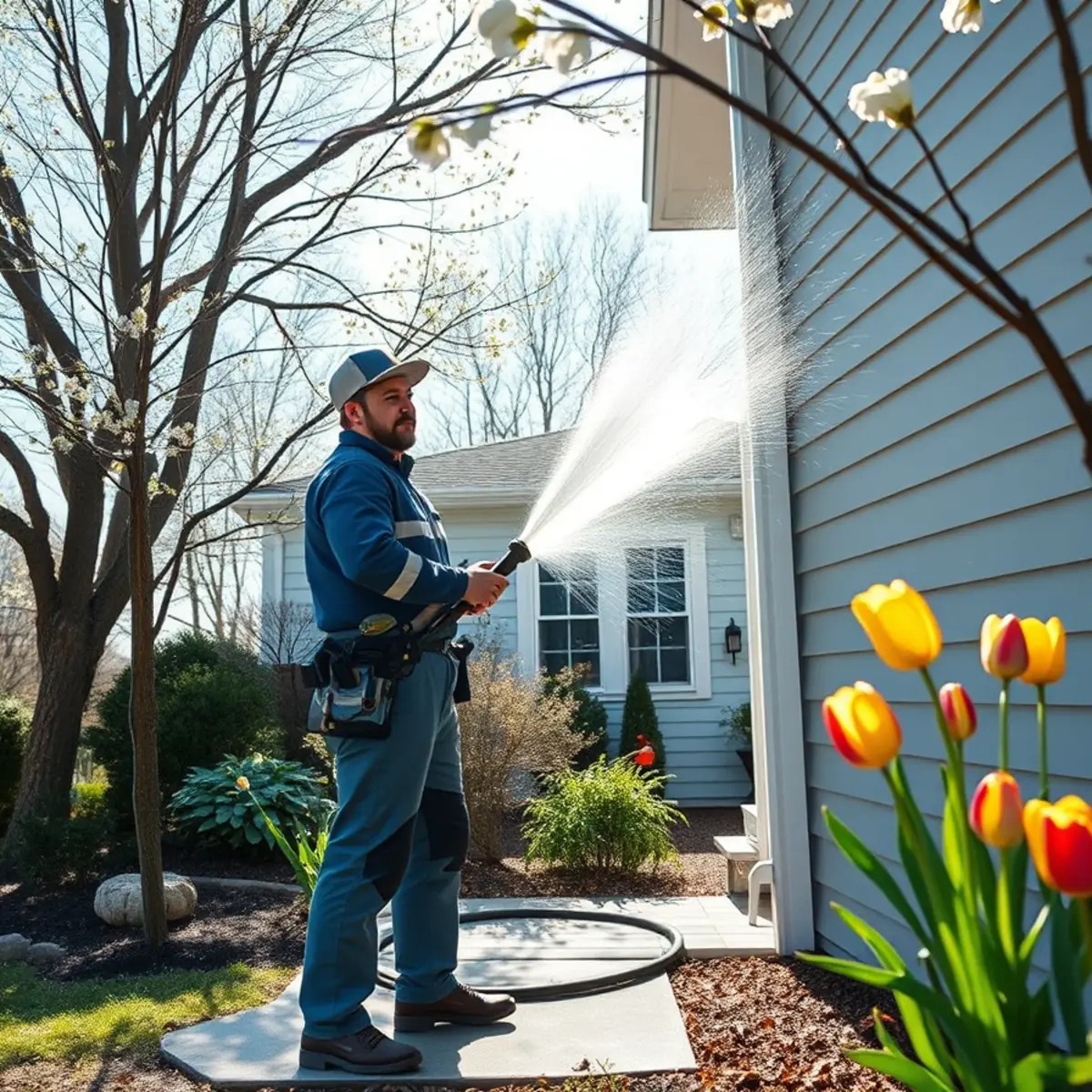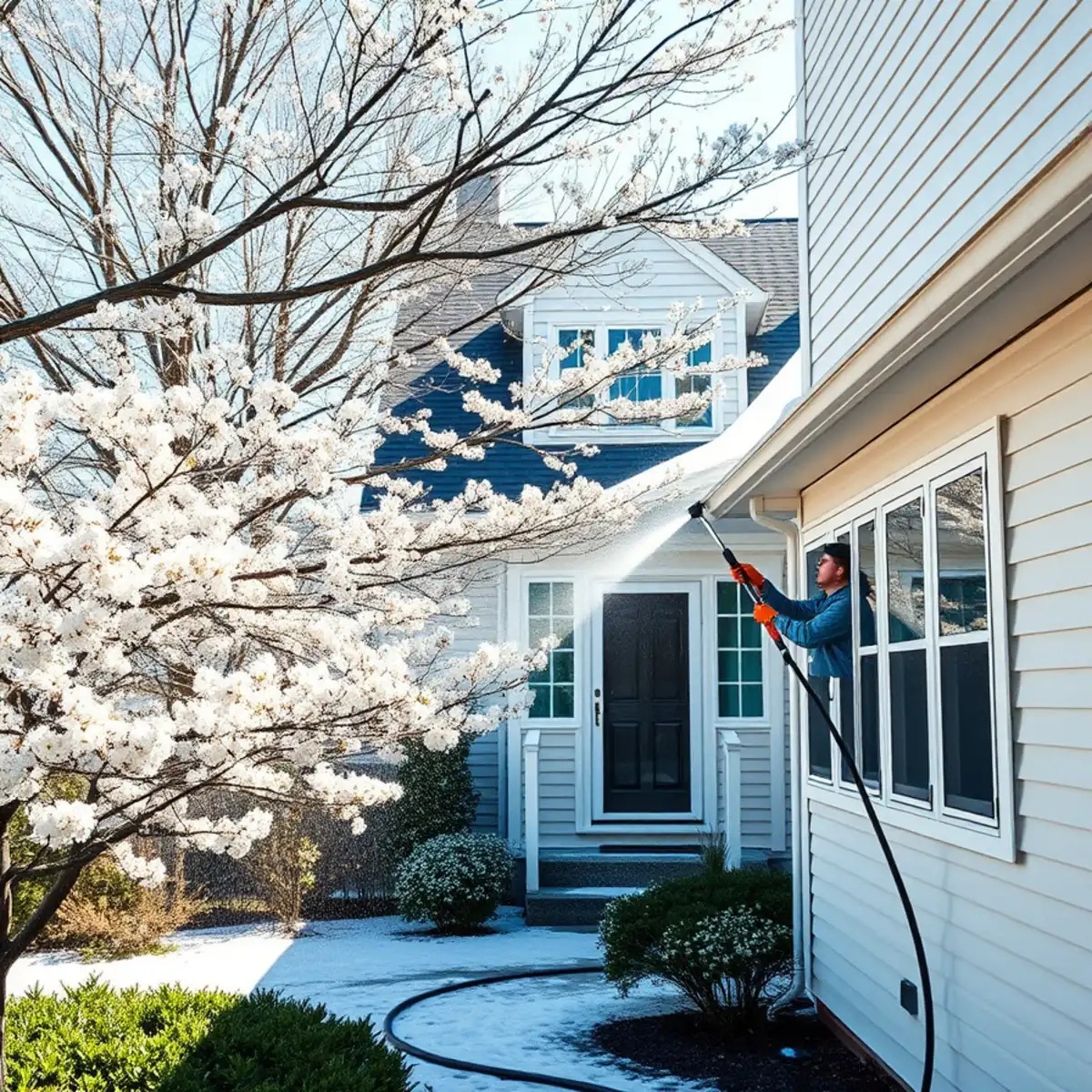
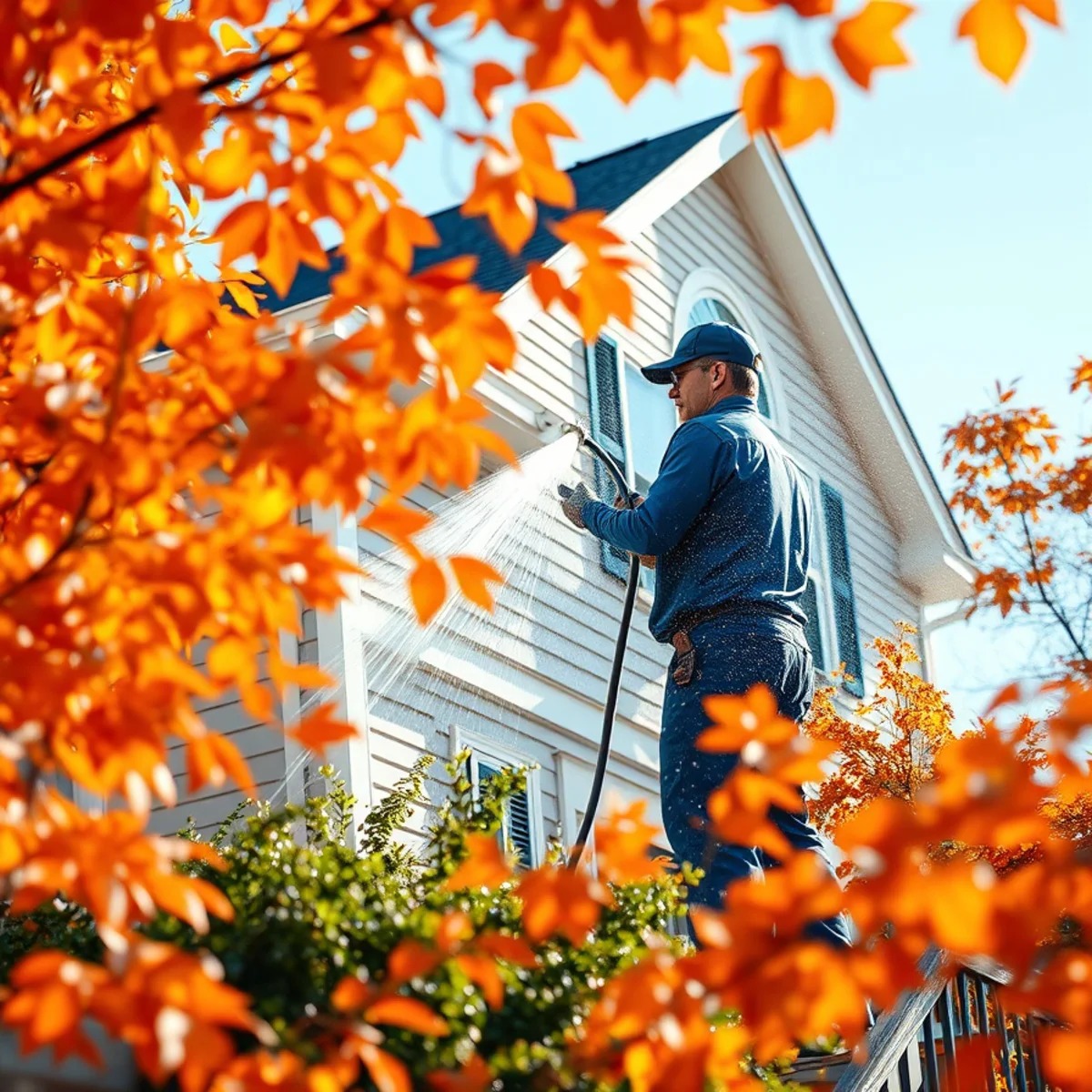
When to clean gutters in fall, how to prevent ice dams, the right order to wash your Massachusetts home, and what it costs before the first freeze.
Fall is the most consequential exterior-cleaning season in Massachusetts, and it is the one homeowners most often get wrong by acting too early or skipping it entirely. The few weeks between the heavy leaf drop and the first sustained freeze decide whether your home sails through winter or fights ice dams, wood rot, and stained concrete by March. This guide combines fall gutter cleaning and exterior washing into one practical, New England-specific workflow so you know exactly what to do, when to do it, and why the order matters.
Why Fall Gutter Cleaning Matters More Than Any Other Season
Gutters spend the summer mostly idle. Then autumn arrives and they suddenly become the single most important drainage system on your house, right as our heavy deciduous tree canopy buries them in leaf debris. Maples, oaks, and the pine needles that sneak past every gutter guard pack the channels with a wet, sludgy mat that water cannot move through.
Here is what makes fall different from a spring cleaning. In spring, a clogged gutter overflows and you get a soggy flower bed. In late fall, that same clog freezes. Water that should have drained to grade instead sits in the channel, refreezes along the roof edge, and starts the chain reaction that produces ice dams. Clean gutters going into winter are not a cosmetic upgrade. They are preventative maintenance against four-figure repair bills.
A blocked gutter also stops doing its one job: moving roof runoff away from the structure. When water overflows, it pours down behind the gutter onto the fascia board, soaks the soffit, and pools against the foundation. Over a single wet winter that constant moisture rots wood and finds its way into basements.
The Connection Between Clogged Gutters and Ice Dams
Ice dams are a signature New England problem, and Boston-area homes see them every snowy winter. The mechanics are simple. Heat escaping through the roof (usually from thin attic insulation) melts the bottom layer of snow on the upper roof. That meltwater runs down toward the cold eaves and the gutter. If the gutter is clear, the water drains. If the gutter is packed with frozen leaf debris, the water has nowhere to go, refreezes, and builds a ridge of ice at the roof edge.
Each freeze-thaw cycle grows the dam. Water backs up behind it, works under the shingles, and ends up in your walls and ceilings. Clean gutters do not prevent ice dams by themselves, attic insulation and ventilation matter more, but a clear, free-draining gutter is the cheapest and most accessible first line of defense you have before the first sustained freeze. Skip the fall cleaning and you have removed that defense entirely.
If your home has a chronic ice-dam problem, gutter cleaning pairs with longer-term fixes like improved attic insulation and, in stubborn cases, heat cables along the eaves. But clearing the gutters comes first, every fall, without exception.
When to Clean Your Gutters in Fall: The 70% Leaf-Drop Rule
The most common mistake is cleaning too early. If you clear your gutters in early October while the maples are still full, you will be cleaning them again in November anyway. The trees are not done with you yet.
The practical benchmark contractors use is the 70% leaf-drop rule: schedule your main fall cleaning once roughly 70 percent of the leaves have come down, but before consistent freezing temperatures arrive. In most of Massachusetts that window lands in late fall, mid-to-late November. You want the bulk of the canopy on the ground and your gutters cleared before the first hard freeze locks any remaining debris into a block of ice.
Timing shifts by region and elevation. Higher-elevation towns in Worcester County and the hills west of Worcester tend to drop leaves and freeze earlier than the milder coastal and Greater Boston areas. Watch your own trees, not the calendar. When the canopy is mostly bare and a hard frost is in the forecast, it is time.
Should you clean gutters before or after the leaves fall?
After. Cleaning before the leaves drop accomplishes almost nothing, because the gutters refill within weeks. The exception is a property so heavily wooded that a single late cleaning cannot keep up, which is exactly where the one-versus-two question comes in.
How Often Should You Clean Gutters in Fall? One vs. Two Cleanings
For most homes, one well-timed late-fall cleaning is enough. Homeowners on open lots with few overhanging trees can comfortably stick to a biannual gutter cleaning schedule, once in late spring and once in late fall.
A wooded lot is a different story. If your roof sits under a dense tree canopy of mature oaks and maples, one cleaning will not hold. Leaves fall in waves over several weeks, and a gutter cleared in early November can be packed again by Thanksgiving. For these properties we recommend two fall passes:
- First pass: mid-to-late October, to clear the early drop and keep downspouts open through the heaviest fall rains.
- Second pass: mid-to-late November, after the canopy is bare, to clear everything out before winter.
The same logic applies to homes downwind of white pines. Pine needles drop continuously, knit into a dense mat, and slip through standard gutter guards, so pine-heavy properties often need that second look no matter how open the rest of the lot is.
Signs Your Gutters Need Cleaning Right Now
You do not always need a ladder to know your gutters are in trouble. Watch for these:
- Water overflowing the gutter edge during rain instead of running to the downspout.
- Sagging gutters or sections pulling away from the fascia, a sign of waterlogged debris weighing them down.
- Plants or seedlings growing out of the channel, the surest sign there is enough rotting gutter sludge in there to act as soil.
- Stains or streaks down the siding below the gutter line, from water sheeting over the edge.
- Granules and grit washing out of the downspout splash, normal in small amounts, a red flag in large ones.
- Pooling water or a soggy strip along the foundation after storms.
Any one of these means the gutters are not draining. Two or more means stop waiting and clear them before the next freeze.
Step-by-Step Fall Gutter Cleaning Process
A thorough cleaning is more than scooping leaves. It is gutters, downspouts, and a final flush, in that order.
- Clear the channels. Remove leaves, twigs, shingle grit, and gutter sludge by hand or with a scoop. A leaf blower attachment speeds up dry debris; wet, matted leaves usually need to be pulled out by hand.
- Open the downspouts. A clogged downspout makes a clean channel useless. Flush each one from the top; if water backs up, a gutter wand or a plumber's snake fed from the bottom clears the blockage.
- Flush the whole system. Run water from the far end toward each downspout to confirm flow and to reveal low spots where water pools, a sign the gutter has lost its pitch.
- Inspect the hardware. Check for sagging gutters, loose hangers, separated seams, and leaking end caps. Wet leaves and ice are heavy; anything loose now will fail under winter load.
- Check the fascia and soffit. Soft, discolored, or peeling fascia board or soffit points to existing water intrusion that needs attention before it spreads.
This is also where ladder safety becomes a real concern, which we cover below. Wet leaves on the roof and ground make fall the slickest, shortest-daylight season of the year for working at height.
Gutter Cleaning vs. Gutter Brightening: What's the Difference
These are two different jobs, and homeowners constantly conflate them.
Gutter cleaning addresses the inside of the gutter, removing the debris that blocks drainage. It is the functional, must-do task before winter.
Gutter brightening addresses the outside, the face of the gutter you actually see from the curb. Those ugly vertical black streaks, often called tiger stripes, are oxidized grime and airborne pollutants that ordinary washing will not lift. Gutter brightening uses a specialized cleanser to dissolve those stains and restore the original bright white finish. Standard gutter cleaning will not touch them, and pressure alone will not either.
You need both for different reasons: cleaning protects the house, brightening protects the curb appeal. If you want the full breakdown, we have a dedicated guide on gutter cleaning vs. gutter brightening. For most homeowners, fall is the practical time for the cleaning and a good moment to brighten while the crew is already on the gutters.
The Complete Fall Exterior Washing Checklist
Gutters are the priority, but they are not the whole job. A complete fall home maintenance checklist for a Massachusetts home covers every exterior surface that has to survive a long, damp winter. Here is the full sequence, top to bottom:
- Clean and inspect gutters and downspouts once ~70% of leaves have dropped.
- Soft wash the roof to kill algae and moss before winter dampness sets in.
- Soft wash the siding to strip summer's mildew, pollen buildup, and grime.
- Clean decks and patios, then seal wood if needed before the snow.
- Wash walkways, steps, and the driveway to remove slip hazards and tannin stains.
- Clear leaf litter from foundation beds and window wells so meltwater drains away from the house.
Work in that order and runoff from the higher surfaces rinses down onto areas you have not cleaned yet, so nothing gets re-dirtied. It is the same order our crews follow on a full-property fall visit.
Fall House Washing and Soft Washing Siding Before Winter
A full house washing before winter removes the mold spores, mildew, cobwebs, and pollen buildup that collect on siding all summer. That organic film is not just unsightly. It holds moisture against the surface, and when that moisture goes through repeated freeze-thaw cycles, it works into seams and accelerates wear.
The right method is soft washing, not high pressure. Soft washing uses low-pressure cleaning paired with biodegradable surfactants that kill algae and mildew at the root rather than just blasting the surface. The guiding principle is simple: you don't need more pressure, you need the right chemistry. Pressure does not kill algae roots; the cleaning solution does.
Pressure ranges matter and they are surface-specific:
- Vinyl siding: soft wash in the 100 to 500 PSI range, never higher. Vinyl siding cleaning done with too much pressure forces water behind the panels.
- Cedar and painted wood: under 200 PSI.
- Historic brick: under 400 PSI, critical on the older colonials and Victorians throughout MetroWest and Newton.
- Stucco and EIFS: under 150 PSI.
A final soft wash before the long, damp winter stops black streaks and algae from spreading across siding and roofs while the surfaces sit cold and wet for months.
Cleaning Driveways, Walkways, and Decks: Wet Leaves and Tannin Stains
Here is a fall-specific problem most homeowners miss until it is too late. Wet, decaying leaves left on concrete, pavers, or decking leach tannin stains, the brown-to-rust discoloration that bonds into the surface. Do leaves stain a driveway? Yes, and the longer a soggy leaf pile sits, the deeper the stain sets.
Clear leaves off horizontal surfaces promptly, and wash off any staining before it cures in for the winter. Driveway cleaning on concrete can handle 2,000 to 3,000 PSI, but tannin and organic stains respond better to the right cleaning solution than to brute force. A composite deck is far more delicate, 500 to 1,000 PSI at most, and natural wood decking should be treated gently before a fall sealing.
There is a safety angle too. Algae and moss and lichen on shaded walkways and steps turn dangerously slick once they are wet or frozen. A fall cleaning of your entry steps and paths is as much about not slipping on black ice as it is about appearance.
A note on concrete and road salt
Massachusetts driveways face a winter of de-icing salt and sand. Salt residue and existing stains bond more stubbornly to dirty concrete, so a fall wash gives you a cleaner baseline before the plows roll out. We cover the longer-term damage in our guide on how salt and snow impact concrete.
Removing Algae, Moss, Mildew, and Black Streaks Before Cold Weather
Those dark streaks running down Massachusetts roofs are a blue-green algae called Gloeocapsa magma, fed by humidity and thriving on shaded, north-facing slopes. Left alone it spreads, holds dampness against the shingles, and can lift granules over time. Fall is an ideal time for roof cleaning because cooler, less intense conditions let the treatment dwell and work without flashing off in the sun.
Roofs must never be blasted with high pressure. Asphalt shingles are soft washed at under 100 PSI; the algae is killed by the cleaning solution, not the water force. The same chemistry-first approach handles moss and lichen on north faces and algae removal on siding and fences. Knock back this growth in fall and it cannot quietly spread under snow cover all winter, leaving you a far worse problem to fix in spring.
Best Temperature and Weather Window for Fall Pressure Washing
Massachusetts fall weather is genuinely good for washing, with one hard limit: freezing. How cold is too cold to pressure wash in the fall? The practical floor is around 40°F, and you want the surface and the air to stay above freezing while everything dries.
Aim to complete your final wash before daytime highs settle into the low 40s, and never wash when overnight temperatures will drop below freezing before surfaces dry. Wet surfaces plus a hard freeze means ice on your walkways and the risk of water freezing in cracks and seams. The cool, dry stretches of October and early-to-mid November are the sweet spot: cool enough to slow evaporation so cleaning solutions dwell properly, warm enough to dry safely. Once a hard freeze is in the forecast, the washing season is over and it becomes purely about getting gutters clear.
What Damage Clogged Gutters Cause
What happens if you don't clean your gutters before winter? The damage is cumulative and expensive:
- Fascia and soffit rot. Overflowing water saturates the fascia board and soffit, and persistent moisture causes wood rot that compromises the roof edge.
- Foundation damage. Water that should drain to grade instead pools at the base of the house, eroding soil and finding cracks. Foundation damage and basement seepage are among the costliest outcomes.
- Roof damage and ice dams. Backed-up water under shingles, plus the ice damming described earlier, damages the roof deck and interior ceilings.
- Gutter failure. Wet debris and ice are heavy. The added weight produces sagging gutters that tear away from the fascia and have to be re-hung or replaced.
Set against the cost of a seasonal cleaning, the math is not close. Clearing your gutters is the cheapest insurance you can buy against all four.
DIY vs. Hiring a Professional: Safety, Ladders, and Heights
Plenty of fall maintenance is DIY-friendly. Ladder work in wet New England fall conditions is the part that sends people to the emergency room. Can you clean gutters yourself or should you hire a professional? It depends honestly on your comfort at height and the height itself.
A single-story ranch with a stable ladder setup is a reasonable DIY job for a careful homeowner. A two-story colonial, a steep roof, or anything over slick leaf-covered ground is a different risk profile. Fall has the shortest daylight and the wettest footing of the year. Wet leaves on a ladder rung or a roof slope do not forgive mistakes.
Beyond safety, the soft washing of roofs and siding is genuinely technical. Wrong pressure or wrong chemistry strips shingle granules, etches siding, or drives water behind the cladding. A fully insured crew matches the method to each surface, brings the reach, and carries a certificate of insurance available on request, so a fall on your property is never your liability. When you do hire out, choose a contractor who is fully insured and ask any contractor doing registered home-improvement work about their HIC registration.
Proper Order of Operations: Why Gutters Come First
This is the detail most online guides skip, and it matters. Always clean the gutters before you wash any surface.
Two reasons. First, the act of clearing gutters and the roof knocks down a shower of debris, grit, and dirty water. If you have already washed the siding and driveway, you have just re-dirtied them. Second, the order of operations on a wash is always top to bottom, gutters and roof, then siding, then decks and hardscape, then the driveway and walkways at the very end, so runoff always lands on surfaces you have not finished yet.
Do you clean gutters before or after washing the house? Before. Every time. It is the difference between cleaning your home once and cleaning parts of it twice.
How Much Does Fall Gutter Cleaning and Exterior Washing Cost in Massachusetts?
Pricing varies with home size, gutter linear footage, roof pitch, and how heavily wooded the lot is, so treat the following as general market estimates, not a Wash Bros quote.
Around Massachusetts, gutter cleaning is commonly billed by the linear foot or as a flat per-visit rate. Reported market figures (estimates, not guarantees) include:
- Boston area: roughly $90 to $290 per visit, with averages often cited near $210 to $240.
- Worcester area: roughly $70 to $240 per visit.
- Statewide: around $175 for smaller homes under ~1,600 sq ft, rising to roughly $300 to $700 for larger or two-story homes.
- Per-foot pricing: commonly around $0.80 to $1.30 per linear foot.
How much does it cost to clean gutters on a 2-story house? Expect to land toward the upper end of those ranges, because height adds setup, equipment, and time. Whole-home exterior washing is quoted separately and depends on square footage and the mix of surfaces. For an accurate number on your specific property, a contractor should look at it. We give free, no-pressure estimates and never invent a price sight unseen. For more on what drives cost, see our guide on pressure washing cost in Massachusetts.
Fall Maintenance Checklist to Prepare for a Massachusetts Winter
Pull it all together with this scannable winter preparation checklist:
- Gutters cleared after ~70% leaf drop, downspouts flushed, hardware inspected. Two passes on wooded lots.
- Roof soft washed to kill Gloeocapsa magma, moss, and lichen before the snow.
- Siding soft washed to remove mildew, pollen, and black streaks.
- Decks and patios cleaned, wood sealed before the freeze.
- Driveway, walkways, and steps washed, tannin stains and slick algae removed, concrete prepped for road-salt season.
- Foundation beds and window wells cleared of leaf litter so meltwater drains away from the house.
- Fascia, soffit, and gutter pitch checked for existing water damage while access is easy.
Run that list every fall and you eliminate the most common, most expensive winter failures before they start.
Wash Bros is a local, family-run company founded by brothers Louis and Dominic in 2023, fully insured with a certificate of insurance available on request, and rated 5.0 across 130 Google reviews. We work from Greater Boston and the South Shore through MetroWest and Worcester County, and we know exactly what a New England winter does to a home. If you want your gutters cleared and your exterior winter-ready before the first hard freeze, contact us for a free estimate or call +1 (351) 242-0666. We will look at your property, tell you honestly what it needs, and get it done right.
Frequently Asked Questions
Need Professional Exterior Cleaning?
Wash Bros provides affordable, dependable pressure washing across Massachusetts. Get your free estimate today.
Get a Free Estimate