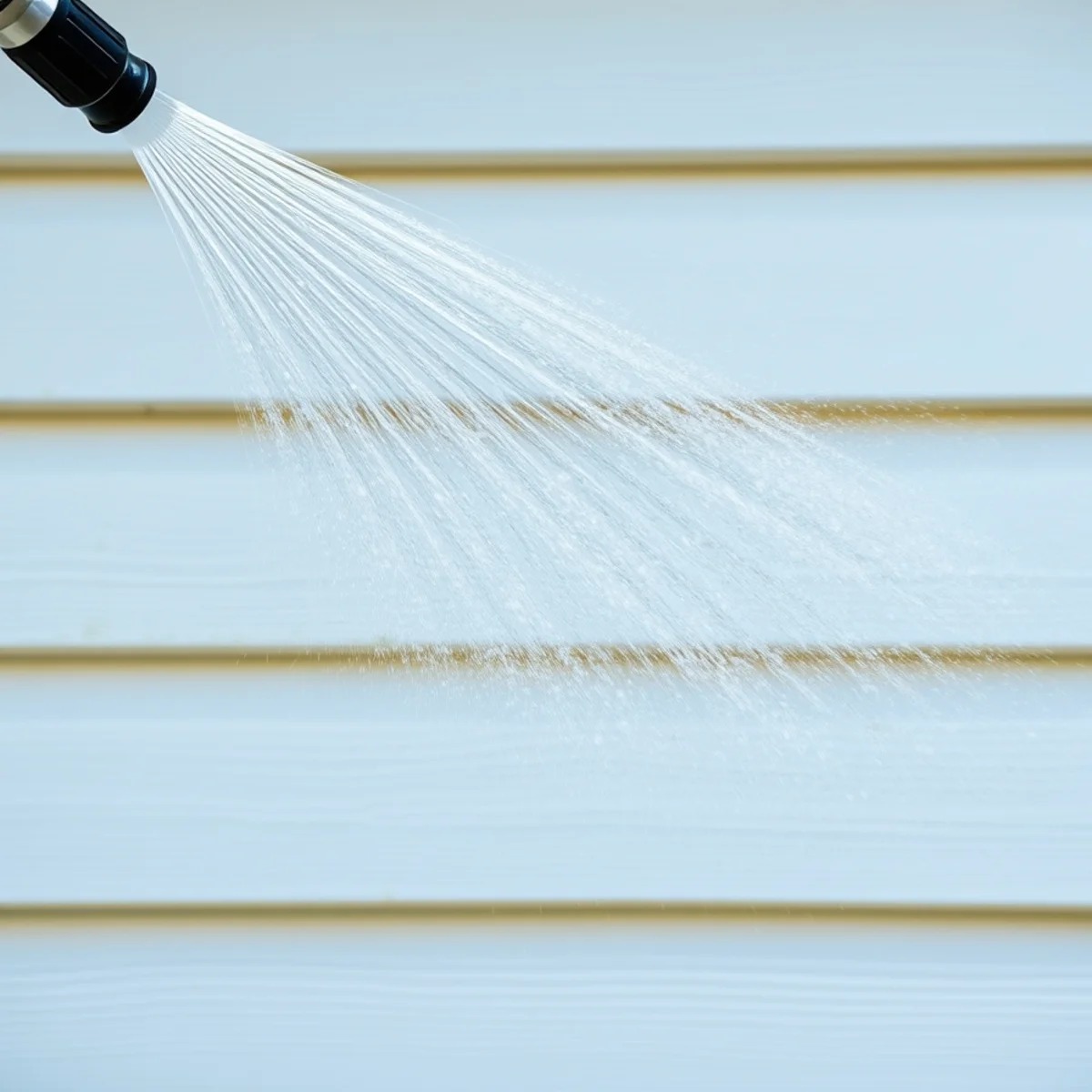
Yes, soft washing is safe for vinyl siding and safer than pressure washing. Here is the safe PSI, the chemistry, warranty facts, and Massachusetts timing.
Vinyl siding is the most common exterior on Massachusetts homes, and homeowners are right to be cautious about how it gets cleaned. The short version: soft washing is the safest, most effective way to clean vinyl, and it is the method manufacturers and exterior pros recommend over high-pressure blasting. This guide breaks down the actual pressures, the chemistry, the warranty fine print, and how to keep your siding looking new through every New England season.
Is Soft Washing Safe for Vinyl Siding? (Short Answer Up Front)
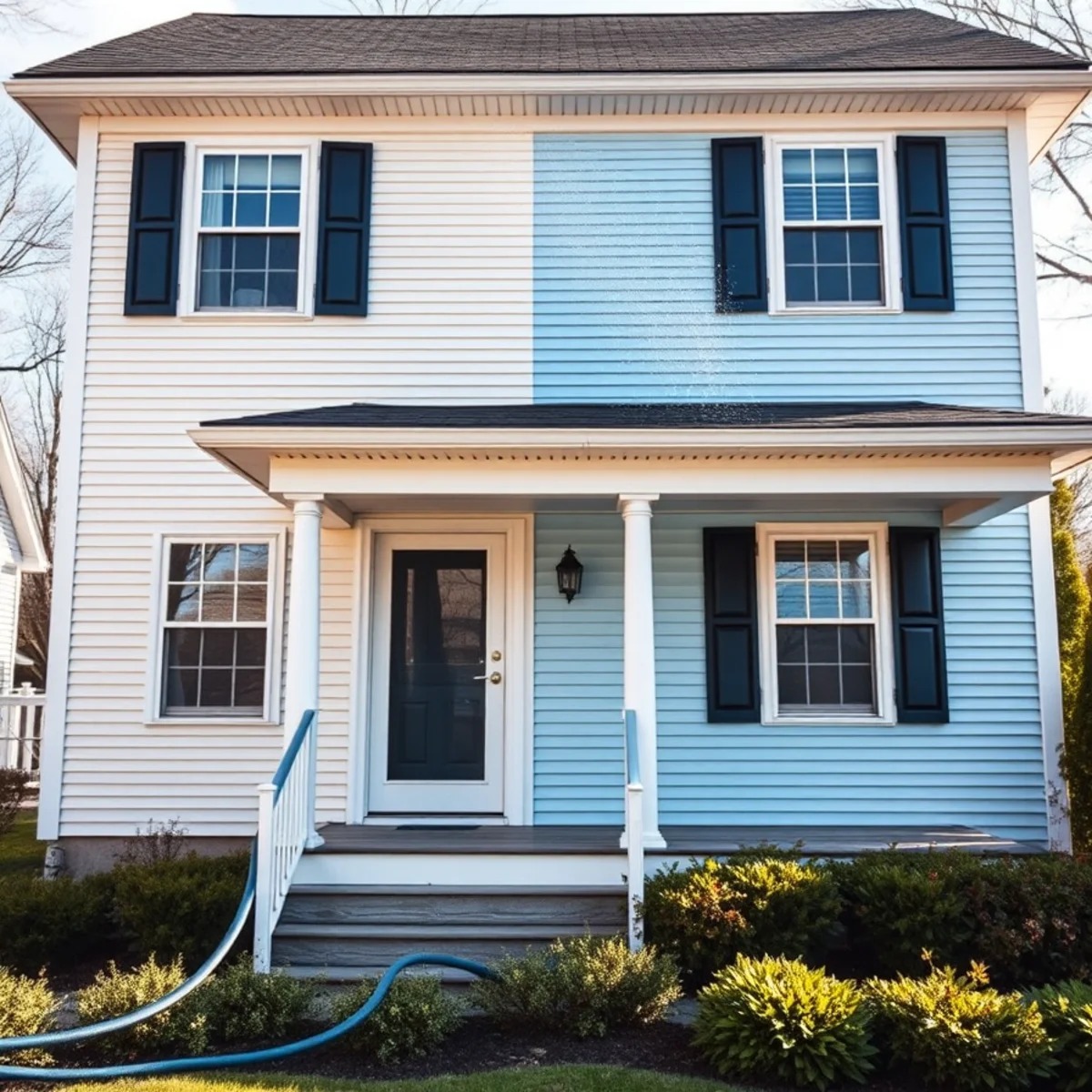
Yes. Soft washing is safe for vinyl siding, and in almost every case it is safer than pressure washing. It cleans with a low-pressure rinse paired with a specialized cleaning solution, so the chemistry breaks down the algae and mold while the water just carries it away. The rinse pressure stays well under the 500 PSI range vinyl tolerates, far below the roughly 1,200 PSI manufacturer limit where damage and warranty problems begin. There is no pounding stream to crack brittle panels, and no force to drive water intrusion behind the siding. Done correctly by a fully insured crew, soft washing removes mold, mildew, and green algae at the root and leaves the panels untouched.
The key idea to hold onto: you don't need more pressure, you need the right chemistry. Water force does not kill algae roots. Biodegradable surfactants and mildewcides do.
What Is Soft Washing and How Does It Work?
Soft washing is a low-pressure washing method that relies on cleaning solution rather than brute force. Instead of hammering the surface, the technician applies a biodegradable detergent that breaks down algae, mildew, dirt, and organic growth, lets it sit for a few minutes of chemical dwell time, then rinses at a gentle pressure closer to a strong garden hose. The cleaning happens in three stages:
- Apply. A measured cleaning solution is applied bottom-up to avoid streaking on a dry wall.
- Dwell. The biocide and mildewcide kill the living growth where it sits. This does the real work.
- Rinse. A low-pressure rinse, top to bottom, carries off the dead growth and dirt.
That middle step separates a soft wash from a quick spray-down. Blasting algae with water removes only the visible top layer, so the green returns within months, while killing it chemically gives you spore removal and genuine regrowth prevention. This is the same approach we use across our soft washing and house washing work.
Soft Washing vs. Pressure Washing: Why Pressure Matters for Vinyl
People use "pressure washing," "power washing," and "soft washing" loosely, but for vinyl the differences are not cosmetic.
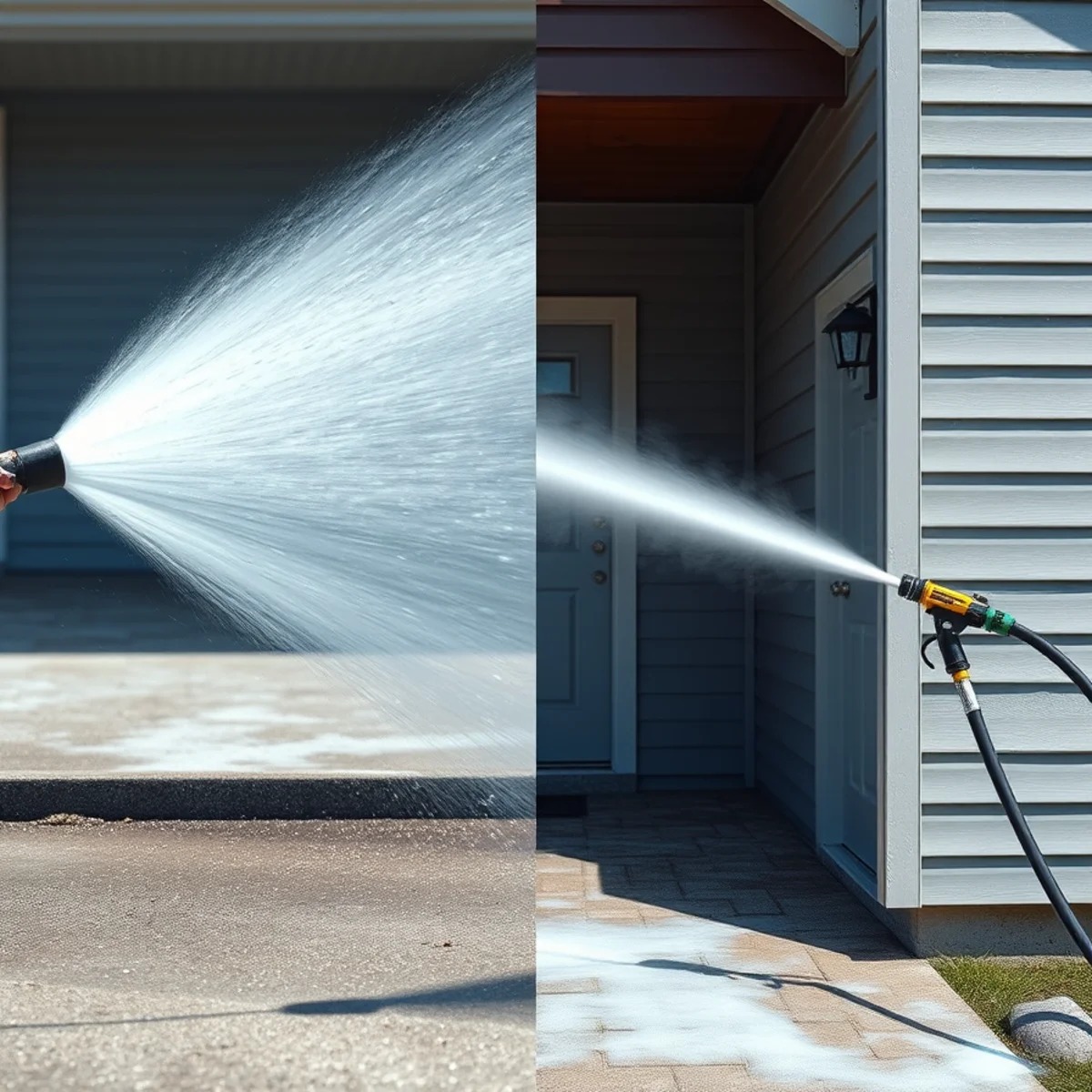
- Pressure washing uses high-PSI water to mechanically strip grime, the right tool for a concrete driveway (2,000 to 3,000 PSI) or some masonry.
- Power washing is the same with heated water, great for concrete cleaning and commercial flatwork.
- Soft washing uses low pressure plus chemistry, the correct method for siding, roofs, and other delicate surfaces.
Vinyl siding looks tough, but it is a thin, flexible panel system engineered to expand and contract as temperatures swing. Aim a concentrated 2,500 PSI stream at it and you can crack a panel, chip the finish, or punch water up under the overlaps. Pressure does not make vinyl cleaner, it just makes it more likely to get damaged. The cleaning power belongs in the detergent, not the nozzle.
Safe PSI for Vinyl Siding and the Manufacturer Limit
Two different numbers get thrown around, and that trips people up. The manufacturer limit commonly cited for vinyl siding is around 1,200 PSI, the ceiling above which siding makers warn you risk damage. The Vinyl Siding Institute (VSI) and manufacturers generally advise low-pressure cleaning and caution against high-pressure equipment.
The actual operating pressure of a soft wash is far lower. The solution is applied through downstream injection at roughly 60 to 100 PSI at the surface, and the final rinse stays under 500 PSI, similar to a hose. We are not creeping up to the 1,200 PSI limit and hoping for the best, we are working a full order of magnitude below it. For context, here are the surface-appropriate PSI ranges a careful crew works within:
- Asphalt shingle roofs: soft wash under 100 PSI
- Vinyl siding: 100 to 500 PSI
- Cedar and wood siding: under 200 PSI
- Historic brick: under 400 PSI
- Stucco and EIFS: under 150 PSI
- Composite decking: 500 to 1,000 PSI
- Concrete driveways: 2,000 to 3,000 PSI
The 1,200 PSI figure is the line you must not cross. Soft washing does not come close, which is exactly why it is the safe choice for vinyl.
How Soft Washing Cleans Without Damaging Vinyl
If the water pressure is so low, what removes the stains? The chemistry. Algae, mold, and mildew are anchored to the siding by a sticky biofilm. A high-pressure stream tears at that biofilm physically, which stresses the panel and only removes the surface layer. The soft wash solution instead penetrates the biofilm, kills the organism, and dissolves the bond holding it to the vinyl, so a gentle rinse sheets the dead growth off the wall. Because the growth is killed rather than knocked loose, the result lasts, with no surviving spores to bloom the next humid week and no force applied to the panels.
What Soft Wash Solutions Are Made Of (Sodium Hypochlorite, Surfactants, Mildewcides)
A professional soft wash mix has three working parts:
- Sodium hypochlorite (SH). The active biocide and mildewcide, the same family as household bleach. It kills algae, mold, mildew, and lichen. Pros start from 12.5% stock bleach and dilute it down, so the working mix on siding typically lands around 0.5% to 1.5% SH, depending on how heavy the growth is.
- Surfactants. The soaps that let the solution cling to a vertical wall, penetrate the biofilm, and rinse clean. Biodegradable surfactants make a soft wash effective and eco-conscious at once, and they are the part that lifts and carries the grime.
- Water. The bulk of the mix. Dilution is everything, because the right concentration cleans thoroughly while staying gentle on the surface and the landscape.
For homeowners who prefer to avoid chlorine chemistry, sodium percarbonate (oxygen bleach) is an alternative on some surfaces, though less aggressive on heavy algae. Matching the solution to the job is why a pro gets a better, longer-lasting result than a one-size-fits-all rental, and why our algae removal and mildew and mold removal work is dialed to each surface.
Does Soft Washing Void Your Vinyl Siding Warranty?
This question should make you put down the pressure-washer rental. Most vinyl siding warranties either require low-pressure cleaning or explicitly warn against high-pressure equipment. Exceeding the recommended pressure, generally the 1,000 to 1,200 PSI range, can damage the panels and give the manufacturer grounds to deny a claim, so a careless DIY pressure wash can cost you your coverage on top of the repair bill.
Soft washing stays comfortably inside those guidelines. It operates well under 500 PSI and uses methods consistent with industry recommendations, the same low-pressure, chemical approach the VSI and roofing groups like ARMA endorse for delicate surfaces, so it is the warranty-safe way to clean vinyl. If protecting your warranty matters, soft washing is the safer choice for both the siding and the paperwork.
Can You Soft Wash Painted or Older Vinyl Siding?
Yes, with adjustments most cleaning companies never mention.
Painted vinyl siding needs a lighter touch, because that paint film can be lifted or bleached if the SH concentration is too high. The fix is simple for an experienced crew: drop the mix below 0.5% SH, test a small inconspicuous area first, and lean more on surfactants and dwell time than on strong chemistry. The paint gets cleaned without getting stripped.
Older and oxidized vinyl is the other case to watch. Aging panels develop a chalky film called oxidation, or chalking. A soft wash cleans the dirt and growth off oxidized siding, but it does not restore lost color or sheen on its own, so heavily chalked panels may benefit from dedicated oxidation removal. And because older Massachusetts siding gets brittle after years of freeze-thaw cycles, the gentle approach matters even more here than on new construction.
Will the Cleaning Solution Damage My Plants, Lawn, or Landscaping?
Handled properly, no. Handled carelessly, it can. The difference is entirely in the prep and the rinse. Here is the checklist a careful crew follows:
- Pre-wet first. Saturate all plants, shrubs, and grass near the foundation with plain water before any solution goes up. Wet foliage dilutes incidental overspray and keeps it from absorbing.
- Cover what is sensitive. Tarp or move potted plants and delicate ornamentals out of the splash zone, and keep beds wet the whole time the solution dwells above them.
- Rinse and neutralize. Flush foliage and soil again with plain water as soon as the wall section is rinsed, which dilutes any residue before it can do harm.
- Mind the runoff. Direct rinse water away from sensitive beds and, on rural properties, away from well heads. Runoff containment and well-water awareness are part of doing this responsibly.
Biodegradable surfactants break down rather than persisting in the soil. The plant-damage stories you hear almost always come from undiluted chemical, no pre-wetting, and no rinse, the exact DIY failure pattern.
Common Vinyl Siding Problems Soft Washing Removes
If your siding looks dingy, one of these is likely the culprit, and soft washing handles all of them:
- Green algae. The classic green film, often caused by Gloeocapsa magma and related organisms, thrives on damp, shaded walls. It is the number-one siding complaint in wooded Massachusetts neighborhoods.
- Mold and mildew. Black and gray speckling, common on north-facing and humid walls.
- Lichen. A tougher crusty growth that needs proper dwell time to kill and release.
- Pollen. The yellow-green dust that coats everything every spring in New England.
- Dirt, road film, and salt residue. Including the salt-air film coastal homes pick up.
Because soft washing kills the growth rather than rinsing it, the streaks stay gone far longer.
Risks of DIY Pressure Washing Vinyl Siding
Renting a pressure washer feels economical until something goes wrong, and with vinyl the failure modes are expensive. These are the most common reasons homeowners call us after a DIY attempt goes sideways:
- Cracking and warping. Brittle older panels crack under a concentrated stream, and Massachusetts siding that has weathered a decade of freeze-thaw cycles is especially vulnerable.
- Water intrusion behind panels. Vinyl overlaps and vents by design. The wrong angle drives water up behind the siding, where it gets trapped against sheathing and insulation. That hidden moisture invites rot and mold you will not see until it is a major repair.
- Oxidation streaks and finish damage. Too much pressure can scar the surface and leave permanent marks on oxidized panels.
- Stripped landscaping and streaking. Undiluted detergent with no pre-wetting kills foundation plants, and working top-down on a dry wall leaves drip lines.
- Voided warranty. Exceeding the manufacturer pressure limit can end your coverage.
How Often Should You Soft Wash Vinyl Siding in Massachusetts?
For most Massachusetts homes, a soft wash once a year, or every 12 to 18 months, keeps siding clean and stops algae from getting a foothold. Shorten the window if your property has heavy tree cover or shade, north-facing walls that rarely see direct sun, proximity to water or low humid ground, or visible streaking already forming.
Timing matters in New England. The sweet spot is late spring to early summer, after the pollen has dropped (usually late May into June), so you clean off the season's pollen coat and head into summer fresh. If you can already see streaks, the growth is active and feeding, and cleaning at the first sign is cheaper than waiting until the whole wall is covered.
How Long Do Soft Wash Results Last?
A properly executed soft wash typically keeps siding visibly clean for one to three years, depending on your environment. Because the cleaning kills the algae and mold rather than just rinsing the surface, there are no surviving spores to bloom the moment conditions get humid again, which is the advantage over a pressure rinse that looks great for a few weeks and then greens up by mid-summer. A sunny, exposed wall can stay clean for years, while a north-facing wall under oaks in a damp Worcester County yard may need attention sooner.
What Does It Cost to Soft Wash Vinyl Siding?
Cost depends on the house, so be wary of any company that quotes a flat number sight unseen. As a general industry reference, soft washing a typical single-family Massachusetts home often falls in the few hundred to roughly a thousand dollars range, very roughly $0.20 to $0.50 per square foot of wall area. Treat that as a ballpark estimate, not a quote.
The factors that move the price are square footage and number of stories, how much growth is present (heavy lichen and algae need more solution and dwell time), access and obstacles like tight lots and dense landscaping, and whether you bundle add-ons. Pairing siding with gutter cleaning, roof, or driveway usually costs less than booking each separately.
Frame the number against the alternative. Vinyl siding replacement runs into the many thousands of dollars, and regular soft washing helps siding reach its full service life, often 30 to 40 years. A periodic clean is cheap insurance on a major part of your home.
DIY vs. Hiring a Professional Soft Washing Company
You can buy a pump sprayer and a jug of bleach, but the gap between DIY and professional results is mostly about control. A pro dials the variables that decide whether the job is safe and effective: SH concentration for your siding's age and condition, dwell time, rinse pressure, nozzle and tip selection, downstream injection ratio, and technique around windows, vents, and electrical fixtures. A pro also has the equipment to reach second-story walls and full insurance if something goes wrong. The honest case for DIY is a single-story home with light dirt and no algae. Hire out for anything with active growth, a second story, painted or oxidized siding, mature landscaping, or a warranty worth protecting, because when the downside is cracked panels or hidden water damage, a professional soft wash is easy math.
Step-by-Step: How Professionals Soft Wash Vinyl Siding Safely
Knowing what a real vinyl siding cleaning looks like helps you judge whether a contractor is doing it right. The crew inspects for cracked panels and loose trim, notes painted or oxidized sections that need a lighter mix, and pre-wets the landscaping. They mix the solution to the siding's condition (0.5% to 1.5% SH, lower for painted vinyl) with biodegradable surfactant, apply it through downstream injection at low pressure bottom to top, allow several minutes of dwell time, then rinse top to bottom under 500 PSI and flush the landscaping again. The process is methodical, not aggressive. The cleaning is thorough, but the siding is never stressed.
Why Massachusetts and New England Climate Makes Algae and Mold Worse
New England's humid continental climate, with cold wet winters and humid summers, is close to ideal for algae, mold, and mildew, which is why Massachusetts homes need cleaning more often than houses in a dry climate. North-facing and tree-shaded walls, common on wooded lots from Worcester to the suburbs, stay damp longest and grow green algae fastest, so they are almost always the first walls to streak. Spring pollen coats siding in a yellow-green film, which is why post-pollen early summer is the prime cleaning window. Near the South Shore, salt-air corrosion and salt film dull siding and hardware, while inland humidity and pollen dominate, and both wash away cleanly with a soft wash.
Whether you are in Cambridge, the coastal South Shore around Quincy, or a leafy inland suburb, the pattern is the same: humid, shaded, seasonal growth that a yearly soft wash keeps in check.
How to Choose a Soft Washing Company in Massachusetts
Not every outfit with a pressure washer knows how to treat vinyl. Before you hire, ask a few questions:
- Are you fully insured? Ask for a certificate of insurance, which protects you if something goes wrong on your property. (It is also reasonable to ask about a contractor's HIC registration for larger exterior work.)
- Do you soft wash siding, or just pressure wash everything? The right answer is a low-pressure, chemistry-based approach for vinyl.
- What do you do to protect my plants? You want to hear pre-wet, cover, rinse, and neutralize, not a shrug.
- How do you handle painted or oxidized siding? A pro will mention adjusting the mix, and consistent local reviews tell you the work holds up.
Be skeptical of low-ball quotes from uninsured operators. The savings vanish the moment a panel cracks or water gets behind your siding. A careful, fully insured local crew that understands Massachusetts siding is worth far more than the cheapest number on the list.
Get a Free Soft Washing Quote from Wash Bros
If your vinyl siding shows green streaks, black mildew, pollen film, or a dull, dingy look, soft washing is the safe and effective fix, and it will not put your panels or your warranty at risk. Wash Bros is a family-run, fully insured exterior cleaning company founded by brothers Louis and Dominic in 2023, serving homeowners across Massachusetts with surface-appropriate methods, biodegradable solutions, and careful landscaping protection. We hold a 5.0 rating across 130 reviews, and a certificate of insurance is available on request.
Ready to refresh your exterior the right way? Contact us for a free estimate, or call directly at +1 (351) 242-0666. We will inspect your siding, recommend the right approach, and leave it looking new again.
Frequently Asked Questions
Need Professional Exterior Cleaning?
Wash Bros provides affordable, dependable pressure washing across Massachusetts. Get your free estimate today.
Get a Free Estimate