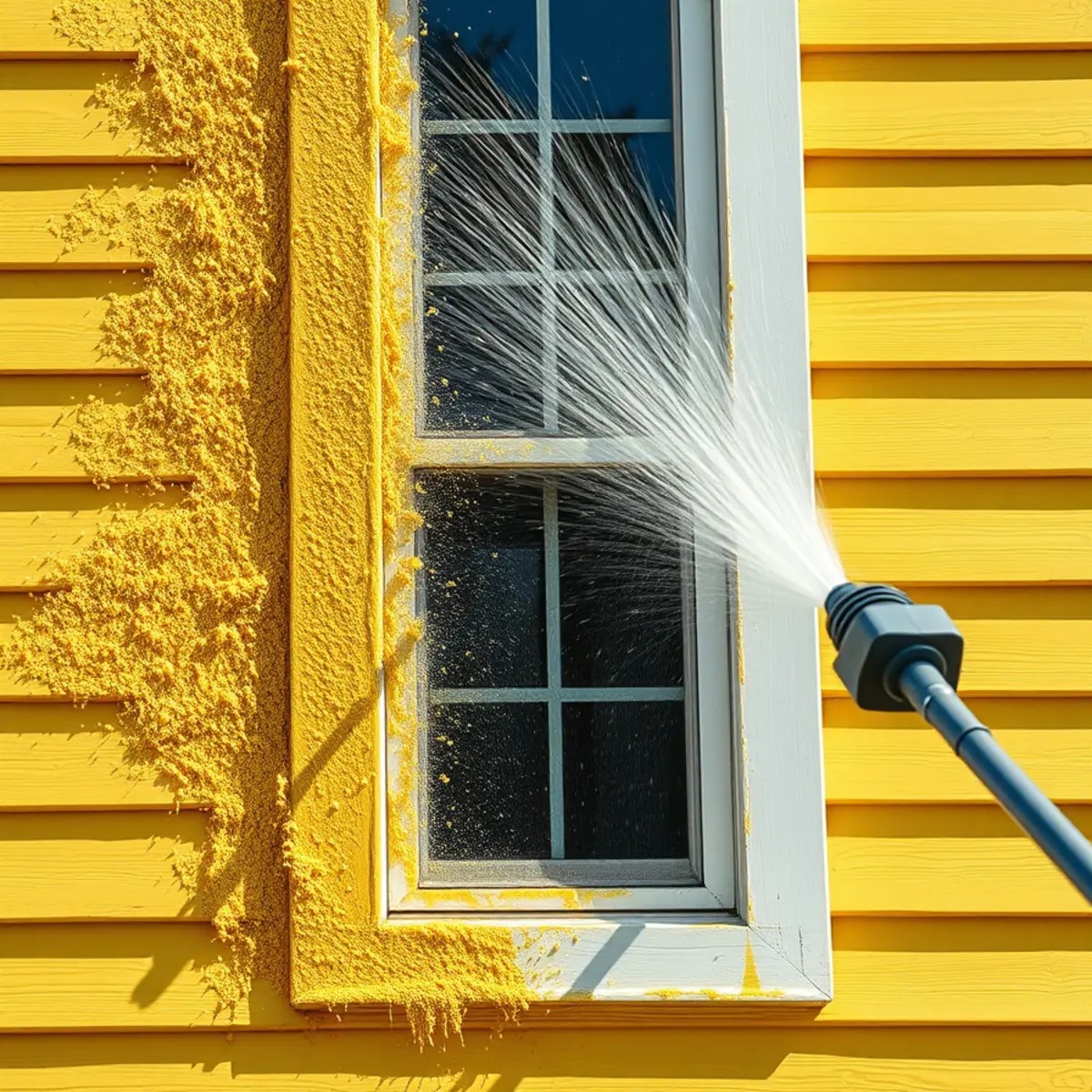
Spring pollen isn't a harmless dusting. See how it stains MA siding, feeds roof algae, and clogs gutters, plus the safe soft-wash way to remove it.
Every spring, a fine yellow-green dust settles over driveways, siding, and windows across Massachusetts, and most homeowners write it off as a harmless cosmetic nuisance that the next rain will rinse away. It will not. Pollen is sticky, mildly abrasive, slightly acidic when wet, and a food source for the algae and mildew that thrive in New England's damp climate. This guide explains exactly what pollen does to your home's exterior, why it does more damage here than in drier regions, and how to remove it safely before it leaves stains that outlast the season.
Why That Yellow-Green Dust Is More Than a Nuisance
The thick yellow film that coats your car hood and porch rail in late May is the visible part of a much larger problem. For every grain you can see, thousands of finer particles you cannot see are settling into the seams of your siding, the valleys of your roof, the pores of your concrete, and the screens on your windows. Left alone, that film does three things: it traps moisture, it feeds biological growth, and it slowly etches certain finishes. None of those are dramatic on day one. All of them compound over a humid Massachusetts summer.
Here is the key message we give every homeowner who calls us in June: you don't need more pressure to fix this, you need the right chemistry and the right timing. Blasting pollen off with a turbo nozzle does more harm than the pollen itself. Below, we walk through the whole exterior system, surface by surface, and the safe way to handle each one.
What Pollen Actually Is and Why It Sticks to Your Home
Pollen is the powdery reproductive material released by trees, grasses, and weeds. Under a microscope, individual grains are not the smooth spheres you might imagine. They are jagged, spiked, and ridged, with a tough outer shell built to latch onto pollinators and survive the trip. That texture is exactly why pollen clings to surfaces and resists a plain water rinse.
Two properties turn pollen from a passing dusting into a maintenance issue:
- A waxy, protein-rich coating. Pollen grains are sheathed in a sticky layer of lipids and proteins. That coating is adhesive, which is why pollen bonds to vinyl, glass, and shingles instead of blowing away. It is also organic, which means it is food for mold and algae.
- Acidity when wet. Dry pollen is fairly inert. But mix it with rain, morning dew, or summer humidity and the residue turns mildly acidic. Held against a finish through repeated wet-dry cycles, that acidity can dull paint, haze glass, and contribute to oxidation on older surfaces.
So when you spray pollen with a garden hose, you are not removing it, you are wetting it. The waxy coating smears, the acidity activates, and the film streaks across the surface instead of lifting off. That is the frustration most homeowners run into, and it is built into the chemistry of the grain itself.
Massachusetts Pollen Season: A Month-by-Month Timeline
Pollen is not one event. In Massachusetts it arrives in overlapping waves from March through fall, and knowing the calendar is the difference between cleaning once effectively and cleaning three times in vain.
- Tree pollen (March through late May). This is the heaviest and most damaging wave for your home's exterior. Oak, birch, maple, ash, and elm release enormous volumes of fine pollen, peaking through April and May. Oak and birch in particular are prolific producers, and Massachusetts is densely wooded with both.
- Pine pollen (late May into early June). This is the thick, unmistakable yellow film everyone notices on decks, pool covers, and light-colored siding. Pine grains are larger and heavier, so they settle visibly and coat horizontal surfaces in a dense layer. The end of pine pollen is the single best signal that it is time to schedule a house washing.
- Grass pollen (late spring through summer). Lighter and steadier, grass pollen keeps a low-level film on surfaces through the warm months.
- Ragweed (August through the first hard frost). The late-season wave. Ragweed is a smaller volume on surfaces than tree and pine pollen, but it extends the season and is worth a fall touch-up before leaves clog the gutters.
For a New England homeowner, the practical takeaway is simple: the worst of the exterior coating is finished by mid-June, and that early-summer window is the right time to reset every surface in one pass.
Why MA Pollen Seasons Are Getting Longer and More Intense
If it feels like the pollen has gotten worse, it is not your imagination. Research on North American pollen trends has documented that growing seasons across the continent have lengthened over recent decades, with New England among the regions seeing the season start earlier and run longer. Some analyses cited by Boston outlets put the extension at roughly two or more weeks compared with 1970, with certain stations seeing larger shifts (these figures are reported estimates, not precise local measurements).
The drivers are straightforward. Warmer winters and earlier springs mean trees break dormancy sooner and pollinate longer. Higher carbon dioxide levels can push some plants to produce more pollen per plant. The net effect across Massachusetts is earlier, heavier, and longer-lasting tree and pine pollen, which is why Boston and Worcester now routinely register "very high" pollen counts during spring peaks. More pollen, sitting on your surfaces for more weeks, in a humid climate, is exactly the recipe for the algae and staining we get called about every summer.
How Pollen Damages Your Home's Exterior, Surface by Surface
Pollen does not treat every material the same. Understanding where it does the most harm tells you what to prioritize.
Siding: Discoloration, Staining, and Trapped Moisture
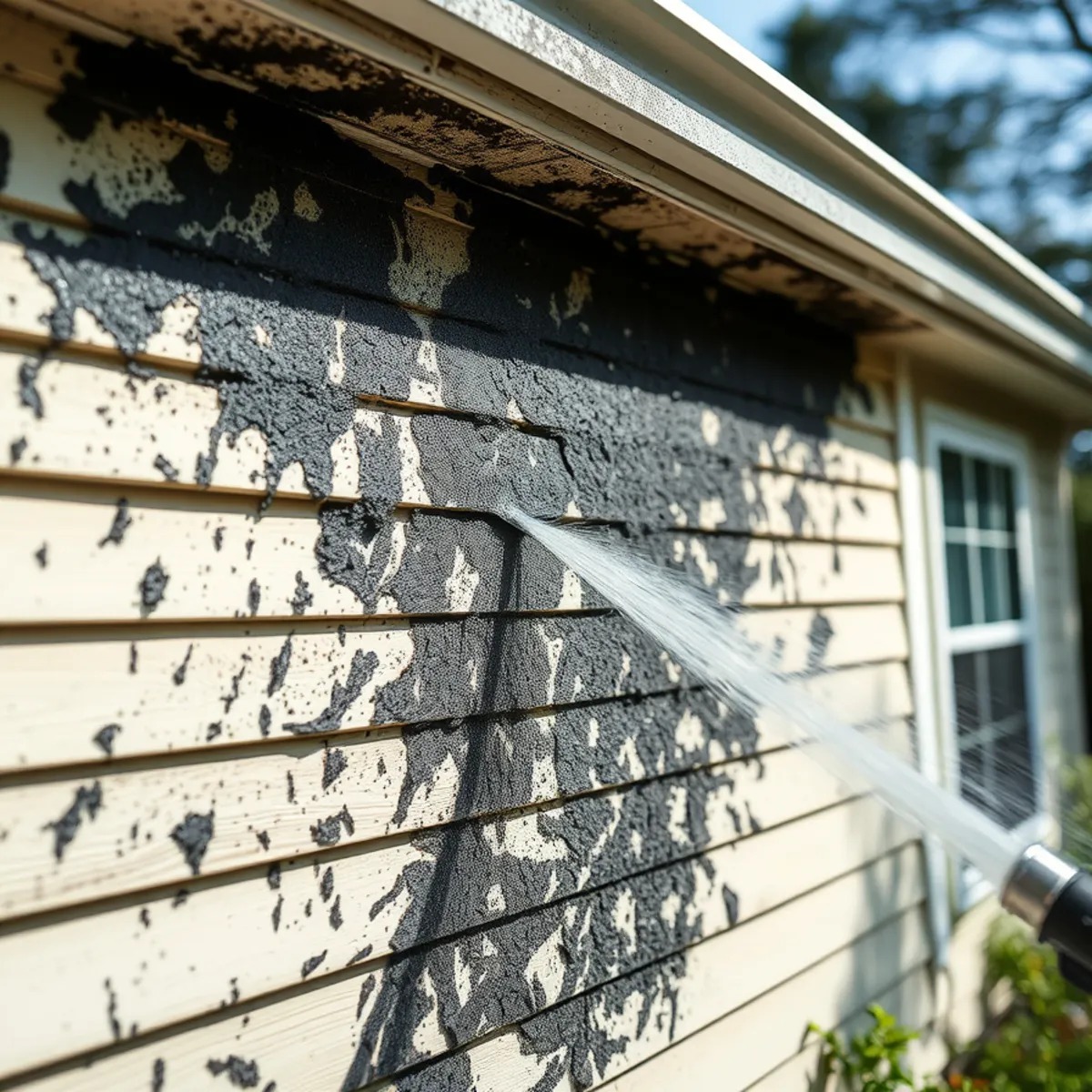
On vinyl, fiber cement, and painted wood siding, pollen settles into the surface texture and the seams and laps where it is nearly impossible to rinse out. Massachusetts homes lean heavily toward light and pastel vinyl with painted trim, and yellow pollen shows badly against those colors. Worse than the look is what happens underneath: the film holds moisture against the surface, and the mild acidity works on the finish through every wet-dry cycle. Over a season or two that contributes to a chalky, faded, prematurely aged appearance. The film also glues ordinary road dirt and pollutants to the wall, accelerating the grime. Gentle soft washing lifts pollen off siding with low pressure and a biodegradable surfactant, without forcing water behind the panels or stripping the finish. For vinyl specifically, pressure stays in the 100 to 500 PSI range, and on cedar siding we keep it under 200 PSI.
Roofs: How Pollen Feeds Black Streaks
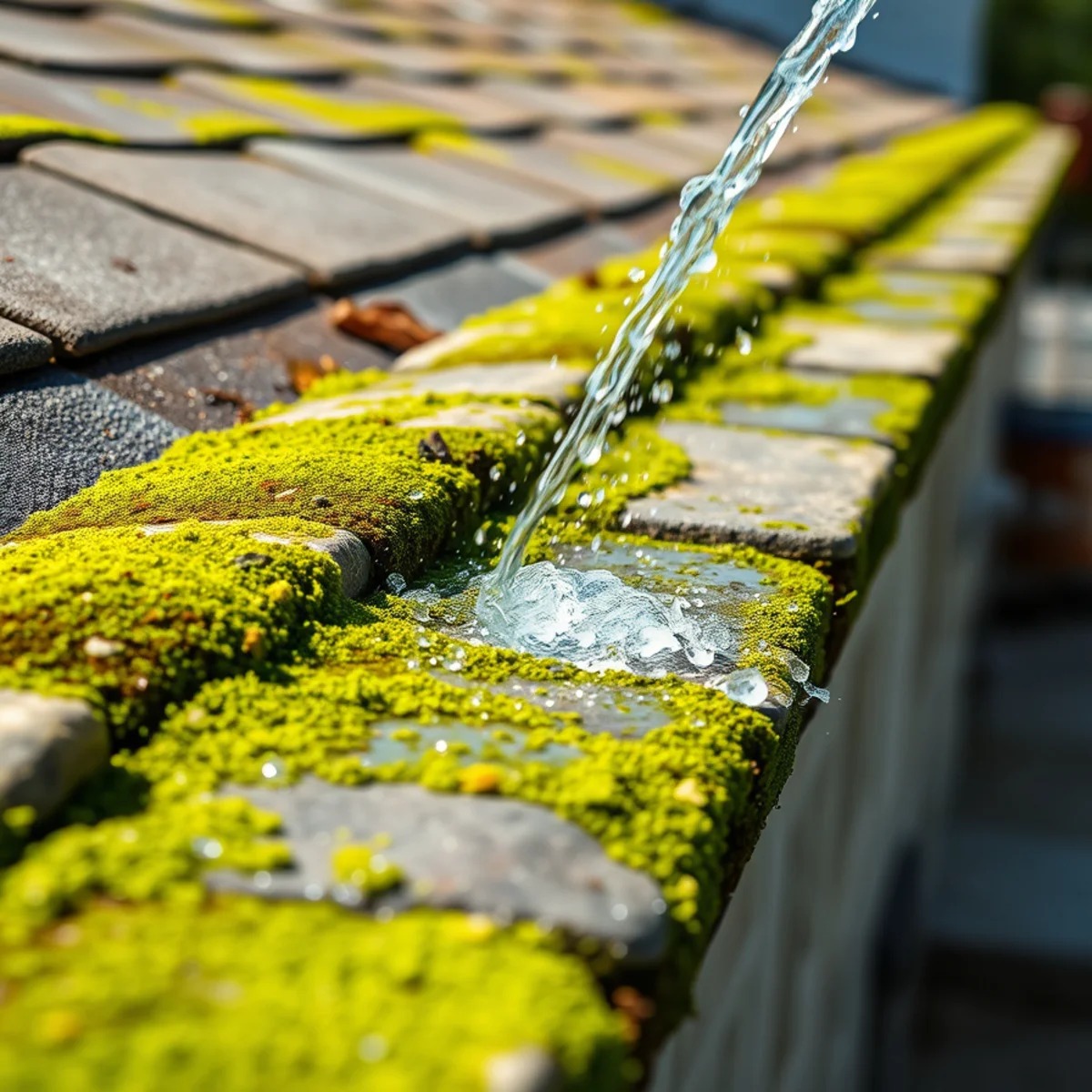
Your roof catches a staggering amount of airborne pollen, and asphalt shingles are the worst place for it to land. The granules that protect your shingles have a slightly rough, porous surface, and the waxy pollen coating bonds right to them. As pollen accumulates in the valleys and washes toward the eaves, it becomes a steady food supply for Gloeocapsa magma, the algae responsible for the black streaks so common on New England roofs. Those streaks are not dirt, they are a living colony feeding partly on the organic film pollen leaves behind. On north-facing slopes and shaded sections that stay damp longest, the growth takes hold first. This is where the key message matters most: pressure does not kill algae, and high pressure strips the very granules that protect your shingles. Proper roof cleaning uses a soft wash under 100 PSI with the right detergent to kill the organism at the root, not blast it off the surface.
Gutters: Paste-Like Buildup and Standing Water
Everything pollen does on the roof ends up in the gutters. Combined with leaf litter and rain, the sticky residue forms a paste-like sludge that clogs downspouts and holds standing water along the roof edge. That trapped moisture rots fascia, feeds growth, and overflows where it shouldn't. A gutter cleaning once pollen season ends clears the paste before it sets, and gutter brightening removes the streaky pollen-and-oxidation tiger striping on the gutter faces themselves.
Decks, Patios, Pavers, and Outdoor Furniture
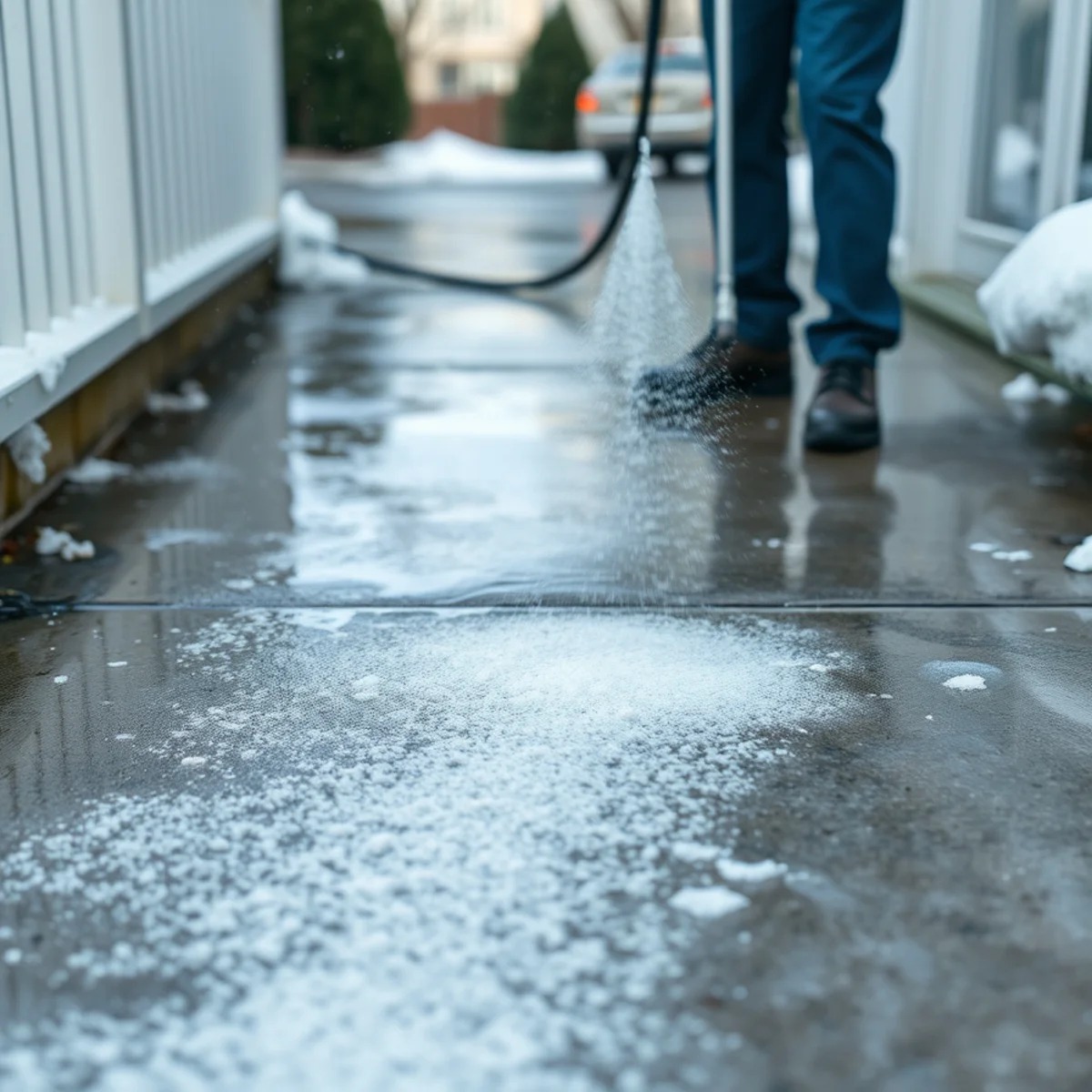
Horizontal surfaces collect the thickest pollen layers, which is why your deck and patio look the worst each spring. On wood and composite decking, the film mixes with mildew and makes boards slick and discolored. On concrete, pavers, and brick, pollen settles into the pores, and in shade and moisture it turns into green algae that gets dangerously slippery. Pine-heavy and oak-heavy wooded suburbs feel this most. Targeted patio cleaning and driveway cleaning clear the film and the organic growth underneath. Pressure is matched to the material: composite decking takes 500 to 1,000 PSI, concrete driveways tolerate 2,000 to 3,000 PSI, and we keep historic brick under 400 PSI to avoid eroding soft mortar joints.
Windows, Screens, Eaves, and the Hidden Hotspots
Pollen on glass is more than a visibility problem. The gritty grains can scratch the pane if you wipe them dry, and the acidic film leaves a haze that ordinary window cleaner just smears. Window screens act like filters and clog with a yellow crust that pushes pollen straight toward the openings you use for fresh air. Eaves, soffits, and the underside of trim are the hotspots homeowners forget entirely, and they hold film the longest because rain rarely reaches them. Exterior window cleaning clears glass and screens the right way and prevents the scratching that comes from dry-wiping pollen-coated panes.
The Real Threat: Pollen as Food for Mold, Mildew, and Algae
The single most overlooked consequence of pollen is that it is a nutrient source. Algae, mildew, moss, and lichen do not need much to take hold in a humid climate, and a layer of protein-rich pollen residue gives them exactly the carbon and organic matter they need to colonize a surface. Spores are always in the air. Pollen is the buffet that lets them establish.
This is why a home that looked clean in March can show green and black discoloration by July. The sequence is consistent: pollen settles first, the film traps moisture, spores land in that damp organic layer, and biological growth digs into the surface. Once established, that growth is far harder to remove than the original dust, and on porous materials it can leave staining that lingers even after the organism is killed. Catching the problem at the pollen stage, before you need dedicated algae removal or mildew and mold removal, is the easier and cheaper path every time.
Can Pollen Cause Permanent Damage or Staining?
Short answer: pollen alone rarely causes permanent damage in a single season, but it absolutely sets the stage for it.
The pollen film itself washes off cleanly if you remove it properly and on time. The lasting damage comes from neglect. On painted and clear-coated surfaces, repeated cycles of acidic, wet pollen contribute to oxidation and dulling over years. On porous materials like concrete, unsealed wood, and soft brick, the organic growth pollen feeds can leave stains that have penetrated the surface, and those may need restorative treatment rather than a simple wash. On shingles, the algae colonies pollen feeds will, given enough time, degrade the granule layer and shorten the roof's service life. So the honest answer is that pollen is a slow problem, not an instant one, and the homeowners who treat it within the season almost never see permanent marks.
The Allergy Angle: Exterior Pollen and Indoor Air Quality
There is a health reason to care about exterior pollen, not just a cosmetic one. Boston and Worcester regularly hit "very high" pollen counts during spring peaks, and the buildup that crusts on your window screens, eaves, and entryways sits exactly where it can be tracked indoors or pulled in through open windows. Reducing the reservoir of pollen near the surfaces you open and walk through can ease the load on allergy sufferers and on your HVAC filter during the worst weeks. It is not a cure for allergies, and we would never claim it is. But for households entering peak season with a sensitive member, clearing the heavy exterior buildup around the home is a reasonable, low-cost part of the strategy alongside running filtration and keeping windows closed on high-count days.
How to Safely Remove Pollen From Your Home Exterior
The wrong method does more damage than the pollen. Here is how the surfaces break down.
Why Soft Washing Beats High-Pressure Washing for Pollen
High-pressure washing seems like the obvious tool for a stubborn film, and it is the wrong one for most of your exterior. On a roof, high pressure blasts away the protective shingle granules and can drive water under the shingles. On siding, it forces water behind the panels and can crack or gouge the surface. On wood it furs and splinters the grain. And here is the part that matters most: pressure does not kill the algae and mildew that pollen feeds. It knocks the surface growth off, the roots stay, and the green is back within months. Soft washing uses low pressure plus a biodegradable surfactant to break down the waxy pollen coating and kill the organic growth at the source. You don't need more pressure, you need the right chemistry.
Pressure Settings and Methods by Surface
A quick reference for matching pressure to material. These are working ranges, not guarantees, and the safe choice is always to start low and test:
- Asphalt shingle roofs: soft wash, under 100 PSI, chemistry does the work
- Vinyl siding: 100 to 500 PSI
- Cedar and soft wood: under 200 PSI
- Stucco and EIFS: under 150 PSI
- Historic brick: under 400 PSI to protect soft mortar
- Composite decking: 500 to 1,000 PSI
- Concrete driveways and walkways: 2,000 to 3,000 PSI
- Metal roofing: 500 to 800 PSI
DIY Pollen Removal: What Works and What to Avoid
For light, fresh pollen on accessible surfaces you can reach safely from the ground, a careful DIY pass is reasonable. Use a garden hose, a bucket of water with a little dish soap, and a soft-bristle brush. Wet the surface, work top to bottom, let the soap sit briefly so it can break the waxy film, then rinse. Never dry-wipe pollen off glass, the grit scratches. Avoid these mistakes:
- No turbo or zero-degree nozzles on siding, roofs, or wood. Ever.
- Never get on the roof. Roofs are a fall hazard and a soft-wash job, not a DIY scrub.
- Skip bleach-heavy big-box mixes that runoff onto your landscaping and well water. Pre-soak plants and contain the runoff.
- Don't chase it during a heavy pollen week. You will be cleaning again in days.
When the job involves a roof, two-story siding, established algae, or a surface you can't reach safely, that is the line where calling a professional protects both the house and you.
Should You Wash During Pollen Season or Wait Until It Ends?
This is the most common question we get in May, and the myth is that you have to wait until every last grain has fallen. You don't, but timing still matters.
The definitive answer for Massachusetts: schedule your main house wash for late May or June, right after the pine pollen finishes. That single, well-timed cleaning removes the entire season's accumulated tree and pine film in one pass and resets your surfaces before summer humidity drives algae growth. Washing in the middle of peak tree pollen in April is mostly wasted effort, the surfaces re-coat within days. The one exception is heavy, visible buildup that is actively feeding growth or sitting on something sensitive, which is worth clearing whenever you notice it. For most homes, the rhythm is one thorough wash in early summer and an optional fall touch-up after ragweed and before the gutters fill with leaves.
Prevention: Keeping Pollen Off Between Cleanings
You cannot pollen-proof a Massachusetts home, but you can cut the buildup:
- Rinse high-traffic horizontal surfaces. A periodic hose-down of decks, porches, and entry walkways stops pollen from compacting, even if it won't fully clean them.
- Trim back overhanging trees. Limbs directly over the roof and deck drop the heaviest concentration right onto your worst-hit surfaces. Thoughtful tree trimming reduces the load.
- Install gutter guards. They keep the pollen-and-leaf paste from packing your downspouts and holding standing water at the eaves.
- Keep up with sealants. A maintained sealant on concrete, pavers, and wood gives pollen and its acidity less porous surface to penetrate and makes the annual wash easier.
- Watch the shaded, north-facing walls. These grow algae first, so they are your early-warning sign that it is time to clean.
Why Hot Water Helps Break Down Pollen Proteins
Because pollen's stickiness comes from a waxy, protein-based coating, heat helps. Hot water loosens that lipid-and-protein film the same way warm water cuts kitchen grease better than cold, letting the detergent break the bond faster and rinse cleaner. For especially caked surfaces, pool decks under pine, or grime-bound pollen on concrete and commercial entrances, hot water pressure washing does the job with less pressure and less dwell time than cold water alone. It is not necessary for every house wash, but it is a real advantage on the heaviest, most stubborn buildup.
When to Call a Professional in Massachusetts
Bring in a pro when the job involves the roof, two-story or hard-to-reach siding, established algae and black streaks, or any surface where the wrong pressure could cause expensive damage. A professional matches pressure and chemistry to each material, kills organic growth at the root instead of just rinsing it, pre-soaks landscaping, and contains runoff to protect your plants and well water. One piece of plain advice when you hire: confirm the contractor carries insurance and ask for a certificate of insurance before anyone touches your roof. An uninsured, low-ball crew that gouges your siding or cracks a shingle valley with a turbo nozzle costs far more than the savings.
How Wash Bros Removes Pollen Safely
Our process is built around the New England pollen calendar and the principle that chemistry, not pressure, does the cleaning. We start by assessing each surface and pre-soaking the surrounding landscaping. Roofs and siding get a low-pressure soft washing with biodegradable surfactants that break down the waxy pollen film and kill the algae, mildew, and Gloeocapsa magma feeding on it, then a gentle rinse. Durable surfaces like concrete and brick get the appropriate controlled pressure. We work top to bottom so the whole exterior system, roof, siding, gutters, decks, and walkways, comes clean in one coordinated visit, with runoff contained throughout. We serve homeowners across the state, from Boston and Worcester to the wooded suburbs like Concord and Newton where pine and oak pollen hit hardest.
Wash Bros is a fully insured, family-run exterior cleaning company founded in 2023 by brothers Louis and Dominic, with a 5.0 average rating across 130 Google reviews and a certificate of insurance available on request. If this spring's pollen has dulled your siding, streaked your roof, or coated your deck, contact us for a free estimate or call +1 (351) 242-0666. We will recommend the safest, best-timed plan to get your home clean and keep it that way through the season.
Frequently Asked Questions
Need Professional Exterior Cleaning?
Wash Bros provides affordable, dependable pressure washing across Massachusetts. Get your free estimate today.
Get a Free Estimate