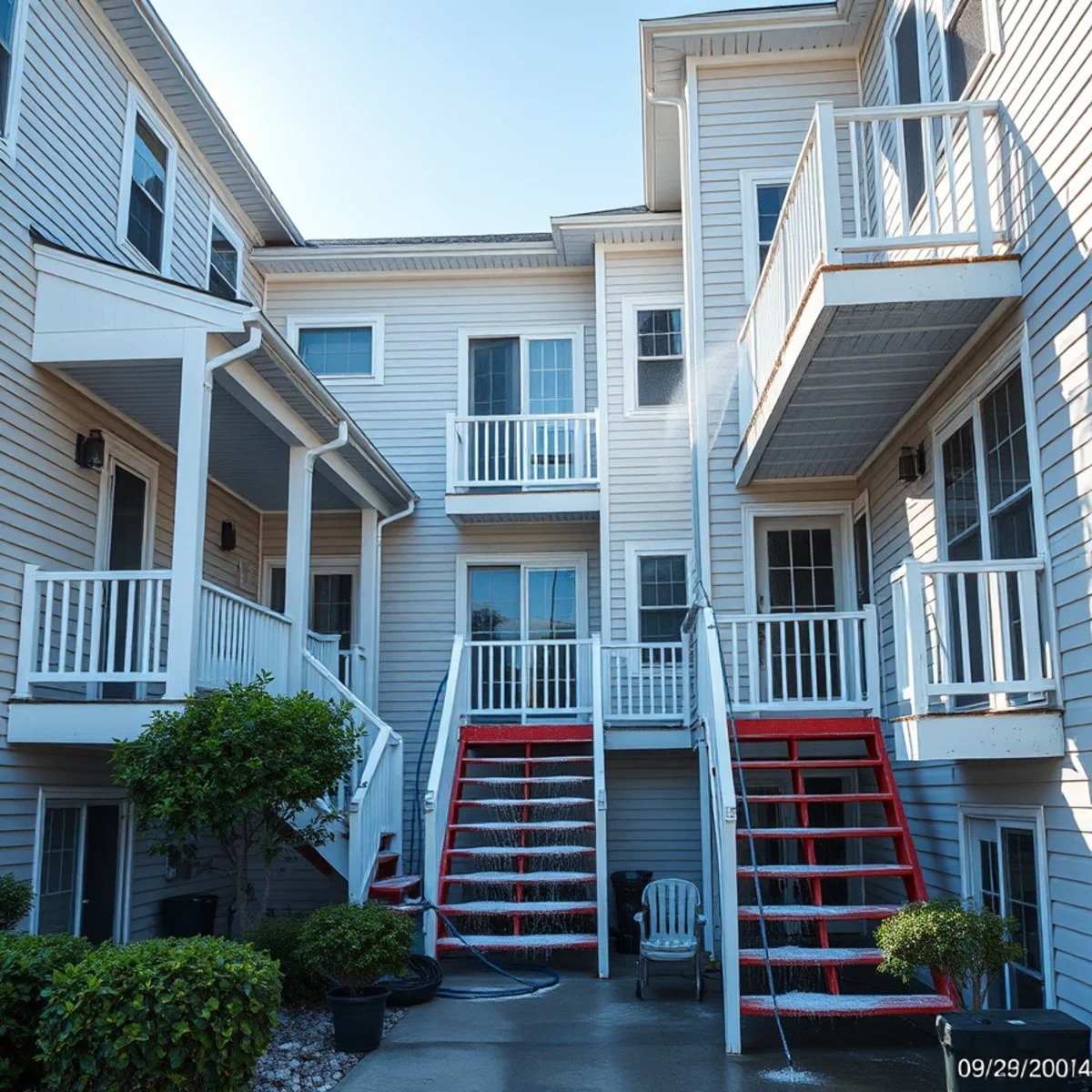
A complete zone-by-zone pressure washing checklist for Massachusetts apartment complexes: soft wash vs pressure, frequency, cost factors, and a printable list.
Keeping a multi-building apartment community clean is a year-round job, and a scattered, building-by-building approach almost always leaves something behind. This guide gives Massachusetts property managers and owners a true zone-by-zone checklist for every exterior surface a complex contains, the right cleaning method and PSI for each one, a frequency table you can budget against, and a printable version you can hand a contractor. Use it to scope a project, write a scope of work, or build a maintenance calendar you can actually stick to.
Why Apartment Complexes Need a Pressure Washing Checklist
A single-family home has one driveway, one set of walls, and a couple of walkways. An apartment complex multiplies all of that across several buildings, shared amenities, and high-traffic common areas, and each surface ages on its own schedule. Without a written plan, it is easy to wash the front entrances every spring while the back stairwells, dumpster pads, and unit patios quietly collect years of grime.
A checklist does four things for a property manager. It makes budgeting predictable, because you know exactly what you are paying to clean and how often. It protects you from liability, because slippery walkways and algae-coated stairs become documented and addressed on a schedule rather than a surprise in a slip-and-fall claim. It supports leasing and resident retention, because clean buildings tour better, lease faster, and hold tenants longer. And it helps with habitability obligations, since mold, mildew, and biofilm on shared surfaces are exactly the kind of thing residents notice and report.
In a New England market where algae, moss, and winter de-icing salt build up fast, consistency is the difference between a community that looks maintained and one that looks neglected. A checklist turns "we should clean that someday" into a line item.
Pressure Washing vs. Soft Washing: Which Method for Which Surface
The single most expensive mistake on apartment properties is using too much pressure on the wrong surface. High pressure has its place on durable concrete and masonry, but it can crack vinyl siding, force water behind panels, strip paint, etch stucco, and shred shingle granules.
Here is the core principle, and it is worth repeating to any contractor who bids your property: you don't need more pressure; you need the right chemistry. Pressure alone does not kill algae, mold, or mildew. It only knocks the surface growth off temporarily. Biodegradable surfactants paired with a measured dose of sodium hypochlorite (the active biocide) actually kill the organism at the root, so the surface stays clean far longer. That means fewer service visits and lower long-term cost across a large property.
When to soft wash (low pressure, right chemistry)
Soft washing uses pressure under roughly 500 PSI plus cleaning solution, and it is the correct method for:
- Vinyl siding (100–500 PSI) and aluminum siding
- Stucco and EIFS (under 150 PSI, very gentle)
- Asphalt shingle roofs (under 100 PSI, essentially a no-pressure rinse)
- Painted clapboard, cedar, and any wood (under 200 PSI)
- Historic brick (under 400 PSI)
When higher pressure is appropriate
Higher pressure, often through a surface cleaner attachment, suits durable horizontal hardscape:
- Concrete sidewalks, walkways, and flatwork (2,000–3,000 PSI)
- Parking lots, dumpster pads, and curbs
- Pavers (with care to avoid blasting out joint sand)
A contractor who reaches for the same wand and the same pressure on siding and on a parking lot is a warning sign. Match the method to the material, every time.
The Complete Apartment Complex Pressure Washing Checklist
Use this master list to make sure no zone is forgotten. The sections that follow explain the method, PSI, and frequency for each.
- Building exteriors: siding, brick, stucco, EIFS, vinyl, building-facing concrete pads
- Breezeways, stairwells, and walkways: treads, landings, railings, ceilings, light fixtures
- Entryways and lobbies: entry mats area, glass approaches, leasing-office frontage
- Sidewalks and curbs: gum, leaf tannin, moss, slip-hazard biofilm
- Parking lots, garages, and carports: oil stains, tire marks, painted striping, deck film
- Dumpster pads and trash enclosures: grease, organic buildup, odor
- Pool decks, patios, and amenity areas: clubhouse, grill stations, lounge surfaces
- Playground and outdoor furniture: structures, benches, tables
- Mailbox kiosks, fences, retaining walls, and signage
- Roofs and gutters: black streaks, algae, gutter face staining, debris
Building Exteriors: Siding, Brick, Stucco, EIFS, and Vinyl
The walls are the largest and most visible surface on the property, so they set the tone for the entire community. Most Massachusetts apartment buildings use vinyl siding, painted clapboard, or brick, and each reacts differently to New England's damp climate. North- and shade-facing walls grow green algae, black streaks, and mildew fastest because they stay damp longest.
- Vinyl and aluminum siding: Never blast it. A soft washing approach at 100–500 PSI with the right surfactant lifts algae and mildew without cracking panels or driving water behind the siding. Dedicated vinyl siding cleaning is an annual to twice-yearly task near woods or water.
- Brick and masonry: Brick is porous and grows moss and lichen in mortar joints. Keep pressure under 400 PSI and let chemistry do the work. White, chalky efflorescence removal is a separate treatment from algae and shows up where moisture migrates through masonry.
- Stucco and EIFS: These are among the most fragile exteriors on any property. EIFS in particular is a foam-backed system that aggressive blasting can puncture. Stay under 150 PSI and rely on brick & stucco cleaning techniques built for soft, controlled application.
- Painted wood: Chalky, oxidized paint signals a finish near the end of its life. A gentle wash protects it, and if repainting is planned, paint preparation washing gives the new coat a clean surface to bond to.
Inspect every building face before washing. Note loose panels, failing caulk, open weep holes, and any sign of water intrusion so the crew can avoid driving water where it does not belong.
Breezeways, Stairwells, and Walkways: The Highest-Liability Zones
Exterior breezeways and stairwells are the zones residents touch most and the ones most likely to generate a slip-and-fall claim. They stay shaded and damp, they rarely see direct sun, and they collect a slick biofilm of algae and mildew that turns dangerous the moment it gets wet. They are also frequently skipped because they are not the building's "front."
Treat any walkway or stair tread that visibly darkens when wet as a safety priority, not a cosmetic one. For these zones the checklist should cover:
- Stair treads, nosings, and landings (the highest fall-risk points)
- Breezeway floors, ceilings, and light fixtures
- Handrails and guardrails
- ADA pathways and accessible routes, which must stay clear and slip-resistant
- Transitions between concrete and entry mats, where biofilm hides
Because these are constant-traffic areas, they need the most frequent attention on the whole property, typically quarterly. Restoring traction here is the clearest example of pressure washing as risk management rather than curb appeal.
Entryways, Lobbies, and Building-Facing Concrete Pads
The concrete pad directly outside each entrance is where winter does its worst work in Massachusetts. De-icing salt and plow sand get tracked onto these pads all season, and freeze-thaw cycles drive moisture into the surface. The result is a white, crusty salt residue and, on aging concrete, the beginnings of spalling.
On older pads, the right move is a gentle, neutralizing rinse rather than aggressive blasting, which can accelerate surface damage on concrete that is already weakened. Concrete cleaning tuned to the surface condition removes salt, grime, and biofilm and leaves a clean, slip-resistant approach for residents and tour traffic. Lobby and leasing-office frontage deserves extra attention because it is the first surface a prospective resident sees.
Sidewalks and Curbs: Gum, Stains, Moss, and Slip Hazards
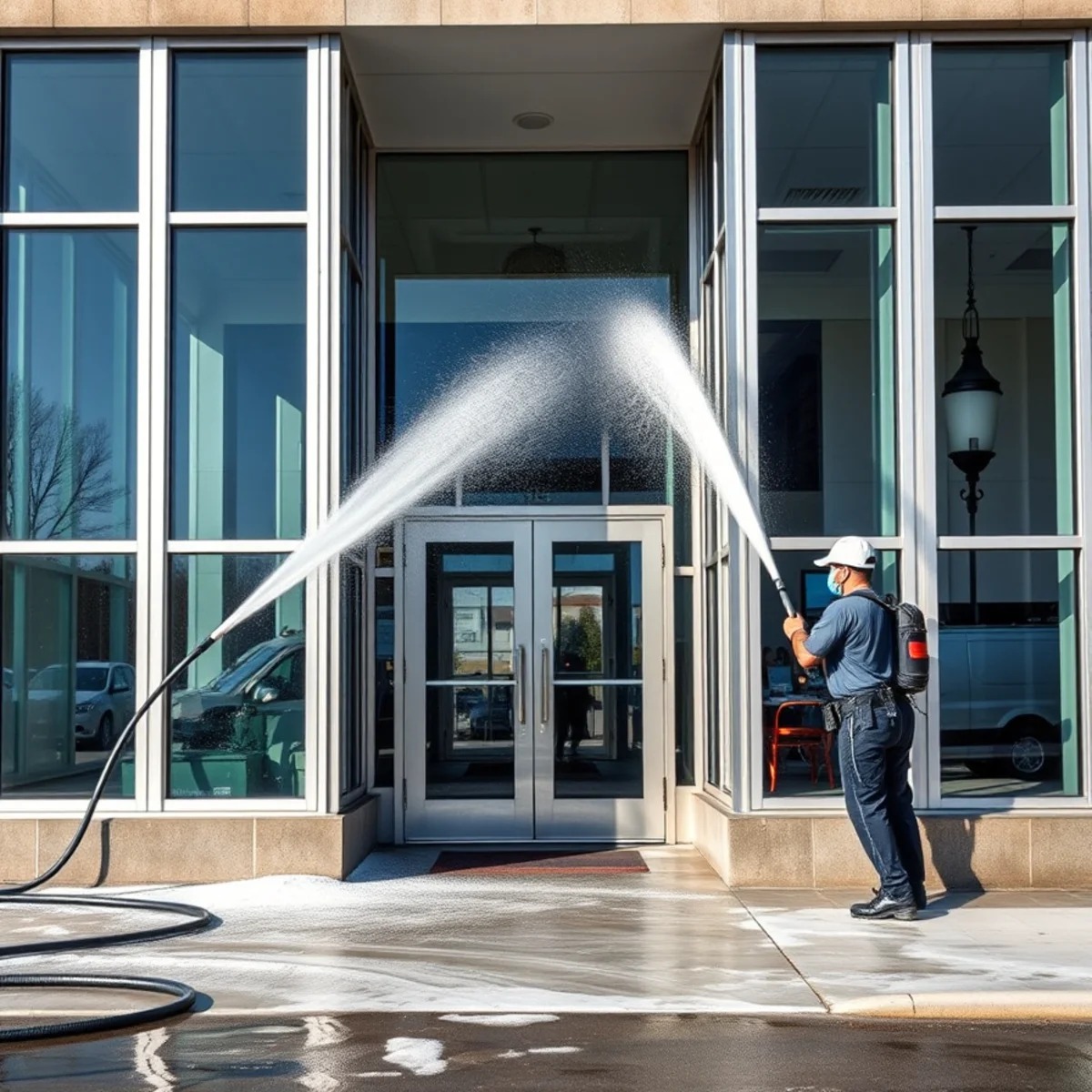
Shared sidewalks connecting buildings accumulate leaf tannin staining, chewing gum, moss in expansion joints, and the same slick biofilm as the stairs. A surface cleaner attachment running at concrete-appropriate pressure (2,000–3,000 PSI) delivers even, streak-free results far faster than a handheld wand, which matters across the linear footage of a large complex.
Sidewalk cleaning should target:
- Chewing gum, which usually needs heat or a dedicated remover, not just pressure
- Black leaf-tannin stains under trees
- Moss and lichen in joints and shaded stretches
- Curbs and curb cuts, where grime makes painted markings disappear
Moss is not just ugly; it holds moisture and creates a genuine slip hazard. Moss & lichen removal treats it biologically so it does not simply grow back in a few weeks.
Parking Lots, Garages, and Carports: Oil and Tire Marks
Parking surfaces take a beating from vehicle traffic, dripping oil, tire marks, and road salt tracked in all winter. Over time, oil stains spread, painted lines fade under a gray film, and parking decks look tired enough to register with prospective residents before they ever step inside a unit.
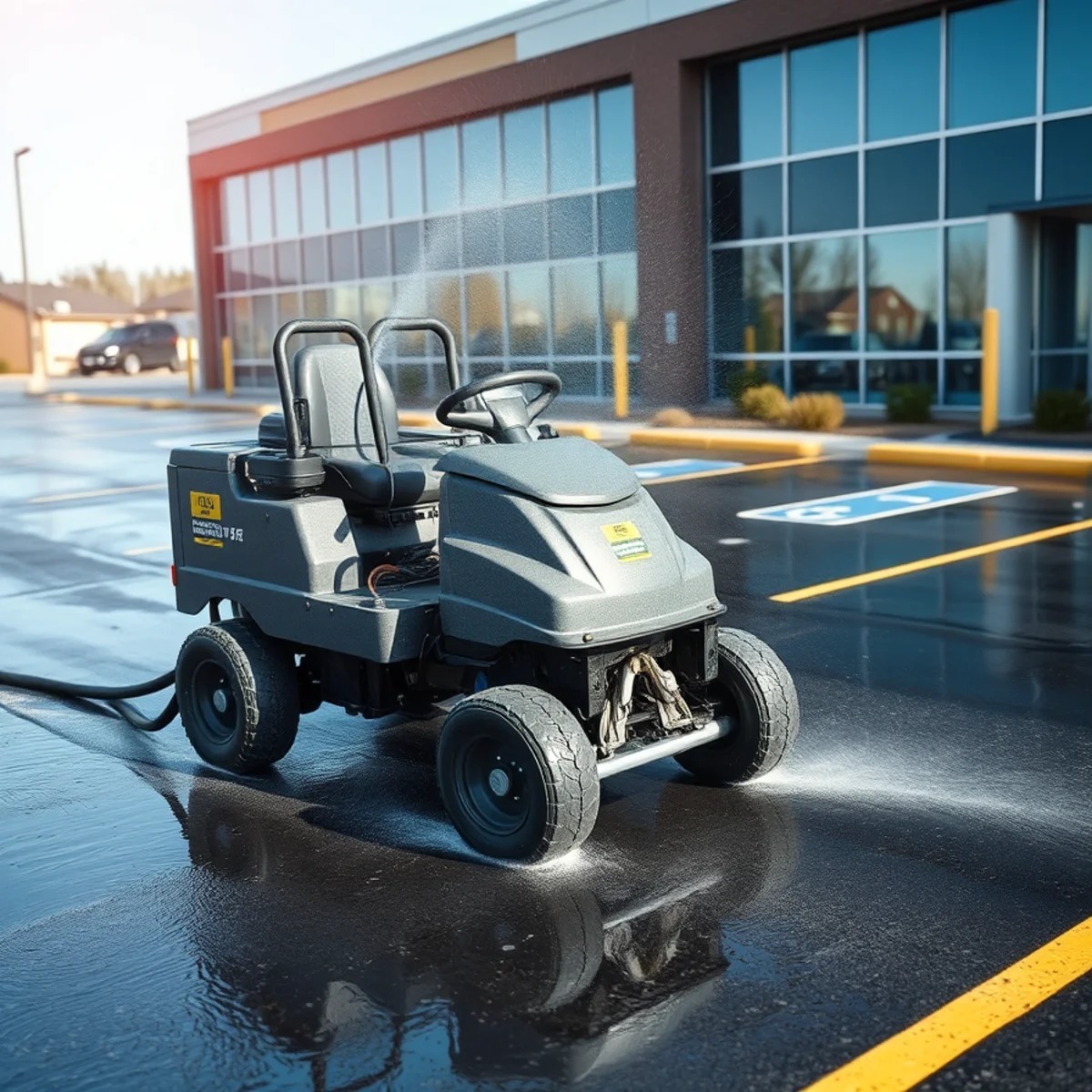
- Surface lots: Periodic washing keeps fluid stains from setting and keeps striping visible. Parking lot cleaning handles the open expanse efficiently with surface cleaners.
- Oil and fluid stains: These are about chemistry, not brute force. Oil stain removal uses a degreaser to pull oil out of porous concrete and asphalt rather than just spreading it around.
- Parking garages: Multi-level structures have low clearances, drains, and tight ramps that surface equipment cannot reach the same way. Parking garage cleaning is built for those conditions, including water management inside an enclosed structure.
- Carports: Covered parking collects bird droppings, dust, and cobwebs on ceilings and posts that an open lot does not.
Dumpster Pads and Trash Enclosures: Grease, Odor, and Hot Water
Dumpster pads and trash enclosures are the dirtiest surface on any apartment property and the one most likely to draw complaints. Rotting organic matter, leaking bin fluid, and grease bake into the concrete and produce a smell that cold water and pressure alone will not touch.
This zone needs hot water pressure washing paired with a degreaser. Heat emulsifies grease so it can actually be lifted and rinsed away instead of smeared, and it does far more to neutralize odor and bacteria than cold water at the same pressure. Because dumpster pads recontaminate quickly, they are one of the highest-frequency items on the calendar, often monthly to quarterly depending on the property and bin volume. A clean enclosure also discourages pests, which is a habitability win, not just a cosmetic one.
Pool Decks, Patios, Amenity Areas, and Outdoor Furniture
Amenity areas are leasing assets, and their condition directly affects how a tour goes. They are also slip-and-fall zones where wet surfaces meet bare feet.
- Pool decks: Algae on a pool deck is both a liability and a code concern. Pool deck cleaning restores traction on the exact surface where people walk wet and barefoot.
- Patios and courtyards: Shared patio cleaning keeps concrete and paver gathering spaces clean; paver cleaning needs a lighter touch so joint sand stays put.
- Wood decks and railings: Composite decking is washed at 500–1,000 PSI and wood at under 200 PSI to avoid gouging the grain. Deck cleaning covers both.
- Playgrounds and outdoor furniture: Structures, benches, and tables collect pollen, mildew, and grime and benefit from a periodic low-pressure rinse, especially after spring pollen season.
Mailbox Kiosks, Fences, Retaining Walls, and Signage
The small stuff reads as "maintained" or "neglected" just as loudly as the buildings. Mailbox kiosks, perimeter and amenity fence cleaning, retaining walls, monument signs, and entry signage all collect algae, road film, and cobwebs. Vinyl and metal fencing soft-wash easily; wood fencing wants low pressure; masonry retaining walls grow the same moss as the buildings. A quick pass on these features during the annual or semiannual service keeps the whole property looking consistent.
Roof and Gutter Cleaning for Multi-Building Properties
Roofs and gutters are out of sight, which is exactly why they get neglected across a multi-building portfolio, and that neglect is expensive. Those dark streaks running down asphalt shingles are not dirt; they are Gloeocapsa magma, a roof algae that feeds on the limestone filler in shingles and shortens roof life. Across a dozen buildings, ignoring it can pull roof replacement years forward.
- Roof surfaces: A no-pressure roof cleaning treatment at under 100 PSI kills the algae and lifts the black streaks without the granule loss high pressure causes. This is pure soft wash, never a blast.
- Gutters and downspouts: Clogged gutters overflow, stain siding, and dump water against foundations. Gutter cleaning keeps the system flowing, which matters even more before New England's heavy fall leaf drop and winter freeze-thaw cycles. The dark "tiger stripes" on the gutter faces themselves are a separate cosmetic fix.
Catching roof algae early on a few buildings is far cheaper than replacing roofs across the entire complex ahead of schedule.
How Often Should an Apartment Complex Be Pressure Washed?
Competitors tend to say "every 6 to 12 months" and leave it there. That is not useful for budgeting. Frequency should follow traffic and contamination, not the calendar alone. Use this as a starting framework and adjust for tree cover, shade, coastal exposure, and bin volume.
| Zone | Typical frequency |
|---|---|
| Dumpster pads & trash enclosures | Monthly to quarterly |
| Breezeways, stairwells, high-traffic walkways | Quarterly |
| Entry pads & sidewalks | Quarterly to semiannually |
| Parking lots & garages | Semiannually to annually |
| Building siding (soft wash) | Annually, twice-yearly near woods/water |
| Roofs | Every 3 to 5 years (sooner if streaking) |
| Amenity decks & furniture | Seasonally, ahead of peak use |
Properties in humid, tree-shaded, or coastal areas of Massachusetts see faster algae and moss regrowth and often land at the more frequent end of every range. Salt-laden air along the coast accelerates exterior staining and corrosion, which is its own frequency driver.
Building a Seasonal Maintenance Schedule
New England weather dictates the rhythm. The practical pressure-washing window in Massachusetts runs roughly April through October, because water freezes on walkways in the cold months and a frozen surface cannot be safely cleaned. Build the calendar around that window.
- Spring (April–May), the anchor service: Wash off winter de-icing salt, plow sand, and the algae that bloomed over the wet months. This is the full-site clean, timed before peak spring and summer leasing turnover so common areas look their best for tours and move-ins.
- Late spring touch-up (late May–June): Tree pollen coats siding, breezeways, and amenity furniture across Massachusetts; a light touch-up after pollen drops keeps the spring clean looking fresh.
- Summer: Focus on amenity areas, pool decks, and patios during heaviest use.
- Fall (early fall for decks): Clean gutters after leaf drop and clear walkways of organic debris before ice season so moss and staining do not take hold over winter.
- Winter: Plan, inspect, and budget. Document problem areas and reserve your spring slot so you are first on the schedule, not waiting out the post-thaw rush.
Tie the schedule to the leasing calendar so the property peaks visually right when tour traffic does. Communities from Boston and Cambridge to Worcester all benefit from this rhythm, with coastal and heavily wooded properties leaning toward the higher-frequency end.
Resident Notification, Site Logistics, and Compliance
A clean property is no good if the service creates chaos. Three areas separate a professional job from a disruptive one.
Resident notification and scheduling
Send a resident notification letter or posted notice at least 48 to 72 hours ahead. Tell residents which buildings and zones are affected, on which dates, and ask them to clear balconies, move vehicles from sections being washed, and close windows. Sequence the work building by building so residents always have a clean, dry path to their door, and respect posted quiet hours so early-morning equipment noise does not generate complaints.
Safety, OSHA, and site logistics
Wet surfaces and equipment in resident areas demand wet-floor signage, cones, and barriers around active zones. Crews working at height on breezeway ceilings, signage, or upper-floor stairwells should follow OSHA practices for ladders and lift equipment. Keep ADA pathways and accessible routes open throughout. A contractor who shows up without signage and a sequencing plan is not ready for a multifamily site.
Water source, runoff, and stormwater compliance
This is the credibility point most local competitors ignore. Massachusetts has MS4 stormwater permit areas, and wash water carrying detergents, grease, or hydrocarbons should not flow untreated into storm drains. A professional crew plans for runoff containment, protects nearby drains, manages the water source, and disposes of wastewater responsibly, consistent with EPA and NPDES expectations. For property managers, that is real liability protection, not just good environmental practice. Wash Bros also pre-soaks landscaping and works with biodegradable surfactants to keep impact low.
Cost, Choosing a Contractor, and the Scope of Work
What drives apartment complex pressure washing cost
There is no honest flat rate for a property this varied. Commercial pressure washing is usually priced per square foot or per project, and on a multifamily site the real cost drivers are: total square footage and number of buildings; the mix of surfaces (a roof soft wash and a greasy dumpster pad cost very differently than open sidewalk); access and height; how heavily contaminated each zone is; and whether the work is a one-time clean or a recurring contract. Bundling the whole property into a scheduled commercial pressure washing or apartment complex pressure washing contract almost always lowers the per-visit cost versus piecemeal calls, because the crew mobilizes once and the chemistry-first approach keeps surfaces cleaner between visits. Be skeptical of a number quoted sight-unseen; it usually means a corner is about to be cut.
What to look for in a commercial contractor
- Insurance: Confirm general liability and workers' compensation coverage, and ask for a certificate of insurance. An uninsured crew injured on your property is your problem.
- Multifamily experience: They should talk fluently about sequencing, resident notices, and runoff before you bring it up.
- Method knowledge: The right answer to "do you soft wash the siding?" is yes, with PSI and chemistry explained.
What a detailed proposal should include
A real scope of work spells out exactly which zones are included, the method and approach for each surface type, the cleaning frequency, who handles resident notification, the runoff and water-management plan, proof of insurance, and a clear post-service walkthrough. Vague one-line quotes hide vague work.
Pre-Service and Post-Service Checklists
Before the crew arrives (property manager)
- Distribute resident notices 48–72 hours out
- Confirm water source access and any spigot locations
- Move or cordon off vehicles in zones being washed
- Clear loose furniture, mats, and planters from work areas
- Flag fragile features, failing caulk, and open windows
- Confirm the contractor's COI is on file
After the work is done (walkthrough and documentation)
- Walk each zone with the crew and confirm it against the scope
- Verify high-liability areas (stairs, breezeways, pool deck) are slip-free
- Confirm runoff was contained and drains protected
- Photograph completed zones for your maintenance records
- Note any surfaces flagged for follow-up or a future visit
- File the dated record for accountability and the next service planning
Keeping this documentation gives you a defensible maintenance history, which matters for both ownership reporting and any future liability question.
Printable Apartment Complex Pressure Washing Checklist
Copy this into a work order or print it for your file:
- Building siding — soft wash, annual (or twice-yearly near woods/water)
- Brick / stucco / EIFS — low pressure, inspect for efflorescence
- Breezeways & stairwells — quarterly, slip-priority
- Entry pads & lobby frontage — quarterly to semiannual, salt removal
- Sidewalks & curbs — gum, moss, tannin; semiannual
- Parking lots & garages — oil/tire stains, striping; semiannual to annual
- Carports — ceilings, posts, bird droppings
- Dumpster pads & enclosures — hot water + degreaser, monthly to quarterly
- Pool deck & patios — seasonal, ahead of peak use
- Playground & outdoor furniture — seasonal, post-pollen
- Fences, retaining walls, mailbox kiosks, signage — annual
- Roofs — soft wash, every 3–5 years or at first streaking
- Gutters — clean before fall leaf drop; brighten faces as needed
- Resident notices sent, signage staged, runoff plan confirmed
- Post-service walkthrough completed and photographed
Put This Checklist to Work
Every apartment community is different, and the smartest plan starts with a walkthrough of your actual buildings, surfaces, and problem spots. Wash Bros, founded by brothers Louis and Dominic in 2023, is a fully insured exterior cleaning company serving multifamily, condo, townhome, and senior-living communities across Massachusetts, with a 5.0 average rating from 130 Google reviews and a certificate of insurance available on request. We will help you build a zone-by-zone maintenance schedule that fits your budget and keeps the property leasing-ready year-round.
Ready to turn this checklist into a plan? Contact us for a free estimate or call +1 (351) 242-0666, and we will map out a clear, surface-appropriate schedule for your complex, whether you manage one building or twenty.
Frequently Asked Questions
Need Professional Exterior Cleaning?
Wash Bros provides affordable, dependable pressure washing across Massachusetts. Get your free estimate today.
Get a Free Estimate