Moss & Lichen Removal Services in Massachusetts
Professional moss & lichen removal from Wash Bros for Massachusetts homes and businesses — affordable, dependable, and designed to restore curb appeal safely.
That green carpet creeping across your north-facing roof slope is not just ugly. It is alive, it holds water against your shingles, and it is quietly cutting years off your roof. The crusty gray-green crust spreading on your pavers and retaining wall is worse, because lichen digs in with root-like anchors that pit stone and stain wood. Left alone, both organisms turn a small cosmetic problem into a rot, leak, and replacement problem.
Here is the part most homeowners get wrong: the answer is not more pressure. Blast a shingle roof with a power washer and you strip the granules that protect it, void the manufacturer warranty, and drive water under the courses. You need the right chemistry, applied at the right pressure, by someone insured to be up on that roof. That is exactly what Wash Bros does across Massachusetts.
What Moss and Lichen Are, and How They Differ (Plus Algae and Gloeocapsa magma)
Three different organisms get lumped together as "the green stuff," and they are not the same.
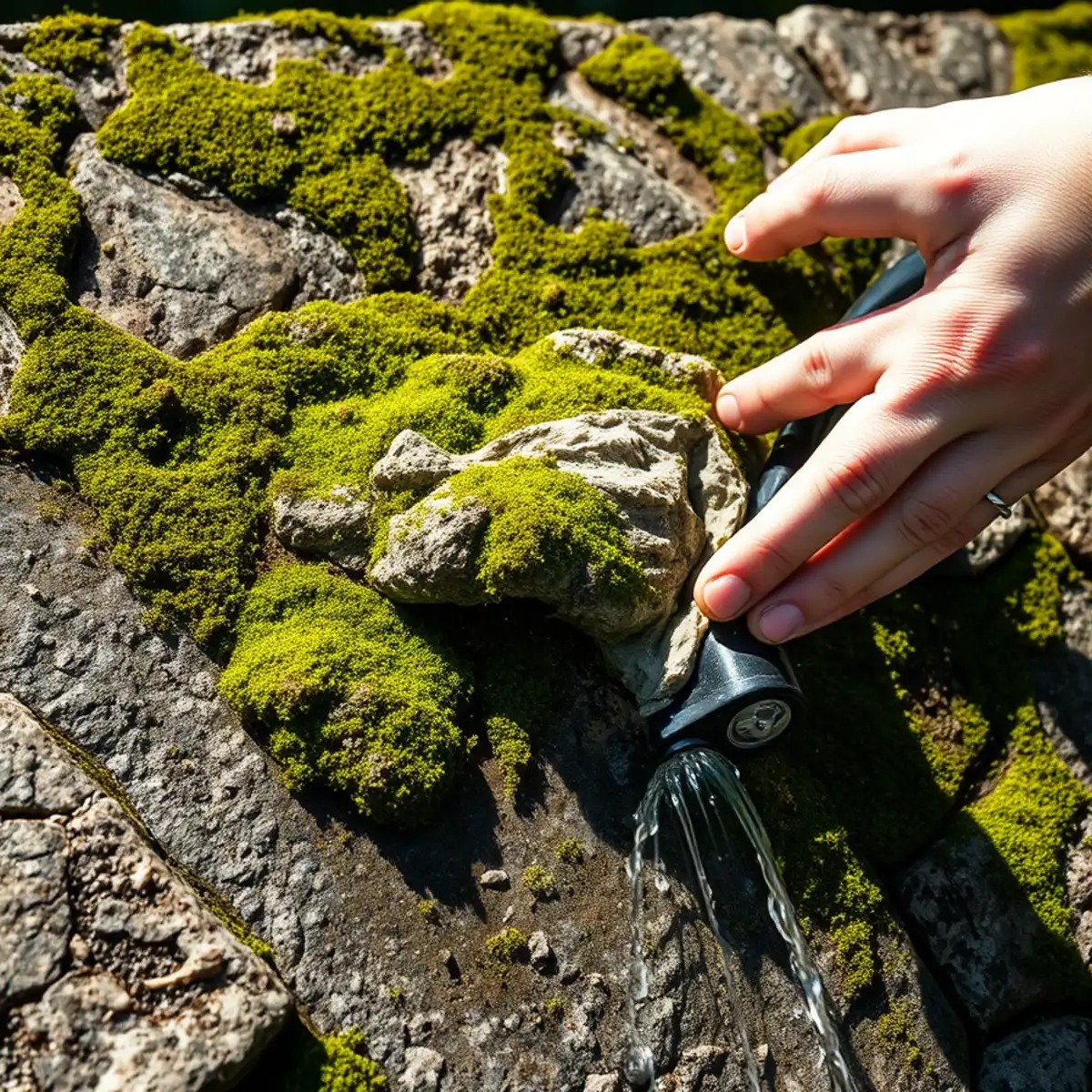
Moss is a true plant. It forms thick, spongy green mats that grow up off the surface, especially in roof valleys, between shingle courses, and along shaded paver joints. Those mats act like a sponge, soaking up rainwater and holding it against the surface long after the rest of your roof has dried.
Lichen is the tough one. It is a composite organism, part fungus and part algae living together, and it bonds to surfaces with hyphae, root-like filaments that physically anchor into shingle asphalt, mortar, and wood grain. Lichen shows up as crusty, flat, gray-green or pale-green spots that look almost painted on. You cannot simply rinse lichen off, and scraping it usually tears the surface underneath.
Algae are different again. The black streaks running down so many Massachusetts roofs are caused by Gloeocapsa magma, a blue-green cyanobacteria that feeds on the limestone filler in asphalt shingles. It does not form mats or crusts. It leaves dark stains and streaks that spread downward with the rainwater. We cover that specific organism in detail on our algae removal page, but it almost always travels with moss and lichen, so we treat all three together.
Why does the distinction matter? Because identification drives the treatment. Moss responds to a thorough soft-wash kill and dwell. Lichen needs more dwell time and sometimes a second application because its anchors hold the colony alive. Algae needs the right surfactant load to break the biofilm. Misjudge which one you are looking at and you either under-treat it or reach for the pressure wand, which is where the damage starts.
How to Tell Moss from Lichen from Black Algae Streaks on Your Property
You can usually identify all three from the ground.
- Raised, fuzzy, bright-green clumps that look like tiny carpet, concentrated in valleys, joints, and shaded edges? That is moss.
- Flat, crusty, circular patches in gray-green or sage, almost fused to the surface, scattered like splatter? That is lichen.
- Dark brown-to-black streaks running vertically down the roof, with no texture you can feel? That is Gloeocapsa magma algae.
Most shaded Massachusetts roofs have all three at once, layered together. The good news is our process handles the full mix in a single visit.
Why Moss and Lichen Grow on Massachusetts Homes
New England is close to ideal habitat for organic growth, and our housing stock makes it worse.
Massachusetts has a humid continental climate: wet springs, humid summers, and long, damp shoulder seasons in fall and early spring where surfaces stay wet for days. Moss spores and lichen fragments are airborne everywhere, and they only need moisture, shade, and a foothold to colonize.
Then there is the tree canopy. The mature oaks, maples, and white pines that make suburbs like Newton and Lexington so beautiful also keep roofs shaded and damp, and they rain down organic debris that feeds growth. North- and northeast-facing slopes, extremely common on the colonials and Capes across this state, barely see direct sun and hold moisture the longest. That is why moss almost always starts on the north side.
Winter compounds it. Snow load and ice sit on shaded slopes for weeks, keeping shingles saturated between thaws and feeding moss that was already rooted. On the coast, from the North Shore down through the South Shore and Cape Cod, salt-laden humidity intensifies the whole cycle. By the time the green is obvious from the street, the organism has usually been working under the surface for a year or more.
Damage Moss and Lichen Cause to Roofs, Siding, Decks, Pavers, and Hardscapes
This is where the cosmetic problem becomes a structural one.
On roofs, moss mats hold water against the shingles and wick it up under the courses by capillary action. That constant moisture rots the wood deck beneath, feeds leaks, and accelerates shingle aging. Lichen is worse: its anchors lift and loosen the protective granules, and granule loss is the single biggest factor in how fast an asphalt roof fails. Every freeze-thaw cycle drives water deeper into the cracks the growth has opened, expanding them a little more each swing. The end result is a meaningfully shorter shingle lifespan and a roof that needs replacing years early.
On siding, especially cedar and the shaded north face of vinyl, moss and mildew trap moisture against the substrate, discolor it, and on wood encourage rot.
On decks, pavers, and hardscapes, moss makes surfaces dangerously slick, holds water in the joints, and on natural stone and concrete, lichen etches and stains. Retaining walls, paver patios, walkways, and foundation lines all hold moisture longer when organic growth blankets them, and that retained water is what drives freeze-thaw spalling in our winters.
None of this gets better on its own. It compounds every wet season.
Surfaces We Treat: Asphalt and Cedar Roofs, Vinyl and Cedar Siding, Concrete, Pavers, Decks, and Fences
Moss and lichen take hold almost anywhere shaded and damp, and we are equipped to treat the full range:
- Asphalt and architectural shingle roofs
- Cedar shake roofs and wood shingles
- Vinyl siding and cedar siding, especially the shaded faces
- Concrete patios, walkways, and steps
- Concrete pavers, brick walkways, and natural stone
- Retaining walls and foundation lines
- Wood and composite decks
- Wood and vinyl fences
Because the growth rarely stays in one place, this service pairs naturally with our roof cleaning and house washing work, and with soft washing for any siding that has gone green on the north side.
Our Soft Wash Moss and Lichen Removal Process
Picture your roof clean from valley to ridge, the crusty lichen gone, the dark streaks lifted, and no granules in the gutters from the cleaning. That is the outcome a proper soft wash delivers, and here is how we get there without harming the surface.
We start by inspecting and identifying exactly what is growing and on what substrate, because cedar, vinyl, asphalt, and stone each have their own pressure ceiling. We protect the surroundings first: landscaping gets a pre-soak and we manage runoff with attention to storm drains and well water, because the same biodegradable solutions that clear your roof should never pool in a garden bed or a drinking-water source. Then we apply a professional cleaning solution tuned to the organism and the surface, and we let it dwell. Dwell time is the whole game. The chemistry kills the moss, lichen, and algae at the root while it sits, which is why temperature and patience matter more than horsepower.
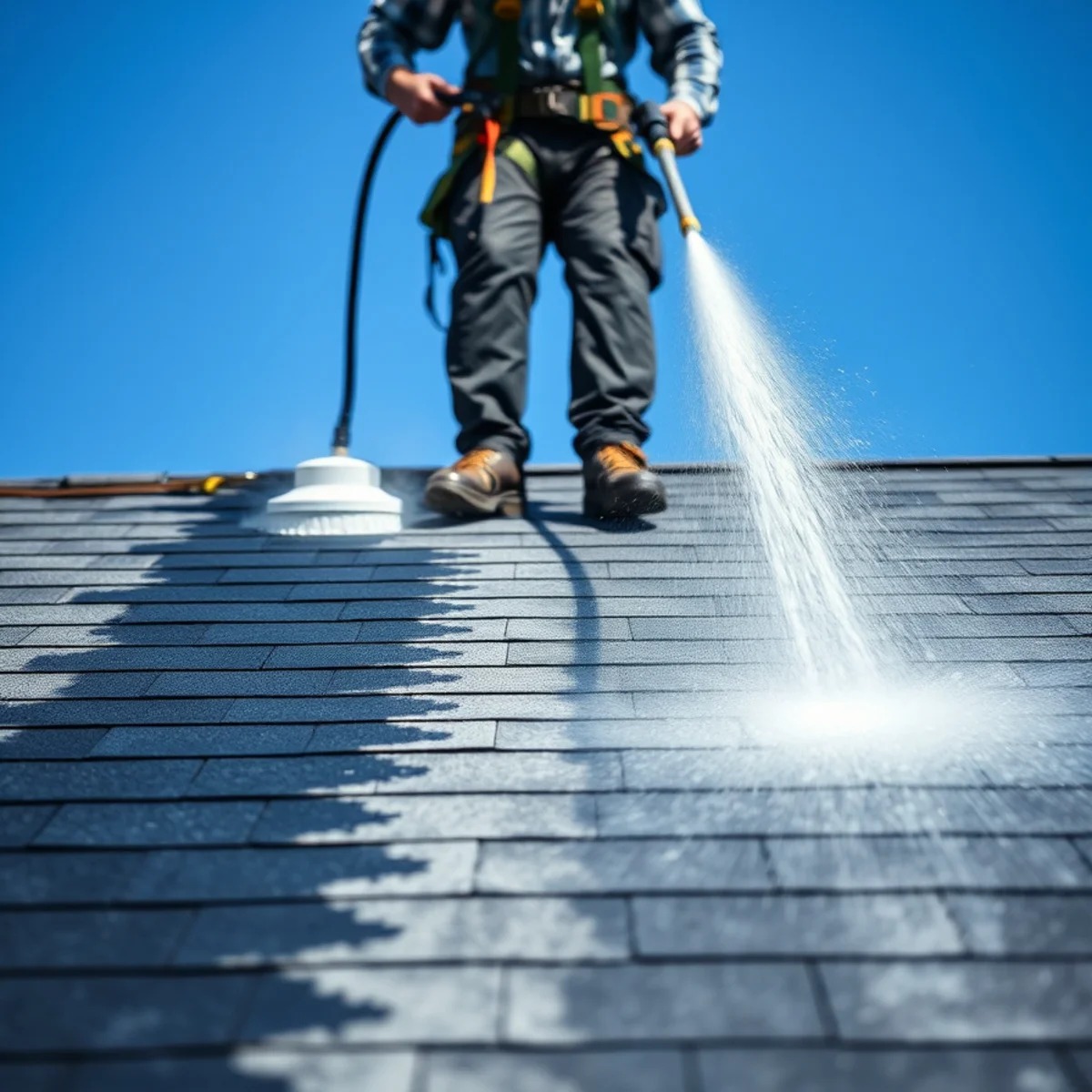
Once the organism is dead, we rinse at low pressure appropriate to the material. On an asphalt roof that means a gentle, non-pressure rinse well under 100 PSI, more flow than force. On cedar we work under 200 PSI and hand-brush where needed. The dead moss and lichen then release over the following days and weeks as wind and rain finish the job, which is normal and expected. We finish by treating the surface to slow regrowth, so you are not back where you started in a single season.
This is the ARMA-approved approach. The Asphalt Roofing Manufacturers Association specifically endorses low-pressure, chemical-based cleaning for shingle roofs, precisely because pressure is what destroys them.
Why Soft Washing Beats High-Pressure Power Washing for Moss and Lichen
The instinct is understandable: the growth is stubborn, so hit it harder. On these surfaces, that instinct will cost you a roof.
High pressure does not kill the organism. It only knocks off the part you can see, leaving the rooted base alive to regrow within months. Worse, the pressure that finally dislodges lichen also blasts away shingle granules, lifts and loosens shingles, drives water under the courses and behind siding, and gouges old mortar. On cedar it strips the soft grain. None of that solves the problem, and all of it shortens the life of the surface.
Soft washing flips the logic. Biodegradable surfactants and the cleaning solution do the killing; water only rinses. You remove the organism at the root, with no mechanical damage, and you slow the regrowth on top of it. For asphalt shingles, cedar, vinyl, and stone, low-pressure non-pressure roof cleaning is not the gentle-but-weaker option. It is the more effective one.
You don't need more pressure. You need the right chemistry.
The Cleaning Solutions We Use
The active workhorse for organic growth is sodium hypochlorite, applied at a controlled, surface-appropriate strength. It is what actually kills moss, lichen, algae, mildew, and mold at the root rather than just rinsing the surface. We pair it with surfactants that let the solution cling and penetrate the biofilm and lichen anchors instead of running straight off, and we keep our mixes biodegradable and as eco-conscious as the job allows.
Just as important is what surrounds the application. We pre-soak landscaping, manage runoff, and stay mindful of storm drains, septic, and well water. Strong chemistry handled carelessly kills plantings and contaminates groundwater. Handled correctly, it clears your roof and leaves your garden untouched.
Preventing Regrowth: Zinc and Copper Strips, Treatments, and Maintenance
Killing the current growth is half the job. Keeping it from coming back is the other half.
The most durable physical prevention is metal. Zinc strips or copper strips installed along the ridge release trace amounts of metal ions every time it rains, and that runoff washes down the slope and suppresses new moss, lichen, and algae. Copper is the more aggressive biocide; zinc is gentler and very common on residential roofs. Both work by the same principle and both have a realistic service life of roughly five to eight years before the exposed metal needs refreshing. Coverage is a factor of how far the rainwater carries the ions, so placement near the ridge matters, and very wide or complex roofs may need supplemental strips lower down.
Metal strips plus a periodic preventive treatment and a sensible cleaning cadence is what actually keeps a shaded Massachusetts roof clear long term. A one-time clean with no prevention on a wooded north slope will green up again, and faster than you would like.
How Often Moss and Lichen Removal Is Needed in Massachusetts
For most Greater Boston homes, a cleaning every two to three years keeps growth from ever getting established. Tree-shaded and wooded lots green up faster and often want attention on the shorter end of that range, sometimes more often. Open, sunny roofs with good airflow can go longer.
Timing matters as much as frequency. Spring and fall are the best windows in Massachusetts because the milder temperatures support proper cleaning-solution dwell time, and treating before another wet season locks fresh growth back into the surface keeps you ahead of the cycle rather than chasing it.
Moss and Lichen Removal Cost Factors in Massachusetts
We do not quote blind numbers online, because honest pricing depends on what we are actually looking at. The factors that move a moss and lichen removal estimate include:
- Surface and material. A delicate cedar roof, a steep asphalt slope, and a flat paver patio each demand different chemistry, technique, and time.
- Roof pitch, height, and access. Steep, tall, or hard-to-reach rooflines take more setup and safety rigging.
- Square footage and how much surface is affected. More area and heavier colonization mean more solution and more dwell.
- Severity and type of growth. Thick lichen with established anchors often needs more dwell, and occasionally a second pass, versus light surface moss.
- Prevention add-ons. Installing zinc or copper strips, or scheduling recurring maintenance, changes the scope.
- Site protection needs. Extensive landscaping, well water, or sensitive runoff areas require extra containment care.
We give you a clear, free estimate after we understand your specific roof or hardscape, with no fabricated round numbers and no surprises.
DIY Moss Removal vs Hiring a Professional
DIY moss removal is one of the most common ways homeowners damage their own roof.
The problems stack up fast. Pressure-washing strips granules and voids the shingle warranty. Bleach-heavy home remedies, mixed wrong and applied without containment, kill landscaping and streak the surface. Scraping only removes what you can see and leaves the rooted base alive. And all of it happens while you are standing on a wet, slick, steep roof, which is a genuine fall hazard. Many manufacturers also specify professional, low-pressure cleaning to keep the warranty valid, so the wrong DIY method can quietly cost you that coverage right when you need it.
A trained, insured crew kills the organism at the source, uses surface-correct chemistry and pressure, protects your plantings and runoff, and works safely on the roof. The job stays done, the warranty stays intact, and you stay off the ladder.
Our Service Guarantee, Insurance, and How to Vet Any Contractor
Wash Bros is fully insured, and we will provide a certificate of insurance on request. That sentence matters more than any marketing line, so let me be blunt about how to vet anyone you let near your roof.
Ask for proof of insurance before work starts, and get the certificate, not a verbal yes. An uninsured washer who falls off your roof or floods water behind your siding becomes your liability and your repair bill. Ask what pressure they use on your specific surface and whether they follow the ARMA low-pressure standard for shingles. Ask how they protect landscaping and manage runoff. The low-ball quote from someone with no coverage and a power washer is the most expensive option on the table the moment something goes wrong.
We are a local, family-run business, started in 2023 by brothers Louis and Dominic, and we hold a 5.0 average across 130 Google reviews from Massachusetts homeowners who wanted the job done right the first time. Our work is satisfaction-focused, and we treat every roof and walkway as carefully as our own.
Massachusetts Towns and Areas We Serve
We treat moss and lichen across Greater Boston, MetroWest, the North Shore, the South Shore, and Worcester County, including Worcester, Boston, Newton, Lexington, and Shrewsbury, along with the surrounding wooded and coastal towns where shade and humidity make organic growth a constant. If your home sits under trees or backs onto woods anywhere in eastern or central Massachusetts, we serve your area.
Get a Free Moss and Lichen Removal Quote
If moss is creeping across your roof valley or lichen is crusting your pavers, the longer it sits, the more it costs you in shingle life and surface damage. Clear it now, with the right chemistry and the right pressure, before another wet New England season locks it back in.
Call Wash Bros today at +1 (351) 242-0666 for a free, no-pressure moss and lichen removal estimate anywhere in Massachusetts.
Problems We Solve
- Thick green moss mats holding rainwater against your shingles and rotting the roof deck underneath
- Crusty gray-green lichen anchoring into asphalt, mortar, and wood, lifting granules and shortening shingle lifespan
- Black Gloeocapsa magma algae streaks running down shaded, north-facing roof slopes
- Slick, moss-covered decks, pavers, walkways, and retaining walls that hold moisture and become hazards
- Growth returning within months after pressure washing or DIY scraping that never killed the root
- Voided shingle warranties and damaged surfaces caused by high-pressure cleaning and bleach-heavy home remedies
Our Cleaning Process
- 1
Inspect the surface and identify problem areas
- 2
Protect nearby landscaping, fixtures, and finishes
- 3
Apply the correct cleaning method for the surface
- 4
Wash and rinse thoroughly with professional equipment
- 5
Final quality check and walkthrough with you
Why Choose Wash Bros
- Affordable, upfront pricing
- Dependable scheduling
- Experienced exterior cleaning team
- Surface-safe process, every job
- Residential & commercial options
- 5.0 stars across 130 reviews
Moss & Lichen Removal Across Massachusetts
We provide moss & lichen removal in 351 Massachusetts cities, including:
Moss & Lichen Removal FAQs
Related Services
Roof Cleaning
Safe soft wash roof cleaning across Massachusetts that removes black streaks, moss, algae and lichen without harming your shingles or warranty.
Read More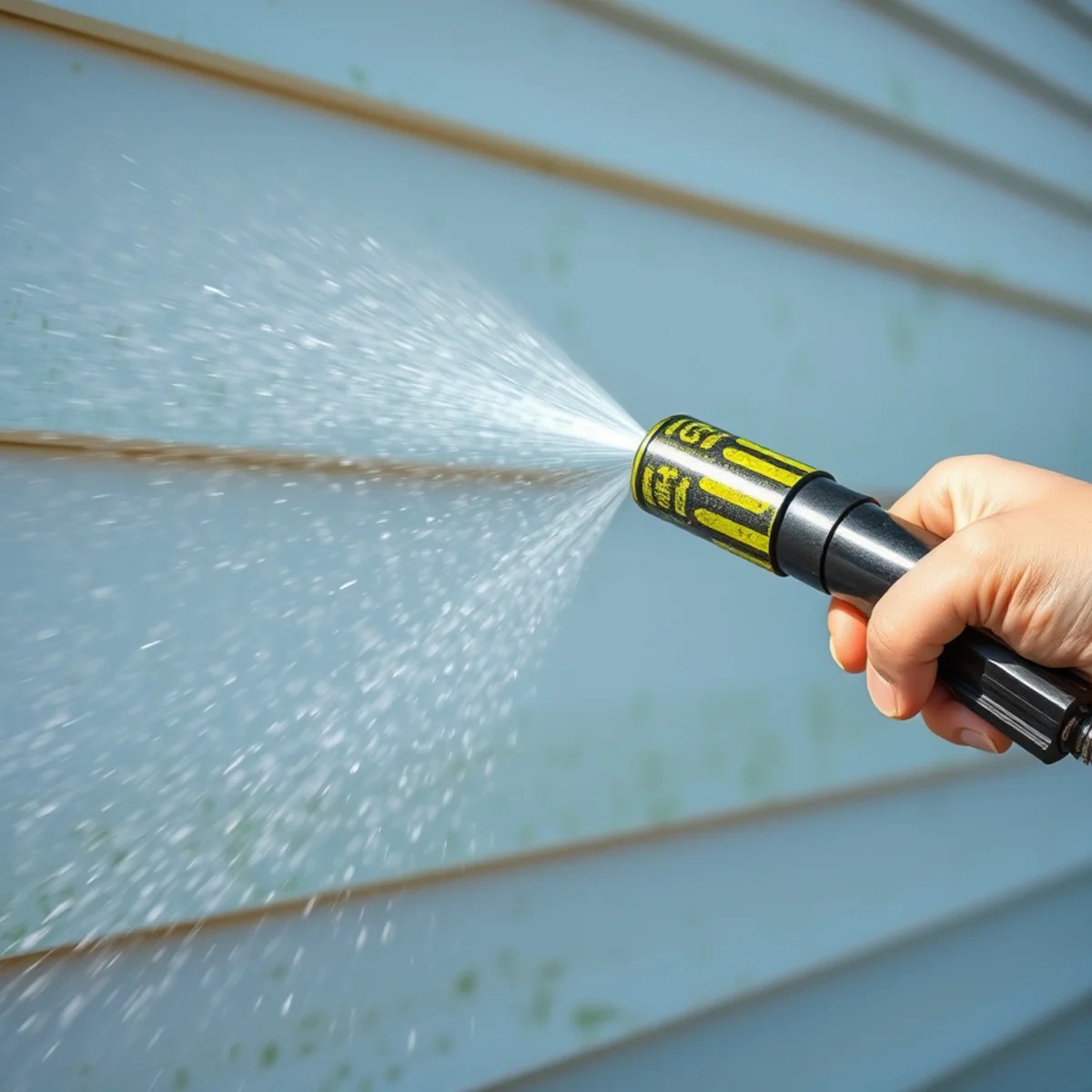
Soft Washing
Low-pressure soft washing that kills roof algae, mold, and black streaks at the root, safely cleaning MA roofs and siding.
Read More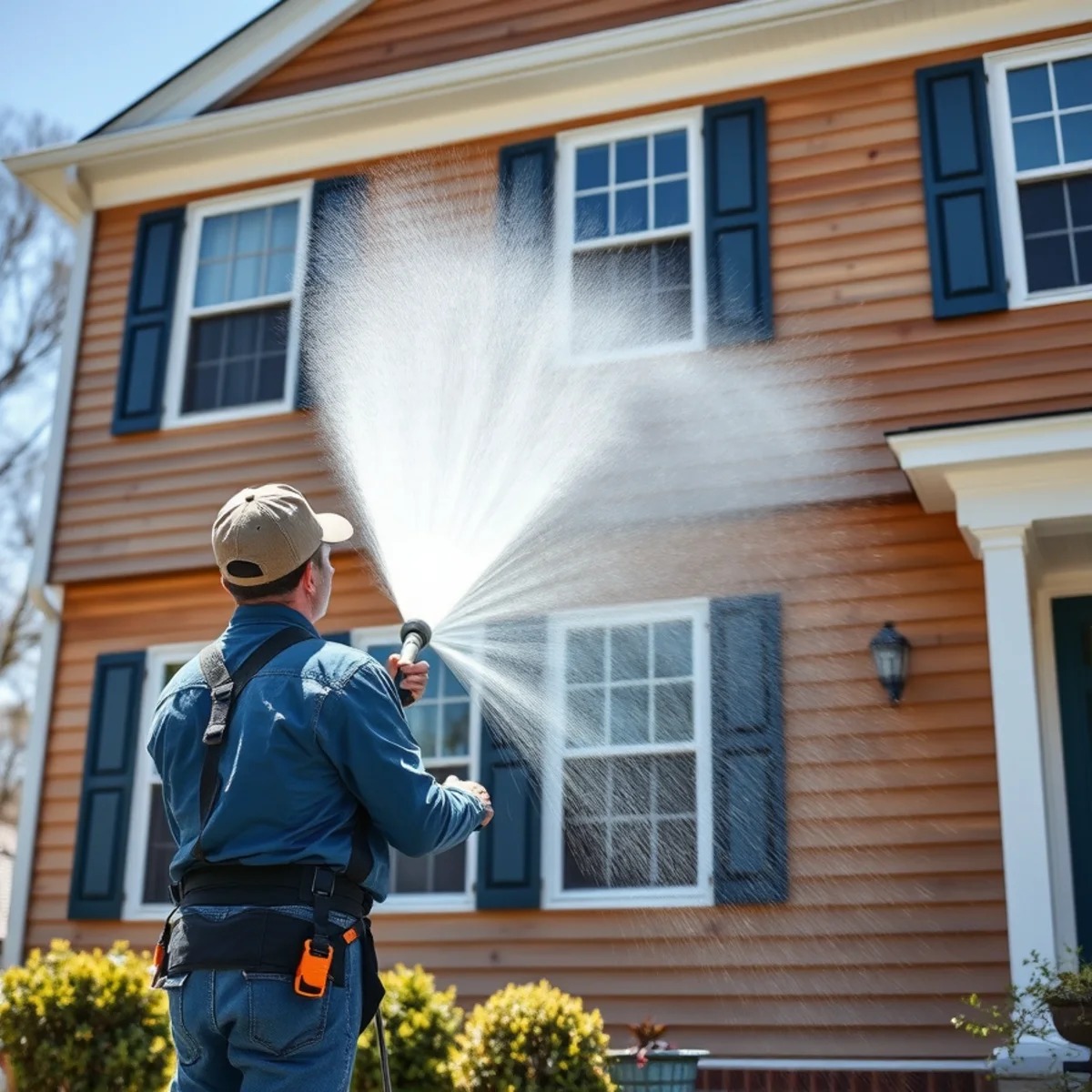
House Washing
Low-pressure soft wash house washing across MA. We kill algae, mold, and black streaks at the root, never blasting your siding.
Read More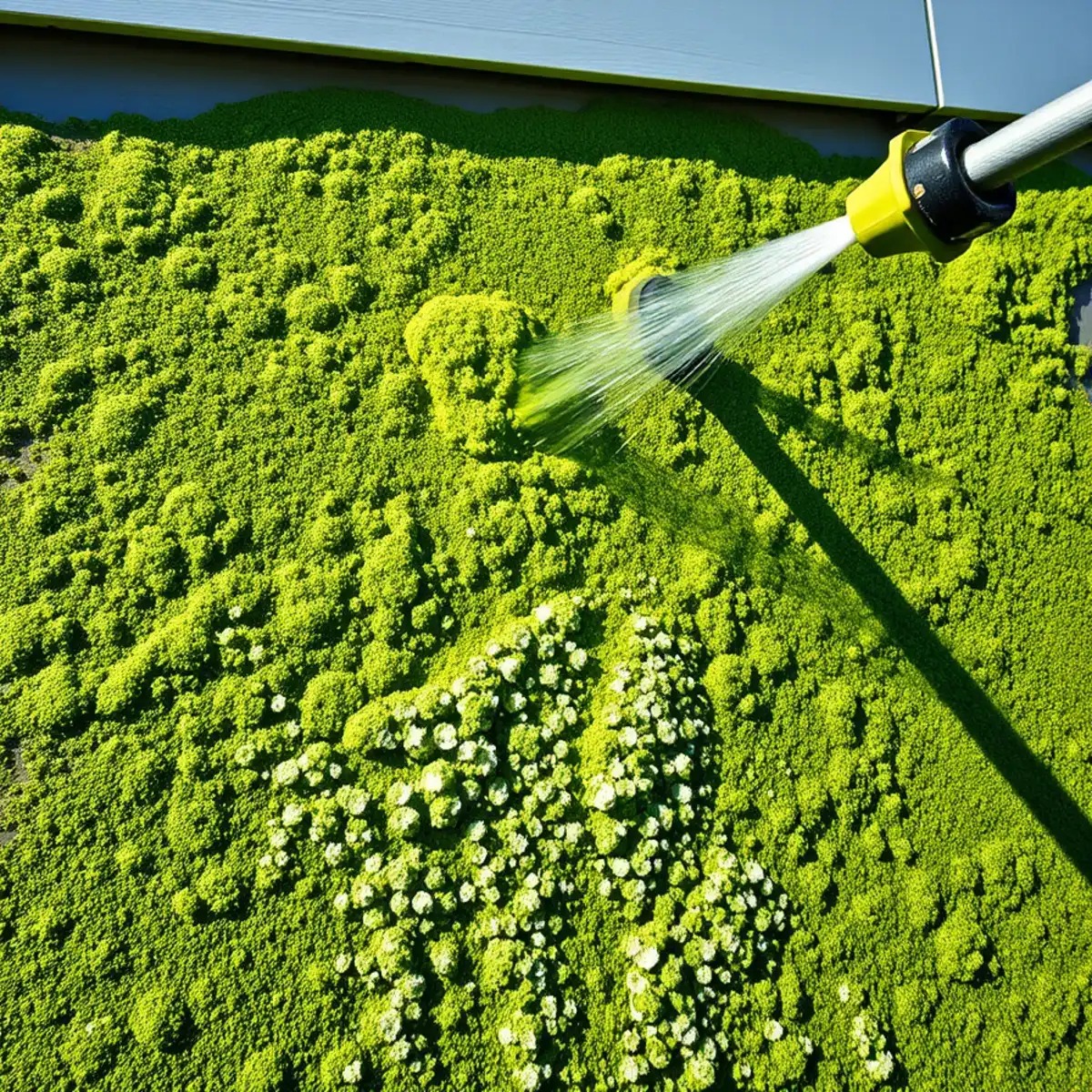
Algae Removal
Soft-wash algae removal for Massachusetts roofs, siding, and hardscapes — kill the colony at the root, not just the green you can see.
Read More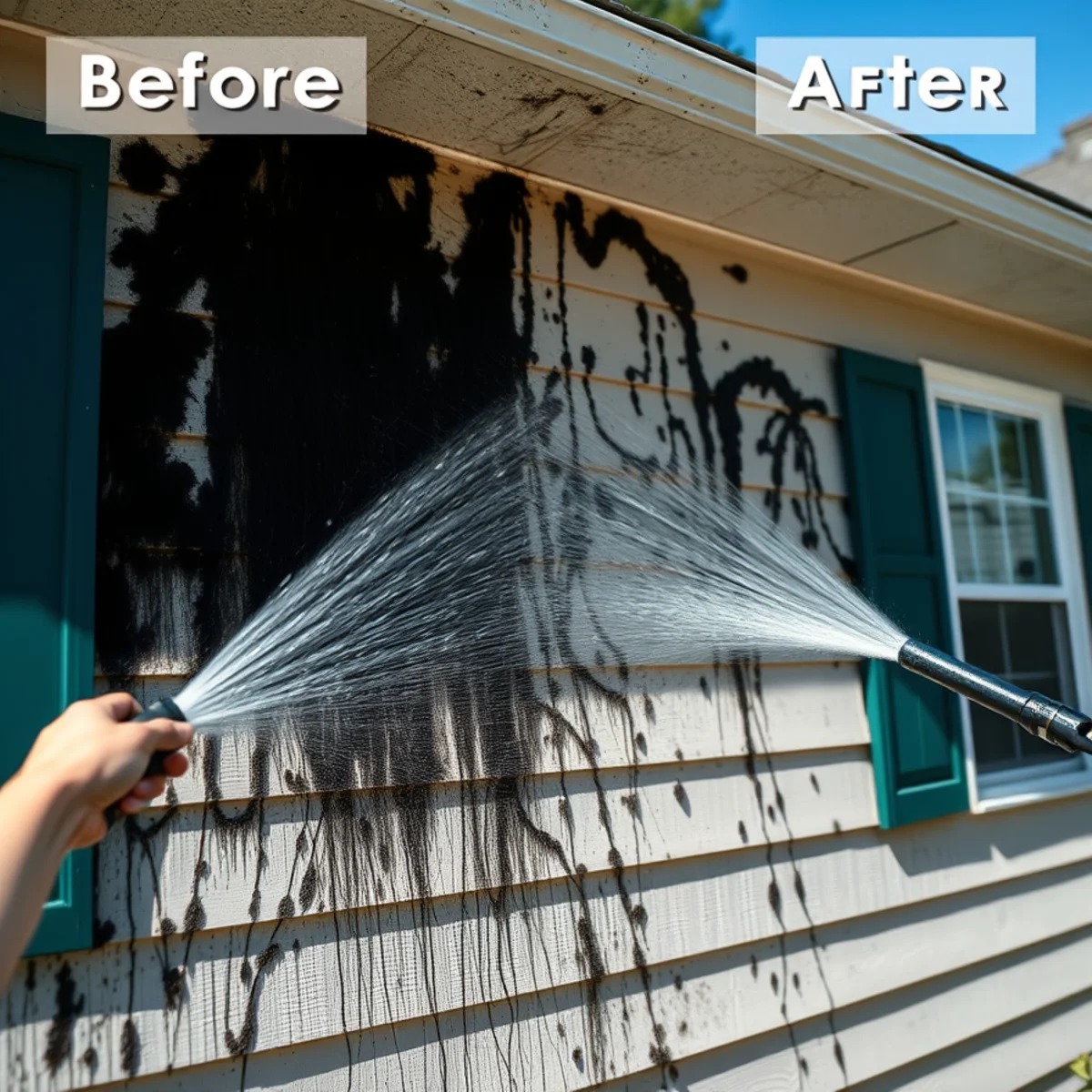
Mildew & Mold Removal
Soft-wash mildew and mold removal that kills growth at the root on Massachusetts siding, roofs, and hardscapes — not just a quick rinse.
Read MoreReady to Schedule Moss & Lichen Removal?
Contact Wash Bros today for a free moss & lichen removal estimate anywhere in Massachusetts.