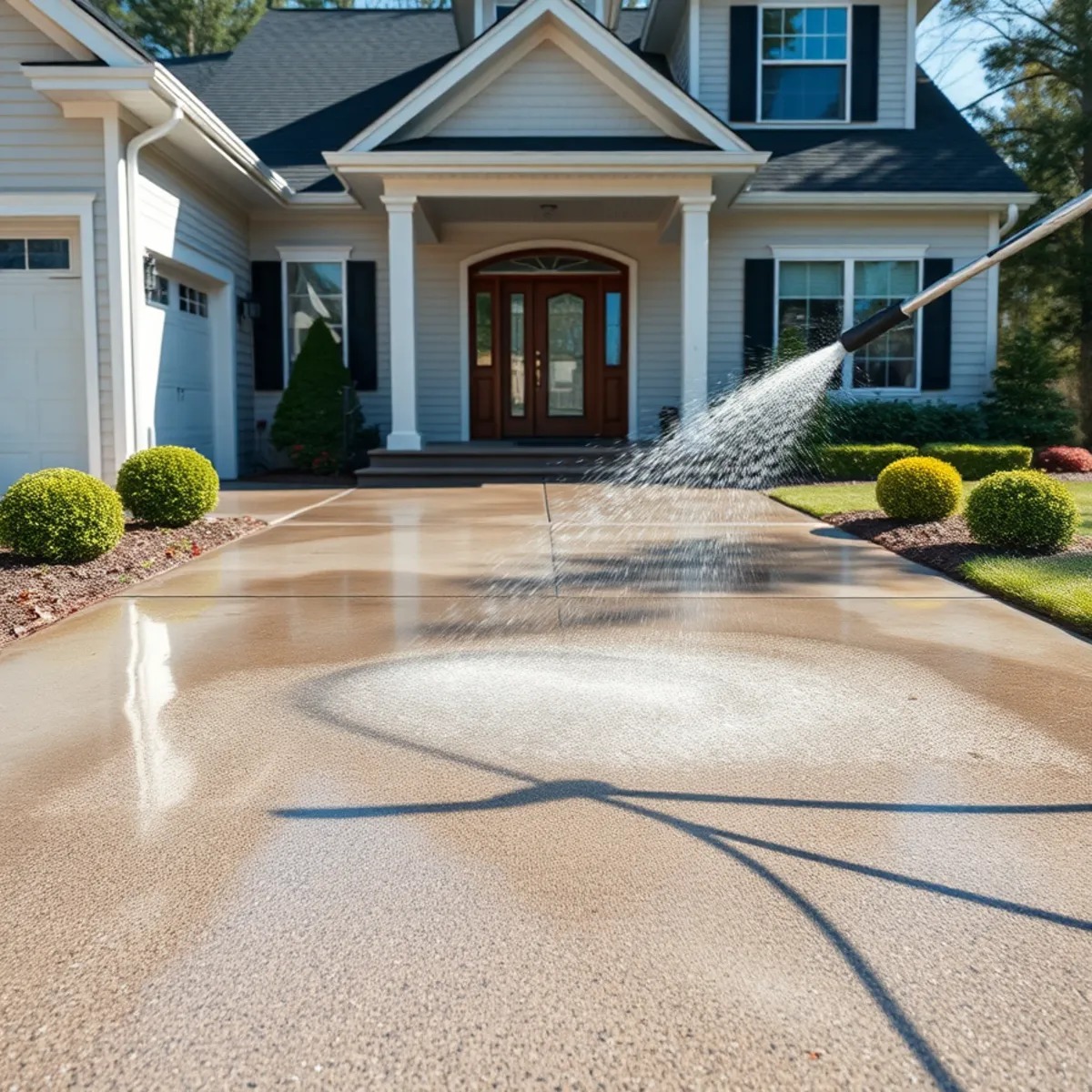
Your driveway is the first thing people see. Here's why cleaning it makes a Massachusetts home look new again, plus methods, ROI, sealing, costs, and timing.
Your driveway is the largest surface most visitors see before they ever look at your house, and after a few New England winters it quietly turns gray, streaked, and tired. Clean it properly and the whole property reads as newer, brighter, and better kept, often for a fraction of what paint or new landscaping would cost. This guide explains why that one surface has such an outsized effect, what builds up on Massachusetts driveways, and how the right cleaning method restores the original material underneath.
Your Driveway Is the First Thing People See
Stand at the curb and look at your home the way a guest or a buyer does. The driveway sits in the foreground of nearly every angle. It is flat, wide, and unbroken, so your eye lands on it before it travels up to the siding, the trim, or the front door. When that surface is dark with organic growth, oil spots, and tire scuffing, your brain registers "neglected" in the first second, and that impression colors everything else.
The reverse is just as powerful. A clean, even-toned driveway works like a fresh canvas. It makes the lawn look greener, the trim look crisper, and the entrance look cared for. Nothing about the structure changed. You simply removed several seasons of stacked grime and revealed the concrete or pavers that were there the whole time. That is why homeowners are so often surprised by the result of a single driveway cleaning: it is the cheapest "renovation" they have ever paid for, because the good surface was hidden, not gone.
What Makes a Driveway Look Old, Dirty, and Worn
A driveway rarely fails all at once. It dulls in layers, and most of what looks like aging is really removable buildup sitting on top of sound material.
- Organic film. Algae, mildew, and mold spread as a thin green-black haze that flattens the color of concrete and makes it read as flat gray.
- Grime buildup. Airborne dust, exhaust soot, and dirt settle into porous concrete and the joints between pavers, darkening the surface unevenly.
- Traffic marks. Tire marks and rubber scuffing collect in the wheel paths, and oil drips spread into halos that ordinary rinsing will not touch.
- Weathering and minor spalling. Years of freeze-thaw cycles can pit the surface slightly, and that rougher texture traps even more grime. True concrete spalling (flaking) is a separate structural issue, but light surface roughening just holds dirt.
The key distinction: most "old" driveways are dirty, not worn out. Embedded organic growth and grime account for the majority of the dingy look, and both come off with the right chemistry and technique. Only a small share of the change is permanent etching or material loss.
Common Driveway Stains and Buildup in Massachusetts
New England is hard on driveways because the climate swings from humid summers to long, salted winters. Knowing what you are looking at tells you what can actually be removed.
- Oil, transmission fluid, and grease. Petroleum soaks into porous concrete. Fresh drips lift readily; deep, year-old stains may lighten dramatically but not vanish. This is where alkaline degreaser and oil stain removal work, not pressure alone.
- Tire marks. Hot rubber transfers onto the surface in the wheel paths and needs a surfactant to release.
- Rust stains. Orange streaks from patio furniture, fertilizer (iron), or rebar near the surface need an acid-based treatment, not a scrub brush. Targeted rust removal dissolves them.
- Organic stains. Algae, mildew, and the green-black growth common on shaded driveways are living organisms with roots in the pores.
- Moss and lichen. In damp, north-facing spots, moss and lichen anchor into the surface and hold water against it, accelerating wear.
- Road salt residue and efflorescence. Winter deicers leave a chalky white haze. A related white bloom, efflorescence, is mineral salt migrating out of the concrete itself; it needs the right cleaner, not just a rinse.
- Leaf tannin stains and pollen. New England's heavy tree canopy drops leaves that leach dark tannin stains, and spring pollen coats everything in a yellow-green film that washes off dramatically.
The truth about what cleaning can and cannot remove
An honest contractor will tell you upfront: surface staining, organic growth, salt haze, pollen, and most oil and tire marks come off and the driveway looks years younger. But concrete that has been chemically etched, deeply oil-saturated for years, or physically spalled cannot be "cleaned" back to new, because the material itself changed. Cleaning restores what is dirty. It does not rebuild what is damaged. Anyone promising a flawless slab from a badly etched one is overselling.
The Curb Appeal Effect: One Clean Surface Changes Everything
Curb appeal is mostly about contrast and consistency. A bright, uniform driveway raises the apparent quality of every surface around it. The lawn looks healthier next to clean concrete. White trim looks whiter. The front walk and entry feel intentional instead of an afterthought.
This is why driveway cleaning punches above its weight. It is a large surface, it is front and center, and it photographs well, which matters for listings. Pair it with house washing and the effect compounds, because the two biggest surfaces a visitor sees are now working together instead of one dragging down the other. The same logic extends to the path to your door: clean walkways and sidewalks complete the approach so the whole route from street to entry reads as maintained.
Driveway Cleaning and Home Value: First Impressions and ROI
Real estate agents and home-improvement researchers consistently rank exterior cleaning and curb-appeal projects among the highest return-on-investment improvements a homeowner can make, precisely because the cost is low relative to the visual payoff. We will not quote a fabricated percentage, but the principle is well established: cosmetic exterior work that improves first impressions tends to return a large share of its cost, and sometimes more, at resale.
Here is how that plays out for a driveway specifically:
- For sellers. Buyers form an opinion before they get out of the car. A stained, mossy driveway plants the idea that the home was neglected and invites lowball offers. A clean approach does the opposite and helps listing photos pop, which can support a faster sale in competitive Massachusetts neighborhoods.
- For homeowners staying put. You see the driveway every day. Keeping it clean preserves the surface, protects your investment in the concrete itself, and keeps your property consistent with a well-kept street.
- As property maintenance. Removing salt, organic growth, and standing-water film slows surface deterioration, so cleaning is preventive care, not just cosmetics.
Treat any specific ROI figure you see online as an estimate, not a promise. The reliable point is that driveway cleaning is one of the lowest-cost, highest-visibility moves available before a sale.
Pressure Washing vs. Soft Washing vs. Surface Cleaning
There is no single "best" way to clean a driveway. The right approach depends on the surface and the stain, and a good contractor switches methods accordingly. The key message we tell every customer: you do not need more pressure, you need the right chemistry. Pressure does not kill algae roots. Biodegradable surfactants do.
Pressure washing (and the surface cleaner attachment)
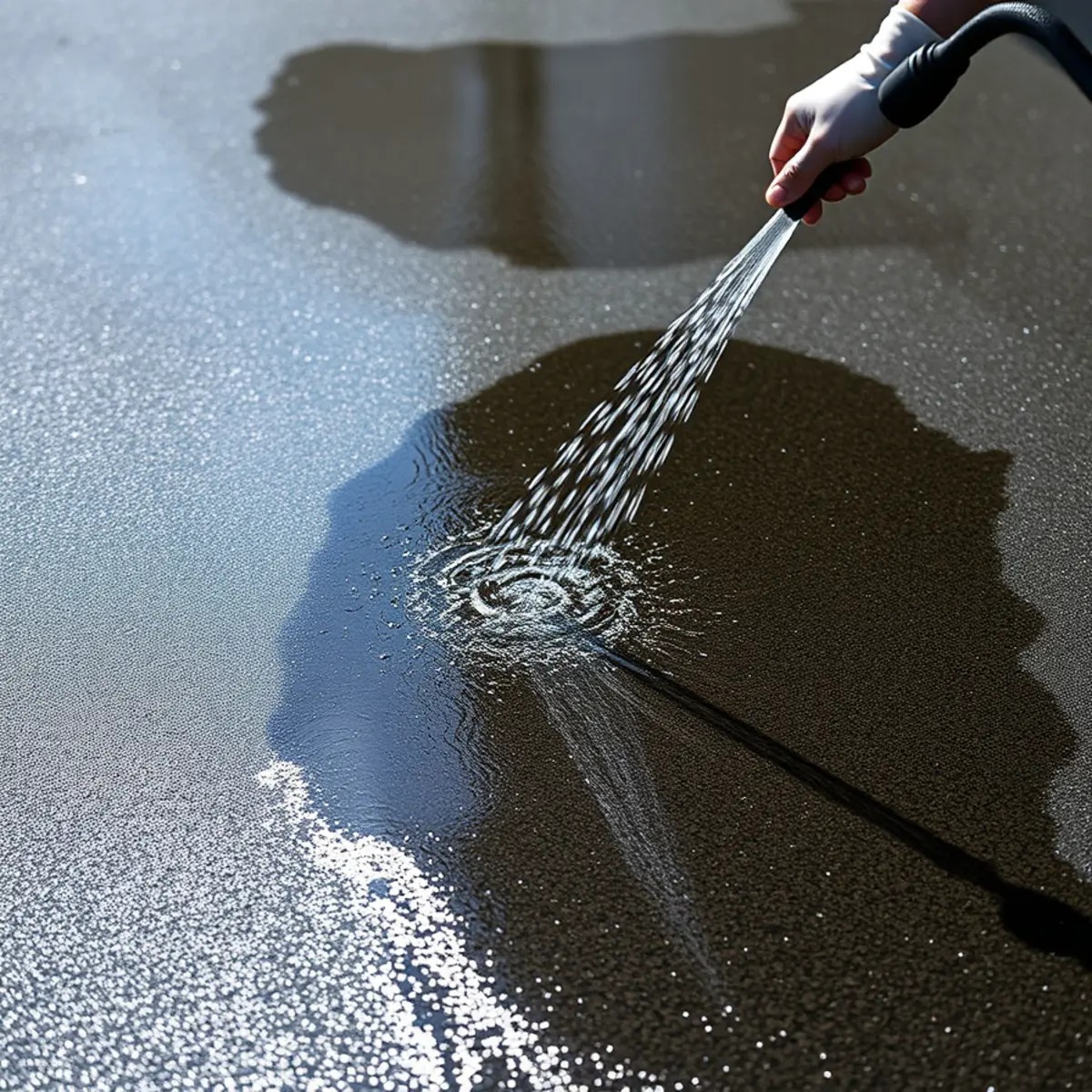
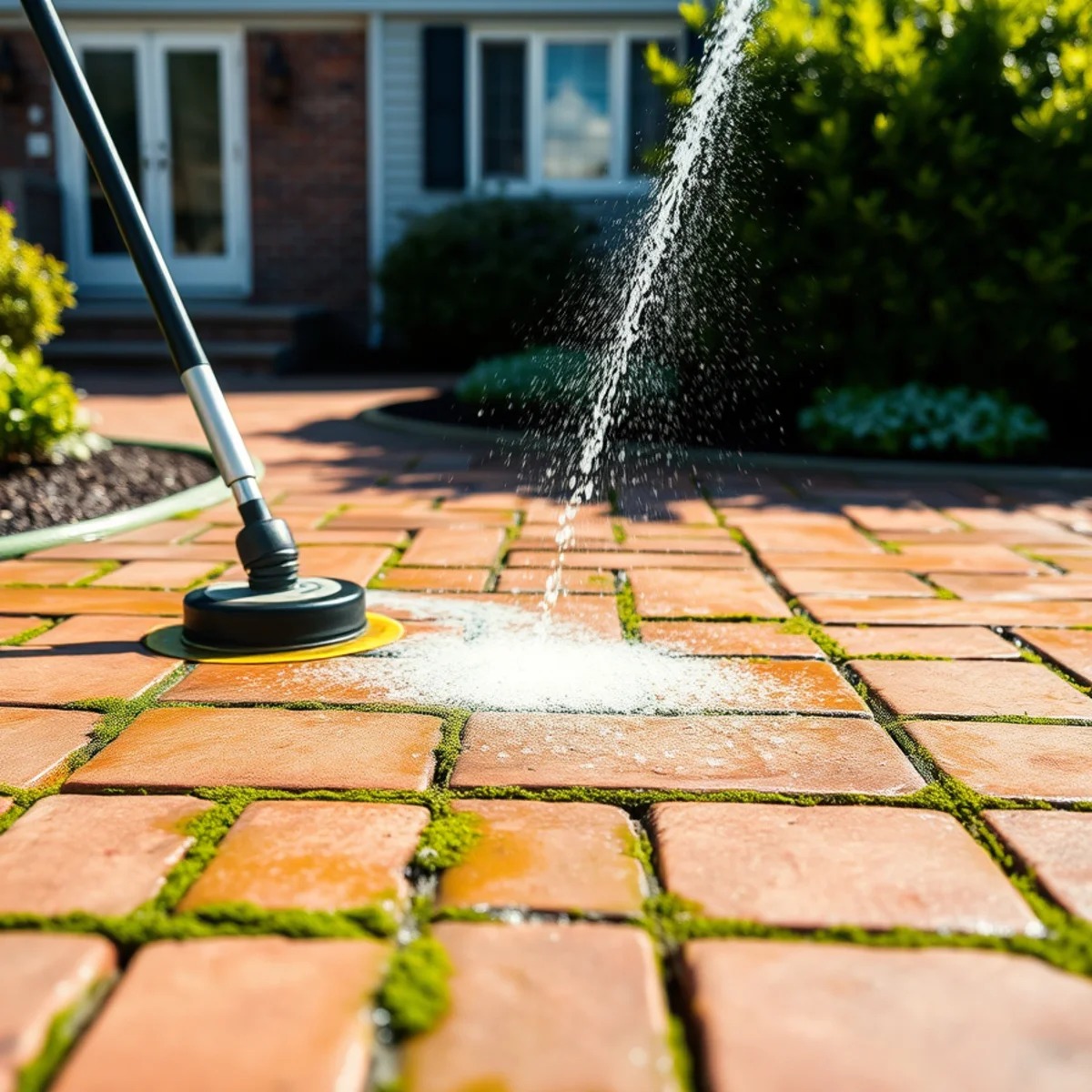
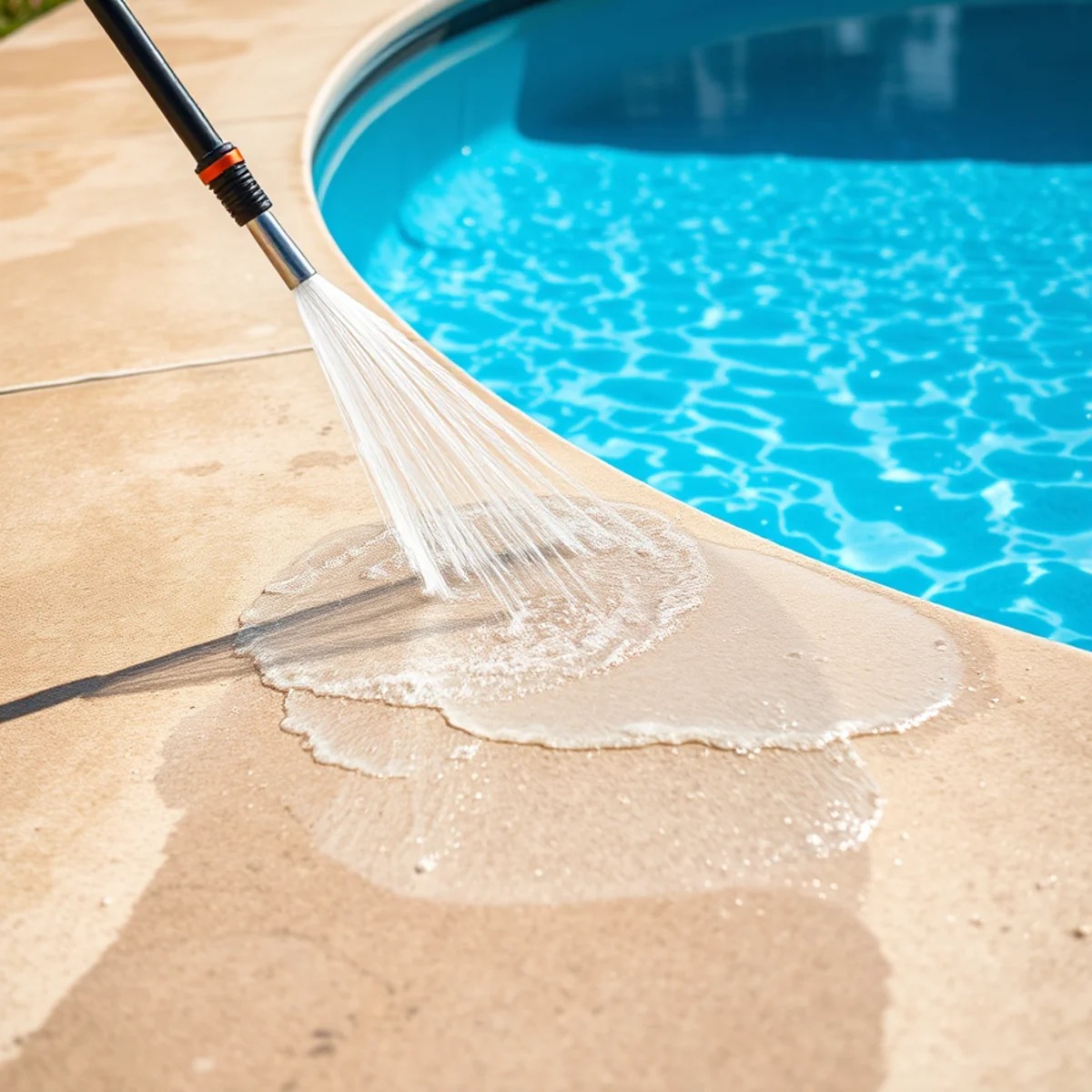
Solid concrete tolerates real pressure, in the range of roughly 2,000 to 3,000 PSI, paired with adequate GPM (water volume) to flush debris away. But a spinning wand leaves "wand marks," uneven lines where the operator slowed down or overlapped. The professional fix is a surface cleaner attachment: a flat, rotating-bar tool that holds two nozzles at a fixed height and distance, delivering even pressure across the whole width. That is how pros get a uniform finish with no striping. For grease-heavy areas, hot water pressure washing melts and lifts oil far better than cold water at the same PSI.
Soft washing
Soft washing uses low pressure (typically under a few hundred PSI) and does the real work with cleaning solution. It is the right call for surfaces where high pressure causes harm, and it is the only thing that actually kills organic growth at the root so it does not race back in weeks. For algae, mildew, and the green-black film on shaded driveways and adjacent siding, soft washing is the correct tool. High pressure removes the visible stain but leaves the roots, which is why blasted-only driveways green up again so fast.
Concrete and surface cleaning as a category
Broadly, professional concrete cleaning and general power washing combine pre-treatment chemistry with the right pressure and the surface cleaner attachment. The method is matched to the material, not the other way around.
Concrete vs. Asphalt vs. Pavers: How Cleaning Differs
The single biggest mistake in DIY driveway cleaning is treating every surface like solid concrete. Material dictates method.
| Surface | Safe approach | Watch out for |
|---|---|---|
| Concrete | Pre-treat, then pressure wash at ~2,000–3,000 PSI with a surface cleaner | Wand marks, etching new concrete, spalling on old slabs |
| Asphalt | Lower pressure and degreaser; let chemistry do the work | High PSI gouges and loosens aggregate on an asphalt driveway |
| Pavers | Pre-treat, controlled pressure, then re-sand joints afterward | Blowing out joint sand, dislodging or chipping pavers |
| Stamped concrete | Gentle pressure plus chemistry to protect the decorative coat | Stripping sealer and the color/pattern finish |
Asphalt is softer than people expect and is easily damaged by aggressive blasting. Pavers clean up beautifully but need joint sand replaced so they stay stable. Stamped concrete has a decorative sealed layer that high pressure will strip. Dedicated paver cleaning handles the re-sanding step that DIYers usually skip, which is what keeps a paver driveway from shifting after a wash.
The Professional Driveway Cleaning Process, Step by Step
A real process is what separates a clean, even result from a striped, half-removed one. Showing it is also how you judge whether a contractor knows what they are doing.
- Inspect and protect. Identify the material, the stains, and any cracks. Pre-soak nearby landscaping and plan runoff containment so detergent and lifted grime are handled responsibly.
- Pre-treat and degrease. Apply a pre-treatment: an alkaline degreaser on oil and grease, a targeted product on rust, and a surfactant-based solution on organic growth. This is the step that breaks the bond and kills algae roots. Let it dwell.
- Surface clean. Run the surface cleaner attachment for even, uniform pressure across the whole driveway, with spot wand work on edges and stubborn marks. This prevents striping and wand lines.
- Post-treat. Apply a post-treatment to neutralize remaining organic growth at the root. This is the step most DIYers and cheap operators skip, and it is the difference between a result that lasts a season and one that greens up in a month. It also helps prevent "zebra striping."
- Final rinse. Rinse the surface and the surrounding area thoroughly so no residue dries into the concrete or onto plants.
Notice that pressure is only one of five steps. The chemistry on either side of it is what makes the result clean and durable.
Before and After: What Realistic Results Look Like
A well-executed driveway cleaning typically takes the surface from flat gray-green back to its true concrete tone, lifts pollen and salt haze completely, removes tire marks and most oil halos, and clears moss and lichen from joints. The change usually looks dramatic in photos because you are seeing months of stacked buildup come off at once.
What to expect honestly: a faint shadow may remain where a deep oil stain sat for years, and concrete that was already etched or spalled will be clean but will still show its texture. A clean driveway is a restored driveway, not a resurfaced one. Any contractor who promises a brand-new slab from a damaged one is setting you up for disappointment.
How Often Should You Clean Your Driveway in Massachusetts?
Treat any interval as an estimate; shade, tree cover, drainage, and traffic all move the number.
- Heavily shaded or tree-lined driveways regrow algae and moss faster and usually benefit from a cleaning about once a year.
- Sunny, open driveways with good drainage stay clean longer and can often stretch beyond a year.
- High-traffic surfaces that collect oil and tire marks may need spot treatment between full cleanings.
The practical answer for most Massachusetts homes is once a year, in spring, when winter salt residue is at its worst and you want the surface looking its best for the warm months. A professional cleaning that includes a post-treatment lasts noticeably longer than a DIY rinse, because it removes what would otherwise regrow within weeks.
Should You Seal Your Driveway After Cleaning?
Sealing is optional, but it pairs well with cleaning. A driveway sealer fills the pores of concrete or locks paver joints, which makes the surface more resistant to oil, salt, and water intrusion, and easier to clean next time. The benefits are real: better stain resistance, slower weathering, and a slightly richer color.
Timing matters in two ways. First, always clean before you seal, because sealing traps whatever is on the surface, including stains and organic growth. Second, the concrete must be fully dry, which is why sealing is a separate visit after cleaning, not the same day. And never seal concrete that is less than a year old; fresh concrete needs to cure fully first. In Massachusetts, the smart window for sealing is late summer or early fall, so the surface is protected before road-salt season arrives.
DIY Pressure Washing vs. Hiring a Professional
A rented pressure washer in untrained hands does real, sometimes permanent, damage. These are the failures we get called to fix:
- Etching. Holding the nozzle too close or using too high a PSI carves visible lines and a rougher texture into the concrete that never fully goes away.
- Striping (zebra striping). Uneven passes and a skipped post-treatment leave alternating light and dark bands. It often appears days later as growth returns unevenly.
- Spalling. Aggressive pressure on weak or older concrete can flake the top layer right off.
- Cleaning concrete that is too new. Concrete under a year old has not fully cured and is easily damaged.
- Asphalt and paver damage. Too much pressure gouges asphalt and blows the sand out of paver joints, leaving them loose.
The other gap is chemistry. Without the right pre-treatment and post-treatment, a DIY wash removes the visible stain but leaves algae roots behind, so the green is back within weeks. Professionals bring the surface cleaner attachment for even results, surface-matched PSI, biodegradable detergents, and runoff awareness. If you want to weigh this in more detail, our guide on DIY pressure washing vs. hiring a professional goes deeper.
Massachusetts Seasonal Considerations and the Best Time to Clean
New England's calendar shapes both the damage and the timing.
- Winter and early spring: road salt. Months of salt, sand, and calcium chloride deicers leave a chalky white residue, dull the surface, and accelerate deterioration. Spring cleaning resets the slate. More on this in how salt and snow impact concrete.
- Spring: pollen and snowmelt. Oak, pine, and maple pollen coat driveways in a yellow-green film that washes off dramatically. Snowmelt keeps surfaces damp, feeding algae.
- Summer: humidity and algae. Warm, humid weather and shaded, tree-lined yards drive green and black growth, especially in coastal and South Shore towns.
- Fall: leaf tannins. Heavy leaf litter leaves dark tannin stains and organic buildup that pros remove before winter.
The best time to clean a driveway in Massachusetts is late spring through early fall, when warm, dry conditions speed drying and make detergents most effective. Late spring, after pollen season winds down, is the sweet spot for most homeowners. Because the New England season is short, driveway cleaning makes a smart first item on a spring exterior checklist; see our spring exterior cleaning checklist to sequence the rest.
How Much Does Driveway Cleaning Cost in Massachusetts?
Pricing depends on real variables, so be skeptical of any flat number quoted sight unseen. The honest cost factors are:
- Square footage. Most driveway cleaning is priced per square foot, so a long or double-wide driveway costs more.
- Surface and condition. Heavy oil, rust, deep organic growth, and large stained areas take more pre-treatment and time.
- Material. Pavers (with re-sanding) and stamped concrete need extra care versus plain concrete.
- Add-ons. Sealing, or bundling the walkway, patio, and house wash, changes the total.
- Access and runoff. Slope, drainage, and water source can affect the job.
As a rough national reference, many homeowners see per-square-foot pricing in the low dollars-per-square-foot range, but Massachusetts labor and conditions vary, so treat that only as an estimate. The accurate number for your driveway comes from a quick look at the surface. We give free, no-obligation estimates so you get a real figure, not a guess. For the bigger picture, our overview of pressure washing costs in Massachusetts breaks down the factors across services.
How to Maintain a Clean Driveway Between Cleanings
You are not helpless between professional visits. A few habits extend the results:
- Rinse off salt and sand in late winter and early spring before the chalky residue sets in.
- Address oil drips fast. The longer a stain sits, the deeper it penetrates. Blot, then treat.
- Keep leaves and debris cleared, especially in fall, so tannins do not stain.
- Improve drainage where you can, because standing water is what feeds algae and moss.
- Consider sealing after a cleaning to make future maintenance easier.
These steps will not replace a professional cleaning, but they keep small problems from becoming set-in stains and stretch the time between visits.
Why Choose Wash Bros for Driveway Cleaning in Massachusetts
Wash Bros is a family-run exterior cleaning company started in 2023 by brothers Louis and Dominic, and we are fully insured, with a certificate of insurance available on request. We match the method to your surface, use biodegradable, environmentally responsible detergents, pre-soak landscaping, and stay mindful of runoff and Massachusetts stormwater realities. We use the surface cleaner attachment for even results and a proper post-treatment so growth does not race back, and we are honest about what cleaning can and cannot fix.
We serve homeowners and businesses across the state, from Boston and Cambridge through MetroWest, Worcester County, and South Shore towns like Quincy. Our work holds a 5.0 average across 130 reviews, and our focus is straightforward: dependable cleaning that makes your whole property look new again.
If your driveway is making your home look older than it is, a single professional cleaning can change that fast. Contact us for a free, no-obligation estimate, or call Wash Bros at +1 (351) 242-0666, and we will recommend the right approach for your surface and your budget.
Frequently Asked Questions
Need Professional Exterior Cleaning?
Wash Bros provides affordable, dependable pressure washing across Massachusetts. Get your free estimate today.
Get a Free Estimate