From fresh-spill blotting to the poultice method and hot-water degreasing, here's how to lift oil out of porous concrete, and which stains leave a shadow.
Oil stains are the single most stubborn problem on a concrete driveway or garage floor, and the reason is chemistry, not effort. Once you understand why concrete grabs oil and holds it, you can match the right method to the right stain instead of scrubbing in circles. This guide walks every proven approach, from a fresh-spill blot to the professional hot-water-plus-degreaser one-two punch, and tells you honestly which stains come clean and which leave a shadow.
Why Oil Stains Cling So Hard to Concrete (Porosity Explained)
Concrete looks like solid rock, but under a microscope it is a sponge. The cured surface is laced with capillary pores and hairline channels left behind as mixing water evaporates. Those pores wick liquid downward and sideways the moment something lands on them.
A petroleum-based stain, motor oil, transmission fluid, hydraulic fluid, or a thick grease stain, behaves badly on porous concrete for three reasons:
- Oil and water don't mix. Oil is hydrophobic and immiscible with water, so rinsing with a hose just beads it around. You need a product that chemically grabs the oil, not pressure that pushes it.
- Capillary action pulls it deeper. Concrete keeps wicking oil into the slab for hours after the spill, well past the surface you can see.
- Heat and time set it. A dark driveway in a Massachusetts July can climb past 120°F, thinning the oil so it sinks faster. Give it a few weeks and that motor oil stain is bonded deep in the pore structure.
Fresh oil sits as a film for the first few minutes, then capillary suction draws it into the micro-cracks. As the lighter fractions evaporate, the heavier residue thickens and grips the pore walls, which is why a one-hour-old spill wipes up and a one-month-old spill fights back. The depth of penetration, not surface darkness, decides how hard the job will be. So successful removal means lifting oil out of the pores, not just wiping the top. You don't need more pressure. You need the right chemistry.
Assess the Stain First: Fresh vs. Set-In vs. Deep Embedded
Before you buy anything, read the stain. The method that clears a fresh puddle will barely touch a years-old shadow, and the aggressive treatment a deep stain needs can needlessly etch concrete if you throw it at a light one.
- Fresh spill (still wet or hours old): Liquid oil is still on or near the surface. Absorb first, then a light clean usually finishes it. Best-case removal.
- Set-in stain (days to a few weeks): Oil has penetrated but not fully cured. A degreaser with proper dwell time and agitation, or a baking soda paste, does real work.
- Deep embedded stain (months to years): Oil is bonded deep in the pores, common on older New England garage floors. This is poultice and hot-water territory, and even then a faint shadow may remain.
Run a quick spot test of any product on an inconspicuous corner first. Concrete varies, and you want to confirm a cleaner won't lighten or etch the surface before you treat the whole driveway.
Safety and Materials Checklist Before You Start
Degreasers, solvents, and alkaline cleaners are effective because they're chemically active, so protect yourself and your property.
- Gloves and eye protection. Nitrile or chemical-resistant gloves and splash goggles, especially with TSP, mineral spirits, or acetone.
- Ventilation. Work outdoors or open the garage fully. Solvents give off fumes; never use them near a pilot light or open flame.
- Containment. Berm the work area with absorbent socks or a ring of cat litter so wastewater doesn't reach the lawn, well, or a storm drain.
- Tools. Stiff-bristle nylon brush (a wire brush only on rugged, unsealed slabs), a bucket, a garden hose, absorbent material, and the chosen cleaner.
Have your absorbent and a labeled disposal bag ready before you open any product. Plan the cleanup before you make the mess.
A note on internet hacks: WD-40 and Coca-Cola get mentioned a lot. WD-40 is a petroleum solvent, so it loosens a stain, but you're adding oil to dissolve oil and must then degrease the WD-40 itself, an extra step, not a shortcut. Coca-Cola is mild acid and does little for oil. Skip both and use a real degreaser.
Method 1: Absorb a Fresh Oil Spill
Catch a spill while it's wet and you have the best shot at total removal. Speed beats technique here.
Pour a generous layer of absorbent material over the spill:
- Clay cat litter (the cheap, non-clumping kind) is the classic and works great
- Baking soda, cornstarch, or sawdust in a pinch
- Diatomaceous earth or a commercial oil-absorbent for larger spills
Press it in with your shoe, let it sit several hours or overnight for a big spill, then sweep it up. Oil-soaked absorbent is not regular trash, bag it and dispose of it as described below. You'll usually be left with a darker shadow; move to a cleaning method to pull out what soaked in.
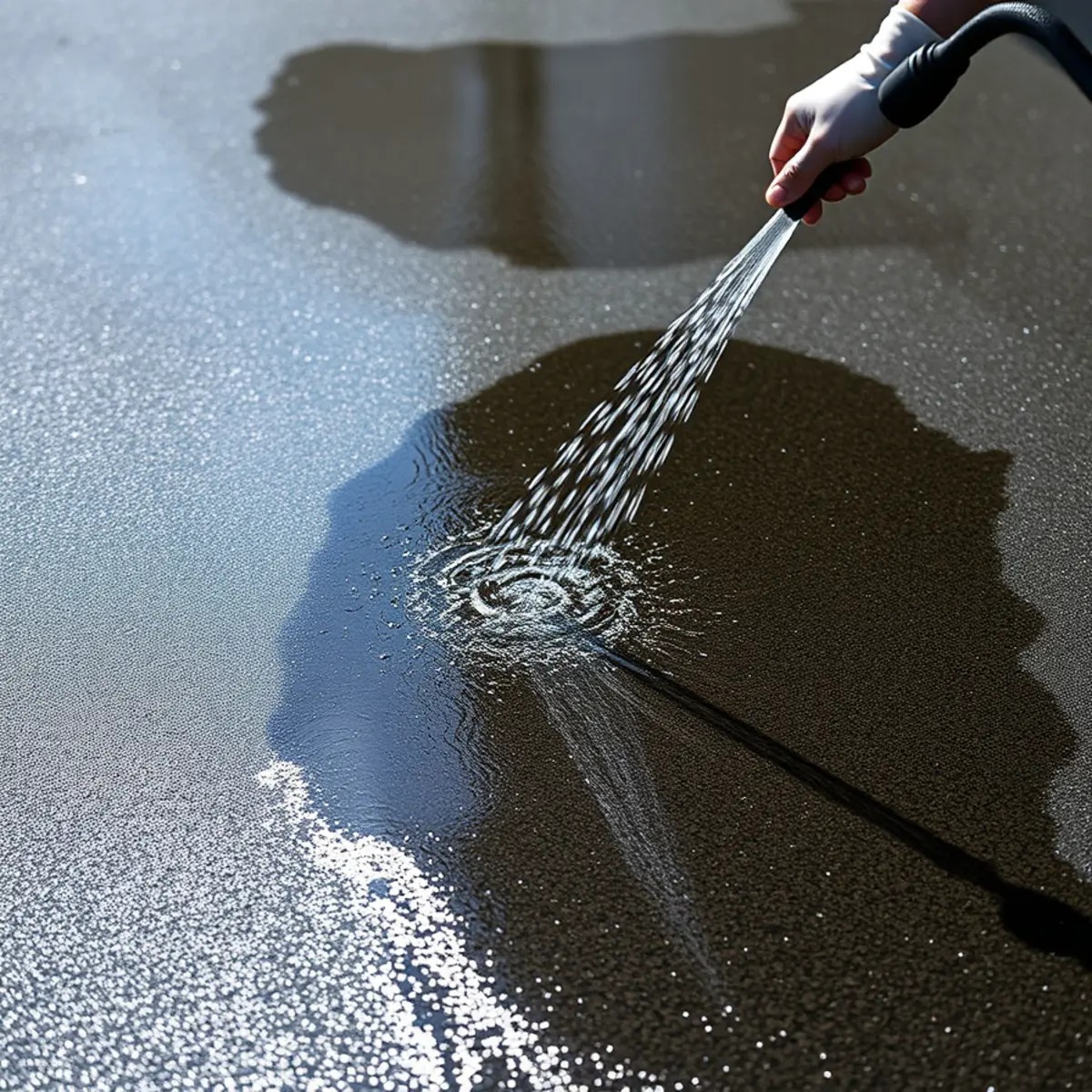
Method 2: Dish Soap and Hot Water for Light Stains
For a recent, lighter stain, grease-cutting dish soap punches above its weight, this is the "does Dawn dish soap remove oil from concrete" answer, and yes, on surface stains it does. The surfactants that lift bacon grease off a plate break the bond between oil and concrete the same way.
- Squirt dish soap directly onto the dampened stain.
- Pour on genuinely hot water.
- Scrub hard with a stiff-bristle brush to emulsify the oil.
- Rinse and repeat until the water runs clear.
Hot water matters: heat thins the oil and helps the surfactants work, which is exactly why cold New England tap water makes this harder in the off-season.
Method 3: Baking Soda Paste for Fresh-to-Moderate Stains
Will baking soda remove an oil stain from a driveway? On fresh-to-moderate stains, yes, baking soda is mildly alkaline and absorbent, so it both lifts and soaks up oil.
- Lightly wet the stain.
- Cover it with a thick paste of baking soda and a little water.
- Let it sit 30 minutes (or let it dry fully for a stronger pull).
- Scrub with a wet brush, then rinse.
For a deeper stain, leave the paste on overnight under plastic so it dries slowly and wicks oil upward, a simple home version of the poultice in Method 6.
Method 4: Commercial Concrete Degreaser (Apply, Dwell, Agitate, Rinse)
When household options stall, a purpose-built concrete degreaser is the workhorse. These alkaline cleaners are formulated to emulsify oil and release it from the pores. The four-step rhythm matters more than the brand:
- Apply to the stain per the label, usually undiluted on heavy stains.
- Dwell. Let it sit so the chemistry can work, typically 5 to 15 minutes. How long do you leave degreaser on concrete? Long enough to break the oil down, but never long enough to dry out, re-wet it if it starts to.
- Agitate with a stiff brush to work the emulsified oil free.
- Rinse thoroughly and repeat on stubborn spots.
Dwell time and agitation are where most DIY jobs fall short. The chemistry needs contact time; the brushing breaks the surface tension. Skip either and you'll blame the product for your technique.
Method 5: Powdered Laundry Detergent or TSP for Grease Cutting
Powdered laundry detergent is a cheap, surprisingly effective alkaline cleaner: make a paste, scrub it in, let it dwell, then rinse. For tougher grease, trisodium phosphate (TSP) is a stronger degreasing agent available at any hardware store, mix per label, apply, dwell, agitate, and rinse. Wear gloves and goggles, and keep TSP wastewater out of storm drains and planting beds; it's hard on aquatic life and vegetation.
Method 6: The Poultice Method for Old, Deep-Set Stains
For old, deep embedded stains, the poultice is the most powerful DIY tool, and it's where most generic articles go thin. A poultice pairs an absorbent material with a solvent into a paste that draws oil back up and out of the concrete as it dries.
How it works: the solvent re-dissolves the bonded oil deep in the pores; the absorbent (diatomaceous earth, baking soda, or even flour) holds the dissolving oil, and as the paste slowly dries, capillary action reverses, wicking the oil-laden solvent out of the slab and into the powder.
- Mix an absorbent powder with a solvent, mineral spirits or acetone, into a peanut-butter-thick paste. (Spot-test the solvent first; acetone is aggressive.)
- Spread a half-inch layer over the stain, extending past its edges.
- Cover with plastic, tape the edges, and let it work 24 to 48 hours.
- Remove the plastic and let the poultice dry completely so it pulls the oil up.
- Scrape up the dried paste, dispose of it as hazardous waste, and rinse.
Repeat for badly embedded stains; deep ones often need two or three rounds. Commercial pre-mixed options like Pour-N-Restore or other oil and grease stain removers work on the same draw-out principle if you'd rather not mix solvents yourself.
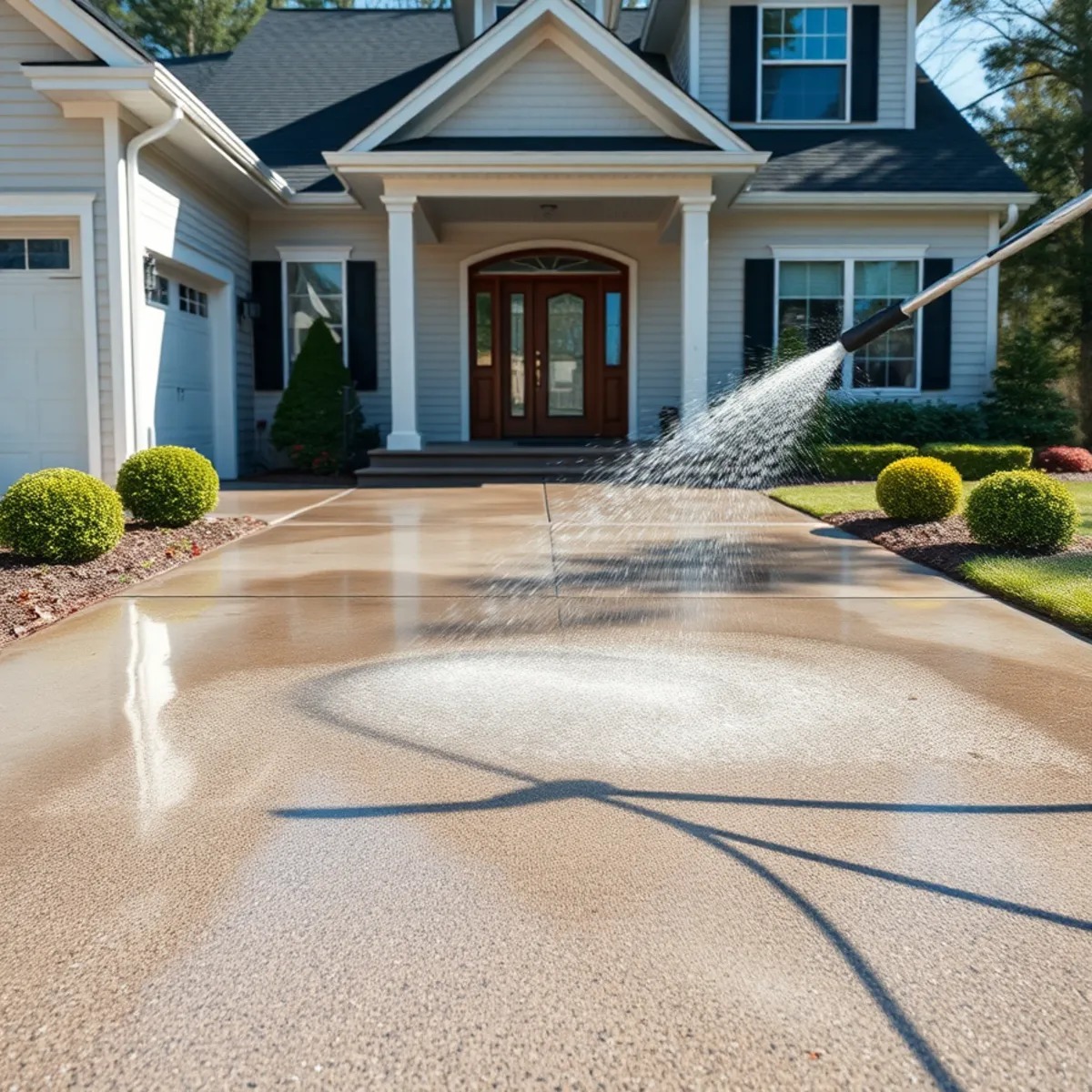
Method 7: Pressure Washing With Hot Water and Degreaser
Does pressure washing remove oil stains from concrete? Water alone, no, it usually just spreads the oil. But pressure washing paired with the right chemistry is the professional standard, and hot water is the difference-maker.
The pro sequence is a one-two punch: pre-treat with degreaser, let it dwell and agitate, then flush the emulsified oil out of the pores under pressure. For greasy, set-in stains, hot water pressure washing wins because heat liquefies the oil and releases it from the concrete, the same reason a hot dishwasher beats a cold rinse. This pairing of heat, chemistry, and controlled pressure is the core of professional oil stain removal and full concrete cleaning.
Method 8: Enzyme and Bioremediation Oil Eaters
For restoring deeply stained concrete without harsh solvents, an enzyme cleaner or microbial bioremediation product is the patient option. These contain microbes that literally digest petroleum, converting the oil into harmless byproducts over days to weeks rather than just loosening it. They're eco-friendly, storm-drain-safer, and excellent for pulling out a lingering shadow after a degreaser has done the heavy lifting. The trade-off is time: results build slowly, so keep the area damp per directions to keep the microbes active.
Step-by-Step: Pressure Washing Oil Stains Correctly
If you own or rent a pressure washer, technique protects both the result and the concrete.
- PSI: Concrete driveways tolerate roughly 2,000 to 3,000 PSI, the range that clears grime without etching, far above what you'd use on siding or a deck.
- GPM: Higher gallons per minute (GPM) flushes lifted oil away faster, flow matters as much as pressure.
- Nozzle: Use a 25-degree fan tip. Avoid a 0-degree pinpoint tip; it gouges concrete and leaves wand marks.
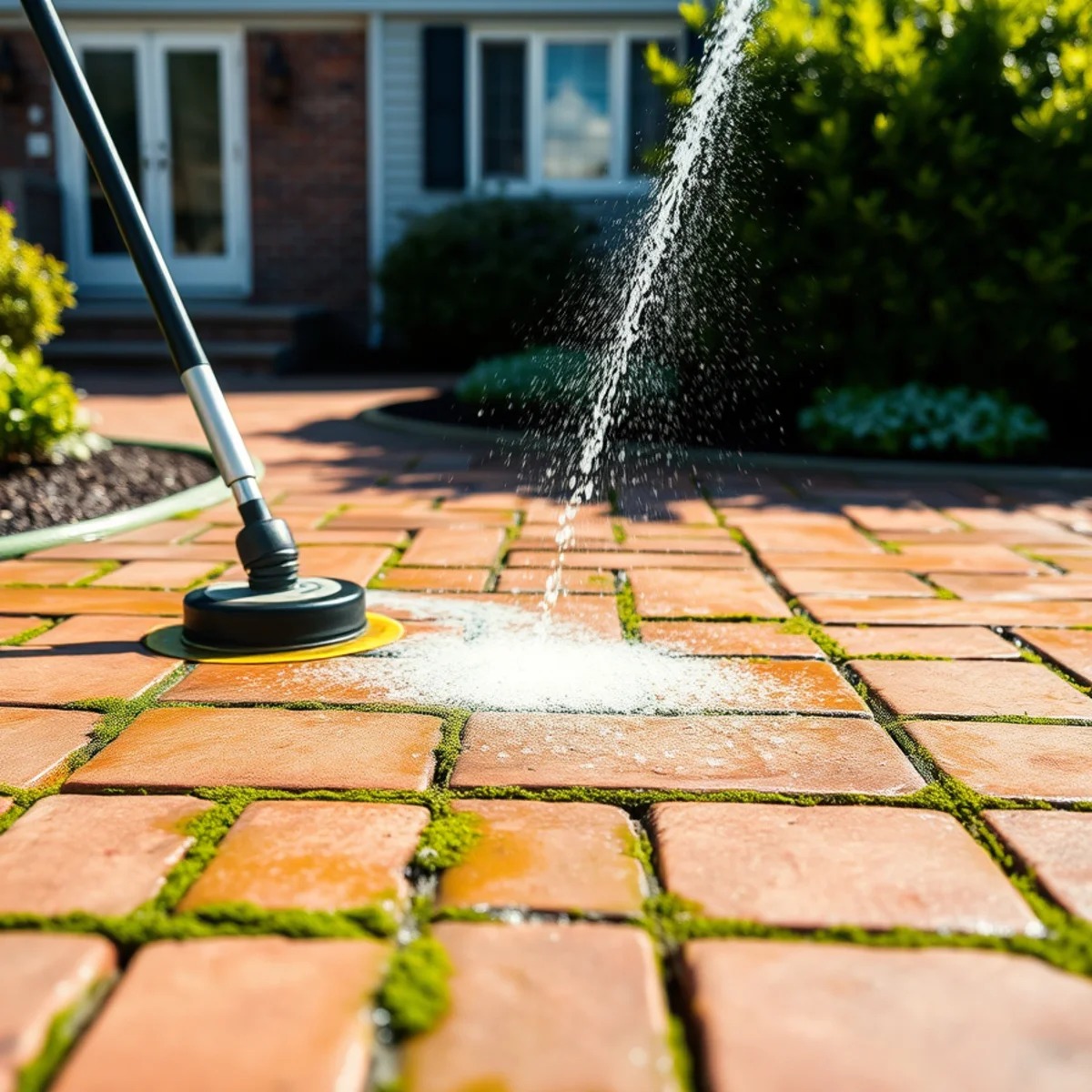
- Surface cleaner attachment: A flat-surface cleaner gives even, streak-free results and prevents the zebra-striping a handheld wand leaves.
- Distance and technique: Keep the tip 8 to 12 inches off the slab, move in steady overlapping passes, and always pre-treat with degreaser first.
For most home concrete, a unit in the 2,000 to 3,000 PSI range with hot water and a good degreaser handles oil. Cold electric units under 2,000 PSI can struggle on set-in grease, which is where calling a pro pays off.
Why Water Alone Won't Work, and What Changes the Chemistry
Here's the science that builds the whole strategy. Oil and water are immiscible, they refuse to blend, so a plain rinse can't carry oil away. Two things change that. Surfactants in soap and degreaser surround oil droplets and suspend them in water (emulsification) so they can finally rinse off. And heat plus pH: hot water thins the oil, while an alkaline cleaner (high pH) chemically breaks down the petroleum so surfactants can grab it. Combine an alkaline degreaser, hot water, agitation, and a rinse, and you've turned an unrinsable stain into a rinsable one. That's the entire game.
Common Mistakes That Drive Oil Deeper or Damage Concrete
- Blasting a dry stain with a 0-degree tip. You push oil deeper and etch the slab. Always pre-treat, then use a 25-degree tip.
- Letting degreaser dry on the surface. Dried product redeposits oil and streaks. Keep it wet during the dwell.
- Reaching for muriatic acid or bleach first. Acid etches and lightens concrete, leaving a clean-but-discolored patch worse than the stain; bleach does little for oil and kills nearby plantings.
- Skipping the spot test. Concrete and sealers vary; confirm before you treat the whole area.
- Spot-cleaning only. One bright patch on a dirty driveway looks worse than the stain did. For a uniform result, wash the whole slab.
Removing Stains From Sealed vs. Unsealed Concrete
This distinction gets skipped constantly, and it changes your approach.
- Sealed concrete: A penetrating or film-forming sealer keeps oil sitting on the surface, so a fresh spill often wipes up with dish soap and hot water. Avoid harsh solvents and acids; acetone and aggressive degreasers can dull or strip the sealer. Start gentle.
- Unsealed concrete: Bare, porous concrete drinks oil in, so stains set deeper, but you can use stronger degreasers, TSP, and the poultice method without worrying about a coating. The flip side: it stains far more easily, the case for sealing once it's clean.
When the Stain Won't Fully Come Out
Honest expectation-setting builds trust, so here it is: not every stain disappears. A fresh spill treated fast can vanish completely. A years-old stain that penetrated deep into older concrete may lighten dramatically but leave a faint permanent shadow where oil reached pores no cleaner can flush. That isn't failure, it's the limit of the material. A professional treatment with hot water and commercial degreasers gets the best achievable result, an enzyme follow-up can fade a lingering shadow over weeks, and resurfacing or a tinted sealer can mask whatever remains.
Preventing Future Oil Stains
Removal is half the job; prevention protects the work.
- Seal the concrete once it's clean and fully dry, this is the single best defense (details below).
- Use a drip mat or cardboard under a vehicle that leaks, and fix the leak.
- Keep absorbent on hand so the next spill gets blotted in minutes, not discovered in weeks.
- Wash the whole driveway seasonally so salt, oil film, and grime don't build into a uniform haze.
Best concrete sealers for oil resistance
- Penetrating sealers (silane/siloxane) soak in and line the pores without changing the look, breathable and ideal for freeze-thaw climates because they don't trap moisture.
- Topical film-forming sealers (acrylic, epoxy, polyurethane) lay a coating on top for the strongest oil and stain resistance, common on garage floors, though they can wear and need recoating.
Always remove oil stains first, then seal, sealing over a stain locks it in. Many homeowners book a professional driveway cleaning before sealing season so the surface is genuinely ready.
Eco-Friendly, Storm-Drain-Safe Disposal
This is a legal issue, not just a courtesy. Under the federal Clean Water Act and Massachusetts stormwater (illicit-discharge) rules, washing oil and degreaser into a storm drain is prohibited, those drains flow untreated to rivers and the coast.
- Contain the wastewater. Berm the area, then vacuum or mop up the oily rinse rather than letting it run to the street.
- Dispose properly. Bag oil-soaked absorbent and poultice residue as hazardous waste and take it to a household hazardous-waste facility; many MA towns host collection days.
- Choose biodegradable surfactants and enzyme cleaners where you can to shrink the footprint.
We build runoff containment into every job because protecting your property shouldn't mean polluting the watershed.
Massachusetts-Specific Concerns: Freeze-Thaw, Road Salt, and Timing
New England adds wrinkles worth planning around.
- Freeze-thaw cycles drive oil and trapped water deeper into micro-cracks each winter, making spring stains harder to remove and accelerating surface spalling. Clear oil before it freezes in.
- Road salt and deicers ride home on your tires and mix with oil residue, speeding surface scaling and leaving white efflorescence. Removal plus sealing protects the slab; if you see chalky white deposits, our efflorescence removal addresses those specifically.
- Salt-and-sand grit settles over oil spots, so a full driveway wash beats spot-treatment for a uniform look.
- Best season: late spring through early fall, warm enough for degreasers to work and for the slab to dry before sealing, and you avoid a fresh treatment freezing overnight. Seal every 2 to 3 years given our harsh freeze-thaw and UV climate, oil removed first.
Homeowners across Worcester, Boston, and Cambridge book exterior cleaning in these shoulder seasons for exactly these reasons. Older garages around the region often hide aged motor-oil stains that need hot-water or poultice treatment, the same care we bring to paver cleaning.
When to Call a Professional
DIY handles most fresh and moderate stains. Call a pro when:
- The stain is large, deep, or has resisted multiple DIY attempts.
- You're dealing with a garage, commercial lot, or fleet area with widespread oil.
- You want the whole driveway cleaned evenly, not one patch.
- You plan to seal and want the surface prepped correctly first.
A trained crew brings commercial-grade degreasers, hot water equipment, surface-cleaner attachments, and runoff containment, plus the judgment to match method to your specific concrete without the etching or discoloration aggressive DIY chemistry causes. Cost depends on stain age, size, and severity rather than a flat figure; against the price of resurfacing stained concrete, professional removal is the economical fix.
Get Your Concrete Clean Again
If oil stains have your driveway, garage floor, or walkway looking tired, Wash Bros can help. Founded in 2023 by brothers Louis and Dominic, our fully insured team (certificate of insurance on request) delivers dependable exterior cleaning across Massachusetts, backed by a 5.0 average across 130 Google reviews. We'll assess your stains honestly and tell you exactly what result to expect, no overselling. Contact us for a free estimate or call +1 (351) 242-0666, and we'll get your concrete looking right again.
Frequently Asked Questions
Need Professional Exterior Cleaning?
Wash Bros provides affordable, dependable pressure washing across Massachusetts. Get your free estimate today.
Get a Free Estimate