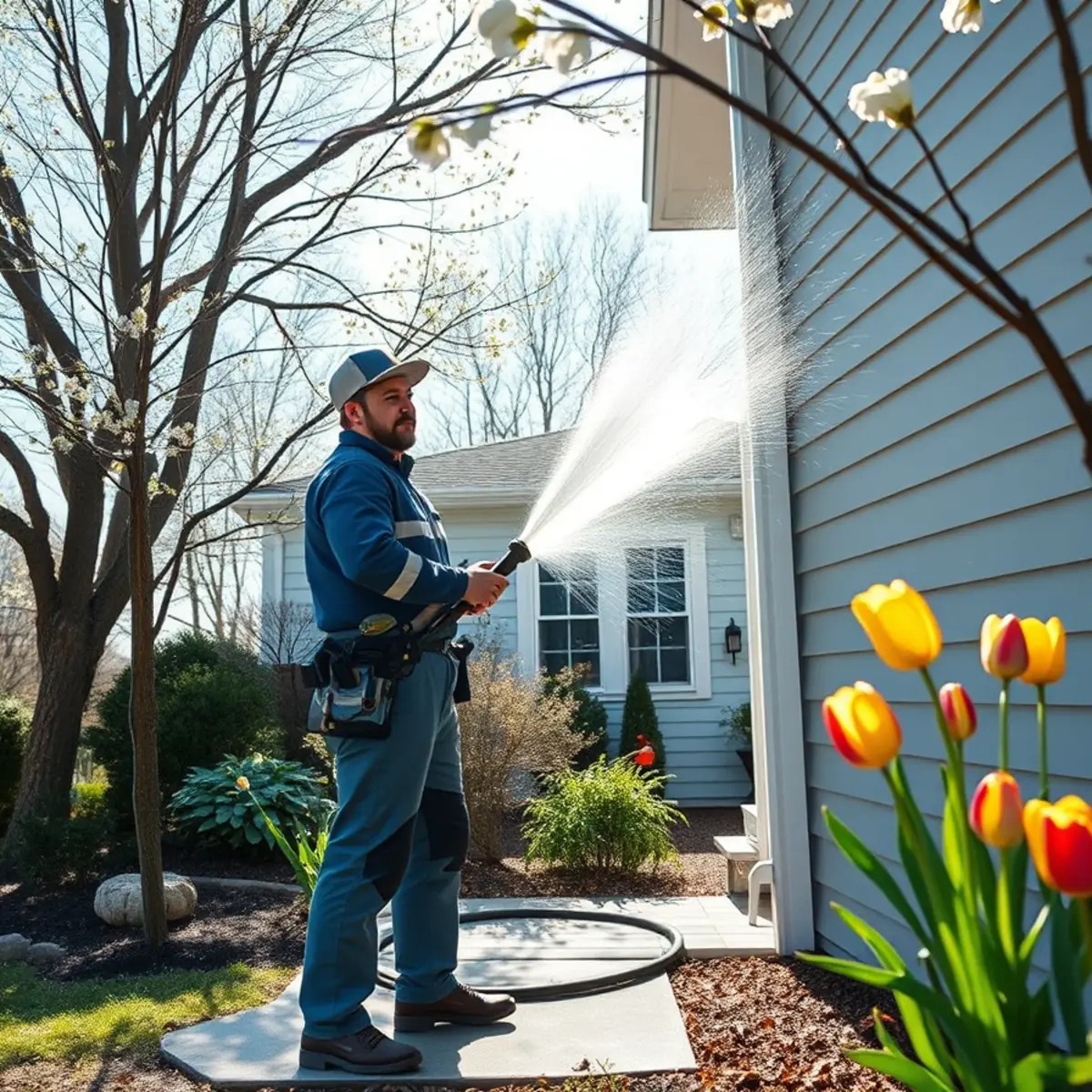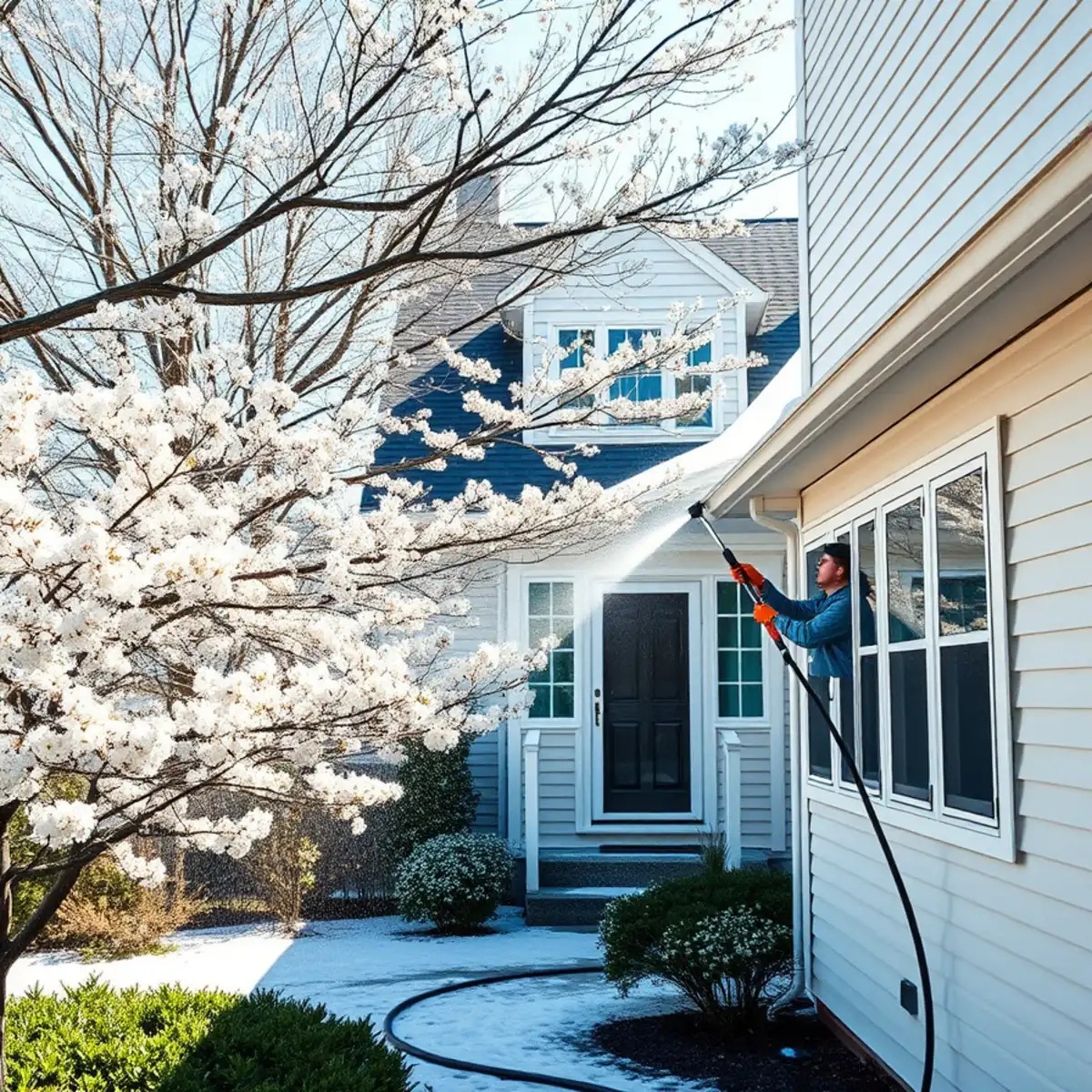
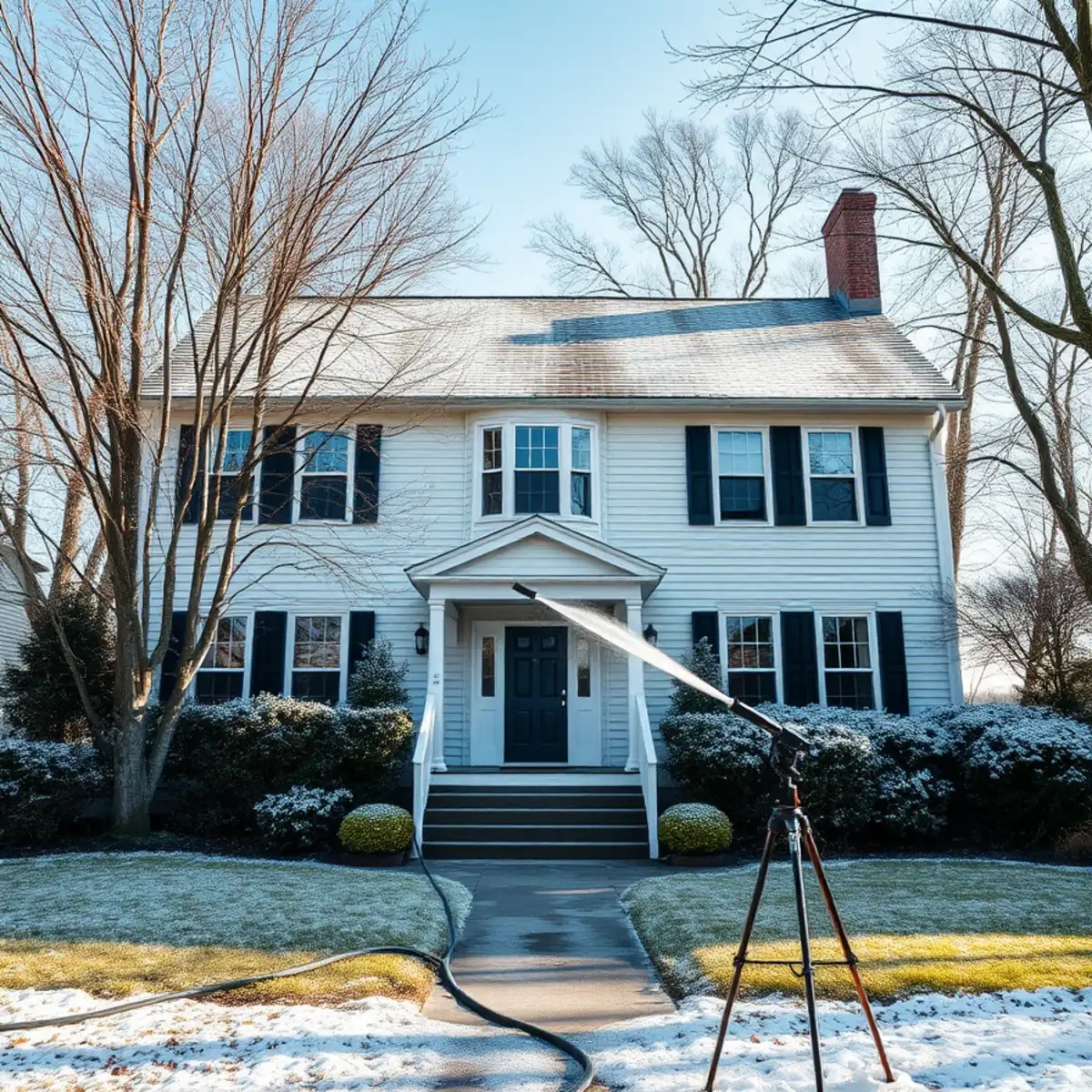
A complete Massachusetts pre-winter exterior cleaning guide: when to wash before the first freeze, how to stop ice dams, and how to protect concrete from road salt.
Massachusetts winters do not negotiate. Between freeze-thaw cycles, heavy wet snow, and months of road salt, the outside of your home takes a beating from November through March, and whatever dirt, algae, or organic film is sitting on your surfaces when the first freeze hits only makes the damage worse. This guide is the most complete pre-winter exterior cleaning plan you will find for New England: what to clean, exactly when to clean it, why it matters in our climate, and which jobs you can DIY versus hand to a pro.
Should You Pressure Wash Before Winter in Massachusetts? (Short Answer: Yes)
Yes. A thorough cleaning before the first hard freeze is one of the smartest, lowest-cost things you can do for your home's exterior in the fall.
Here is the logic in plain terms. Algae, mold, mildew, and moss are living organisms that hold water against your siding, shingles, and concrete. Dirt and organic buildup do the same. When that trapped moisture freezes, it expands roughly nine percent in volume, prying at the surface it is sitting on. Multiply that by the dozens of freeze-thaw swings a typical Massachusetts winter delivers and you get accelerated wear: lifted shingles, spalling concrete, cracked caulk, and stained, prematurely aging surfaces.
A clean surface sheds water and dries faster. That single fact, dry faster, is the whole reason pre-winter washing protects your home. You are not just making the place look cared-for through the gray months (though it will). You are removing the moisture-holding gunk that turns ordinary winter weather into a slow demolition project.
How New England Freeze-Thaw Cycles Damage Siding, Concrete, and Decks
The freeze-thaw cycle is the central villain of a Massachusetts winter, and it is worth understanding because it explains nearly every section that follows.
Water seeps into the pores, hairline cracks, and joints of a material. Temperatures drop below 32 degrees and that water freezes and expands. Temperatures climb back above freezing and it thaws. Then it happens again. And again. Eastern Massachusetts can cross the freezing line more than fifty times in a single winter, far more punishing than a region that simply stays cold.
- Concrete and masonry: Repeated freezing inside the pores causes the surface to flake and chip, a process called spalling. Brick joints crack, and historic brick and mortar, common across older Massachusetts colonials and Victorians, are especially vulnerable.
- Vinyl, fiber-cement, and wood siding: Trapped moisture behind organic film freezes and contributes to cracking, warping, and loosened caulk. North-facing and shaded walls, which stay damp longest, take the worst of it.
- Decks and wood surfaces: Water freezing in the grain accelerates splintering, graying, and rot, and lifts deck boards over time.
The common thread: trapped moisture is the enemy, and a dirty surface traps far more of it than a clean one.
The Ideal Timing Window: Fall (Late September to Early November) Before the First Freeze
In Massachusetts, the best time to do your pre-winter exterior cleaning is fall, after most leaves have dropped but before sustained freezing temperatures settle in. For much of the state, that means late September through early November.
That window shifts by region and by year:
- Coastal and eastern communities like Boston and the South Shore tend to hold milder temperatures a little longer into November.
- Central and western Massachusetts, including hubs like Worcester and the Berkshires, cool off earlier, so aim for late September into mid-October there.
A few practical rules for timing the work:
- You want daytime temperatures comfortably above freezing so cleaning solutions stay effective and surfaces fully dry before nightfall.
- Schedule earlier rather than later. The last mild, clear days fill up fast as homeowners across the region rush to finish the same prep.
- If you intend to seal concrete or a deck after cleaning, you need the surface fully dry plus the sealer's required cure temperature, usually above 50 degrees, so build in extra lead time.
Is it better to pressure wash in fall or spring? For pre-winter protection, fall wins. Spring is for cleaning up salt residue and winter grime, which we will cover at the end. The two seasons work as a cycle: prep now, clean up later.
Why You Should NOT Pressure Wash During a Massachusetts Winter
Can you pressure wash in winter in Massachusetts? Technically on a rare mild day, but you usually should not, and reputable local pros pause traditional residential house washing once temperatures stay near or below freezing. Here is why:
- Freezing water everywhere. Below 32 degrees, the water you spray freezes on contact, on the siding, in your hoses, on walkways, and in the equipment itself.
- Serious slip hazards. A thin glaze of ice on a driveway, deck, or walkway turns a routine job into an emergency-room risk.
- Surface damage. Cleaning solutions need above-freezing temperatures to work as designed. Apply them in the cold and they underperform, tempting people to add pressure they should not, which damages shingles, soft wood, and older siding.
- Equipment failure. Water frozen inside a pump or hose can crack components outright.
The takeaway: get it done in fall. Winter is for snow and ice management, not house washing.
What Temperature Is Too Cold to Pressure Wash? (The 40 Degree Rule and the 32 Degree Danger Zone)
The working benchmark most professionals use is the 40 degree rule: try to wash when air and surface temperatures are at or above 40 degrees Fahrenheit, and ideally rising through the afternoon.
- Below 40 degrees: Cleaning detergents and surfactants lose effectiveness, and dwell times stretch out unpredictably. Results suffer.
- At or below 32 degrees, the danger zone: Water freezes. Washing is unsafe and counterproductive. Surfaces glaze over, slip risk spikes, and equipment can freeze mid-job.
Two field tips that buy you a safer margin:
- Wash in the afternoon, after the day has warmed and before evening temperatures fall back toward freezing, so surfaces have hours to dry.
- Watch the overnight low, not just the daytime high. A surface that is still wet when it dips below 32 overnight can freeze and be damaged even if your washing window felt mild.
Pre-Winter Exterior Cleaning Checklist for Massachusetts Homeowners
Here is the consolidated, scannable checklist. Work top-down so debris and runoff flow away from already-cleaned surfaces.
- Gutters and downspouts — clear all debris, flush downspouts, confirm water exits away from the foundation, check hangers.
- Roof — soft wash moss, black streaks, and algae before snow load arrives.
- Siding and trim — soft wash to remove algae, mildew, and organic film; inspect caulk and flashing.
- Windows and frames — wash exterior glass and sills while the weather is mild.
- Driveway, walkways, and patios — clean embedded dirt, oil, and growth; sweep paver joints; seal once dry.
- Decks and fences — clean off the slick algae film, then seal wood before moisture freezes in the grain.
- Outdoor faucets and spigots — shut off interior supply, drain, disconnect hoses, and insulate.
- Pressure washer (DIY owners) — drain, add pump antifreeze, and store before the first freeze.
Each item below explains the why and the how.
House Washing and Soft Washing: Removing Mold, Mildew, and Algae Before Snow Arrives
By fall your siding has collected a season of pollen, dust, cobwebs, and organic film. Left in place, that layer holds moisture against the wall all winter, and the mold and mildew underneath keep growing under the snow because the organisms survive cold, they just go dormant. Does mold grow on siding in winter? Active growth slows, but it does not die, and the colony resumes the moment temperatures rise, often larger than before.
The right method for most Massachusetts homes is soft washing, not high-pressure blasting. Soft washing pairs low pressure with biodegradable surfactants that actually kill algae and mildew at the root. Pressure alone does not. As we tell every customer: you don't need more pressure, you need the right chemistry. High pressure on siding can also force water behind panels and under trim, exactly where you do not want trapped moisture heading into a freeze.
Surface-appropriate pressure matters:
- Vinyl siding: 100 to 500 PSI, paired with cleaning solution, not brute force. Our vinyl siding cleaning approach is calibrated to lift grime without stressing the panels.
- Cedar and wood siding: under 200 PSI.
- Historic brick: under 400 PSI.
- Stucco and EIFS: under 150 PSI.
Is soft washing safe in cold weather? It is safe and effective in the fall mild window above 40 degrees. Once temperatures hover near freezing, even soft washing should wait until spring. A clean wall also dries faster after every thaw, so a fall house washing pays off all winter, and it makes spotting cracked caulk or damaged trim far easier while there is still time to seal up.
Gutter Cleaning and Brightening to Prevent Ice Dams and Frozen Downspouts
If you clean only one thing before winter, make it the gutters. Clogged gutters are the single leading cause of ice dams, the signature New England winter headache.
Here is the chain of failure. Leaves and debris block the troughs and downspouts. Melting snow cannot drain, so it backs up and refreezes at the cold eaves, building a ridge of ice, the ice dam. Water pooling behind that dam is forced up under your shingles and into the roof deck, walls, and ceilings. Frozen downspouts make it worse by giving meltwater nowhere to go.
Before winter:
- Remove all leaves, twigs, and shingle grit from the troughs.
- Flush the downspouts and confirm water exits well away from the foundation.
- Check that hangers and fasteners are secure before the weight of ice tests them.
Does pressure washing prevent ice dams? Cleaning the gutters directly removes the blockage that causes most ice dams, so yes, a clean, free-flowing gutter system is a real ice-dam defense. It is not the whole story, attic insulation, ventilation, and sometimes heat cables address the warm-roof side of the equation, but a clogged gutter guarantees trouble. If your gutters work but show black tiger-striping, a professional gutter cleaning followed by gutter brightening restores both flow and appearance in one visit.
Driveways, Walkways, and Patios: Cleaning and Sealing Concrete Against Salt and Freeze-Thaw Damage
Concrete and pavers take the worst beating of any surface in a Massachusetts winter, because they absorb both the freeze-thaw punishment and the road salt.
Should you seal your driveway before winter? If it has been a few years, yes, and fall is the time, before road-salt season begins. The routine is clean first, then seal:
- Clean thoroughly. A proper driveway cleaning at the correct pressure (concrete handles roughly 2,000 to 3,000 PSI) removes embedded dirt, algae, and organic buildup that weaken the surface and hold moisture.
- Treat oil and rust now. Targeted oil stain removal is far easier in mild weather than in the cold.
- Sweep and refill paver joints so they drain through the winter, then consider re-sanding.
- Seal once fully dry. A quality acrylic sealer (for concrete) or paver sealer creates a barrier against salt brine and water intrusion. Our paver cleaning service restores joints and color before sealing.
Why does this matter so much? Salt and water work into the pores and micro-cracks of concrete. When that moisture freezes, it spalls the surface, flaking and chipping it apart. Salt also draws moisture in and can leave a white, chalky efflorescence behind. A clean, sealed surface resists all of it dramatically better than a dirty, porous one.
Decks and Wood Surfaces: Cleaning and Sealing Before Moisture Freezes
A deck coated in algae and ground-in dirt holds water in the grain, and when that water freezes it accelerates splintering, graying, and rot. The slick algae film is also a genuine slip hazard once snow and ice cover it.
Before you put the patio furniture away:
- Clean decks and railings to strip the algae film and open the grain.
- Wash fences, especially shaded sections where moss takes hold.
- Sweep and rinse patios so leaves do not mat down and stain over winter.
Use the right pressure for the material: composite decking takes 500 to 1,000 PSI, while natural wood needs gentler treatment, under about 1,500 PSI with the fan tip kept moving. Professional deck cleaning dials this in so you protect the wood instead of gouging it. If you plan to seal or stain, fall cleaning sets you up to apply sealer while temperatures still allow it to cure, locking moisture out before the freeze.
Roof Cleaning: Removing Moss and Black Streaks Before Winter Snow Load
Those dark streaks on north-facing shingles are usually Gloeocapsa magma, a hardy algae, often joined by moss and lichen in shaded, damp spots. Moss is the real threat heading into winter: it lifts shingle edges and holds snowmelt against the roof deck, exactly where you do not want water sitting under a heavy snow load.
The correct method is low-pressure soft washing, asphalt shingles should be cleaned at well under 100 PSI, and a metal roof at 500 to 800 PSI. High pressure strips the protective granules off aging shingles and voids many manufacturer warranties. Professional roof cleaning uses biodegradable solutions that kill the growth at the root without touching the granules. Late fall, before sustained freezing, is the ideal window, and it spares you a slick, dangerous rooftop in spring.
How Road Salt and De-Icers Damage Your Home Exterior (and How a Clean Surface Helps)
Massachusetts uses enormous amounts of de-icer every winter, rock salt (sodium chloride), calcium chloride, and magnesium chloride, and every bit of it ends up as corrosive brine on your driveway, walkways, foundation, masonry, and lower siding.
How does road salt damage concrete and siding?
- Concrete spalling: Salt brine penetrates pores and dramatically worsens freeze-thaw damage, accelerating the flaking and chipping.
- Masonry corrosion: Chlorides attack mortar joints and can corrode embedded metal, and they leave efflorescence behind.
- Siding and metal: Salt spray and splash drive corrosion on lower siding, railings, and metal fixtures.
A clean, sealed surface fights back. Sealed concrete and pavers give the brine far less to penetrate, and clean siding without an organic film holds less of the moisture salt needs to do its damage. Then in spring, washing off the accumulated salt residue stops the corrosion clock, which is why the fall-prep, spring-cleanup cycle matters so much here. For more on this specific local problem, our guide on how salt and snow impact concrete goes deeper.
Catching Problems Early: How Pre-Winter Washing Reveals Cracks and Repairs Needed
There is a hidden benefit to washing before winter that has nothing to do with cleanliness: a clean surface tells you the truth about its condition.
Grime hides cracks, gaps, failing caulk, lifted shingles, soft deck boards, and rusting fasteners. Strip that grime away in the fall and these problems become visible while you still have mild weather to fix them, before water gets in, freezes, and turns a hairline crack into a real repair. A pre-winter wash effectively doubles as an annual inspection of your siding, roofline, concrete, and wood. Finding a failed bead of caulk in October is a five-minute fix; finding it in February, after water froze behind it, is not.
Protecting Your Home's Plumbing: Winterizing Outdoor Faucets and Spigots
This one is not glamorous, but a frozen, burst outdoor faucet can flood a wall cavity. How do you protect outdoor faucets from freezing? Before the first hard freeze:
- Disconnect and drain every garden hose. A connected hose traps water in the spigot, and that water freezes and cracks the pipe.
- Shut off the interior supply to each outdoor faucet, if your home has dedicated shutoff valves, then open the spigot to let it drain.
- Insulate the spigot with an inexpensive foam faucet cover.
- Note frost-free vs. standard sillcocks. Frost-free models still fail if a hose is left attached, so disconnect regardless.
Five minutes per faucet in the fall prevents one of the most common and expensive winter plumbing failures.
Winterizing a Pressure Washer (For DIY Homeowners)
If you own a pressure washer, do not let it freeze with water inside. What happens if water freezes in a pressure washer? The water expands and can crack the pump, the most expensive part, along with hoses and fittings. A cracked pump usually means a new machine.
How do you winterize a pressure washer?
- Run it to flush out any remaining detergent, then disconnect the hoses, spray gun, and nozzles and drain them.
- Squeeze the trigger to relieve pressure and let the unit drain fully.
- Add pump saver / antifreeze (the non-toxic RV type works) through the pump inlet per the manufacturer's instructions, this displaces residual water and lubricates the seals.
- Store the machine somewhere it will not freeze, like a heated garage or basement.
Skip this and you may be shopping for a new washer come spring.
DIY vs. Hiring a Professional for Pre-Winter Exterior Cleaning
Plenty of this list is reasonable DIY: disconnecting hoses, sweeping patios, winterizing your own pressure washer, light ground-level rinsing. The higher-stakes work rewards a professional.
- Safety: Roofs, second-story siding, and steep grades are genuinely dangerous when surfaces are cold and slick. This is not the season for ladder gambles.
- Method: The wrong technique does more harm than the dirt. High pressure on shingles, soft wood, or older siding causes damage that shows up later. Pros match pressure and chemistry to each surface.
- Chemistry: Killing algae and mildew at the root takes the right biodegradable surfactants and correct dwell times, not just a stronger nozzle.
- Responsibility: A good crew pre-soaks and protects landscaping, manages runoff, and is mindful of well water.
When you do hire, choose a contractor who is fully insured and can provide a certificate of insurance on request, and check that they carry proper HIC registration for any work that requires it. At Wash Bros we are fully insured (COI available on request), use surface-appropriate pressure and biodegradable solutions, and have earned a 5.0 average across 130 reviews. We are a local family business, founded in 2023 by brothers Louis and Dominic, serving homeowners and businesses throughout Massachusetts, including communities like Cambridge and the surrounding region.
How Pre-Winter Cleaning Makes Spring Cleaning Easier
Everything you do in the fall pays a dividend in March. A home that goes into winter clean and sealed comes out needing far less recovery work, no full season of compounded algae growth, no grime baked under months of snow, and surfaces that already resisted salt and freeze-thaw because they were protected.
Spring becomes a lighter job: rinse off the winter salt residue and road grime, do a quick inspection, and you are done. Skip the fall prep and spring becomes a heavy reset, removing a winter's worth of trapped-moisture damage and overgrown organic buildup. Prep now, clean up light later. That is the Massachusetts seasonal cycle that keeps a home's exterior ahead of the weather.
Winter Services Still Available in Massachusetts
Even after traditional house washing pauses for the season, Wash Bros keeps working through the cold months. When ice dams form despite your best prep, low-pressure steam removal melts them safely without the roof damage that chipping and chiseling cause. And commercial work continues year-round, including commercial pressure washing and fleet washing for businesses that need clean storefronts, lots, and vehicles no matter the forecast. We serve customers across Massachusetts in every season, not just the warm one.
Schedule Your Pre-Winter Exterior Cleaning with Wash Bros
Do not wait for the first hard freeze to think about your home's exterior. A free, no-obligation estimate is the easiest way to find out exactly what your property needs before winter and to lock in a spot during the busy fall season. Contact us or call +1 (351) 242-0666, and our team will build a winter prep plan that keeps your home protected from the first snowfall through the spring thaw.
Frequently Asked Questions
Need Professional Exterior Cleaning?
Wash Bros provides affordable, dependable pressure washing across Massachusetts. Get your free estimate today.
Get a Free Estimate