Mold and mildew quietly destroy MA siding, roofs, decks, and concrete. See how the damage happens surface by surface and the right way to stop it for good.
Mold and mildew on a Massachusetts home are not just an eyesore. They are living organisms that feed on your siding, roof, deck, and concrete, trap moisture against the surface, and quietly shorten the life of building materials you paid a lot of money for. This guide breaks down exactly how that damage happens, surface by surface, why New England homes are especially prone to it, and the right way to stop it before it turns into a repair bill.
Mold, Mildew, Algae, Moss, and Lichen: What's the Difference?
People lump all exterior growth together as "mold," but you are usually looking at five different organisms. Knowing which one you have tells you how much damage it can do and how hard it is to remove.
- Mildew is a surface-level fungus. It shows up as a flat, powdery patch in gray, white, or pale yellow. It sits on top of the surface, so caught early it wipes off fairly easily.
- Mold is thicker and darker, ranging from black and deep green to brown. Its hyphae (the root-like filaments of fungal growth) dig into porous surfaces like wood, grout, and unsealed concrete, which makes it far harder to remove and far more damaging.
- Algae is the green film you see on shaded, north-facing siding. It is not a fungus; it is a plant-like organism that needs moisture and a little light. It is mostly a staining and curb-appeal problem, but it holds water against the surface.
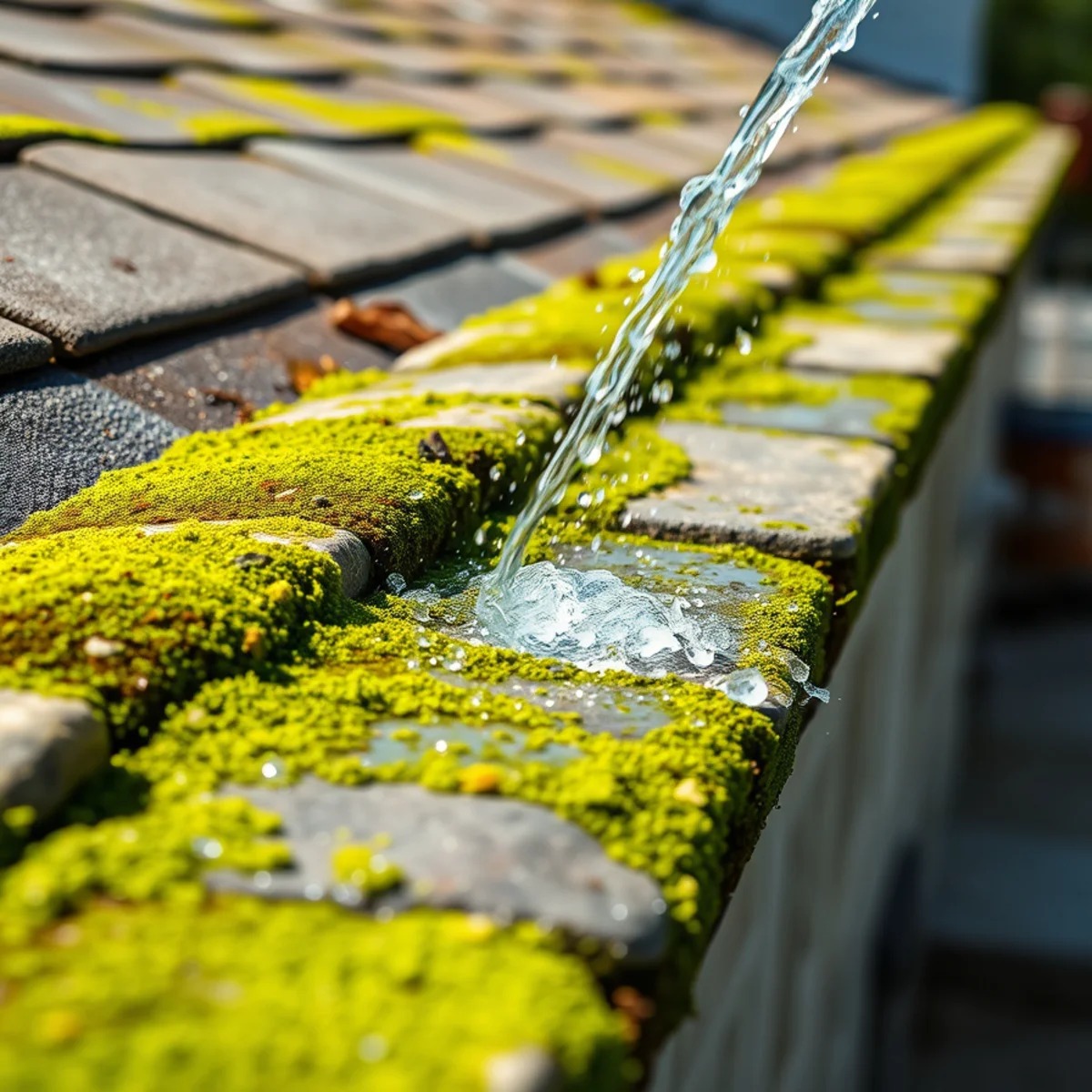
- Moss is the thick, spongy green carpet that grows on roofs, north-facing shingles, and damp pavers. It acts like a sponge, holding standing water against the material underneath.
- Lichen is a tough crust, often gray-green, that is actually a partnership between a fungus and an algae. It bonds tightly to shingles and stone and is the most stubborn of the group to remove.
Here is the quick reference:
| Organism | Looks like | Where it grows | Main damage |
|---|---|---|---|
| Mildew | Flat gray/white powder | Siding, trim, shaded walls | Surface staining, traps moisture |
| Mold | Black/green/brown, fuzzy | Wood, grout, porous masonry | Roots into material, rot |
| Algae | Green film or streaks | North-facing siding, fences | Staining, moisture retention |
| Moss | Thick green carpet | Roofs, pavers, shaded wood | Lifts shingles, holds water |
| Lichen | Crusty gray-green patches | Shingles, stone, brick | Bonds in, etches surface |
All five share three requirements: moisture, something organic to feed on, and limited sunlight. As you will see, the New England climate hands them all three for most of the year.
How to Identify Mold and Mildew on Exterior Surfaces
You can usually diagnose the problem with your eyes and nose before you ever touch the surface.
Color and texture. Mildew tends to be flat and powdery in light shades. Mold is darker, often with a slightly raised or fuzzy texture, and concentrates in seams, shaded corners, and anywhere water lingers. Wipe a small spot with a damp cloth: if a gray or black smear lifts off and the surface lightens, you are dealing with mold or mildew rather than ordinary dirt or simple oxidation (the chalky residue that builds on aging vinyl and faded paint).
Smell. A persistent musty smell near siding, under deck boards, or around a shaded foundation is one of the most reliable signs of active biological growth. That odor is the organism releasing compounds as it feeds. Dirt does not smell musty; mold does.
Pattern. Growth that follows the shaded side of the house, drips below a leaking gutter, or streaks down from the roofline is biological. Random splatter near the ground is usually mud and pollen.
Why New England's Climate Makes Mold and Mildew Inevitable
Massachusetts sits in a humid-continental climate, and almost every part of our weather year feeds organic growth. Humid summers routinely push outdoor humidity well past the roughly 50 to 60 percent threshold where mold thrives. Heavy spring rain, lingering snowmelt, and long overcast stretches keep surfaces damp for days at a time instead of drying out between storms.
A few regional factors make local homes especially vulnerable:
- Coastal moisture. South Shore and coastal towns like Scituate, Marshfield, Cohasset, and Plymouth get persistent salt-air humidity and fog that keep siding and roofs damp long after inland homes have dried.
- Deep shade. New England's mature tree canopy and densely sited lots keep north-facing walls and roof slopes from ever getting direct sun. Towns full of old shade trees, like Newton and Concord, are prime mildew country.
- Spring runoff. Ground stays frozen deep into spring here. When rain hits frozen soil it can't absorb, so water runs sideways against foundations and the lower courses of siding, soaking exactly the spots where mold loves to start.
- Freeze-thaw cycles. Winter drives moisture and the colonies living in it deeper into cracks and pores, then expands that water as it freezes, widening the openings for next season's growth.
If your home sits under trees, near wetlands, or in a low spot that drains slowly, expect to see growth within a year or two of any cleaning.
How Mold and Mildew Damage Vinyl Siding
Vinyl is not food, but the dirt, pollen, and organic film that settle into its texture absolutely are. Mildew and algae root into the grain and seams of the panels and hold a thin layer of moisture against the siding around the clock.
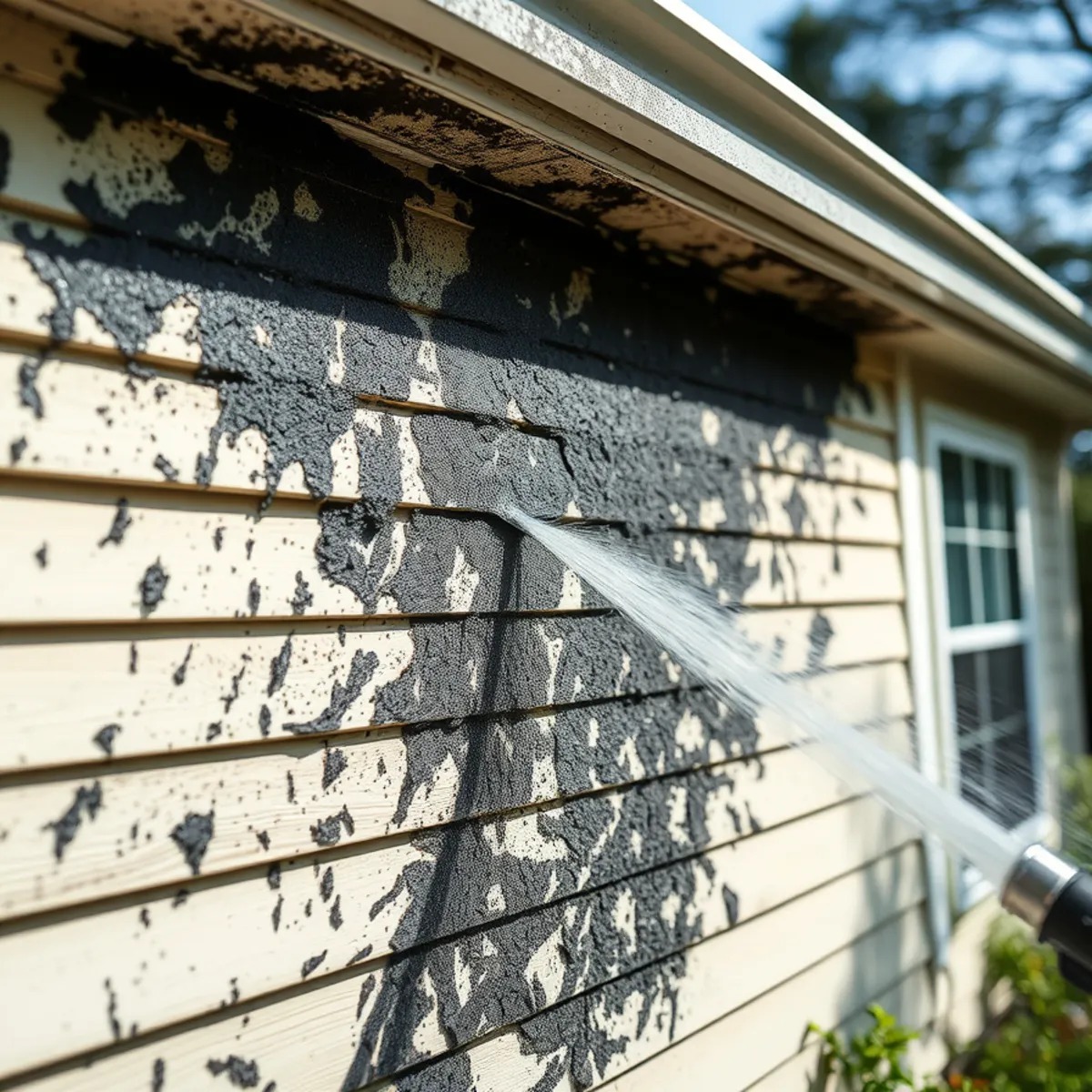
That constant dampness causes two problems. First, on the painted wood or fiber-cement siding common on older Massachusetts colonials, trapped moisture lifts and bubbles paint and accelerates rot underneath. Second, on vinyl itself, heavy organic staining that bakes in season after season can become permanent, and the growth speeds up the chalky oxidation that makes older siding look dull and faded.
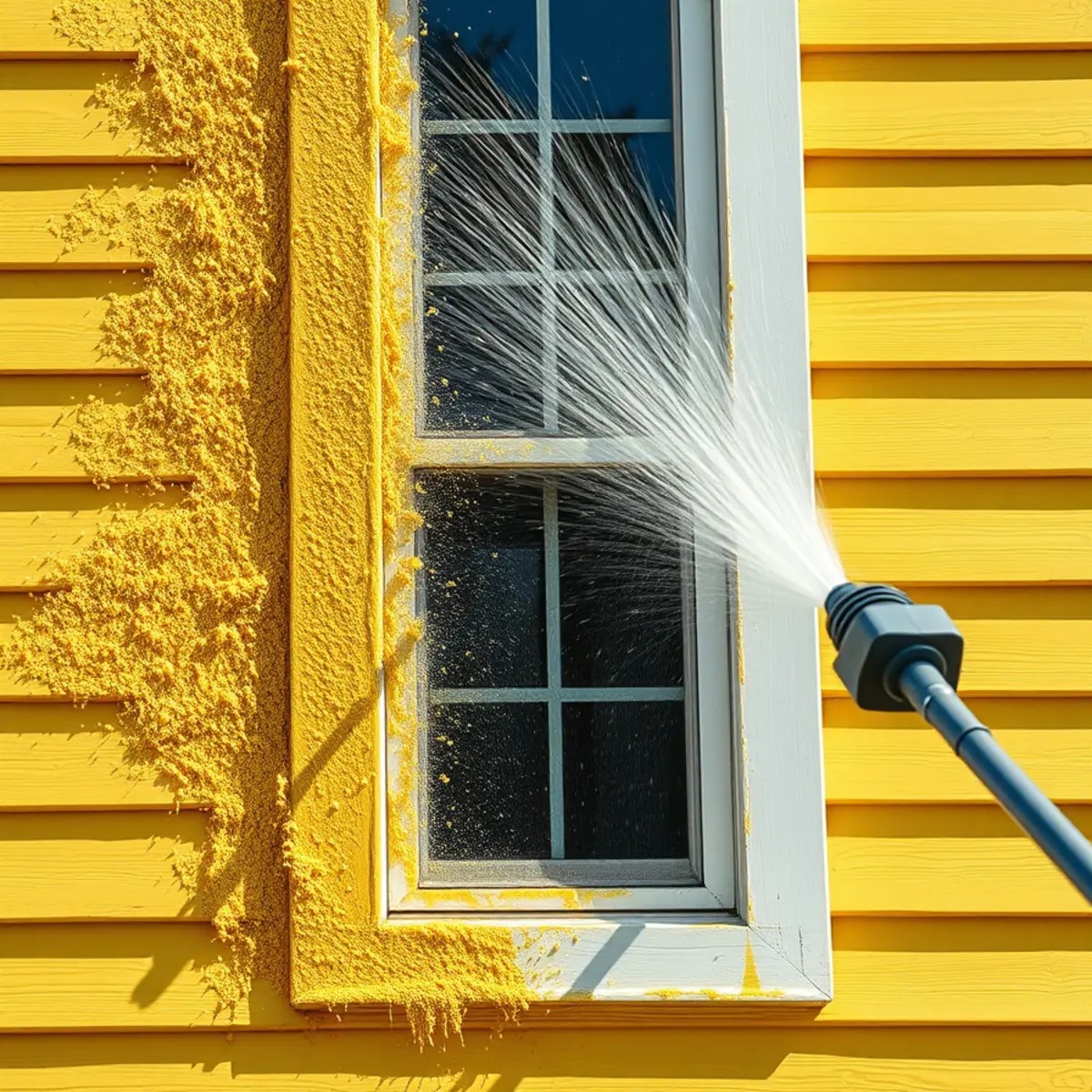
The fix is chemistry, not force. Vinyl tolerates only a narrow pressure range (roughly 100 to 500 PSI), so the right approach is a soft washing treatment that applies a fungicidal wash to kill the organism at the root, then rinses at low pressure. That is exactly why dedicated vinyl siding cleaning uses soft-wash chemistry instead of a pressure wand.
How Mold, Algae, and Lichen Damage Roof Shingles
The black streaks running down asphalt shingles across Massachusetts are not dirt and they are not mildew. They are colonies of Gloeocapsa magma, a hardy blue-green bacteria that feeds on the limestone filler manufacturers blend into shingles. As the colony spreads, it produces a dark, UV-resistant sheath, which is why the streaks look black and always seem worse on the shaded north slope.
The damage is real and it is mechanical:
- Granule loss. As the bacteria consume the limestone and the colony expands, the protective shingle granules loosen and wash away. Those granules are what shield the asphalt from UV. Lose them and the shingle dries out, cracks, and ages years ahead of schedule. This is shingle degradation you are paying for in roof life.
- Moss and lichen go further. Moss holds standing water against the roof deck and lifts shingle edges, opening a path for moisture intrusion into the roof decking below. Lichen bonds directly into the shingle surface and pulls granules with it when it is disturbed.
The Asphalt Roofing Manufacturers Association (ARMA) is explicit that asphalt shingles should be cleaned with low-pressure soft washing and a chemical treatment, never high pressure that strips granules. Reputable roof cleaning keeps the wand under 100 PSI and lets the solution do the work, which is also what protects most shingle warranties. For a deeper dive on the science, see our guide on what causes black streaks on roofs.
How Mold and Mildew Damage Wood Decks, Fences, and Trim
Wood is organic, which means to mold and mildew it is a meal. Fungal growth breaks down the lignin that binds wood fibers together, and the result is wood softening: boards go from solid to spongy. Left long enough, that is wood rot, and rotted decking and fence rails get replaced, not cleaned.
There is a safety dimension too. A deck or set of stairs coated in algae and mildew develops a slick film that is genuinely dangerous, especially when it is wet or frosted. Cedar and softwoods tolerate only very gentle cleaning (under about 200 PSI), so the right move is a low-pressure wash with the proper solution. Routine deck cleaning and fence cleaning strip the growth and the slip hazard before either becomes a rebuild. In Massachusetts, early fall is the ideal window: it clears a summer's worth of growth and lets boards dry and accept sealer before road-salt season.
How Mold and Mildew Damage Concrete, Pavers, Driveways, and Walkways
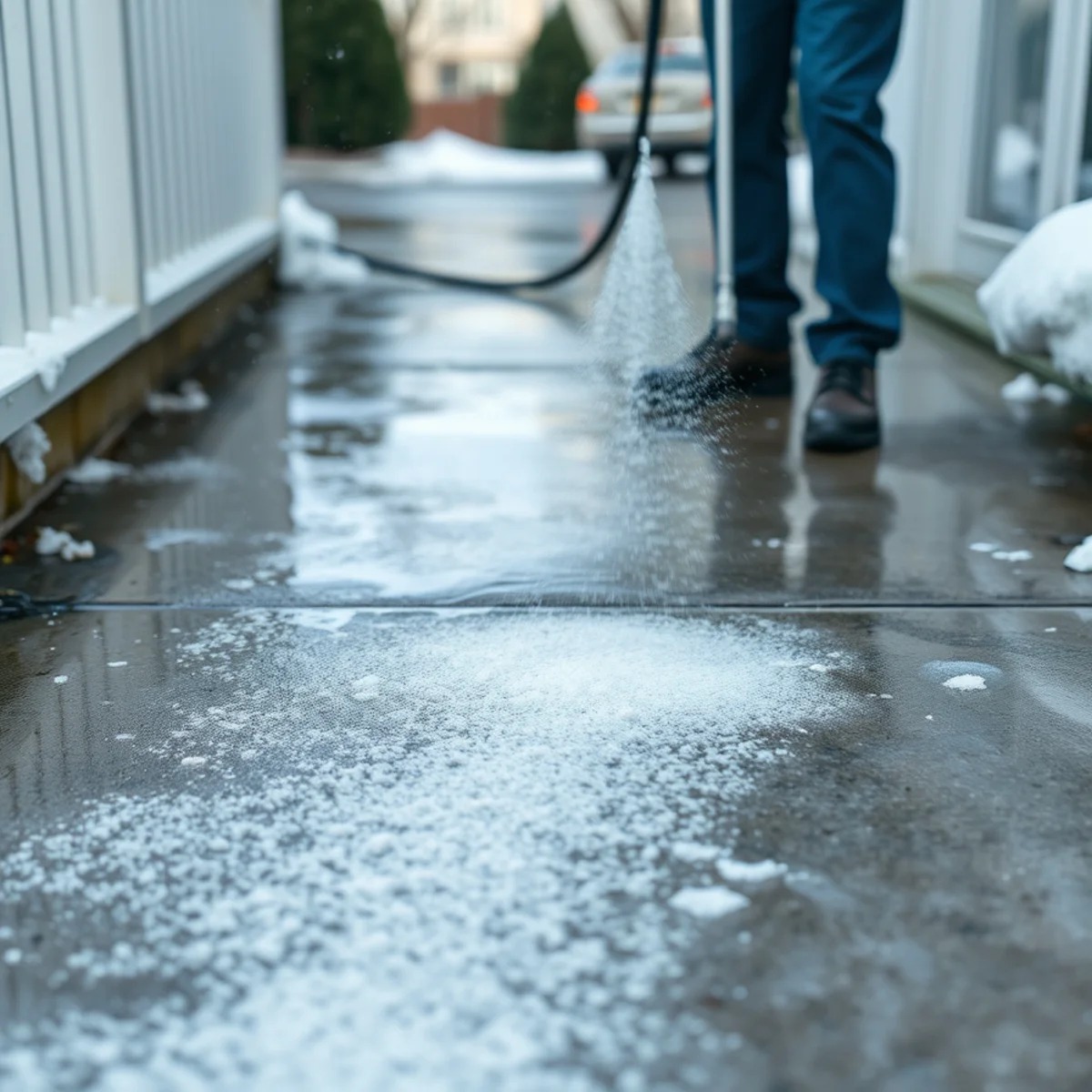
Concrete, pavers, and brick are porous, so mold and mildew don't just sit on top of them, they settle into the surface and trap moisture inside. In our freeze-thaw climate, that trapped water expands when it freezes and drives flaking, pitting, and surface spalling. The biological growth accelerates the same damage that road salt and winter already inflict.
Two more issues show up on hardscape:
- Slip hazard. Mildew and algae turn walkways, patios, pool decks, and shaded steps slick. On high-traffic surfaces this is a safety problem first and a curb-appeal problem second.
- Efflorescence confusion. The white, chalky bloom that surfaces on brick and concrete is efflorescence, mineral salts leaching out, not mold. It is harmless to your health but signals moisture moving through the masonry, the same moisture that feeds organic growth.
Concrete is durable enough to take real pressure (a driveway handles 2,000 to 3,000 PSI), but pressure alone just blasts the surface film and leaves the roots. Professional concrete cleaning pairs the right pressure with a treatment that actually kills the growth so it stays gone longer.
The Timeline: How Fast Mold Grows and How Long Until Permanent Damage
Urgency matters here, because the clock starts faster than most homeowners think. These are general estimates based on how fungal growth behaves on damp exterior surfaces:
- 24 to 48 hours. Under the right warmth and moisture, mold spores can germinate and begin colonizing a surface in a single day or two. A shaded wall after a wet Massachusetts spring week is exactly that environment.
- Days to weeks. The colony establishes a root system, embeds into the texture, and starts spreading visibly. This is when a faint film becomes obvious streaking.
- Months to a few seasons. Once embedded, the organism is actively degrading the material, lifting paint, eating shingle granules, softening wood, and holding moisture into freeze-thaw cycles.
- Years. Untreated growth crosses into permanent damage: rotted boards, prematurely aged shingles, spalled concrete, and staining that no longer fully cleans up.
The takeaway is simple. The cost of removal climbs the longer you wait, and at some point it shifts from a cleaning to a replacement.
Beyond the Surface: Structural Damage and Moisture Intrusion Behind Siding
The damage you can see is only part of the story. When growth and the moisture it holds get behind siding, through a failed seam, a clogged gutter overflow, or a gap around a window, it works on the materials that hold your house up.
Trapped moisture behind siding feeds mold on the sheathing and framing, where it slowly compromises structural integrity out of sight. The early warning signs are usually outside: persistent dark streaks below a gutter, a musty smell along one wall, or paint that keeps failing in the same spot no matter how often it is redone. Yes, mold can absolutely grow behind siding, and by the time it shows indoors as a stain or a smell, it has often been at work for a while. Keeping the exterior clean and the water moving away from the walls is the cheapest defense against the most expensive kind of damage.
Health and Safety Risks: Allergens, Respiratory Issues, and Slip Hazards
Exterior mold is not only a building problem. Mold spores travel, and they find their way indoors through open windows, vents, and door gaps. A heavy bloom on the siding right outside a bedroom window is worth taking seriously, because those spores and the allergens and mycotoxins some molds release can aggravate asthma, allergies, and other respiratory issues, and they degrade indoor air quality for the household.
Then there is the slip factor, which is the most immediate danger. Algae and mildew on steps, pool decks, ramps, and shaded walkways create a slick film that is easy to miss until someone loses their footing. For homes with kids, older adults, or anyone with mobility concerns, keeping those surfaces clean is a genuine safety measure, not a cosmetic one.
Why You Can't Just Pressure Wash Mold Away
It is tempting to think a powerful pressure washer will blast mold off and be done with it. It won't, and here is why.
High pressure removes only what sits on the surface. It leaves the root system, the hyphae embedded in the pores, fully intact, so the colony regrows, often faster than before because the surface is now damp and slightly roughened. Worse, blasting an active colony aerosolizes mold spores and sprays them across clean siding, the deck, and your neighbor's wall, literally seeding new growth.
Pressure also damages the very surfaces you are trying to save. Too much force carves grooves in cedar, cracks aging vinyl, strips paint, etches concrete, and drives water behind panels where it causes the hidden damage described above. This is the core message we give every customer: you don't need more pressure, you need the right chemistry. Pressure does not kill the roots; the cleaning solution does. If you want the full comparison, read pressure washing vs soft washing.
Soft Washing: The Right Way to Kill Mold and Mildew at the Root
Soft washing is the professional standard for any living organism on an exterior surface. Instead of relying on force, it applies a fungicidal wash, typically a measured blend of sodium hypochlorite, biodegradable surfactants, and water, that kills mold, mildew, algae, moss, and lichen down to the root. The surface is then rinsed at low pressure, well under 100 PSI on a roof. The treatment does the work, so the surface is never at risk.
The advantages over pressure for biological growth:
- It kills the organism rather than relocating its spores, so the surface stays clean far longer.
- It is safe on the full range of delicate substrates, asphalt shingles, vinyl, cedar, stucco, and painted wood, that high pressure would ruin.
- It reaches into pores and seams where pressure can't, eliminating the root system that causes regrowth.
For stubborn, established colonies, a dedicated mildew and mold removal approach targets the growth without harming what's underneath, and related treatments like algae removal and moss and lichen removal handle the specific organisms that need their own chemistry. Responsible operators also pre-soak landscaping and manage runoff containment, which matters on the many Massachusetts properties on well water.
DIY Bleach and Vinegar Solutions vs. Professional Treatment
Homeowners reach for three things to kill exterior mold: chlorine bleach, oxygen bleach, and vinegar. They are not equal.
- Chlorine bleach (sodium hypochlorite) does kill mold and is the active ingredient in professional soft-wash mixes. The problem is dilution and control: too strong and it kills landscaping and discolors surfaces; too weak and it only lightens the stain without killing the root. It also needs the right surfactant to cling and dwell, which a hose-end sprayer won't deliver.
- Oxygen bleach (sodium percarbonate) is gentler on plants and wood and works well on decks, but it is slower and weaker on heavy roof and siding colonies.
- Vinegar and hydrogen peroxide can knock back small mildew spots on a porch rail, but on real exterior colonies they are inconsistent and rarely reach the roots. Vinegar is fine for a quick touch-up, not for a roof or a whole wall.
DIY can handle a small, fresh patch. The trouble is reaching second-story siding and roofs safely, mixing chemistry that kills without damaging, protecting plantings, and not spreading spores in the process. That is where a professional crew earns its keep, and why a thorough house washing outlasts a weekend with a garden sprayer.
How Often Should Massachusetts Homes Be Cleaned to Prevent Mold and Mildew?
There is no single number, because shade, tree cover, and proximity to water all change the timeline. As a general guideline for Massachusetts properties:
- Annual cleaning is a safe default for most homes, ideally late spring through early summer once heavy rains taper and pollen season ends.
- Every 6 to 12 months for homes under heavy tree cover, on the coast, or with persistent north-side growth.
- As soon as you spot it, new streaks, green patches, or that telltale musty smell. Catching growth early keeps it from rooting in.
A few habits stretch the time between visits: trim back branches so sun and air reach the siding and roof; keep gutters clear so water drains away from walls instead of overflowing down them; redirect downspouts and sprinklers off the walls; and watch the north and shaded sides, your early-warning system. None of this replaces a wash, but it slows regrowth. The economics are straightforward: routine preventative maintenance costs a fraction of repainting, re-decking, or replacing a roof early. (Any schedule here is a general estimate; the right cadence depends on a quick look at your specific property.)
Signs It's Time to Call a Professional Exterior Cleaning Company
Call in a pro when you see any of these:
- Black streaks on the roof or thick moss between shingles, which need ARMA-compliant low-pressure treatment.
- Green or gray growth spreading across siding faster than you can keep up with.
- A persistent musty smell along a wall, or paint that fails repeatedly in one spot, both signs moisture may be getting behind the surface.
- Slick algae on decks, stairs, or walkways where someone could fall.
- Growth on a second-story wall or steep roof you can't reach safely.
If reaching it means a tall ladder, or if a DIY clean keeps coming back within weeks, that is the surface telling you the roots are still there and it is time for professional treatment.
How Wash Bros Removes Mold and Mildew Safely Across Massachusetts
Wash Bros is a fully insured, family-run exterior cleaning company founded in 2023 by brothers Louis and Dominic, with a 5.0 average across 130 Google reviews and a certificate of insurance available on request. We match the method to the surface every time: soft washing and surface-appropriate PSI for roofs, siding, and wood; the right chemistry for concrete and masonry; biodegradable surfactants; and a landscaping pre-soak with runoff awareness on well-water properties. We serve homeowners and businesses across the state, from Boston and Worcester to coastal and South Shore towns like Plymouth, where salt-air humidity makes black roof streaks and shaded-side algae a constant battle.
If you have spotted streaks, green patches, or a damp musty smell around your home, don't wait for the growth to dig in and turn a wash into a repair. Contact us for a free, no-obligation estimate, or call +1 (351) 242-0666 to talk through your property with our team. Local, dependable, and genuinely protective of your home, we'll get the mold and mildew gone and help keep it that way.
Frequently Asked Questions
Need Professional Exterior Cleaning?
Wash Bros provides affordable, dependable pressure washing across Massachusetts. Get your free estimate today.
Get a Free Estimate