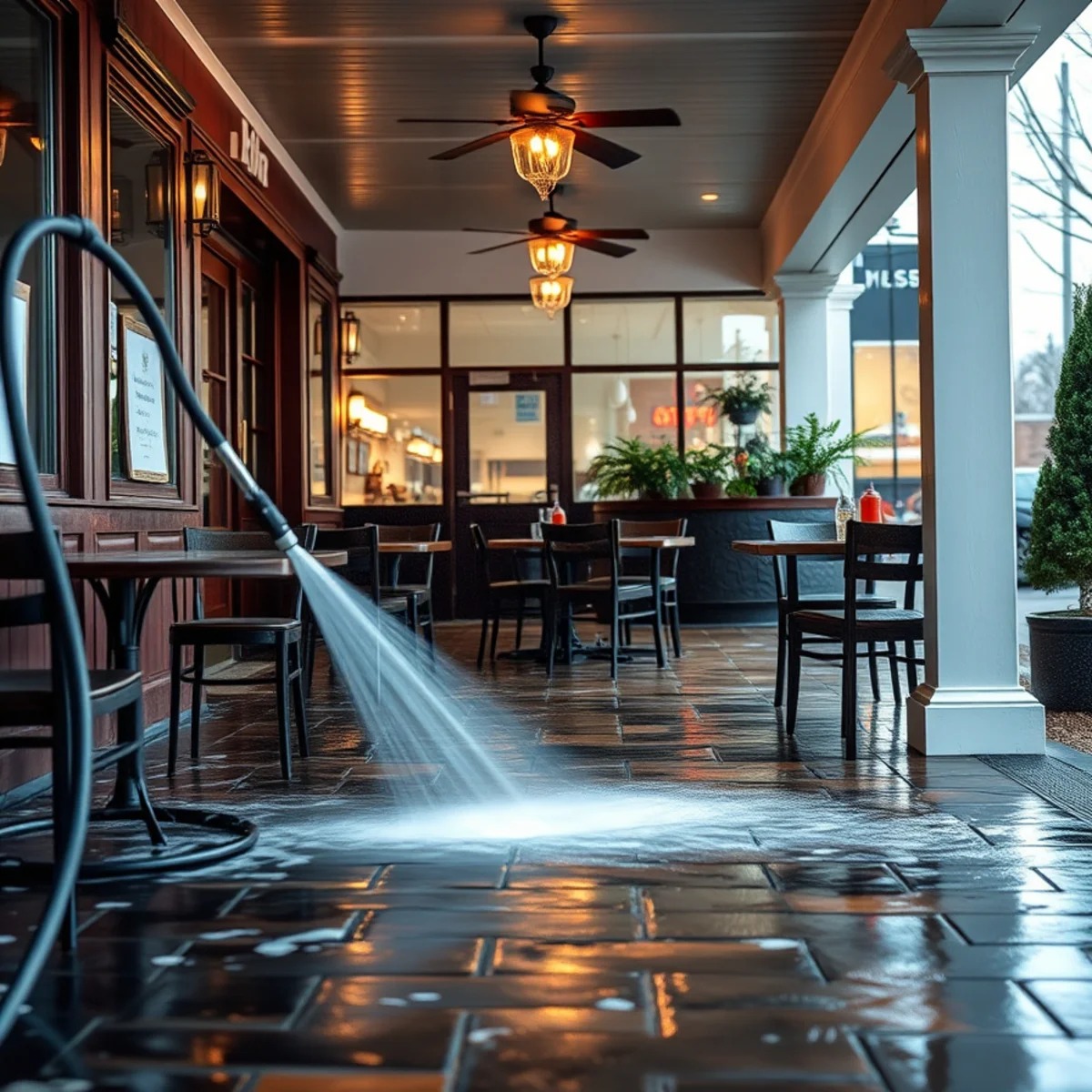
Why restaurant entrances and patios need hot water and food-safe degreasers, how often to clean each area, costs, and how to keep grease out of storm drains.
For a restaurant, the sidewalk out front and the patio out back are part of the menu before a single plate is served. A greasy door handle, a black-stained entryway, or a patio crusted with spilled soda and gum tells customers exactly how they think the kitchen looks. This guide walks Massachusetts restaurant owners through what really builds up on food-service exteriors, why grease demands hot water and the right chemistry, how often each area needs attention, and how a professional crew keeps grease out of the storm drain and your business out of trouble.
Introduction: Why Restaurant Entrances and Patios Demand Specialized Cleaning
No other commercial exterior takes the abuse a restaurant's does. A storefront office gets foot traffic. A restaurant gets foot traffic plus airborne cooking grease, sugary drink spills, dropped food, gum, and a steady parade of delivery drivers, dumpster runs, and outdoor diners. The result is a layered, sticky, food-based grime that ordinary sweeping and a garden hose never touch.
That is why generic "commercial pressure washing" advice falls short for food service. Cleaning a restaurant entrance is closer to degreasing a kitchen than rinsing a driveway. You need hot water, food-safe degreasers, the right PSI for each surface, and a plan for where the dirty water goes. Get any of those wrong and you either leave grease behind, damage the surface, or flush contaminated wastewater into a storm drain you are legally responsible for. This article covers all of it, the New England way.
What Builds Up on Restaurant Exteriors (Grease, Drink Sugars, Gum, Foot-Traffic Grime)
The buildup on a restaurant exterior is a specific cocktail, and each ingredient behaves differently:
- Airborne cooking grease. Exhaust fans and rooftop hoods vent oily mist that drifts down and settles on walkways, walls, railings, and patio furniture. It starts invisible, then turns black as it traps dust and dirt, and it bonds tighter to concrete the longer it sits.
- Drink-sugar and soda residue. Spilled soda, juice, and cocktails leave a sticky sugar film that grabs every speck of dirt and footprint that crosses it. On a patio, that is hundreds of micro-spills a day baking onto the surface.
- Gum. Crushed flat by foot traffic, gum bonds to porous concrete and quarry tile and refuses to scrape off cleanly once it sets.
- Foot-traffic grime and oil stains. Shoe rubber, tracked-in road grime, and dripped vehicle oil near drive-thru lanes and loading docks darken high-traffic paths.
- Mold, mildew, and algae. Shaded, slow-drying corners, common in New England's humid summers and damp springs, grow a green or black biological film that is genuinely slippery.
Left alone, this mix stops being cosmetic. Sugars and grease feed pests. Grease and algae make surfaces slick. Stains migrate deep into porous concrete and become permanent. A scheduled wash stops the cycle before it sets.
Key Areas a Restaurant Pressure Washing Service Should Cover
A real restaurant cleaning is not just "the front sidewalk." A complete restaurant pressure washing scope covers every zone where food, grease, and traffic concentrate:
- Entrances and entryways. The first thing every customer sees and touches. Highest foot traffic, most visible staining, and the area judged hardest.
- Patios and outdoor dining. Quarry tile, concrete, or pavers under tables collect drink sugars, food, and grease, plus winter grime while they sit unused.
- Sidewalks. The public-facing approach, where gum and foot-traffic stains accumulate. Good sidewalk cleaning keeps the whole stretch consistent with the entrance.
- Dumpster pads and grease-trap areas. The single greasiest, smelliest zone on the property. This is where rodents, odors, and health-inspection problems start.
- Drive-thru lanes. Oil drips, brake dust, and tracked grime build a dark stripe down the lane that hot water lifts and cold water just spreads.
- Service entrances and loading docks. Back-of-house doors see constant delivery and trash traffic and rarely get cleaned until they are badly stained.
Each zone has a different surface and a different soil load, which is why a flat "one rinse fixes everything" approach never works.
Why Hot Water Pressure Washing Is Essential for Grease and Gum
Here is the single most important truth in food-service exterior cleaning: cold water does not remove grease, it just smears it around. Grease is an oil. Spraying cold water at an oily film pushes it into a thinner layer and drives it deeper into the pores of the concrete. It looks wet, then dries right back to black.
Hot water pressure washing changes the chemistry. Heat melts and liquefies the grease so it releases from the surface and emulsifies with a degreaser, the same reason hot water cuts grease on a dish and cold water does not. Hot water also softens gum so it lifts in one piece instead of shredding into a smeared mess. For cooking-oil residue on walkways, dumpster pads, drive-thru lanes, and patios, hot water is not a luxury, it is the difference between actually clean and just wet.
This is the core lesson worth repeating: you don't need more pressure, you need the right chemistry and the right temperature. Blasting grease with sky-high PSI on a cold machine etches the concrete without removing the oil. Hot water plus a quality degreaser at a controlled pressure does the job and protects the surface.
How Often Should Restaurants Pressure Wash Entrances and Patios?
There is no single answer, because traffic volume and cuisine vary. A high-volume burger spot generates far more grease than a wine bar. Treat the following as planning estimates, not strict rules, and lean toward the more frequent end for high-traffic and high-grease operations.
Frequency by Area and Traffic Volume
- Entrances and high-traffic walkways: monthly to quarterly. These get the most visible staining and the most judgment, so they earn the most frequent attention.
- Patios and outdoor dining: a deep clean before patio season opens, plus touch-ups through the summer. New England patios sit idle all winter and collect salt, sand, and grime that must come off before the first warm-weather service.
- Dumpster pads and grease-trap areas: monthly during warm months, more often for high-volume kitchens. This is where grease, odor, and pests concentrate fastest.
- Drive-thru lanes and service entrances: monthly to quarterly depending on volume.
- Building facade and signage: one to two soft washes per year, typically spring and fall.
Many restaurants set up a recurring commercial schedule so cleanings happen automatically and never get forgotten during a busy stretch. A standing plan also spreads the cost into predictable, manageable visits instead of one shocking deep-clean bill.
Health Code, Slip-and-Fall Liability, and First-Impression Stakes
Restaurant exterior cleaning is a business decision, not a vanity one. Three things are on the line.
Health inspections. Inspectors look beyond the kitchen. Exterior conditions, grease accumulation around the dumpster pad and grease-trap area, and pest evidence all factor into how an inspection goes. A documented exterior cleaning schedule demonstrates that you take sanitation seriously and helps you stay ahead of issues before they show up on a report.
Slip-and-fall liability. Grease, algae, and food residue turn walkways into genuine hazards, especially when wet. A slip-and-fall claim is expensive and damaging to a small business, and grease near a restaurant entrance is a textbook example of a hazard a reasonable owner should have addressed. Regular cleaning restores traction to concrete, tile, and pavers and strips the slick film near doorways and grease-heavy zones.
First impressions and revenue. A diner's decision to walk in or keep driving often happens at the curb. A bright, clean entrance signals a clean kitchen. A grimy one plants doubt before the food is tasted. In a competitive market like Greater Boston, where a block can hold a dozen options, that split-second impression decides who gets the table. Clean exteriors also photograph better in the customer reviews and social posts your reputation now lives on. Pressure washing pairs naturally with storefront pressure washing and commercial building exterior cleaning for a complete, polished look.
Surfaces That Should NOT Be Pressure Washed
Knowing what not to blast is as important as knowing what to clean. Used wrong, a pressure washer destroys more than it cleans.
- Food-contact surfaces. Outdoor prep counters, cutting areas, and anything food touches should be hand-cleaned and sanitized to food-safety standards, never high-pressure rinsed, which can drive contaminants into seams and crevices.
- Electrical. Outlets, junction boxes, exterior lighting, menu boards, and signage wiring must be protected and avoided. Forcing water into electrical components is a shock and short-circuit hazard.
- Painted walls and wood trim. High pressure strips paint, gouges wood, and forces water behind siding. These get soft washing at low pressure instead.
- Building facades, awnings, and EIFS/stucco. Delicate vertical surfaces need soft-wash chemistry under 150 PSI, not a pressure blast.
- Cracked grout, loose mortar, and aging brick. High pressure blows mortar out of joints. Historic brick should stay under roughly 400 PSI.
Matching method to material is exactly the judgment that separates a professional from someone with a rented machine, and it is the main reason most restaurants hand this off rather than risk costly damage.
Degreasers and Food-Safe Cleaning Agents for Restaurant Exteriors
Pressure alone will never beat restaurant grease. The chemistry does the real work, and pressure plus hot water simply rinses away what the chemistry has already broken down.
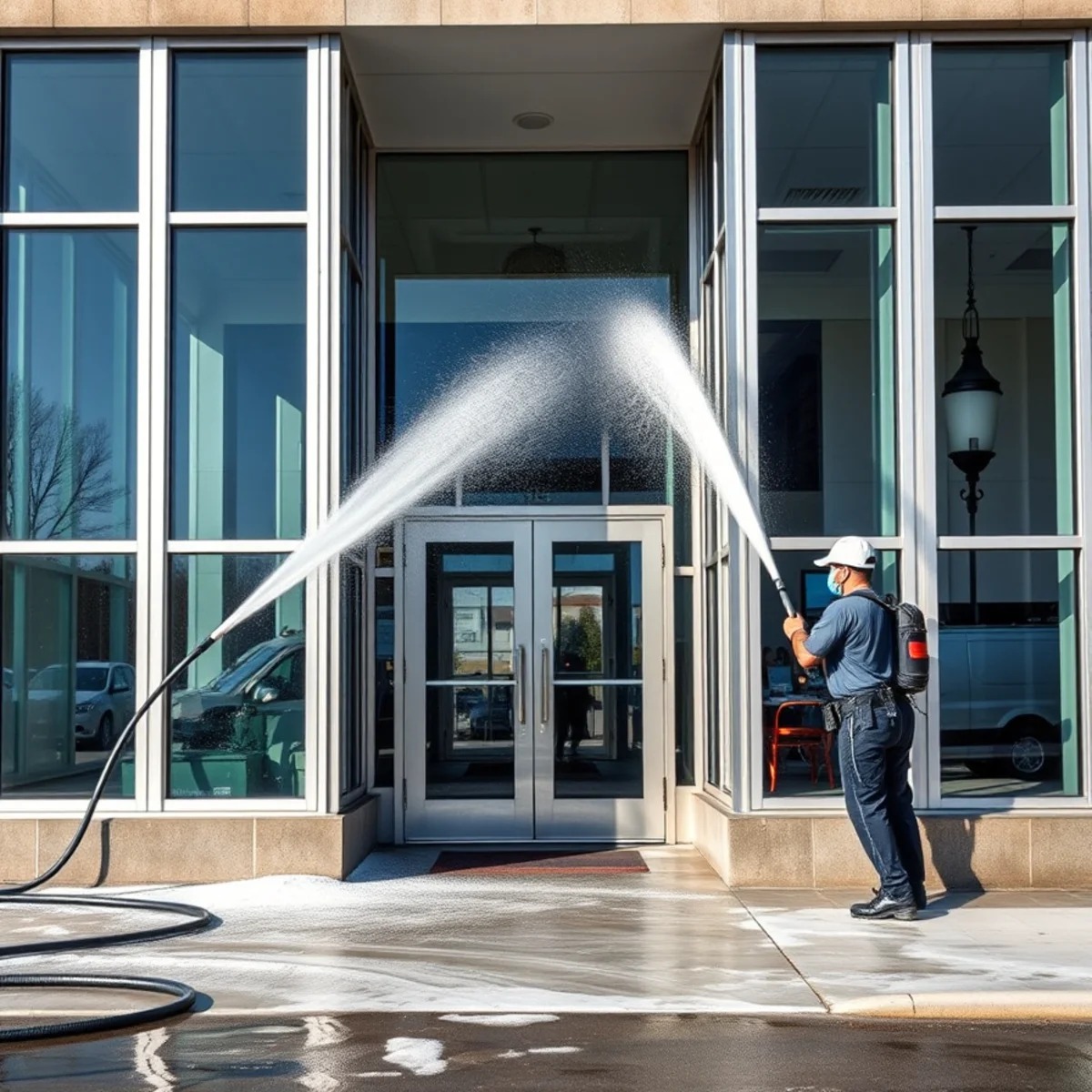
A proper restaurant clean uses a commercial-grade degreaser with biodegradable surfactants that emulsify oil so it can be rinsed away rather than smeared. For areas near food, outdoor seating, and entrances people touch, food-safe, biodegradable cleaning solutions are the right call, not harsh industrial solvents that leave a residue or harm landscaping. The process is dwell-based: apply the degreaser, let it sit and work on the grease, agitate where needed, then rinse with hot water and a surface cleaner attachment that delivers an even, streak-free finish on concrete, quarry tile, and pavers.
The eco-conscious angle matters in two directions. Biodegradable surfactants are safer for the plants, soil, and people around a busy patio, and they break down rather than persisting in the runoff, which keeps you on the right side of the stormwater rules covered next.
Water Reclamation, EPA / Clean Water Act, and Stormwater Compliance for Grease Runoff
This is the part most restaurant owners never think about, and the part that can cost the most. When you pressure wash a restaurant, the wash water is full of grease, food waste, and detergent. That water cannot legally go down the storm drain.
Storm drains in Massachusetts do not lead to a treatment plant. Under the federal Clean Water Act and EPA's stormwater program, most local systems operate under an MS4 (municipal separate storm sewer system) permit, and they flow more or less directly to local rivers, ponds, and the ocean. Discharging grease-laden wash water into them is a prohibited wastewater discharge that can expose the property owner to fines and enforcement. Many Massachusetts municipalities are actively enforcing this.
A professional restaurant crew handles this with water reclamation. Wash water is contained, vacuumed up, filtered, and disposed of properly instead of being allowed to run into the gutter. When a contractor talks about runoff containment and water recovery, this is what they mean, and for a restaurant it is a real liability shield, not a sales gimmick. Wash Bros uses runoff-containment practices so grease and detergent are captured rather than washed into a storm drain, which protects you from the kind of stormwater violation that generic, low-ball operators ignore. If a contractor cannot explain where your dirty water goes, that is the contractor to walk away from.
Best Time to Schedule Pressure Washing Around Restaurant Hours
The best clean is the one your customers never see happen. Pressure washing is loud, wet, and uses chemicals, so it belongs before open or after close, never during service.
- After close / overnight is ideal for full deep cleans. The crew works an empty patio and entrance, surfaces dry overnight, and you open to a spotless space.
- Early morning before open works well for quicker entrance and sidewalk touch-ups, leaving time for everything to dry before the first customer.
- Slow days (often early in the week) are best for the bigger jobs that take longer.
After-hours cleaning also lets the degreaser dwell properly and the surfaces dry fully, which matters for both results and slip safety. A good contractor builds the schedule around your hours, not theirs.
DIY vs. Hiring a Professional Restaurant Pressure Washing Company
Plenty of owners buy a consumer pressure washer and try to handle this in-house. The trade-offs are real.
A consumer machine runs cold water and lacks the hot water and commercial degreasers that actually break down restaurant grease, so the worst stains never fully lift, they just spread. Used incorrectly, high pressure etches concrete, strips paint, cracks tile grout, and blows mortar out of brick joints, turning a cleaning project into a repair bill. And then there is the wastewater: restaurant runoff is full of grease and food waste, and as covered above, letting it reach a storm drain can put you on the wrong side of the Clean Water Act. Most owners doing this themselves have no containment plan at all.
A professional crew brings hot water, food-safe degreasers, surface-matched PSI, runoff containment, after-hours scheduling, and full insurance, with a certificate of insurance available on request. For most restaurants, the time saved, the damage avoided, and the liability covered make professional cleaning the clear choice.
How Much Does Restaurant Pressure Washing Cost?
Pricing depends on real variables, not a flat sticker. The honest factors that move a restaurant quote up or down include:
- Total square footage of the entrance, sidewalk, patio, and back-of-house areas.
- Grease load and condition. A heavily soiled dumpster pad or years-deep entrance grime takes more degreaser, dwell time, and labor than light maintenance.
- Surface type. Quarry tile, pavers, and stained concrete each clean differently.
- Frequency. Recurring monthly or quarterly maintenance is priced lower per visit than a one-time emergency deep clean, because the buildup never gets out of hand.
- Access and scheduling. After-hours and overnight work, and whether water reclamation is required, factor in.
In the industry, exterior flatwork is commonly estimated on a per-square-foot basis for larger areas and a per-job flat rate for a defined scope like an entrance and patio, but the only accurate number is one tied to your actual property. Be skeptical of any quote given sight-unseen or any price that seems too good to be true, because the cheapest bids usually skip hot water, food-safe chemistry, or runoff containment, the exact things you are paying for. Wash Bros gives free, property-specific estimates so the number reflects your real scope.
Setting Up a Recurring Maintenance Plan / Cleaning Schedule
The smartest restaurants stop treating pressure washing as an emergency and put it on a calendar. A monthly maintenance plan keeps grease from ever reaching the baked-on, pest-attracting, slip-hazard stage, which means each visit is faster, cheaper, and more effective than a once-a-year rescue mission.
A typical recurring plan layers the frequencies from earlier: monthly dumpster-pad and high-traffic-entrance service through the warm season, a major patio deep clean before outdoor dining opens, and one or two facade soft washes a year. Between professional visits, daily habits protect the results, sweep entrances and patios so debris does not grind in, wipe spills before they set into porous surfaces, keep dumpster lids closed and the pad clear, and address gum and sticky spots before they harden. A standing schedule also creates the documented cleaning record that helps at inspection time.
Massachusetts-Specific Concerns: Winter Salt, Slush, Pollen, and Seasonal Outdoor Dining
New England weather shapes a restaurant's cleaning calendar more than owners expect.
Winter (roughly November through April). Rock salt, sand, slush, and road grime get tracked across entrances and into vestibules constantly. De-icing salt does not just look bad, it pits and stains concrete, and the freeze-thaw cycle works that salt into the surface and spalls it over time. Monthly winter maintenance washes during thaws protect both appearance and the hardscape investment. You can read more in our guide on how salt and snow impact concrete.
Spring. This is the most important window of the year. After the thaw, patios are coated in salt residue, sand, pollen, and the mold that thrives in damp, warming conditions. Massachusetts pollen season blankets outdoor furniture, railings, and patio surfaces in yellow. A thorough spring deep clean resets the outdoor space right before the season when patio revenue peaks.
Summer. The short, high-value outdoor-dining season makes a spotless patio critical during your best revenue months. Humidity feeds algae and mildew in shaded corners, and heavy patio use means constant spills, so light, regular touch-ups keep things presentable.
Fall. Clear leaves and organic debris before they stain, and soft wash the facade before winter sets in.
Urban and high-foot-traffic restaurants, from dense districts in Cambridge and Boston to busy main streets in Worcester, face heavier gum, drink-sugar, and foot-traffic staining than suburban spots and benefit from tighter schedules.
How to Choose a Commercial Restaurant Pressure Washing Contractor in Massachusetts
Not every pressure washer is equipped for food service. Before you hire, confirm the contractor:
- Uses hot water, not just cold. For grease, this is non-negotiable.
- Uses food-safe, biodegradable degreasers, not harsh solvents around your seating and entrances.
- Has a runoff-containment / water-reclamation plan and can tell you exactly where the dirty water goes.
- Matches PSI to surface and knows what not to pressure wash.
- Is fully insured and can provide a certificate of insurance on request. In Massachusetts, also ask whether the company is HIC registered if that matters for your situation, as it is reasonable buyer due diligence.
- Works around your hours with before-open or after-close scheduling.
- Gives a property-specific written estimate, not a vague phone quote.
Wash Bros is a fully insured, family-run exterior cleaning company founded in 2023 by brothers Louis and Dominic, with a 5.0 average rating across 130 Google reviews. We bring hot water, food-safe biodegradable chemistry, surface-matched pressure, and runoff containment to restaurants across Massachusetts, and we understand New England weather in a way generic, out-of-state guides never will.
Whether you need a one-time deep clean before patio season or a recurring schedule that keeps your entrance spotless year-round, we will match the right method to every surface and protect both your property and your liability. Get a free, no-obligation estimate by visiting our contact page or calling +1 (351) 242-0666 today, and let your restaurant make the great first impression it deserves.
Frequently Asked Questions
Need Professional Exterior Cleaning?
Wash Bros provides affordable, dependable pressure washing across Massachusetts. Get your free estimate today.
Get a Free Estimate