Restaurant Pressure Washing Services in Massachusetts
Professional restaurant pressure washing from Wash Bros for Massachusetts homes and businesses — affordable, dependable, and designed to restore curb appeal safely.
In the restaurant business, the sidewalk in front of your door is your first menu. A grease-stained entryway, a gum-pocked patio, and a dumpster pad that fouls the back alley tell customers and health inspectors the same story before anyone tastes the food.
That story costs you. It shows up in a lower health inspection score, in a slip-and-fall claim, in a one-star photo of a greasy curb, and in a Board of Health or code-enforcement notice over odor and pests. Food-service grease is not ordinary dirt. It bonds. It bakes. It feeds rodents, cockroaches, and flies. And it does not come off with a garden hose and a box-store wand.
Wash Bros cleans Massachusetts restaurant exteriors the way food service actually demands: hot water, the right degreaser chemistry, and runoff handled by the book. Here is exactly what that involves and why a food-service exterior needs a specialist, not a generalist.
Restaurant Pressure Washing Services in Massachusetts
A restaurant exterior carries a contaminant profile no office park or retail strip generates. Airborne fryer grease drifts off the kitchen exhaust hood and settles on walls and sidewalks. Spilled food drives embedded grease into concrete pores. Bonded grease buildup hardens at the dumpster pad and the drive-thru lane into a slick, dark, smelling crust. That mix sits at the intersection of three things every operator cares about: safety, compliance, and curb appeal.
Get it right and your property reads clean from the curb, passes the eye test on inspection day, and keeps customers walking in. Get it wrong and the same surfaces become a slip-and-fall hazard, a pest magnet, and a Board of Health red flag. Restaurant pressure washing is the maintenance discipline that keeps all three on your side. Done by a specialist, it is grease removal, surface degreasing, and biofilm control performed with the correct temperature, the correct chemistry, and EPA-compliant wastewater handling — not a generalist with a cold-water wand who lists "restaurants" in a sentence and moves on.
Why Restaurant Exteriors Need Professional Pressure Washing
Here is the problem most owners underestimate. Food-service grease is a fat, and fat behaves nothing like ordinary grime. It oxidizes, hardens, and bonds to concrete. Then it does four things that hit your bottom line.
It builds up. Layer over layer at the dumpster pad, the grease trap area, and the drive-thru until the surface is black and tacky.
It gets slick. Grease plus rainwater plus winter slush equals a slip-and-fall hazard at exactly the spots — entryways and drive-thru lanes — where a fall turns into a liability claim.
It attracts pests. Decomposing food residue is a buffet. Rodents, cockroaches, and flies do not infest a clean pad; they infest a fouled one, and a pest sighting is a fast track to a failed inspection.
It wrecks first impressions. A greasy curb and a gum-pocked patio are the first thing a customer sees and the first thing a phone camera captures for a review.
Left alone, that bonded crust does not wipe off. It takes heat and surfactants to break it. A garden hose spreads it. A box-store machine smears it and, cranked high enough to bite, scars the concrete underneath. This is specialist work because the failure modes are expensive.
Restaurant Areas & Surfaces We Pressure Wash
A restaurant's exterior is a collection of very different surfaces, each with its own contaminant and its own correct technique. We clean:
- Dumpster pads and grease enclosures — the heaviest grease and the worst odor on the property
- Drive-thru lanes and windows — tire-tracked grease, spilled drinks, and grime at the hand-off
- Sidewalks, entryways, and walkways — gum, foot-traffic grime, food spills, and road salt
- Outdoor dining patios and parklets — food grease, pollen film, and mildew under tables
- Kitchen back-of-house floors and loading docks — oil stains, organic decomposition, standing residue
- Parking lots and curbs — oil drips, tire marks, and the worn-out look that drags down curb appeal
- Building exterior, roof, and gutters — algae, mildew, and the grease film the exhaust hood lays down on nearby walls
For the building face, awnings, and painted surfaces we switch to gentle soft washing instead of high pressure. The hard surfaces — pads, lanes, sidewalks — get concrete cleaning with hot water and a degreaser. Many owners pair this service with storefront pressure washing for the signage zone, fold in parking lot cleaning for the lot, and multi-tenant plazas often bundle everything under broader commercial pressure washing.
Dumpster Pad & Grease Enclosure Cleaning
The dumpster pad is the single biggest reason restaurants call us, and the single biggest liability they ignore. Grease and food liquor leak from the bins, pool on the concrete, and undergo organic decomposition. That decomposition is the smell. It is also a food source, which is the pest problem.
Massachusetts gives this area teeth. Many local boards of health require a food-service dumpster to sit on an impervious 6-inch concrete pad inside a 6-foot enclosure, with regular — often monthly — servicing of the area to control grease, odor, and vermin. A fouled pad is not just ugly; it is a documented finding waiting to happen on your next inspection, and odor and pest complaints from neighbors in a dense Boston or Worcester corridor are what bring code enforcement to your door.
We hot-wash and degrease the pad and the enclosure walls, deodorize the surface, and contain the rinse so the grease leaves the property instead of getting pushed into the next storm drain. On a fryer-heavy, high-volume kitchen this is monthly work. Skip it and the grease-stained concrete bonds into a crust that takes hours of dwell time to break later.
Drive-Thru Lane & Outdoor Dining / Patio Cleaning
A drive-thru lane carries a grime no other lane does: airborne kitchen grease laid down over tire rubber, spilled sodas, and ground-in dirt, then polished by constant traffic into a dark, slick band along the hand-off window. For a QSR or fast-food drive-thru it is the highest-traffic, highest-grease surface on the lot. Hot water and a degreaser cut it. Cold water and pressure alone just rearrange it.
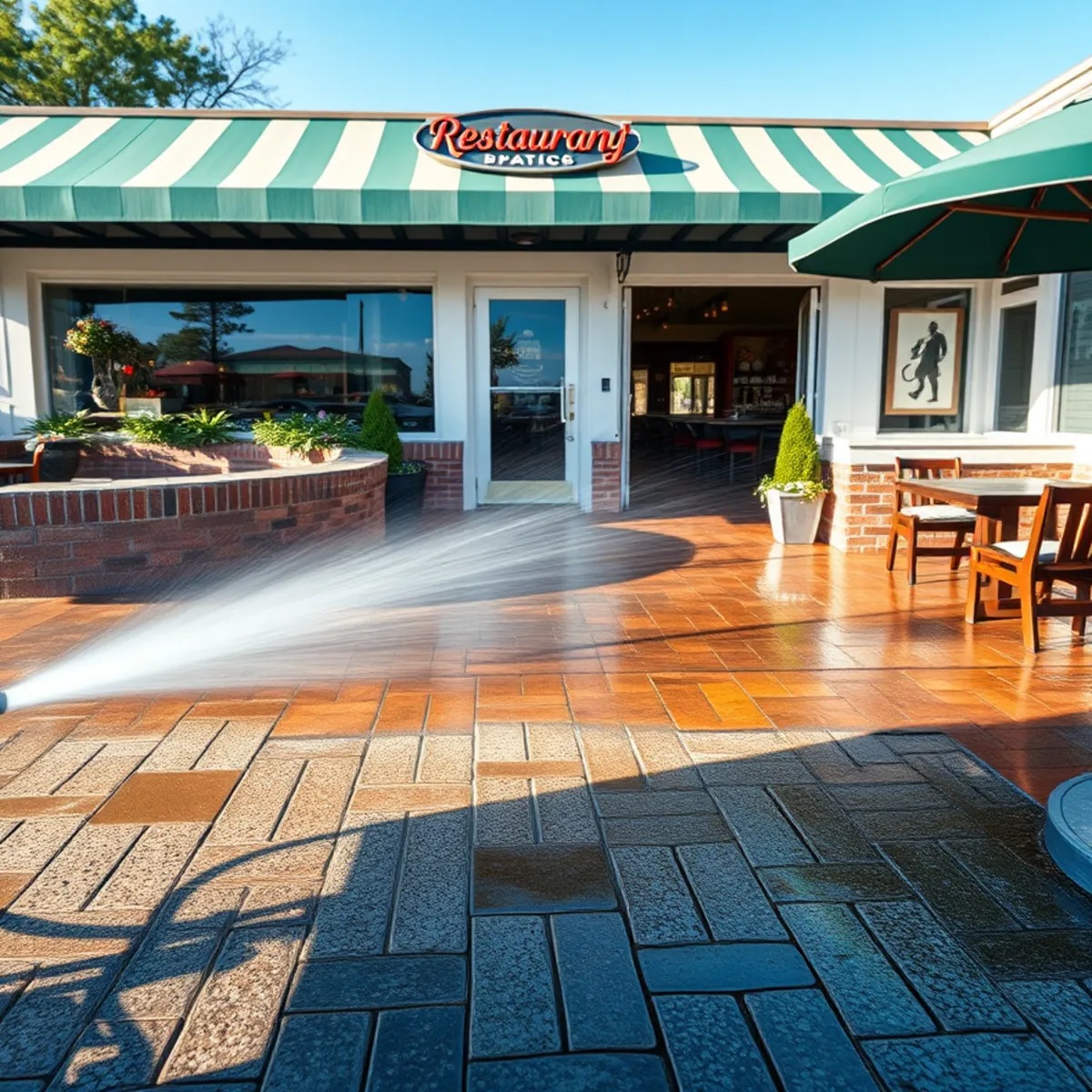
Outdoor dining is the other half of this story, and in Massachusetts it has exploded. The patio and parklet boom since 2020 means more sidewalk seating accumulating food grease, more chairs filmed with spring pollen, and more mildew breeding under tables in the shade. Patios run on a season here: they reopen in spring and close in fall, so a deep clean before opening and another at end-of-season keep the space safe and presentable through the months that matter. We surface-clean these zones for an even finish and protect the seating and planters while we work. This overlaps directly with our patio cleaning work.
Sidewalk, Entryway & Walkway Degreasing
The entryway is where customers form their first opinion and where slip-and-fall risk concentrates. Three things foul it. Gum welds itself to the concrete and turns the walk into a field of black dots. Grease and food residue tracked from the kitchen and the patio grays the surface and makes it slick. And in Massachusetts, winter road salt, sand, and slush get tracked across the threshold for five months a year, leaving a gritty white film that grinds underfoot.
We degrease and surface-clean the entry, walkway, and curb for an even finish, spot-treat gum and oil stains, and keep the ADA-accessible path safe and presentable. Sidewalk gum removal and food-spill degreasing are the difference between a curb that invites people in and one that warns them off. This ties into our sidewalk cleaning and oil stain removal services.
Hot Water Pressure Washing vs. Soft Washing for Grease Removal
Here is the principle that governs every restaurant job: you don't need more pressure; you need the right chemistry and the right temperature.
Grease is a fat. Fat softens with heat and dissolves with surfactants. That is why hot water pressure washing near 180–200°F is the standard for restaurant grease, and why cold-water-only operators struggle with it. Cold water at high PSI can push loose dirt around, but it smears bonded grease and forces you to crank pressure high enough to scar the slab. Hot water with a degreaser does the work at lower, safer pressure.
The right PSI and GPM depend on the surface:
- Concrete pads, sidewalks, drive-thru lanes — power wash with a surface cleaner, roughly 2,000–3,000 PSI, paired with hot water and a degreaser for grease
- Historic brick alley walls — soft wash only, no direct high spray, under 400 PSI to protect the mortar
- Painted siding, signage, awnings — low-pressure soft wash so water is never forced behind the finish
Soft washing is not a weaker pressure wash. It is a different tool: low pressure plus biodegradable surfactants that kill organic growth at the root instead of knocking it off the surface. Pressure does not kill algae and mildew — and in New England's humidity, shaded brick alleys grow plenty of both. The chemistry kills it. On a porous brick wall or a painted facade, soft washing is the only correct choice.
Health Inspection Readiness & Board of Health Compliance
This is where exterior cleaning stops being cosmetic and starts protecting your license to operate.
A Massachusetts Board of Health inspector reads the exterior as a signal. A grease-free dumpster enclosure, a clean entry, and an odor-free back-of-house support the food-safety posture they are there to verify. A fouled exterior — a smelling pad, a pest sighting, a slick walk — invites the kind of scrutiny that turns a routine annual food-service inspection into a list of violations.
Pressure washing does not, by itself, pass an inspection. But it removes the conditions that fail one. It eliminates the harborage and food source that attract vermin. It clears the grease that creates slip hazards. And it shows an inspector a property that is actively maintained, which is exactly the impression you want walking the lot with a clipboard. Regular exterior degreasing is one of the cheapest forms of inspection insurance a restaurant can buy.
Our Restaurant Pressure Washing Process
Picture the dumpster pad on a Friday: black, tacky, and giving off an odor you can smell from the parking lot. Here is how we hand it back to you clean.
We walk the property first, mapping the grease load, the surface types, and — critically — where every drain goes. Then we pre-treat the heavy zones with a commercial degreaser and give it real dwell time, because the surfactant has to break the bond between grease and concrete before any water touches it. That dwell step is the part amateurs skip and the reason their work looks streaky.
Next comes hot water at the correct pressure and the right surface-cleaner setup for each surface — pads and lanes worked hot near 180–200°F, walls and painted surfaces dropped to a low-pressure soft wash. The proof is in the surface: an even, uniform finish with no wand stripes and no smeared grease shadow. Throughout, we manage drainage and capture the greasy rinse so nothing reaches the storm drain. We finish with a walkthrough so you, the owner or property manager, sign off on every area before we load the rig. Then you open the next day to a property that looks the way your food deserves.
After-Hours, Overnight & Weekend Scheduling to Avoid Disruption
A restaurant makes its money during service, so we work around service. Wash Bros schedules early mornings, late nights, overnight windows, and weekends so the dining room never loses a cover and the drive-thru never goes dark during peak. You hand us access; you come back to a clean property.
For franchises and multi-location operators, we coordinate a consistent overnight rotation so every site holds the same standard on the same calendar. After-hours service is not a premium afterthought here — for most restaurants it is the only sensible way to do the work.
Recurring Maintenance Plans & Cleaning Frequency by Zone
Frequency is not one-size-fits-all. It depends on volume, cuisine, and how much grease the operation throws. As a working guide for a typical Massachusetts restaurant:
| Zone | Suggested frequency |
|---|---|
| Dumpster pad & grease enclosure | Monthly (high-volume / fryer-heavy) to quarterly |
| Drive-thru lane & window | Monthly to quarterly by traffic |
| Sidewalks & entryways | Monthly to quarterly; more in heavy foot traffic |
| Outdoor dining patio | Spring open-up, mid-season refresh, fall deep clean |
| Kitchen exhaust hood area / exterior grease zones | Every 3–6 months |
| Loading dock & back alley | Quarterly, or as spills dictate |
| Parking lot & curbs | Quarterly to twice a year |
| Full building exterior, roof & gutters | Once or twice a year |
Most restaurants are best served by a recurring maintenance plan that hits the high-grease areas often and the building less often, so buildup never gets the chance to bond. A scheduled plan almost always costs less per visit than emergency one-off cleanings, because grease removed on a cycle never hardens into the crust that takes hours of hot-water dwell time to break.
How Much Does Restaurant Pressure Washing Cost in Massachusetts
We will not quote a fake number, because honest pricing depends on the property. The real cost factors are:
- Square footage and number of areas — a single dumpster pad is one thing; pad, lanes, patio, and lot is another
- Grease severity — how heavy and how bonded the buildup is, and how long it has been left
- Surface mix — concrete versus historic brick versus painted finishes, each needing different chemistry
- Wastewater containment and reclamation — how much capture and water recovery the site requires
- Access and scheduling — after-hours and overnight windows, and how tight the site is
- One-time versus recurring — a maintenance plan lowers the per-visit cost over time
Recurring plans almost always come in lower per visit than emergency cleanings. We walk your property, scope it honestly, and give you a clear quote with no surprises and no fabricated figures.
Commercial Insurance, Licensing & EPA-Compliant Wastewater Reclamation
This is the part most competitors skip, and it is the part that can get a restaurant fined.
In Massachusetts, pressure-wash rinse water carrying grease and detergent is a pollutant. It cannot legally enter a storm drain. The state's Title 5 / State Environmental Code framework and EPA stormwater rules both treat that runoff as something you must contain, not release. Compliant work means we block the storm drains, capture the wash water, and use a water recovery setup for runoff containment where the job calls for it, then route that water to the sanitary side rather than the storm system. We use biodegradable detergents chosen to match each surface, because the wrong chemical etches concrete, dulls paint, or burns mortar — and because a food-service property has landscaping and floor drains we pre-soak and protect.
A short word on vetting whoever you hire. Ask for proof of insurance: Wash Bros is fully insured, and a certificate of insurance is available on request — exactly what a franchise manager or commercial property manager needs in a vendor file. Ask how they handle rinse water; the honest answer is containment, not the gutter. Ask whether they run hot water, because cold-water-only outfits cannot properly cut restaurant grease. And be skeptical of a low-ball, uninsured quote — the cost of cleaning up after an amateur, or covering their accident, lands on you. If you do hire a general contractor for related interior work, that is the moment to confirm their own HIC registration; for exterior washing, what matters most is full insurance and a contractor who handles wastewater by the book.
Service Areas Across Massachusetts
We serve restaurants, cafes, breweries, and food halls across the state. That covers the dense restaurant clusters of Boston — the North End and Seaport especially — and the streets of Cambridge and Somerville, out to Worcester and the heart of Worcester County, the MetroWest corridor, the Quincy and South Shore towns, the North Shore, and the seasonal restaurant rows of Cape Cod and the Islands.
Coastal sites from the Cape to the North Shore fight salt-air grime on top of grease; inland kitchens in Worcester County and the Pioneer Valley deal more with humidity, pollen, and algae on shaded walls. We adjust the chemistry to the location. Wash Bros is a local, family-run business started by brothers Louis and Dominic in 2023, with a 5.0 average across 130 Google reviews from owners and managers who count on us. We work safe, we work clean, and we are satisfaction-focused on every job.
Get a Free Restaurant Pressure Washing Quote
If your dumpster pad smells, your drive-thru lane is slick, or your next health inspection is on the calendar, the time to clean is now — before buildup becomes a violation. Call Wash Bros today at +1 (351) 242-0666 for a free restaurant pressure washing quote and a straight answer on your property.
Problems We Solve
- Grease-stained dumpster pads and enclosures that smell, attract pests, and flag your next Board of Health inspection
- Slick, grease-coated drive-thru lanes and entryways that create slip-and-fall liability
- Gum, food residue, and winter road salt grinding into sidewalks and walkways
- Outdoor dining patios filmed with food grease, pollen, and mildew before the season opens
- Greasy rinse water illegally entering storm drains, risking Title 5 and EPA stormwater violations
- Cold-water or uninsured operators who smear bonded grease instead of removing it
Our Cleaning Process
- 1
Inspect the surface and identify problem areas
- 2
Protect nearby landscaping, fixtures, and finishes
- 3
Apply the correct cleaning method for the surface
- 4
Wash and rinse thoroughly with professional equipment
- 5
Final quality check and walkthrough with you
Why Choose Wash Bros
- Affordable, upfront pricing
- Dependable scheduling
- Experienced exterior cleaning team
- Surface-safe process, every job
- Residential & commercial options
- 5.0 stars across 130 reviews
Restaurant Pressure Washing Across Massachusetts
We provide restaurant pressure washing in 351 Massachusetts cities, including:
Restaurant Pressure Washing FAQs
Related Services
Commercial Pressure Washing
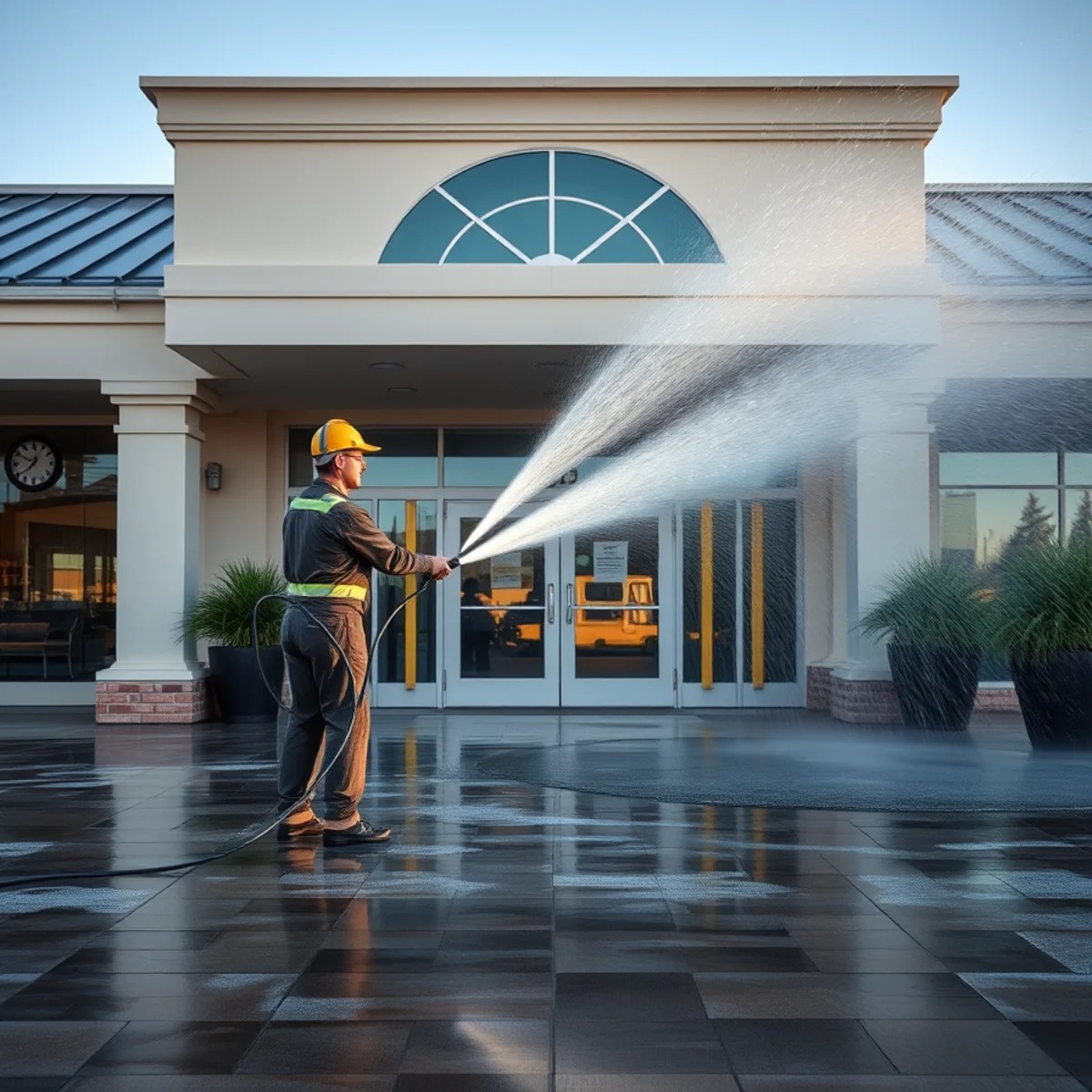
Fully insured commercial pressure washing across Massachusetts. Soft wash and hot water for storefronts, lots, docks, and dumpster pads, scheduled around your hours.
Read More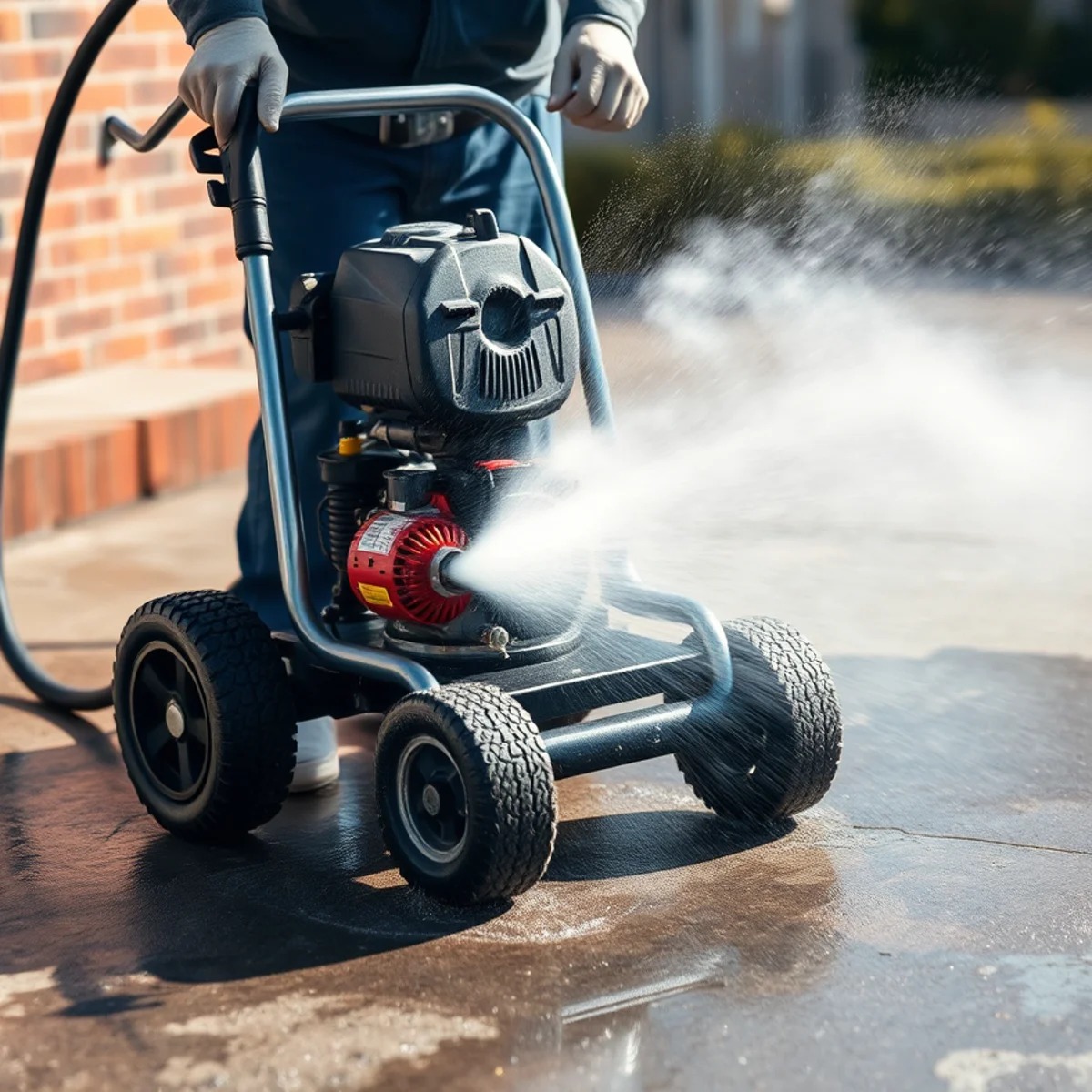
Hot Water Pressure Washing
Truck-mounted hot water pressure washing across Massachusetts that emulsifies grease, oil, gum, and sap on concrete and commercial flatwork.
Read More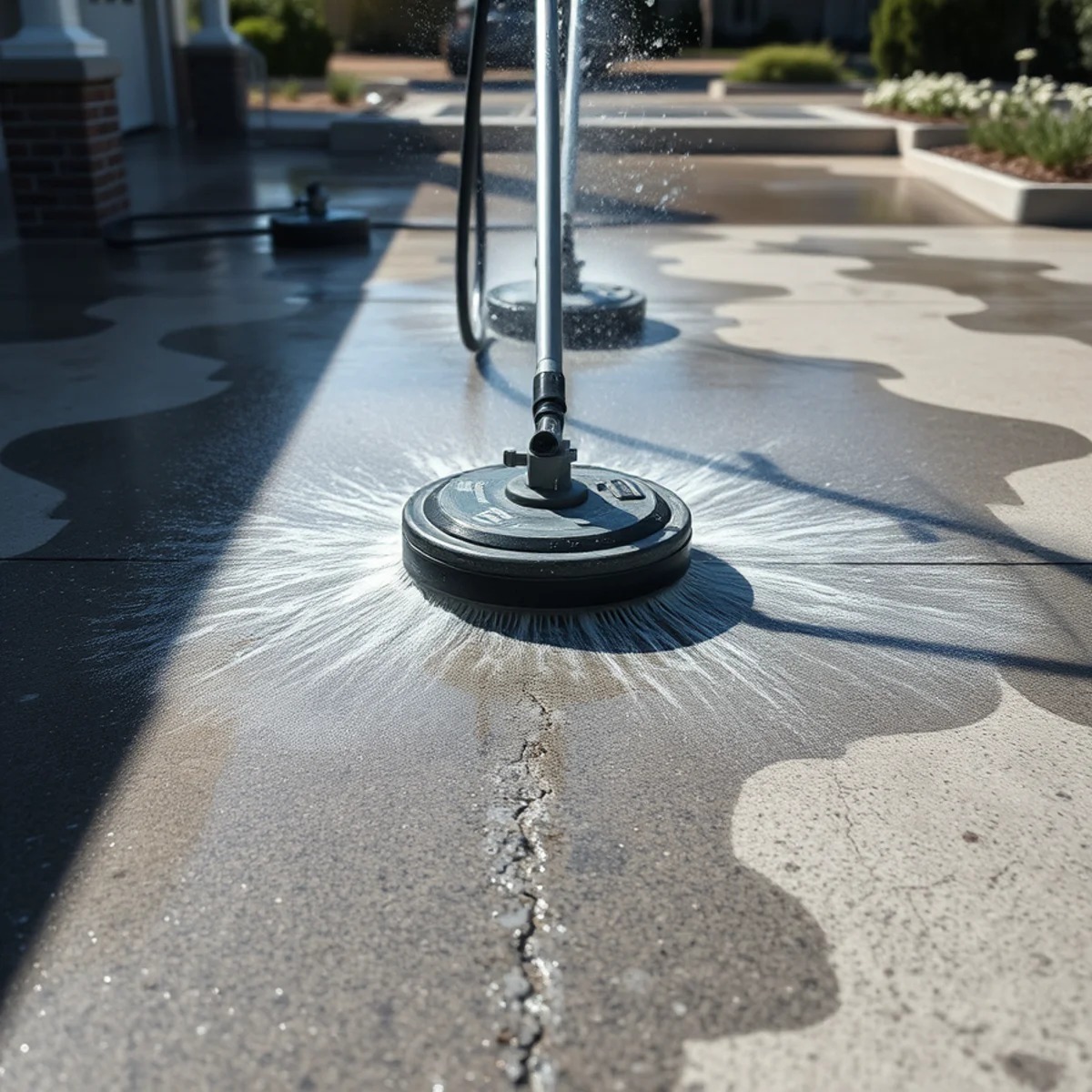
Concrete Cleaning
Expert concrete cleaning in Massachusetts: surface-cleaner flatwork, hot-water degreasing, and chemistry that removes salt, algae, oil, and efflorescence.
Read More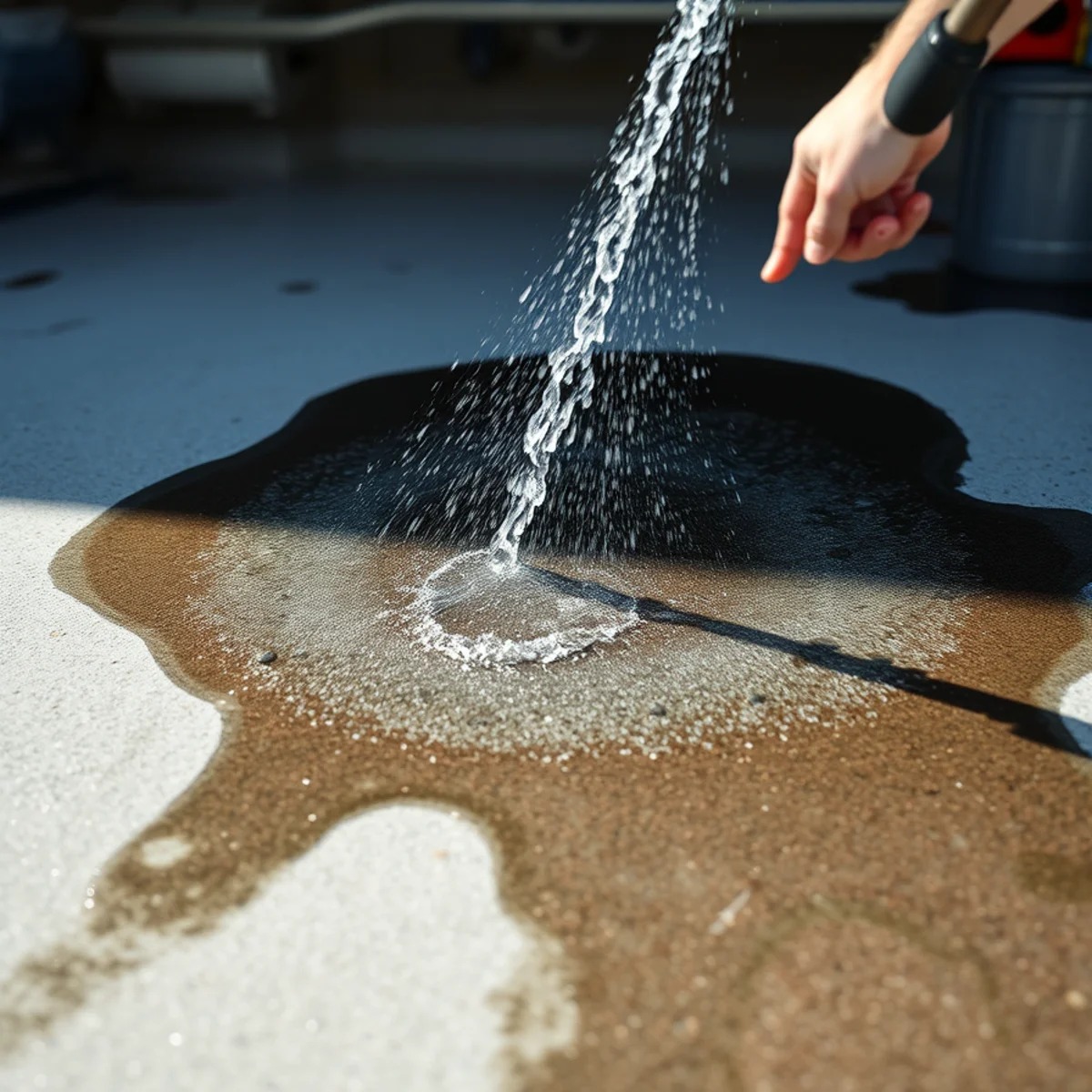
Oil Stain Removal
Hot-water degreasing that lifts motor oil, grease, and fuel stains out of MA concrete, pavers, and asphalt, not just over them.
Read More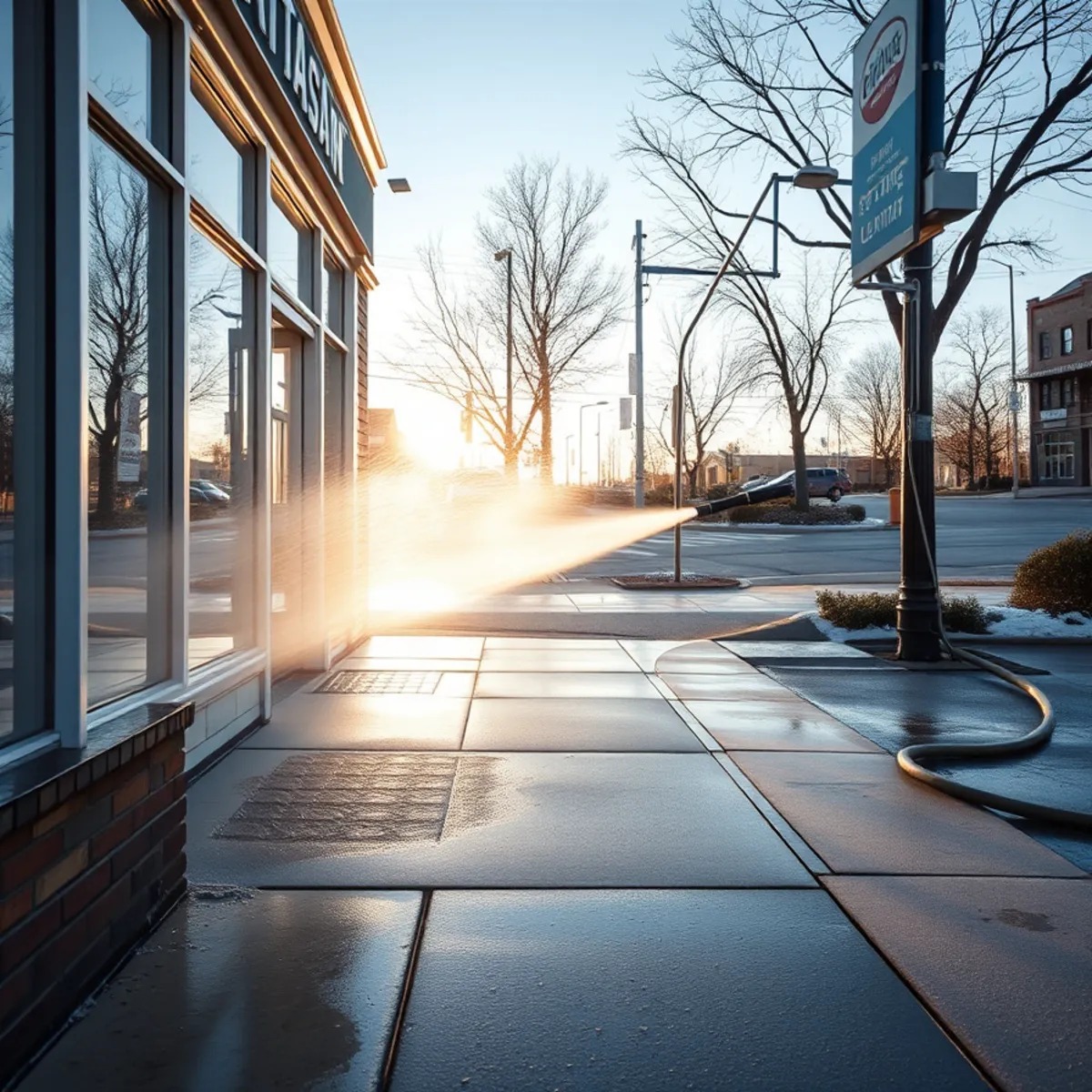
Storefront Pressure Washing
Expert storefront pressure washing across Massachusetts: hot-water gum, grease, and salt removal, soft washing, and zero-disruption after-hours scheduling.
Read MoreReady to Schedule Restaurant Pressure Washing?
Contact Wash Bros today for a free restaurant pressure washing estimate anywhere in Massachusetts.