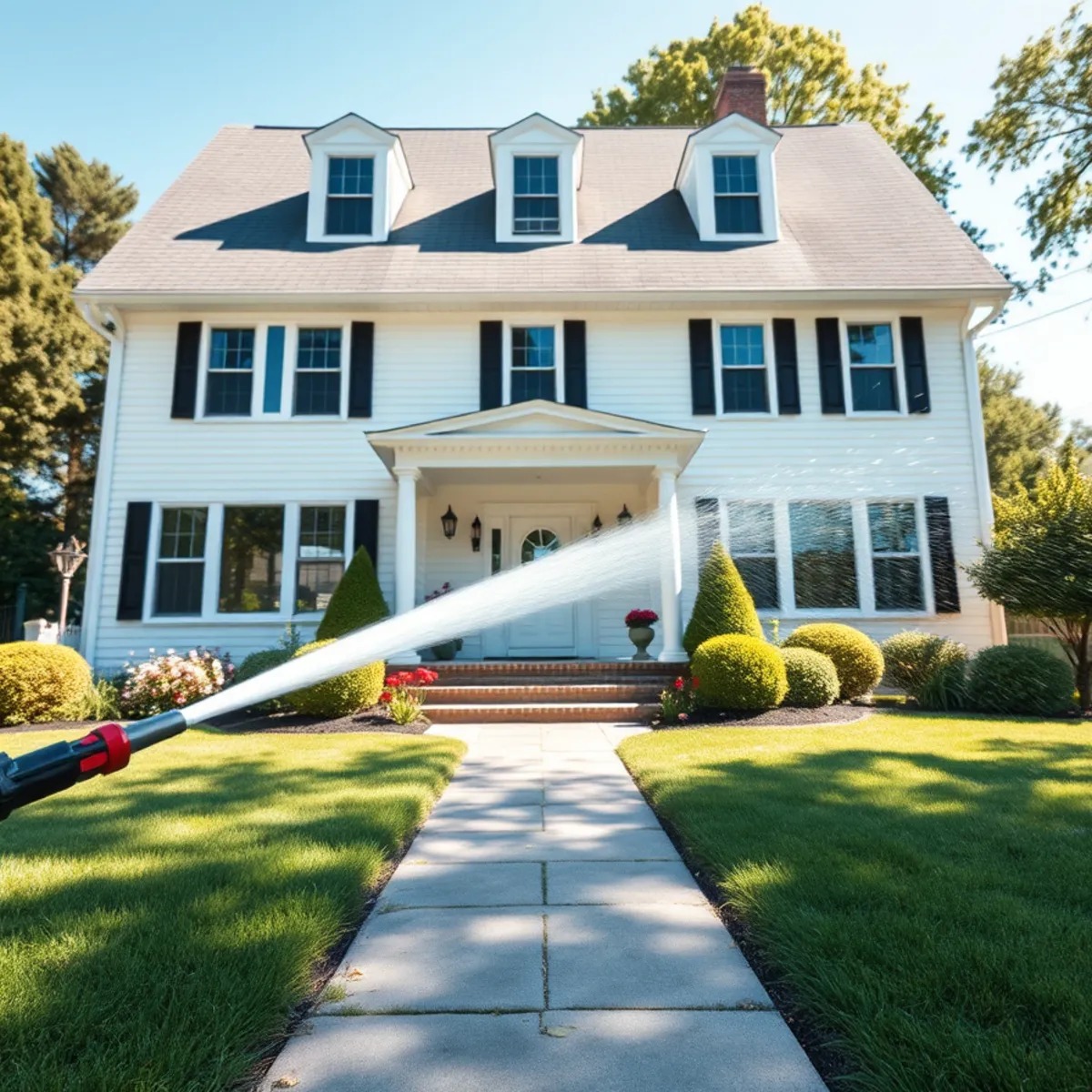
How a professional wash restores curb appeal in Massachusetts, which surfaces deliver the biggest payoff, what the value data shows, and how to keep it fresh.
Curb appeal is the first impression your home makes, and in Massachusetts that impression takes a beating from pollen, road salt, freeze-thaw cycles, and coastal humidity. Pressure washing is one of the fastest, lowest-cost ways to restore it without repainting, resurfacing, or replacing anything. This guide breaks down exactly how a professional wash changes the way your property reads from the street, which surfaces deliver the biggest visual payoff, what the data says about value, and how to keep that fresh look year-round in a New England climate.
What Curb Appeal Really Means and Why It Fades
Curb appeal is the overall attractiveness of your home seen from the street. It is a blend of clean surfaces, true color, defined edges, and the unmistakable sense that a property is cared for. Buyers, neighbors, appraisers, and even delivery drivers form an opinion in seconds, and most of that opinion comes from the exterior before anyone gets close to the front door.
The problem is that exteriors fade gradually, so you rarely notice the decline on your own home. A handful of specific culprits do most of the damage in New England:
- Green algae and mildew leave green and gray films on siding, worst on shaded, north-facing walls.
- Black roof streaks caused by Gloeocapsa magma (a hardy blue-green algae) run down asphalt shingles and read as an aging, neglected roof.
- Moss and lichen take hold on north roof slopes, brick, and shaded walkways.
- Pollen coats everything in a yellow-green film each spring and clings to textured surfaces.
- Road salt and sand dull driveways, walkways, and the lower foot or two of siding all winter.
- Oil stains, rust stains, and efflorescence mark concrete, masonry, and pavers until they look permanently weathered.
None of this means your home is in bad shape. It usually means the surfaces are coated in organic and mineral buildup that needs to come off. That distinction is exactly why a wash delivers such a dramatic visual return: you are not repairing the house, you are revealing it.
How Pressure Washing Transforms Curb Appeal: The Core Mechanism
Here is the part most homeowners get wrong, and where a careless contractor does real harm. The visual transformation is not about brute force. You don't need more pressure; you need the right chemistry. Pressure rinses surface dirt, but it does not kill the algae, mold, and biological growth that cause most discoloration. Biodegradable surfactants and a controlled dose of sodium hypochlorite do that. They break the organic bond at the root, so the growth releases instead of being knocked back for a few weeks.
That is why a professional wash brightens a facade and keeps it bright. The transformation shows up in four ways at once:
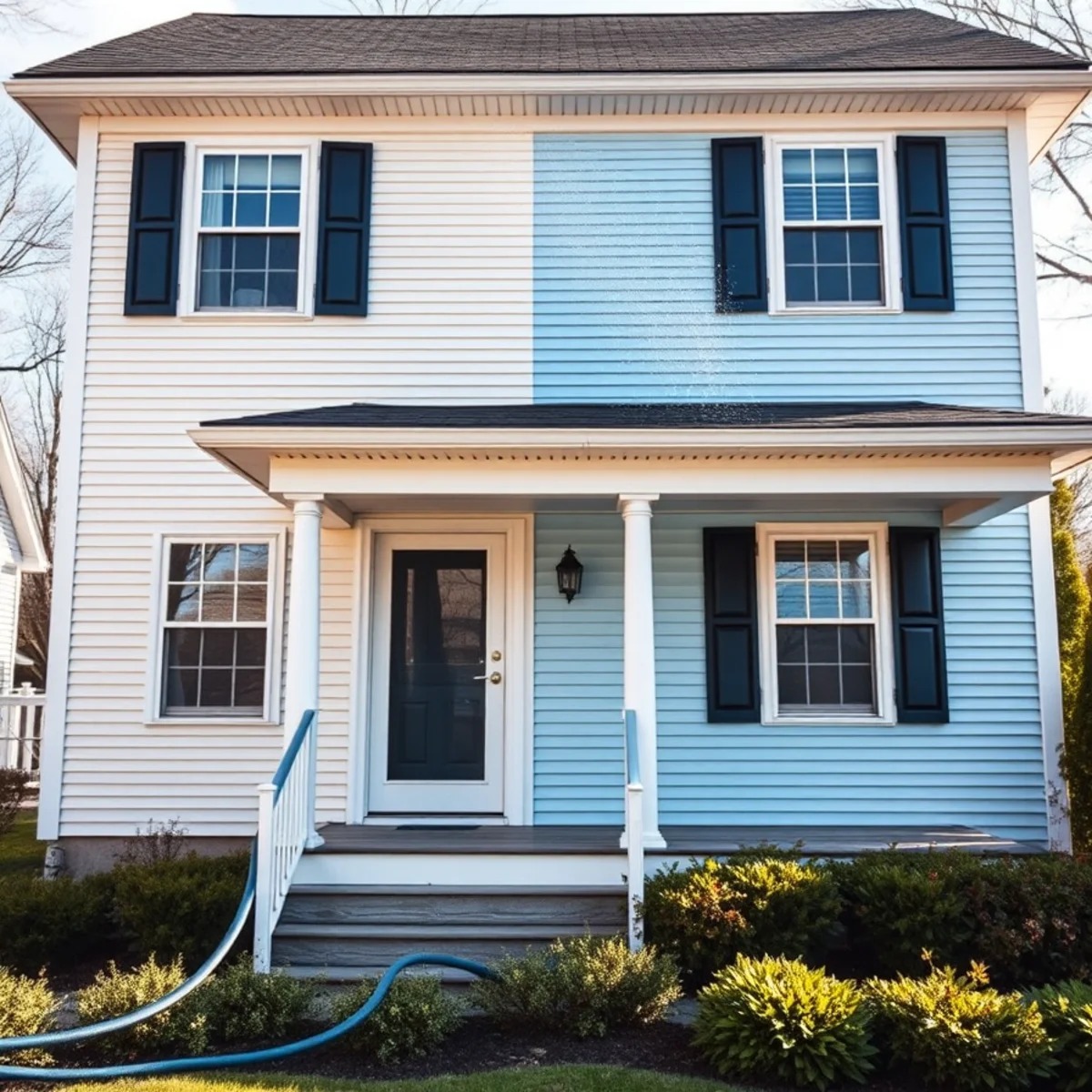
- True-to-color surfaces. Vinyl, fiber cement, brick, and stucco all look faded under an organic film. Clearing it brings back the original color, and homeowners routinely think their siding looks freshly painted. A thorough house washing often makes a tired facade read five to ten years newer with no paint involved.
- Crisp edges and architectural detail. Trim, soffits, and window frames disappear when everything wears the same gray grime. Cleaning restores contrast so the architecture reads clearly from the curb.
- Welcoming walkways and driveways. Stained, mossy concrete signals neglect; a clean, uniform surface signals care. Driveway cleaning lifts oil spots, tire marks, and salt residue that creep in along edges and seams.
- A roof that looks maintained. Black streaks are one of the most aging features of any home. Roof cleaning erases them and restores an even shingle tone, with an outsized effect on the whole house.
Before and After: The Instant Visual Impact
The reason before-and-after photos are so compelling is that the brain reads "clean" as "new" and "newer" as "worth more." A grayed-out, streaked exterior signals deferred maintenance even when the structure is sound, and viewers unconsciously price in repairs that the home does not actually need. A clean exterior removes that mental penalty.
This is also where listing photos come in, and it is a point most competitors miss entirely. Cameras and phone screens exaggerate texture and contrast, so a thin layer of algae or a faint roof streak looks far worse in a photo than in person. A well-maintained exterior photographs evenly and bright, which matters enormously when the majority of buyers begin their search online and decide in a fraction of a second whether to click. A wash before the photographer arrives is one of the highest-leverage, lowest-cost moves a seller can make.
The Surfaces That Deliver the Biggest Payoff
If you want the most noticeable improvement for your budget, focus on the surfaces that occupy the most visual space and show the most contrast once cleaned.
- Siding is the largest visible surface, so cleaning it changes the entire look of the home.
- Roof is highly visible from the street and dramatically improved by removing streaks.
- Driveway and front walkway are the first and last surfaces a visitor sees up close.
- Front steps, porch, and entryway are small areas with high impact at eye level.
- Fences and decks frame the property and gray out fast.
A full exterior clean works because the home, the ground, and the framing elements all get refreshed together, so nothing is left looking dingy next to a freshly cleaned surface.
Siding and House Washing: Removing Algae, Mildew, and Chalky Dirt
Siding holds the most visual real estate on the front of a home, and it is the surface that benefits most from the right method. Vinyl and aluminum siding accumulate green algae, mildew, and a chalky oxidation film; clearing them restores color instantly. The key is matching pressure to material: vinyl handles roughly 100 to 500 PSI, aluminum should stay gentle, and cedar or other wood siding needs under 200 PSI to avoid raising the grain. Most siding is cleaned by soft washing rather than high pressure, because the surfactants do the cleaning while low pressure simply rinses. High pressure on siding drives water behind panels and under trim, which is a damage risk, not a cleaning advantage.
Driveways, Walkways, and Concrete: Eliminating Dark Stains and Oil Spots
Concrete is where high pressure earns its keep. A concrete driveway tolerates 2,000 to 3,000 PSI, often paired with a surface cleaner that delivers an even, stripe-free finish. This is the right approach for dark organic staining, tire marks, and the gritty salt-and-sand residue that splashes up onto driveways and walkways and sidewalks over a Massachusetts winter. Oil stains and rust stains usually need a dedicated pretreatment rather than pressure alone, and pavers call for a gentler touch plus joint-sand replacement afterward. A clean, uniform approach to the front door is one of the strongest curb-appeal upgrades available.
Roof Cleaning: Erasing Black Streaks That Age a Home
Those black streaks are a colony of Gloeocapsa magma, and they are everywhere on Massachusetts asphalt roofs because of our humidity. The fix is never high pressure. Asphalt shingles must be soft washed under 100 PSI with a chemistry that kills the algae and lets rain rinse the staining away over the following days. Blasting a roof strips the protective granules and voids most shingle warranties, which is why this job belongs with a careful, fully insured crew. A clean, even roof tone can take years off the perceived age of a house from the curb. Metal roofs are cleaned gently as well, typically in the 500 to 800 PSI range.
Decks, Patios, Fences, and Pool Areas: Restoring Outdoor Living Spaces
Decks, patios, and fences frame the property and gray out faster than any other surface because they sit in moisture and shade. Wood decking and fencing clean best at low pressure, while composite decking handles roughly 500 to 1,000 PSI. The goal is to lift mildew and graying without furring the wood fibers. Restoring these spaces not only improves curb appeal from the side and back yards, it makes the spaces genuinely more pleasant to use, and a freshly cleaned deck or pool deck reads as a maintained, move-in-ready outdoor room to a buyer.
Pressure Washing vs Soft Washing: Choosing the Right Method
Using the wrong technique can hurt your curb appeal by causing damage, so matching method to material is the whole game.
- High-pressure washing suits hard, durable surfaces: concrete driveways, sidewalks, brick (historic brick stays under 400 PSI), and pavers. The goal is to lift embedded dirt, salt, and stains.
- Soft washing uses low pressure plus biodegradable surfactants and a measured dose of sodium hypochlorite. It is the safe, correct choice for siding, roofs, painted surfaces, stucco and EIFS (under 150 PSI), and anything delicate. It cleans at the biological level, killing algae and mildew rather than spraying them off, which keeps surfaces cleaner for longer.
A fully insured crew that knows which approach each surface needs is the difference between a wash that looks great and lasts versus one that streaks, etches, or strips a finish. It is also why professional results consistently outlast DIY attempts.
Does Pressure Washing Increase Home Value? The ROI and Data
Curb appeal is not just pride of ownership, though that counts. There is real data behind it.
The National Association of Realtors has reported that the overwhelming majority of realtors, on the order of 97%, advise sellers to improve curb appeal before listing, and that buyers form a meaningful share of their opinion before they ever step inside. A widely cited study from the University of Texas at Arlington found that a well-maintained, attractive exterior can support a price premium in the neighborhood of 7% over comparable homes with weaker curb appeal. Industry surveys also put the perceived-value lift from a professional exterior wash in roughly the 5 to 11% range, though that is a perception effect and the realized figure depends heavily on your specific home, neighborhood, and market.
A few honest caveats. These are general market findings, not a promise about your address. Pressure washing is one of the least expensive improvements you can make relative to its visual impact, which is precisely why the return-on-investment story is strong: you are spending a modest amount to remove the buildup that was quietly suppressing your home's perceived value. We don't quote a value increase for your specific property, because no honest contractor can. What we can say is that a clean exterior helps a home photograph better, show better, and sell faster, and in a competitive Massachusetts market that often translates into stronger offers.
The Massachusetts and New England Angle
Our climate creates specific curb-appeal challenges that make regular cleaning especially worthwhile here.
Coastal Salt Air vs Inland Humidity
Coastal homes on the South Shore, North Shore, and Cape battle salt-air corrosion and nor'easter spray that leave chalky white salt residue on siding and masonry, dulling curb appeal faster than inland properties. Inland and wooded homes around Worcester County fight more shade-loving algae, moss, and lichen plus heavy spring pollen from oak and pine. Either way, New England homes accumulate grime faster than homes in drier regions.
Freeze-Thaw and Road Salt
Massachusetts winters run road salt and sand onto every lower surface, leaving residue on siding, driveways, and walkways and accelerating concrete deterioration. The freeze-thaw cycle drives efflorescence and surface flaking on brick, pavers, and concrete. Cleaning in spring not only restores appearance, it reveals spalling and joint issues early, while they are still cheap to address.
Older Housing Stock
Historic towns like Concord, Lexington, and Winchester are full of colonials and Victorians with delicate clapboard, cedar, and aged brick. These materials demand gentle soft washing rather than high pressure to restore appearance safely and preserve the architecture that gives these homes their character.
Best Time of Year to Pressure Wash for Curb Appeal in Massachusetts
For most homeowners, late spring through early fall is the window, because cleaning solutions need temperatures reliably above freezing to work. A practical New England routine:
- House washing late May through June, after the heavy pollen drop, to clear winter salt and spring film.
- Decks and patios in early fall, ahead of leaf litter and the next freeze.
- Concrete cleaning and sealing before road-salt season, to protect the surface through winter.
A single well-timed annual wash keeps most homes looking sharp year-round. Heavily shaded or coastal properties may benefit from a second visit.
How Long Results Last and How Often to Reschedule
Because a proper wash kills the growth at the root rather than just rinsing it, results from a professional house wash typically hold for one to three years, depending on shade, tree cover, and proximity to the coast. Roofs treated with a soft wash can stay streak-free even longer. Sun-exposed homes with good airflow stretch toward the long end; north-facing, tree-shaded, or coastal homes drift toward the short end. Most Massachusetts homeowners settle into a once-a-year cadence for house washing, with concrete and decks refreshed as needed.
DIY vs Hiring a Professional
A rental pressure washer can absolutely clean a patch of concrete. The trouble starts on everything else. The most common DIY mistakes we are called in to fix are etched concrete, water driven behind vinyl siding, stripped roof granules, and furred wood decking, all from too much pressure and no chemistry. Climbing a ladder to reach a second story or a roof slope adds real fall risk. A professional crew brings surface-appropriate PSI, the right biodegradable solutions, landscaping pre-soak and runoff awareness, and full insurance with a certificate of insurance available on request. For low-risk ground-level concrete, DIY can be fine. For siding, roofs, and anything you would hate to damage, the professional route protects both the result and the surface.
Curb Appeal Maintenance Checklist for Massachusetts Homeowners
A single wash makes a big difference, but light upkeep keeps your home looking its best between professional cleanings:
- Rinse pollen off siding and entryways during the heavy spring bloom.
- Keep gutters clear so overflow does not streak siding or stain walkways. Pairing house washing with gutter cleaning keeps water managed and surfaces clean.
- Address oil spots and salt buildup on the driveway before they set in.
- Trim back vegetation touching the house to reduce moisture, shade, and the growth that follows.
- Schedule a professional wash on a regular cadence, typically once a year, so grime never gets a foothold.
How Much Does Pressure Washing Cost in Massachusetts?
Cost depends on real factors, not a flat sticker. The biggest drivers are the size of the home or surface, the number of stories, how heavy the buildup is, which surfaces you are combining, and access challenges like steep slopes or tight landscaping. A single-story ranch siding wash sits at the lower end; a multi-story home with a roof soft wash, driveway, and deck bundled together costs more but usually delivers a better per-surface rate. Rather than publish a number that may not fit your property, we give a clear, itemized estimate after seeing what you actually need. As a rule, exterior cleaning remains one of the lowest-cost improvements relative to the curb-appeal return it delivers.
Beyond Appearance: How Cleaning Protects Surfaces and Prevents Damage
The wash that makes your home look better is also helping it last longer. Algae, moss, and lichen hold moisture against shingles and siding, accelerating wear. Salt residue is corrosive and shortens the life of metal, masonry, and concrete. Organic growth on a deck or walkway is also a slip hazard. Removing these contaminants on a schedule is far cheaper than replacing the surfaces they degrade. In that sense, curb-appeal cleaning is preventive maintenance that happens to look fantastic, which is the kind of investment that keeps paying off.
Ready to Refresh Your Home's First Impression?
If your siding looks dull, your driveway is stained, or black streaks are creeping across your roof, a professional wash is the fastest way to bring your home back to life. Wash Bros is a fully insured exterior cleaning company founded by brothers Louis and Dominic, serving homeowners and businesses across Massachusetts with dependable, satisfaction-focused service and a 5.0 average rating across 130 Google reviews. Get a free, no-obligation estimate by visiting our contact us page or calling +1 (351) 242-0666, and we will match the right cleaning method to every surface so your curb appeal looks its very best.
Frequently Asked Questions
Need Professional Exterior Cleaning?
Wash Bros provides affordable, dependable pressure washing across Massachusetts. Get your free estimate today.
Get a Free Estimate