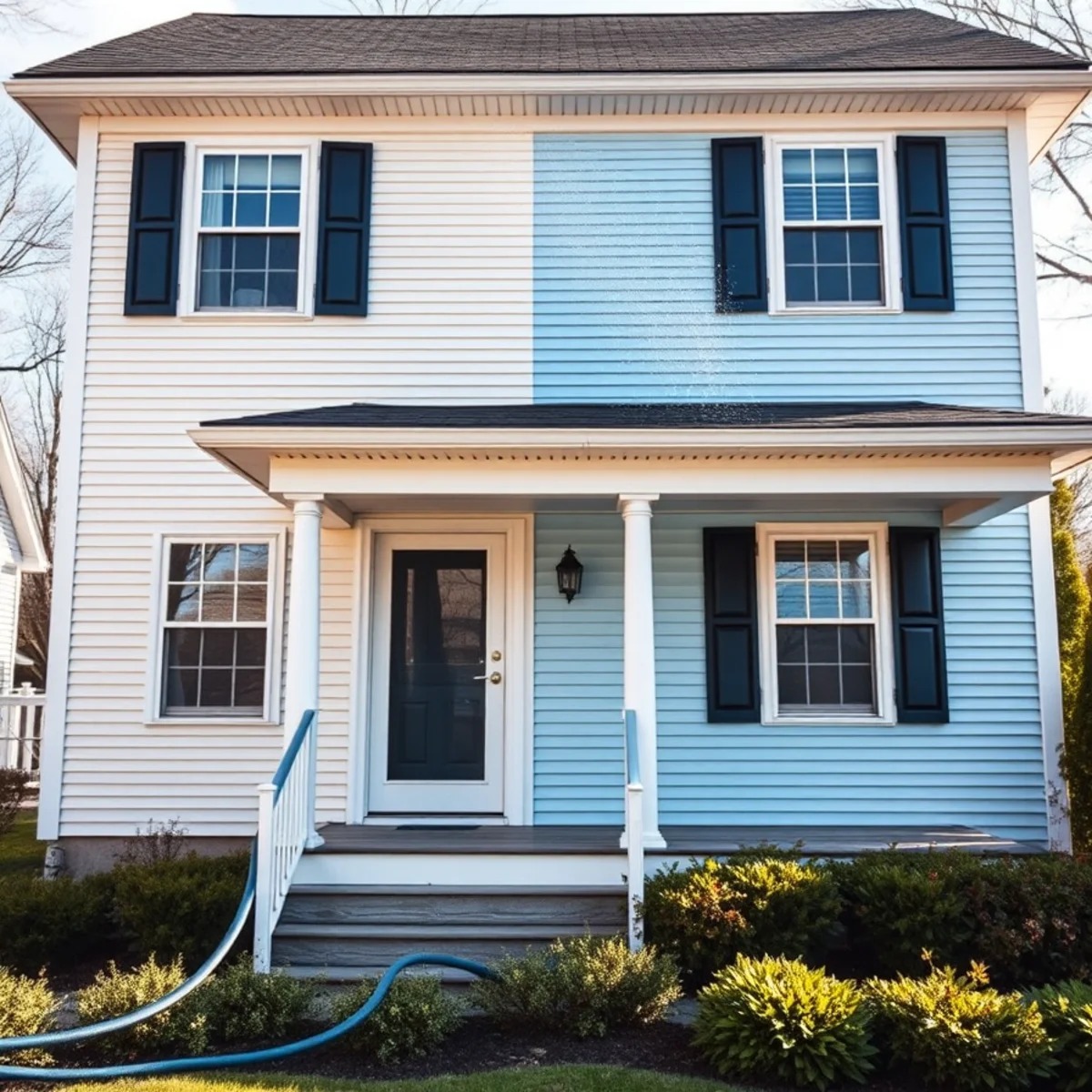
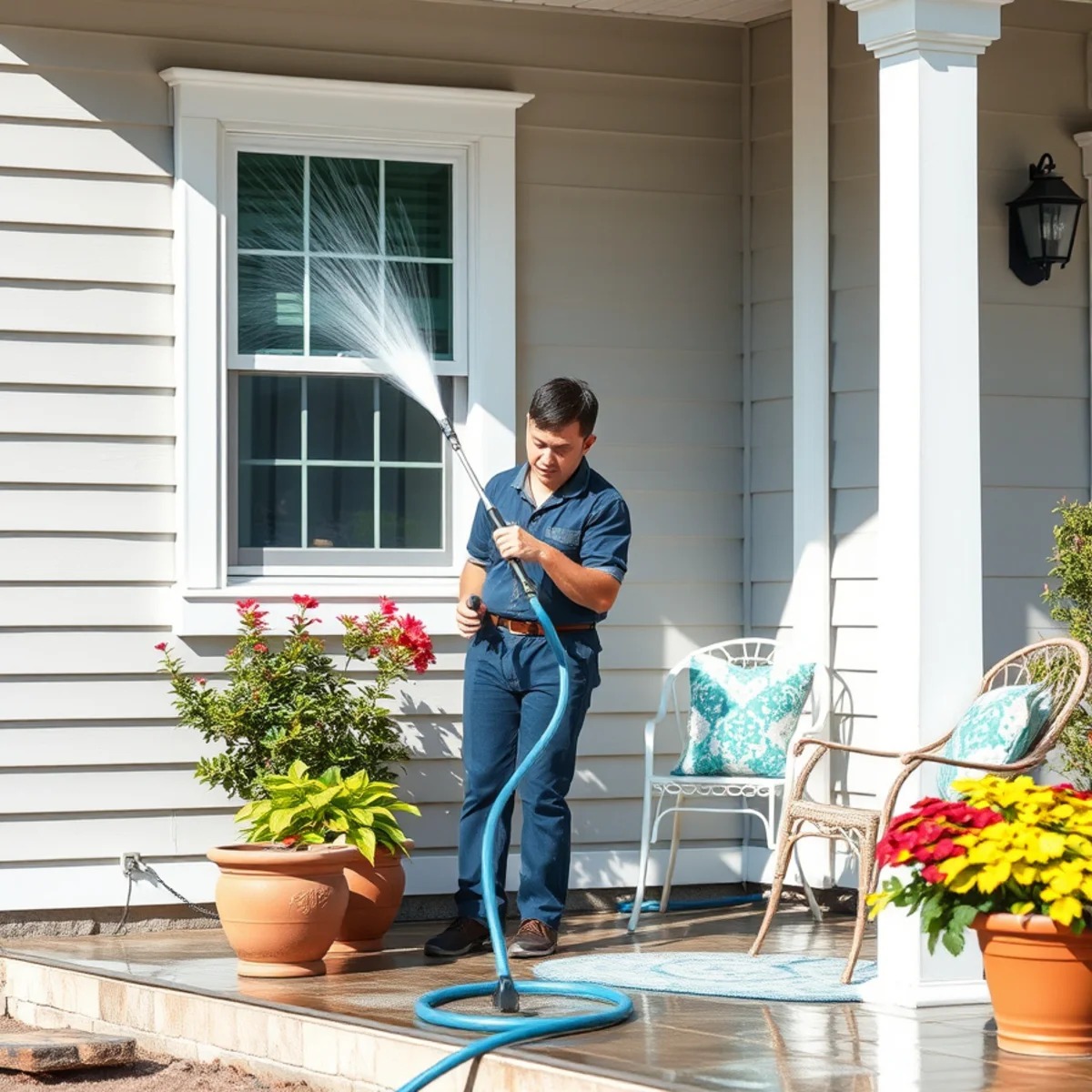
Exactly how to prep your MA home for pressure washing: clear furniture, seal windows, protect plants and outlets, plus a printable day-of checklist.
A little preparation before the crew arrives makes the whole job faster, safer, and noticeably better-looking when it's done. Thirty to sixty minutes of prep protects your belongings, keeps water out of places it doesn't belong, and lets the technicians spend their time cleaning instead of relocating your patio furniture. Here is exactly how to prepare your Massachusetts home for a professional pressure washing or soft washing appointment, step by step.
Why Prep Work Matters Before Pressure Washing Your Home
Professional exterior cleaning pushes a high volume of water and cleaning solution against your home at speed. When everything is closed up and cleared beforehand, that water stays where it belongs and does its job lifting away dirt, algae, and grime. When it isn't, you get water in an open window, a soaked cushion, or a flower bed flattened by overspray.
Good prep also protects the result you're paying for. Every minute a technician spends coiling your garden hose or dragging a grill out of the spray zone is a minute not spent cleaning. In New England, where spring pollen, winter road salt, and shaded-yard algae build up fast, that cleaning time is exactly the point. A prepared home means a more thorough wash, fewer day-of surprises, and a cleaner final look that lasts.
Do You Even Need to Prepare if You Hire a Professional? (Short Answer: A Little)
Here's the honest version a lot of companies won't give you: a fully insured, experienced crew handles most of the protective work themselves. We bring our own pre-wash inspection, our own detergents, and the know-how to keep overspray off your roses. So no, you do not need to spend a weekend prepping.
But "a little" prep still matters, and it falls into two buckets:
- Things only you can do — close and lock windows, unlock the side gate, bring the dog inside, move your car off the driveway, and tell us about the cranky basement window that leaks.
- Things we'll handle but go faster with your help — clearing furniture, pre-watering beds, covering outlets that lack weatherproof caps.
The rest of this guide walks through both. If you only do three things, make them: close every window, move vehicles, and secure pets.
Step 1: Clear the Work Area (Furniture, Grills, Toys, Hoses, Decor)
Walk the full perimeter of the house and move anything that isn't bolted down. An open, uncluttered work zone is the single most helpful thing you can do, and it eliminates tripping, tangling, and projectile hazards for the crew.
- Patio and deck furniture — chairs, tables, umbrellas, and especially cushions, which soak up water and detergent fast.
- Grills, smokers, and fire pits — pull them out of the spray zone and close the lids.
- Potted plants and hanging baskets — relocate them to a safe, shaded spot.
- Toys, bikes, garden hoses, and tools — anything leaning against the house should be cleared so nothing gets snagged by a high-pressure line.
- Door mats and welcome rugs — set them aside so they don't get drenched.
- Garden ornaments and low-voltage lighting — flag anything decorative or fragile.
A good rule of thumb: move items at least 5 to 6 feet away from the walls being cleaned, and farther for anything you'd hate to see splashed. If something is too heavy to move easily, tell your technician ahead of time so we can plan the cleaning sequence around it.
Step 2: Move Vehicles, Bikes, and Equipment Away From the House and Driveway
Cars, motorcycles, trailers, and lawn equipment should be parked well clear of any surface being cleaned. There are two reasons. First, detergent runoff and overspray can leave spots on a freshly waxed finish. Second, if we're handling driveway cleaning or concrete cleaning, the vehicles simply have to be off the slab so the crew can reach the whole surface.
Move vehicles to the street or the far end of the driveway, beyond the work zone. If you share a driveway with a neighbor, sort out parking before the appointment so nobody is blocked in. The same goes for boats, RVs, and anything on wheels stored against the house.
Step 3: Close and Seal All Windows, Doors, and Storm Windows
Water intrusion is the most common preventable problem during a wash, and it is easy to avoid with a five-minute walk around the house.
- Close and lock every window, including basement and storm windows. Locking pulls the sash tight against the frame and weather stripping for a better seal.
- Shut every exterior door firmly — front, side, garage, bulkhead, and shed.
- Check older or drafty windows. Many older New England homes still have original wood windows that don't seal like modern units. If a window is known to leak air, lay a towel on the interior sill as backup, or point it out so we can ease the pressure there.
- Tape problem windows from the outside with painter's tape and a strip of plastic sheeting if a frame has cracked caulk or a known gap.
You generally do not need to remove window screens for a soft wash of your siding, but if you've booked exterior window cleaning, removing or unlatching screens beforehand gives a cleaner result and speeds things up. In historic communities like Salem and Cambridge, give original windows and winter-cracked caulk an extra look before the appointment.
Step 4: Protect Outdoor Electrical Outlets, Light Fixtures, and Doorbell Cameras
Exterior electrical components and water don't mix, so this step earns its own spot.
- Outdoor outlets. Code-compliant exterior outlets should already have GFCI/GFI protection and weatherproof in-use covers. If yours have hinged outlet caps or GFI safety bubble covers, just make sure they're snapped shut. If an outlet is exposed, cover it with a small piece of plastic sheeting and painter's tape.
- Light fixtures. Porch lights and sconces are usually fine for a soft wash, but flag any fixture with a cracked seal or loose glass.
- Video doorbells and security cameras. This is the modern catch. Many smart-home devices, including some video doorbells and exterior cameras, are weather-resistant but not built to take a direct detergent rinse at close range. Tell your crew where every camera and doorbell is so they can clean around it carefully or power it down briefly. If you're cautious, pop the doorbell off its mount for an hour.
You do not need to shut off power to the whole house. If you'd like extra peace of mind near a panel of exterior outlets, flipping that single breaker off and back on afterward is a reasonable, conservative move.
Step 5: Cover or Hose Down Plants, Shrubs, and Landscaping
Massachusetts homeowners take pride in their gardens, and a careful crew will too. The key tool for protecting greenery isn't a tarp, it's plain water, and there's a real mechanism behind it.
Pre-Soak Beds the Right Way
Give garden beds, shrubs, foundation plantings, and nearby lawn a thorough soak with plain water right before the appointment, ideally within an hour. Here's why it works: wetting the foliage and soil first dilutes any cleaning solution that drifts onto plants, and saturated roots can't absorb concentrated runoff. Most professional soft washing solutions are biodegradable surfactants paired with a controlled sodium hypochlorite (bleach) dilution. Diluted further by a pre-soak, that runoff is far gentler, and the sodium hypochlorite naturally breaks down into water and a small amount of ordinary salt within roughly a day. A quick rinse of the plants again after the wash is cheap insurance.
Cover the Prized and Delicate
For specimen plants, tender annuals, or anything pressed right against the foundation, lay a lightweight breathable tarp or drop cloth over them during the wash. Avoid sealing plants under heavy plastic on a hot day, and remove any cover promptly afterward so the plant can breathe. Note any spots where loose mulch could wash out so the crew can ease off there.
Step 6: Bring Pets Indoors and Move Pet Bowls, Beds, and Toys
The noise of a pressure washer can spook even mellow dogs and cats, and wet, slippery surfaces are no place for a curious pet underfoot. Bring all animals inside before the crew arrives and keep them in for the duration. Move outdoor pet bowls, beds, toys, and any backyard runs or crates out of the work zone so they don't get sprayed with detergent.
When can pets go back outside? Once the surfaces have been rinsed and have dried, the yard is safe. With biodegradable solutions and a proper rinse, that's typically a matter of a few hours. If you have a dog that grazes on grass, give freshly washed beds and lawn an extra plain-water rinse and let them dry before reopening the yard.
Step 7: Inspect Siding, Trim, and Eaves for Loose Boards, Cracks, and Wood Rot
Walk the property slowly before your appointment and make notes. The more your technician knows, the better and safer the outcome, because damaged surfaces need a gentler touch.
What to Look For
- Loose siding boards or lifted vinyl panels that water could get behind.
- Cracked or peeling paint that needs low pressure to avoid further lifting.
- Wood rot in trim, eaves, soffits, and window sills, soft spots are a red flag.
- Cracked caulk and open joints, common after New England freeze-thaw cycles that expand and contract every seam all winter.
- Existing interior water stains near exterior walls, which signal a leak path to avoid.
- Specific stains you want addressed: rust runoff under a railing, oil in the driveway, or green algae removal on the shaded north wall.
Flagging damage doesn't mean you must repair everything first. It means we adjust technique and avoid driving water into a vulnerable spot. If a board is actively rotting, sealing or replacing it before the wash protects against water intrusion, especially given how MA freeze-thaw cycles widen existing cracks.
Step 8: Provide Access to an Outdoor Water Spigot (and What the Crew Supplies)
Most crews draw water from your home's outdoor spigot (hose bib), so make sure at least one exterior faucet is turned on and flowing. A classic New England surprise: the spigot was shut off at the interior valve before winter to prevent freezing and never reopened in spring. Check it the day before.
What you supply is water access. The crew supplies everything else: pumps, hoses, surface cleaners, ladders, the right nozzles, and the cleaning solutions matched to each surface. You do not provide detergent, equipment, or electricity for the machines (professional units are gas-powered). If you're on a private well and unsure about volume, mention it when you book so we can plan our water setup accordingly.
Step 9: Should You Cover or Avoid Your AC Unit and HVAC Equipment?
This is the question national guides tend to bury, so let's be clear.
You generally do not need to wrap your AC condenser in plastic, and in fact sealing it can trap moisture. A professional crew simply avoids blasting the unit directly. Here's the practical approach:
- Don't spray into the condenser fins. High-pressure water bends aluminum fins and reduces efficiency. We clean around the unit, not at it.
- A gentle rinse is fine; a direct blast is not. Condenser coils are actually designed to be hosed off gently for maintenance, so light overspray won't hurt anything.
- Turn the unit off at the thermostat or breaker during the wash if it sits right against a wall being cleaned. It's a simple, conservative step that avoids pulling mist into a running fan.
- Flag mini-split heads, dryer vents, and exhaust openings so the crew avoids spraying into them.
If your condenser itself is filthy, that's a separate gentle-cleaning task, not something to solve by aiming a pressure wand at it.
Step 10: Give the Crew Clear Access and Park Off the Driveway
The crew needs a clear path to the whole house and a place to set up. Before the appointment:
- Unlock side gates and fence latches so the back and side yards are reachable.
- Clear the driveway if any surface there is being cleaned, and leave room for the work truck near a water source.
- Move trash and recycling bins out of the way along the foundation.
- Secure or restrain dogs in fenced areas the crew must enter.
- Clear an obvious path to the outdoor spigot and electrical panel.
If you won't be home, leave clear instructions on gate codes, where to park, and which spigot to use. A two-minute note prevents most day-of delays.
A Quick Note for Neighbors: Notify Them Before the Loud Work Starts
Pressure washing is loud, and the work happens close to property lines. A quick heads-up to the neighbors is good manners and prevents friction, especially with attached homes, shared driveways, or close-set lots common in older Massachusetts neighborhoods.
Let adjacent neighbors know the date and rough window so they can close their own windows, move a car, or keep pets in. If you're in an HOA or condo association, confirm any rules on scheduling and noise. In tight South Shore and MetroWest neighborhoods, a friendly text the day before goes a long way.
Do You Need to Be Home During the Service?
Not necessarily. Exterior cleaning happens entirely outside, so as long as the crew has water access, a clear path, gates unlocked, and clear instructions, the job can be done while you're at work.
That said, being home for at least the start has advantages: you can walk the property with the crew, point out problem areas and devices, confirm which surfaces to clean and which to skip, and answer questions on the spot. Many homeowners meet the crew at the start, then leave. If you can't be there at all, a phone call beforehand to cover the walkthrough achieves the same thing.
DIY vs Professional Prep: What Changes
The prep checklist shifts depending on whether you're renting a machine yourself or hiring a pro. It also shifts between high-pressure rinsing and low-pressure soft washing.
If You Hire a Professional
Your job is mostly the "only you can do it" list: close and lock windows and doors, move vehicles, secure pets, unlock gates, water the beds, and flag problem areas and smart-home devices. The crew handles detergent selection, outlet awareness, plant protection technique, ladder work, and matching pressure to each surface.
If You're Doing It Yourself
You take on everything, including the parts that cause damage when rushed: covering every exposed outlet, removing screens, detaching delicate fixtures, choosing a surface-safe detergent, and, most importantly, dialing the right pressure. This is where DIYers get into trouble. Vinyl siding wants roughly 100 to 500 PSI, cedar under 200, historic brick under 400, stucco under 150, and asphalt roof shingles a soft wash under 100 PSI. A concrete driveway can take 2,000 to 3,000 PSI, but pointing that same pressure at siding strips paint and forces water behind panels.
The key message professionals live by: you don't need more pressure, you need the right chemistry. Pressure doesn't kill algae and mildew at the root; biodegradable surfactants do. That's why most house exteriors should be soft washed, not blasted. If that distinction is new to you, that alone is a good reason to leave siding and roofs to a house washing pro.
Printable Pre-Pressure-Washing Checklist
Run through this the morning of your appointment. Copy it, print it, or screenshot it.
- Furniture, grills, cushions, and decor moved 5 to 6 feet from the house
- Vehicles, bikes, and trailers parked off the driveway and work zone
- Every window closed and locked (including basement and storm windows)
- All exterior doors shut firmly
- Problem windows taped or flagged
- Exposed outdoor outlets covered; in-use covers snapped shut
- Video doorbell and security cameras flagged or powered down
- Garden beds and foundation plants soaked with plain water
- Delicate plants covered with breathable cloth
- Pets indoors; bowls, beds, and toys moved
- Siding, trim, and eaves inspected; damage and stains noted
- Outdoor spigot turned on and flowing
- AC/HVAC noted; unit off at thermostat if against a cleaning wall
- Gates unlocked, path clear, parking spot for the truck
- Neighbors given a heads-up
What to Expect on Service Day and After (Drying, Replacing Items)
A typical single-family house wash runs a few hours, though larger homes, multiple surfaces, or heavy algae take longer; treat any time figure as an estimate, since every house is different. The crew arrives, walks the property, sets up at the water source, applies the cleaning solution to lift algae and grime, lets it dwell, then rinses.
Afterward, give surfaces time to dry before you replace furniture and reopen the area. Siding and concrete typically surface-dry within a few hours in good weather, longer on a humid Massachusetts afternoon or a shaded north wall. Once things are dry: move furniture back, uncover plants, give beds a final plain-water rinse, restore power to anything you switched off, and remount the doorbell. Then step back and check the curb appeal, that's the payoff.
Massachusetts-Specific Prep: Pollen, Salt, and Spring Mildew Considerations
New England gives siding a unique beating, and timing your wash to the season makes prep more effective.
- Spring pollen and tree sap. Oaks, maples, and pines coat siding in a sticky yellow-green film every spring. The sweet spot for a house wash is late May through June, once the heaviest pollen has dropped. Pre-watering plants matters even more in pollen season, when beds are already coated.
- North-facing and shaded walls. Under the tall pines and oaks common in MA suburbs, north-facing walls stay damp and grow algae and mildew the rest of the house doesn't. Inspect and flag these areas, they need the most attention.
- Winter road salt and sand. Salt and sand residue cakes onto siding, foundations, and concrete near the road. Schedule a wash after the last hard freeze to clear it before it sits all summer.
- Humid summers. MA's humidity accelerates mildew regrowth, which is why an annual or bi-annual wash beats waiting until the house looks visibly dirty.
We clean homes across the South Shore, MetroWest, and Worcester County, from Quincy to Worcester, and the prep rhythm follows the same New England calendar everywhere.
Common Prep Mistakes That Cause Damage or Delays
A few avoidable missteps cause most of the trouble we see:
- Leaving a window cracked open. The number-one source of interior water. Walk every room.
- Pre-watering plants days early. The pre-soak only works if it's fresh, do it the same day, within an hour.
- Sealing the AC or plants under heavy plastic. Traps heat and moisture; use breathable covers and skip wrapping the condenser.
- Forgetting the smart doorbell. It's easy to overlook a small camera until it's getting rinsed at close range.
- Renting a machine and aiming high pressure at siding. This strips paint and drives water behind panels. Match PSI to the surface, or hire it out.
- Skipping the inspection. Washing over hidden wood rot or an open joint invites water intrusion. Two minutes of looking prevents it.
Schedule Your Wash With Wash Bros (Massachusetts)
A few minutes of preparation sets the stage for a faster, safer, and far better-looking result, and the right crew handles the rest. Wash Bros is a family-run, fully insured company founded in 2023 by brothers Louis and Dominic, with a 5.0 rating across more than 130 reviews. We match the right pressure and the right chemistry to every surface, protect your landscaping and well water, and provide a certificate of insurance on request.
Ready to get your home cleaned the right way? Contact us for a free, no-pressure estimate, or call +1 (351) 242-0666. We'll help you prep, answer your questions, and leave your home looking its best.
Frequently Asked Questions
Need Professional Exterior Cleaning?
Wash Bros provides affordable, dependable pressure washing across Massachusetts. Get your free estimate today.
Get a Free Estimate