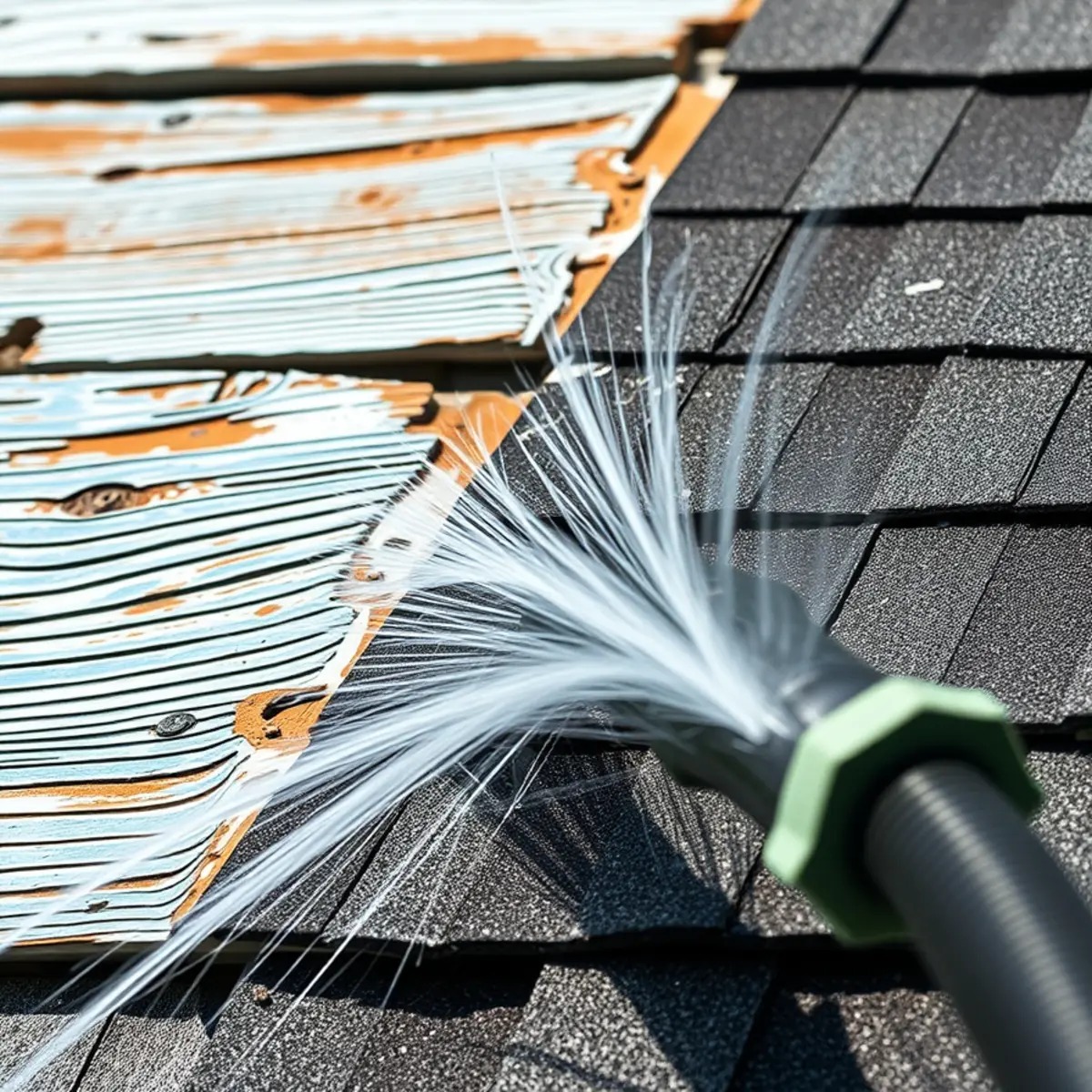
From roofs and cedar to brick, vinyl, and windows, here are the surfaces you should never pressure wash, why they fail, and the safer way to clean them.
Pressure washing is one of the fastest ways to refresh a tired exterior, and one of the easiest ways to cause four-figure damage when the wand points at the wrong surface. The same high-pressure stream that strips years of grime off concrete will splinter cedar, drive water behind siding, and blast mortar out of a brick wall. This guide walks through every surface you should never pressure wash, explains exactly why each one fails, and shows you the safer method that gets the same clean result without the regret.
Why Some Surfaces Should Never Be Pressure Washed
Here is the core truth most homeowners miss: pressure does not kill what makes your house look dirty. Algae, mildew, and moss are living organisms with roots that grip into the surface. Blasting them off shears the visible growth but leaves the roots behind, so the green comes back faster than ever. You don't need more pressure. You need the right chemistry.
A pressure washer is a blunt instrument. It is excellent at breaking the bond between dirt and a hard, dense, ground-level surface. It is terrible at making judgment calls about porous masonry, soft wood, painted finishes, or anything with a seal. The cost of getting that judgment wrong is not a do-over. It is granule loss on a roof, repointing on a brick wall, water intrusion behind clapboard, or a fogged double-pane window. Once those happen, cleaning becomes the cheap part of the bill.
Pressure Washing vs. Soft Washing: Understanding the Difference
Most damage starts with one confusion: treating pressure washing and soft washing as the same job at different intensities. They are fundamentally different approaches.
Pressure washing (and power washing) uses mechanical force, often 1,300 to 3,100 PSI on residential machines and far higher on commercial units, to physically scour a surface. Power washing adds heated water, which helps cut grease and gum but does nothing to make a fragile surface tougher.
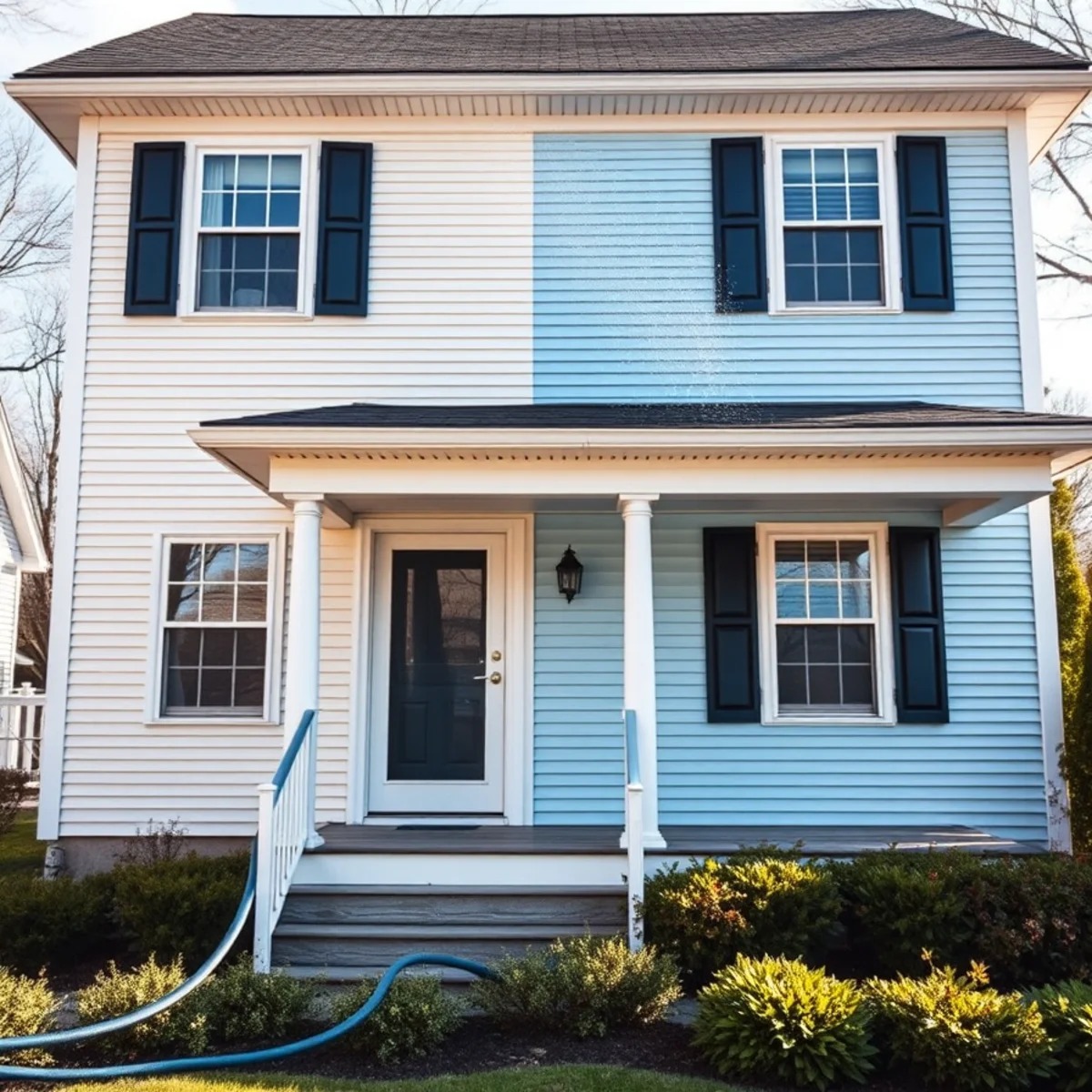
Soft washing flips the equation. It rinses at roughly garden-hose pressure, often under 500 PSI, and lets biodegradable surfactants and a controlled sodium hypochlorite solution do the actual cleaning. The chemistry kills mold, mildew, algae, moss, and lichen at the root, so the surface stays clean for years rather than weeks. This is the correct method for almost every delicate surface on your home.
The professional rule is simple: match the method to the material, not to the stain. When a surface cannot take force, you switch chemistry, not horsepower.
How Much Pressure Is Too Much? Understanding PSI and Surface Tolerance
Two numbers define what a machine does. PSI (pounds per square inch) is the force of the water. GPM (gallons per minute) is the volume, which controls how fast you rinse. Both matter, but PSI is what cracks, gouges, and erodes.
Just as important is the nozzle tip, which sets the spray angle and concentrates that force:
- 0-degree (red): a needle-thin jet that will carve wood, etch concrete, and strip paint. Almost never appropriate on a home.
- 15-degree (yellow): still aggressive; for tough stains on hard surfaces only.
- 25-degree (green): a wider fan tip for general cleaning of durable surfaces.
- 40-degree (white): the gentlest, for siding rinses and delicate work.
A 40-degree fan tip on a 3,000 PSI machine still delivers serious force. Distance, dwell time, and angle change everything. Held too close, even a "safe" tip will damage. This is why a PSI number alone never tells the whole story, and why the safest delicate-surface tools have no aggressive tip at all.
Surfaces You Should Never Pressure Wash (Quick-Reference List)
If a surface is soft, porous, painted, sealed, electrical, fabric, or up high where water can be forced behind it, keep the pressure washer off it. The short list:
- Asphalt shingle and most other roofs
- Cedar shingles, shakes, and wood siding
- Old brick and crumbling mortar
- Stucco and EIFS
- Vinyl siding (high pressure; soft wash instead)
- Windows, glass, and screens
- Painted, stained, and sealed surfaces
- Electrical meters, panels, outlets, and light fixtures
- Air conditioning condensers and heat pumps
- Soffit, fascia, and gutters (aimed upward)
- Outdoor furniture, awnings, and fabric shades
- Composite, laminate, and soft-wood decks
- Vehicles, grills, and delicate equipment
The sections below explain why each one fails.
Roofs and Asphalt Shingles: Granule Loss, Leaks, and Voided Warranties
Your roof sits at the top of the do-not-pressure-wash list. Asphalt shingles are coated with mineral granules that shield the asphalt from UV and weather. High pressure tears those granules off in seconds. That granule loss exposes the mat, accelerates aging, and is often visible as grit washing into your gutters.
The damage does not stop at the surface. Pressure can drive water up under shingles and past flashing into the attic, causing leaks and wood rot. And it carries a financial sting most people never see coming: the Asphalt Roofing Manufacturers Association (ARMA) and major shingle makers warn against high-pressure cleaning, and doing it can void your roofing manufacturer warranty.
Those black streaks on north-facing Massachusetts roofs are an algae called Gloeocapsa magma. Force does not touch its root structure. Professional roof cleaning uses a soft wash under roughly 100 PSI, treating the algae directly so it rinses away and stays gone. Metal roofs are slightly more forgiving but still belong in the 500 to 800 PSI range with the right tip, never a red-tip blast.
Cedar Shingles, Shakes, and Wood Siding (Common on New England Homes)
Walk any neighborhood on Cape Cod, the South Shore, or the North Shore and you will see cedar shakes, cedar shingles, and clapboard siding everywhere. Cedar is the quintessential New England exterior, and it is soft, fibrous, and grain-directional, which makes it one of the worst candidates for pressure washing.
High pressure raises and splinters the wood fibers, leaving a fuzzy, weathered texture that traps more dirt than before. It erodes the softer growth rings, gouges permanent wand marks, and, worst of all, drives water behind the courses where it cannot dry. In our climate, trapped moisture means wood rot and, through the freeze-thaw cycle, cracking that worsens every winter.
Cedar should be cleaned at very low pressure, generally under 200 PSI, or with a soft-wash and garden-hose rinse. The right approach lifts mildew and the gray salt-air film without tearing the grain. If you want bare wood brightened before staining, that is a job for chemistry and gentle technique, the same care we bring to deck cleaning on softwood.
Old Brick and Crumbling Mortar
Brick looks indestructible. The mortar between it is not. Massachusetts has enormous stock of historic and mill-town masonry, much of it laid with soft lime mortar that has been softening for a century. High pressure erodes that mortar straight out of the joints, and once a joint opens, water gets into the wall. Then the freeze-thaw cycle takes over, spalling brick faces and pushing cracks wider.
The repair is not cheap. Repointing and tuckpointing are skilled masonry work, and replacing spalling brick on a historic facade can run into serious money. Porous older brick also drinks water, so forcing moisture in invites long-term problems behind the wall.
Brick should be cleaned at low pressure, generally under 400 PSI, paired with the correct solution for the staining. Our brick cleaning and combined brick and stucco cleaning services do exactly that. If you are fighting white, chalky efflorescence, note that it is a salt deposit, not surface dirt, and it responds to chemistry, not force.
Stucco and EIFS
Stucco and EIFS (exterior insulation and finish systems) have textured, relatively brittle surfaces that chip and pit under a concentrated stream. Worse, EIFS is essentially foam under a thin coating; punch water through a hairline crack and it gets trapped in the wall assembly with nowhere to drain, feeding hidden mold and rot.
Both belong in the soft-wash category, generally under 150 PSI, cleaned with low-pressure application and a biological-growth treatment rather than mechanical scrubbing. Any cracks should be sealed, not blasted open wider.
Vinyl Siding: When Pressure Washing Goes Wrong
Vinyl is the surface that trips up the most homeowners. It can technically take moderate pressure, somewhere in the 100 to 500 PSI range, but the failure modes are real. Too much force cracks and warps the panels, especially older, sun-brittle vinyl. And because siding installs in overlapping laps, water aimed upward funnels straight behind it into the wall cavity, where it soaks the sheathing, feeds mold, and causes rot you will not see until it is expensive.
This is exactly why professionals soft wash vinyl. Our vinyl siding cleaning and broader house washing services use low pressure plus surfactants that lift green algae, pollen, and oxidation film off the surface without forcing a drop where it does not belong. As a bonus, soft washing handles oxidation and chalking, the dull powdery residue on aging vinyl, which a pressure blast just smears around.
Windows, Glass, and Screens
Aiming a pressure washer at a window invites a cracked or shattered pane. The force also breaks the seal on double-pane (insulated) glass, leading to permanent fogging between the layers that no cleaning will ever fix. It tears screens and drives water past weatherstripping and caulking into the frame and wall.
Exterior window cleaning should always be low-pressure work with proper tools. Streak-free glass comes from technique and the right squeegee, never from horsepower.
Painted, Stained, and Sealed Surfaces
Any coating, paint, stain, or sealer is a film bonded to the surface, and high pressure peels it. That is occasionally useful for deliberate paint preparation washing before repainting, but it is destructive when you actually want the finish to survive.
There is a serious local angle here. Massachusetts has a huge number of pre-1978 homes, which means lead paint is a real possibility. Blasting lead paint creates hazardous dust and chips that contaminate soil and violate EPA RRP rules. This is never a DIY pressure-washing job. It requires contained, lead-safe methods, full stop. When in doubt on any older painted surface, treat it as lead until proven otherwise.
Electrical Meters, Panels, Outdoor Outlets, and Light Fixtures
Water and electricity are a genuine safety hazard, not a maintenance footnote. Forcing pressurized water into an electrical meter, service panel, outdoor outlet, or light fixture can short the circuit, damage wiring, and create a shock risk. Exterior outlets should be covered before any wash, and the meter and panel should be given a wide berth entirely. The same goes for doorbells, cameras, and low-voltage landscape lighting.
Air Conditioning Condensers and Heat Pump Units
The AC condenser and heat pump outside your home have rows of thin aluminum fins over the coils. High pressure bends those fins flat, which chokes airflow and makes the unit work harder and fail sooner. It can also drive debris deeper or damage internal components. These units need a gentle rinse from a garden hose or a fin-safe low-pressure spray, working with the fins and never across them. If the coils are heavily fouled, that is an HVAC cleaning task, not a pressure-washing one.
Gutters, Soffits, and Fascia (Exterior and Interior)
Aiming a wand up into a gutter, soffit, or fascia forces water exactly where it should never go: behind the trim, under the drip edge, and into the roof structure. The soffit and fascia are vented and seamed, so high pressure pushes moisture into the rafter tails.
Gutters should be cleared by hand and then brightened with the correct solution. The exterior face responds to a low-pressure wash and a gutter cleaning approach that removes the black "tiger striping" without blasting water up under the roof edge or denting the downspouts.
Outdoor Furniture, Awnings, and Fabric Shades
Anything fabric or thin-painted does not belong in front of a pressure washer. Awnings, retractable shades, umbrella canopies, and cushion covers tear and stretch under force, and they trap water that breeds mildew. Powder-coated and thin-painted metal furniture chips, exposing bare metal to salt-air corrosion. These items clean with mild soap, a soft brush, and a rinse.
Laminate, Composite Decking, and Soft Wood Decks
Composite and laminate decking market themselves as low-maintenance, but they are not pressure-proof. The plastic-and-fiber cap layer scars, fuzzes, and discolors under a concentrated stream, and many manufacturers cap the safe pressure around 500 to 1,000 PSI with a wide fan tip held well back. Exceed it and you void the decking warranty while making the boards harder to clean next time.
Soft and sealed wood decks have the same vulnerability as cedar siding: raised grain, gouging, and stripped finish. The right method is low pressure with a deck-safe cleaner, working along the grain, which is the standard we follow for deck cleaning and pool deck cleaning across busy Massachusetts summers.
Vehicles, Grills, and Delicate Equipment
A pressure washer can strip a vehicle's clear coat, force water into door seals and electronics, and dent body panels. Grills, smokers, generators, and sensitive equipment all have gaskets, electronics, or finishes that high pressure ruins. Cars and grills want a bucket, soap, and a hose, not a wand.
Plants, Landscaping, Pets, and People
Even on surfaces that can take pressure, what is around them cannot. Cleaning solutions and runoff can scorch plantings, so professionals pre-soak landscaping with clean water, tarp sensitive beds, and practice runoff containment, an extra concern on properties with private wells. People and pets should be clear of the spray entirely; a pressure stream can cut skin at close range and inject debris. Good crews plan the wash around your garden, not over it.
Safe-to-Pressure-Wash Surfaces (and the Right Way to Do It)
It is not all caution tape. Plenty of hard, dense, ground-level surfaces are ideal for higher pressure when technique is right:
- Concrete driveways, walkways, and patios (roughly 2,000 to 3,000 PSI)
- Sidewalks and curbing
- Pavers, with care not to blow out the joint sand
- Pool decks and stamped concrete, at a dialed-back setting
Even here, technique decides the outcome. Too much pressure on pavers strips the jointing sand; the wrong angle etches stamped concrete; and an aggressive tip leaves wand stripes on a driveway. The goal is even, controlled cleaning, not maximum force.
Recommended PSI by Surface (At-a-Glance Chart)
Treat these as professional starting points, not absolutes. Material age, condition, and nozzle distance all shift the safe number.
| Surface | Method / PSI Range |
|---|---|
| Asphalt shingle roof | Soft wash, under 100 PSI |
| Stucco / EIFS | Soft wash, under 150 PSI |
| Cedar shakes / shingles | Soft wash, under 200 PSI |
| Vinyl siding | Soft wash, 100–500 PSI |
| Historic / soft brick | Low pressure, under 400 PSI |
| Metal roof | 500–800 PSI |
| Composite decking | 500–1,000 PSI |
| Concrete driveway | 2,000–3,000 PSI |
Signs Your Surface Has Already Been Damaged by Pressure Washing
If a previous wash was too aggressive, the evidence is usually visible:
- Wand stripes or "zebra" lines on siding, concrete, or a deck, where the spray etched a pattern.
- Furry, splintered wood on cedar, fences, or decking that feels rough and snags.
- Grit in the gutters and bald patches on shingles, a sign of granule loss.
- Open or sandy mortar joints and chipped brick faces.
- Fogging between double-pane windows, meaning a broken seal.
- Cracked, warped, or pulled-loose vinyl panels.
- Recurring algae that returns faster than before, proof the roots were never treated, only sheared.
Catching these early lets you seal joints and re-coat wood before the freeze-thaw cycle turns cosmetic damage into structural damage.
Soft Washing: The Safer Alternative for Delicate Surfaces
For roofs, siding, stucco, cedar, and most vertical surfaces, soft washing is not a compromise. It is the superior clean. Low-pressure application carries biodegradable detergents and a measured sodium hypochlorite solution onto the surface, the chemistry kills the biological growth at the root, and a gentle rinse carries it away.
The result lasts far longer than a pressure blast because the organisms are dead, not merely knocked back. It is gentler on your finishes, safer for your landscaping, and the correct answer to the algae, mildew, moss, and lichen that thrive in our climate. Again: you don't need more pressure; you need the right chemistry.
Why Massachusetts Homes Are Especially Vulnerable (Climate and Architecture)
Massachusetts stacks the deck against pressure washing in three ways.
Architecture. Cedar shakes, clapboard, historic lime-mortar brick, and pre-1978 painted homes are everywhere here, and every one of them is on the do-not-blast list. Coastal towns add salt-air corrosion that eats thin finishes and metal fixtures faster than inland homes ever see.
Climate. Heavy shade, humidity, pollen, and ocean moisture make algae, mildew, and moss relentless on north-facing walls and roofs, which is precisely why homeowners reach for a pressure washer and precisely why soft washing is the right fix.
Freeze-thaw. Any water forced behind siding, into a mortar joint, or under a shingle will freeze in winter and expand, widening cracks and lifting materials a little more every cycle. Damage that looks minor in July becomes a leak by March.
From Boston brownstones to Worcester triple-deckers to coastal Quincy cedar, the safe method changes from surface to surface, sometimes within a single house.
When to Call a Professional Instead of DIY
Rent a machine for a concrete patio if you like. But hand the high-risk surfaces to a pro. You should not be the one deciding the safe pressure for a 90-year-old brick chimney, a cedar-shingled gable, a roof under warranty, or a pre-1978 painted wall that may carry lead. The downside of a wrong guess, repointing, re-siding, a fogged window, a voided warranty, or a lead-dust cleanup, dwarfs the cost of the wash.
A professional crew also carries what a rental does not: surface-appropriate PSI, the right tips and chemistry, landscaping protection and runoff containment, and insurance if something goes wrong. Wash Bros is fully insured, with a certificate of insurance available on request, and as a Massachusetts homeowner you should ask any contractor for proof of insurance and check their HIC registration before they touch your home.
Get a Free Estimate from Wash Bros
Not sure whether your roof, siding, deck, or brick can take a pressure washer? Let us look first. Wash Bros is a family-run team founded in 2023 by brothers Louis and Dominic, fully insured, with a 5.0 average across 130 Google reviews earned by getting surfaces genuinely clean without cutting corners or causing damage. We bring pressure where it helps and soft washing where it protects. Contact us for a free estimate, or call +1 (351) 242-0666, and we will recommend the safest, most effective approach for every surface on your property.
Frequently Asked Questions
Need Professional Exterior Cleaning?
Wash Bros provides affordable, dependable pressure washing across Massachusetts. Get your free estimate today.
Get a Free Estimate