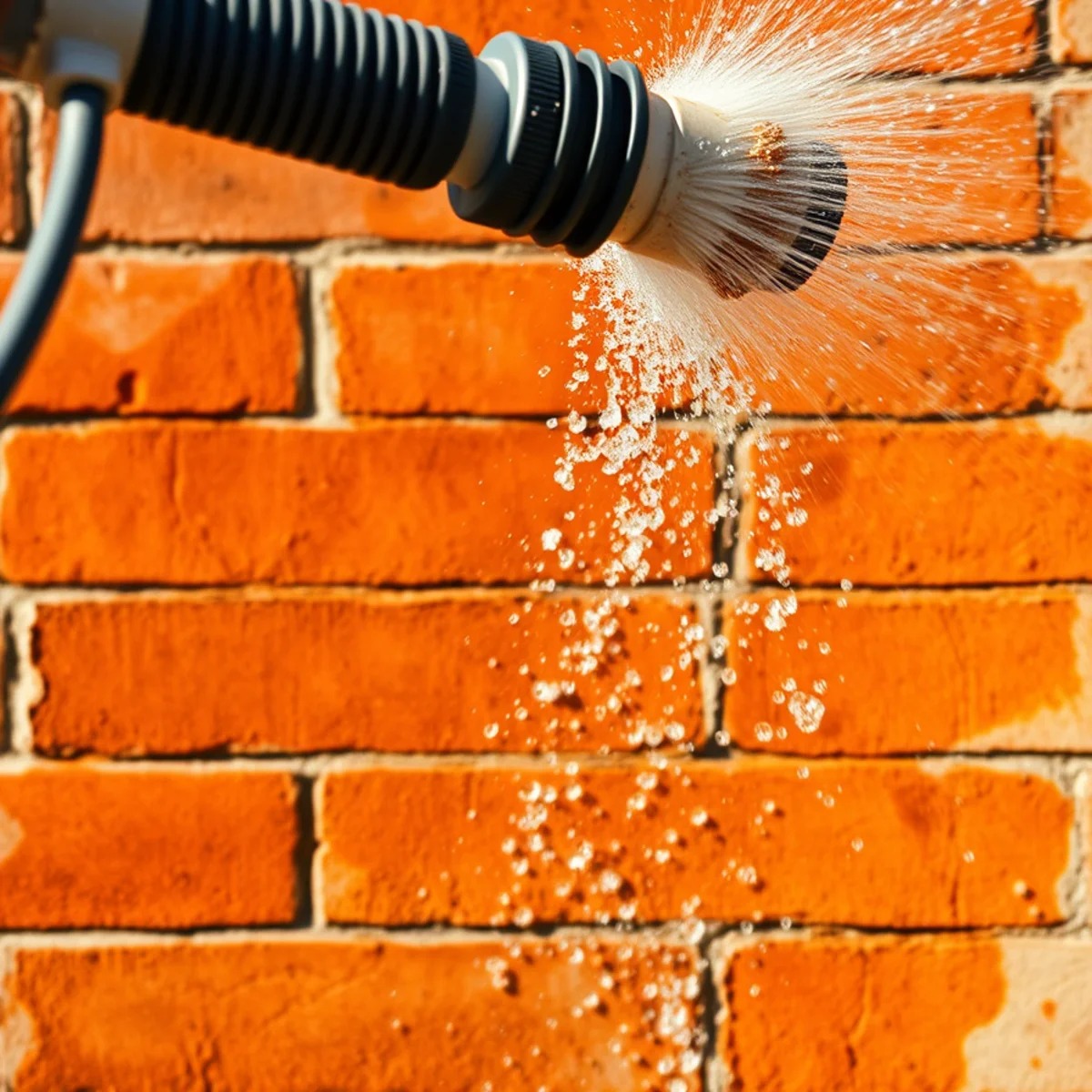
Pressure washing won't touch rust. Learn how to dissolve iron-oxide stains safely on every surface, by surface type, and how to stop them coming back.
Rust stains are one of the few exterior marks that laugh at a pressure washer. Those orange and reddish-brown streaks bleeding down your driveway, siding, or brick are not surface dirt sitting on top of the material; they are iron oxide chemically bonded into the pores. This guide explains exactly what causes rust staining on a Massachusetts home, why pressure alone never works, how to treat it safely surface by surface, and how to keep it from coming back.
Why Rust Stains Are a Stubborn, Different Kind of Stain
Most of what we wash off a house, including algae, pollen, mud, and road film, sits on the surface. A surfactant loosens it and water carries it away. A rust stain is different. When iron meets moisture and oxygen, it oxidizes into iron oxide, and that iron oxide soaks into and bonds with the material it lands on. It behaves more like a dye than like dirt.
That is why the homeowner's first instinct, blasting it with a pressure washer, fails. You are not pushing something off the surface; you are trying to break a chemical bond. The fix is not more force; it is the right chemistry. Once you understand that, rust removal becomes predictable.
What Causes Rust Stains on Exterior Surfaces
Almost every rust stain traces back to a metal source plus water. Find the source and you understand the stain. The most common causes we see on Massachusetts properties:
- Well water and irrigation overspray. Private wells across New England carry dissolved iron. Iron concentrations as low as roughly 0.3 ppm can stain a surface orange. When iron-rich well water sprays from a sprinkler onto concrete, stucco, or a foundation, the ferrous iron oxidizes on contact and leaves recurring streaks. This is the single most common cause we find in well-served towns like Plymouth, Pembroke, and Marshfield.
- Metal railings and fasteners. Wrought-iron railings, downspout brackets, screws, nails, and lally columns corrode and bleed rust streaks down siding, brick, and foundations. Older Massachusetts homes are full of aging metal fixtures that do exactly this.
- Iron-rich lawn fertilizer. The deep-green New England lawn often comes from iron-fortified fertilizer. Granules scattered onto a driveway or sidewalk turn into orange staining the moment it rains.
- Battery and metal furniture stains. Metal patio furniture, planters, grills, and the occasional car battery left on concrete leave rust rings and battery acid stains, especially after sitting through a wet season.
- Rebar and embedded metal in concrete. Rebar bleed happens when the steel reinforcement inside concrete rusts and pushes orange staining out through the surface from the inside.
Seasonal timing matters too. New England freeze-thaw cycles and winter road de-icing accelerate corrosion on any metal left outdoors, so spring is when many homeowners first notice fresh rust streaks on furniture, fences, and concrete.
Why Pressure Washing Alone Won't Remove Rust
This is the most important thing to understand, and it is the gap most contractors never bother explaining. Pressure washing removes things that sit on a surface. Rust is iron oxide that has chemically bonded into the material's pores. There is no amount of pressure that dissolves a chemical bond.
Worse, cranking the pressure up damages the surface while barely touching the color. On a concrete driveway, an aggressive zero-degree tip can etch the surface and leave permanent wand marks, yet the orange stain stays put underneath. On vinyl siding, cedar, or stucco, high pressure gouges, splinters, and drives water behind the surface. You end up with damage and a stain.
The correct approach is chemistry first, water second. A rust-specific remover dissolves the iron oxide at the molecular level, and a controlled low-pressure rinse then carries the dissolved residue away. That is the same principle behind our rust removal service and our broader soft washing approach: the product does the work, and water only finishes the job. You don't need more pressure; you need the right chemistry.
Identify the Source Before You Treat the Stain
Treating the stain without finding the source is how rust comes back two weeks later. Before you mix anything, play detective.
- Look up. A rust streak running vertically down siding or brick almost always starts at a metal fixture above it: a bracket, a screw, a railing, a light fixture.
- Look at the pattern. A fan-shaped or arcing stain on a driveway or walkway points to sprinkler overspray. A round ring points to furniture or a planter. Diffuse orange across a wide area after rain suggests fertilizer.
- Check your water. If you are on a private well and you see staining wherever the sprinklers reach, dissolved iron in your well water is the likely culprit. A simple iron test from a hardware store confirms it.
Once you know the source, you know two things: which method to use, and what to fix so the stain does not return.
Rust Removal by Surface Type: Concrete and Driveways
Concrete is where most homeowners notice rust first, and it is the most forgiving surface to treat because it is durable. It is also porous, so deep stains take patience.
- Clear and pre-wet. Remove furniture and debris. Pre-soak surrounding plants and grass with plain water so runoff is diluted, not concentrated on roots.
- Apply an oxalic acid based remover. Following label directions, apply the product directly to the stain with a trigger sprayer or pump sprayer. Keep the surface from drying out during the dwell.
- Let it dwell. Give the chemistry several minutes to work. Do not let it bake dry in direct sun; work in the shade or on a cooler part of the day.
- Agitate. Use a stiff-bristle nylon brush, never a wire brush, which leaves its own metal fragments and new rust.
- Rinse thoroughly. Flush with plenty of water. A properly cleaned concrete driveway can handle a rinse in the 2,000 to 3,000 PSI range, but the stain is already dissolved by this point, so the rinse is just carrying residue away.
- Repeat for deep stains. Old or deep-set staining often needs two or three rounds. Patience beats brute force.
For large or badly stained areas, our concrete cleaning and driveway cleaning crews pair the right rust chemistry with professional rinsing for an even finish.
Rust Removal by Surface Type: Brick, Pavers, and Natural Stone
Brick masonry, pavers, and natural stone like granite are porous New England building materials, so rust penetrates deeply. They also react to acid, which makes them trickier than concrete.
- Use a masonry-rated remover and keep dwell times conservative. Aggressive acid attacks mortar joints and can leave etching or a chalky white residue.
- Spot test first. Treat an inconspicuous area, rinse it, and wait a day to confirm the color and texture are unharmed before treating the whole stain.
- Rinse generously to neutralize and flush acid out of the joints, not just off the face.
- Watch for efflorescence. Brick sometimes shows a separate white, powdery mineral deposit that looks like a stain but is not rust. Efflorescence needs a different treatment than iron staining.
Historic and older homes, common in places like Salem and Newburyport, deserve extra caution and usually a professional touch. Our brick cleaning and paver cleaning services are built around protecting the material while lifting the stain.
Rust Removal by Surface Type: Vinyl and Other Siding
Siding rust almost always comes from rusting fixtures, screws, or runoff above it, so step one is fixing the source. For the stain itself, the rule is gentle chemistry and low pressure.
Vinyl siding tolerates only 100 to 500 PSI, so this is a soft-wash job, never a pressure-wash job. A surface-safe rust remover applied with a pump sprayer or by downstream injection, allowed to dwell, then rinsed at low pressure, lifts the stain without warping or cracking the panels. Use a soft brush for stubborn spots and keep the product off any nearby glass and metal trim. Our vinyl siding cleaning service handles exactly this.
Rust Removal by Surface Type: Wood Decks and Fences
Wood is soft and stains easily, both with rust and with the chemicals used to remove it. Oxalic acid, often sold as "wood bleach," is actually the traditional choice here because it brightens wood while pulling out iron staining left by nails, screws, and metal furniture.
Keep pressure under 200 PSI on cedar and similar softwoods. Apply the oxalic solution, let it dwell, agitate with a soft brush along the grain, then rinse and neutralize thoroughly so no acid lingers in the wood. Plan a deck refinish for early fall in Massachusetts, after summer humidity and before road-salt season. Our deck cleaning and fence cleaning crews use wood-safe chemistry and low pressure to protect the fibers.
Rust Removal by Surface Type: Stucco, Fiberglass, and Painted Surfaces
These surfaces are the most chemically sensitive of all.
- Stucco and EIFS tolerate under 150 PSI and react strongly to acid. Use the mildest effective remover, the shortest dwell, and copious rinsing. Test first, every time.
- Fiberglass (some doors, columns, and pool surrounds) can dull or discolor if acid sits too long. Short dwell, immediate rinse.
- Painted surfaces are unpredictable. Strong acid can strip or discolor paint. Start with the gentlest product and a spot test, and accept that some treatments may require a touch-up.
When in doubt on any of these, the safe move is a no-pressure acid treatment by someone who handles it daily, not a weekend experiment.
DIY Methods Compared: Vinegar, Oxalic Acid, Commercial Removers, and Muriatic Acid
Not all rust removers are equal, and using the wrong one damages your surface. Here is how the common options actually compare.
| Method | Best for | Strength | Watch out for |
|---|---|---|---|
| Vinegar / lemon juice | Very light, fresh surface stains | Weak | Rarely works on set-in stains; fine to try first |
| Oxalic acid | Concrete, brick, wood, most masonry | Moderate | Wear PPE; rinse fully; test on stone |
| Commercial rust removers | Most exterior surfaces | Moderate | Match the product to your surface |
| Muriatic (hydrochloric) acid | Heavy, old industrial rust | Very strong | Burns skin, etches concrete, kills plants, dangerous fumes |
Does vinegar remove rust stains? On a light, fresh stain, sometimes. Vinegar and lemon juice are mild acids and worth a quick try on a small spot. On any set-in or deep stain, they do not have the strength, and you will waste an afternoon before reaching for something stronger.
Oxalic acid is the practical sweet spot for homeowners: strong enough for typical fertilizer and well-water stains, mild enough to be reasonably safe with proper protection. It is the active ingredient in many products labeled as deck brighteners and rust removers.
Commercial products worth knowing by name include Iron OUT, Rid O' Rust, F9 BARC (a pro favorite for concrete), and Whink rust remover. Match the product to your surface and follow the dilution and dwell times on the label.
Muriatic acid (hydrochloric acid) cuts heavy rust fast but is genuinely dangerous. It burns skin, etches and discolors concrete, damages metal and glass, harms plants, and releases hazardous fumes. We do not recommend it for DIY use; leave it to trained technicians with the correct dilution, PPE, and neutralizing agents.
A few rules apply no matter what you choose: confirm the product is rated for your surface, always pre-test an inconspicuous area, never mix rust removers with bleach (it creates toxic gas), and choose a biodegradable cleaner where one will do the job.
Step-by-Step: How to Remove Rust Stains Safely
The same disciplined sequence works across most surfaces. Skip a step and you risk damage or a wasted effort.
- Pre-clean. Sweep or rinse loose dirt so the remover contacts the stain, not the grime on top of it.
- Pre-test. Apply to a small, hidden area first. Wait and check for discoloration or etching before committing to the whole stain.
- Protect. Pre-soak nearby plants and grass with plain water. Cover anything you do not want treated.
- Apply. Use a trigger sprayer or pump sprayer for even coverage. Keep the product wet on the surface.
- Dwell. Give the chemistry the time the label specifies, usually several minutes. Do not let it dry out.
- Agitate. Work it in with a stiff-bristle nylon brush. No wire brushes.
- Rinse and neutralize. Rinse thoroughly with plenty of water. On acid-sensitive surfaces, neutralize per the product directions to stop the reaction and prevent a white residue.
- Repeat if needed. Deep stains take multiple rounds. Stop when the color is gone, not when you are tired.
Safety Precautions: PPE, Ventilation, and Protecting Your Property
Acid is acid, even the homeowner-friendly kind. Treat it with respect.
- Wear rubber gloves and safety goggles at minimum, and old clothing you do not mind ruining.
- Work in good ventilation and never in a confined space.
- Plant protection is non-negotiable: pre-soak landscaping before you start and rinse it again after.
- Never mix rust removers with bleach, ammonia, or other cleaners.
- Keep product off glass, metal, and finished surfaces you are not treating.
- Practice runoff containment where you can, especially near storm drains, vegetable gardens, and well heads.
If a job needs muriatic acid, stop and call a professional. That is the line where DIY stops making sense.
How to Prevent Rust Stains From Coming Back
Removing the stain is half the battle. If you do not address the source, it returns with the next rain. Prevention is where you actually win.
- Treat the water source. If iron-rich well water is the cause, options include a water softener, an iron filtration system, or polyphosphate injection that keeps dissolved iron from oxidizing on surfaces. This is the real fix for recurring sprinkler rust.
- Adjust your sprinklers. Re-aim irrigation heads so well water never hits concrete, siding, or the foundation. This one change ends most recurring driveway staining.
- Seal your concrete. A quality concrete sealant or surface sealer fills the pores so iron cannot soak in, and it makes the next stain far easier to remove. Apply before road-salt season for the best protection.
- Remove or replace metal fixtures. Sand, prime, and seal corroding railings and brackets, or swap them for stainless or coated hardware. Put rubber feet under metal furniture and planters.
- Mind the fertilizer. Sweep iron-fortified granules off hard surfaces before watering, or switch to an iron-free product near concrete.
Light Stains vs. Deep-Set Stains: Realistic Expectations
Be honest about what you are dealing with. A light, recent stain on sealed concrete often comes out completely on the first pass. A deep-set stain that has soaked into raw, porous concrete or brick for years may lighten dramatically but never reach zero, because the iron has penetrated too far.
That is not a failure; it is chemistry and time. A skilled technician can get most stains to vanish or fade to where they are no longer noticeable from the curb. Anyone who promises guaranteed 100 percent removal on a decade-old stain in raw masonry is overselling.
When to Call a Professional Pressure Washing Company
Plenty of light rust is a fine weekend project. Call a pro when:
- The staining is large, old, or deeply set and shrugs off DIY treatment.
- The surface is delicate, historic, or expensive, like stucco, natural stone, or a freshly painted exterior.
- The job would require strong acids you are not equipped to handle safely.
- The rust keeps coming back because of an ongoing source like well-water iron.
- You want it done right the first time, without the risk of etching your own driveway.
A professional brings commercial-grade removers, correct dilution, landscaping and runoff protection, and the equipment to rinse safely and evenly across an entire surface.
How Wash Bros Removes Rust Stains for Massachusetts Homeowners
At Wash Bros, rust removal is a chemistry job, not a pressure job. We identify the source first, then apply a surface-appropriate, no-pressure acid treatment and lift the iron oxide with a controlled, low-pressure rinse and downstream injection where it suits the surface. That protects your concrete, siding, brick, and wood instead of risking the etching and gouging that high pressure causes.
We are a local, family-run company started in 2023 by brothers Louis and Dominic. We are fully insured with a certificate of insurance available on request, and we hold a 5.0 average across 130 Google reviews. We use biodegradable surfactants where they do the job, pre-soak your landscaping, and stay mindful of runoff and well-water conditions. We serve homeowners and businesses across Massachusetts, from Boston and Worcester out to the South Shore and the suburbs, protecting your curb appeal and property value whether you are staying put or getting ready to list.
Get a Free Rust Stain Removal Quote in Massachusetts
If rust streaks are dragging down your home's appearance, you do not have to battle them with trial and error. We will inspect the stain, identify the source, and recommend the safest, most effective treatment for your specific surface. Request your free estimate through our contact us page or call directly at +1 (351) 242-0666, and let us get your concrete, siding, and brick looking right again.
Frequently Asked Questions
Need Professional Exterior Cleaning?
Wash Bros provides affordable, dependable pressure washing across Massachusetts. Get your free estimate today.
Get a Free Estimate