Industrial Pressure Washing Services in Massachusetts
Professional industrial pressure washing from Wash Bros for Massachusetts homes and businesses — affordable, dependable, and designed to restore curb appeal safely.
Walk a Massachusetts plant floor at the end of a shift and you can read the problem with your eyes. Grease tracked off forklift tires. Hydraulic fluid weeping into the concrete pores. Carbon film on the dock walls, road-salt crust on the apron, and a black mildew line creeping up the north-facing steel. None of that came off with a garden hose, and most of it is getting worse while it sits.
Here is the part facility managers feel in their gut. Every one of those soils is a liability. Oil on a polished slab is a slip-and-fall claim waiting on a wet morning. Salt left on structural steel is corrosion you will pay to repair. Uncontained washwater running to a storm drain is a stormwater violation with the Commonwealth's name on the notice.
That is the gap industrial pressure washing closes. Not a rinse. A controlled, contained, surface-appropriate process built for the abuse that warehouses, factories, and processing plants actually take. Wash Bros runs that process across Massachusetts, and we built it around the contaminants and the regulations that live in real facilities.
What Is Industrial Pressure Washing? (and how it differs from commercial power washing)
Commercial power washing cleans storefronts, office exteriors, sidewalks, and parking lots. The soils are mostly biological and cosmetic: algae, pollen, gum, light grime. Pressure is moderate and chemistry is gentle.
Industrial pressure washing is a different animal. The soils are petroleum-based and bonded: baked-on grease, oil saturation, carbon, rust bleed, mineral scale, and chemical residue. Removing them takes more than cold water and PSI. It takes the right combination of heat, flow, dwell time, and the correct degreaser for the soil.
Three technical levers separate industrial from commercial work. First, hot water — heated output that melts and emulsifies grease that cold water only smears around. Second, GPM (gallons per minute) — high flow that floods the soil off the surface, which matters more than raw PSI on large slabs. Third, degreasing chemistry — biodegradable surfactants and degreasers that break the bond between the contaminant and the substrate so pressure simply rinses it away.
The principle we live by carries over from every surface we clean: you don't need more pressure, you need the right chemistry. Pile on PSI and you spall concrete, etch steel, and drive water into electrical housings. Match the chemistry to the soil and the pressure does less work, not more.
Industrial Facilities & Sites We Service in Massachusetts
Massachusetts has a deep industrial base, and it clusters along predictable corridors. We service it where it lives:
- Warehouses and distribution centers off the I-495 belt and I-90 / Mass Pike, where dock traffic never stops and the floors show it.
- Manufacturing plants and machine shops through Worcester County and Central Massachusetts, the Commonwealth's manufacturing backbone.
- Food and beverage processing facilities, where sanitation is not optional and surfaces must be cleaned to a standard, not just made to look clean.
- Energy, transportation, and fleet yards, where fuel, brake dust, and road grime layer onto concrete and equipment.
- Industrial parks along the Route 128 corridor, mixing light manufacturing, logistics, and tech assembly under one cleaning need.
If your operation sits in the Boston metro, the Worcester industrial base, or anywhere along the Lowell and Merrimack Valley logistics routes, we build our routes to reach you.
Industrial Surfaces We Clean
The substrate dictates the method, and industrial sites are built from the toughest of them:
- Concrete floors and exterior slabs — production floors, aprons, ramps, and storage pads.
- Loading docks and dock levelers — the highest-traffic, highest-soil zone on most sites.
- Exterior walls and metal siding — block, tilt-up panel, and corrugated steel.
- Structural steel — beams, columns, railings, and mezzanines carrying salt and oxidation.
- Silos, tanks, and storage vessels — exterior shells and surrounding pads.
- Equipment, machinery, and conveyors — housings, frames, and conveyor belt assemblies that collect product residue and grease.
For petroleum staining on concrete, our oil stain removal process pulls fluid out of the pores instead of pushing it deeper. For corroded steel and dock plates, our rust removal chemistry lifts the stain without grinding the metal. And when the whole site needs a uniform finish, we coordinate with our commercial pressure washing crews so the cleaning lines up in one mobilization.
Our Industrial Pressure Washing Process: From Site Assessment to Final Walkthrough
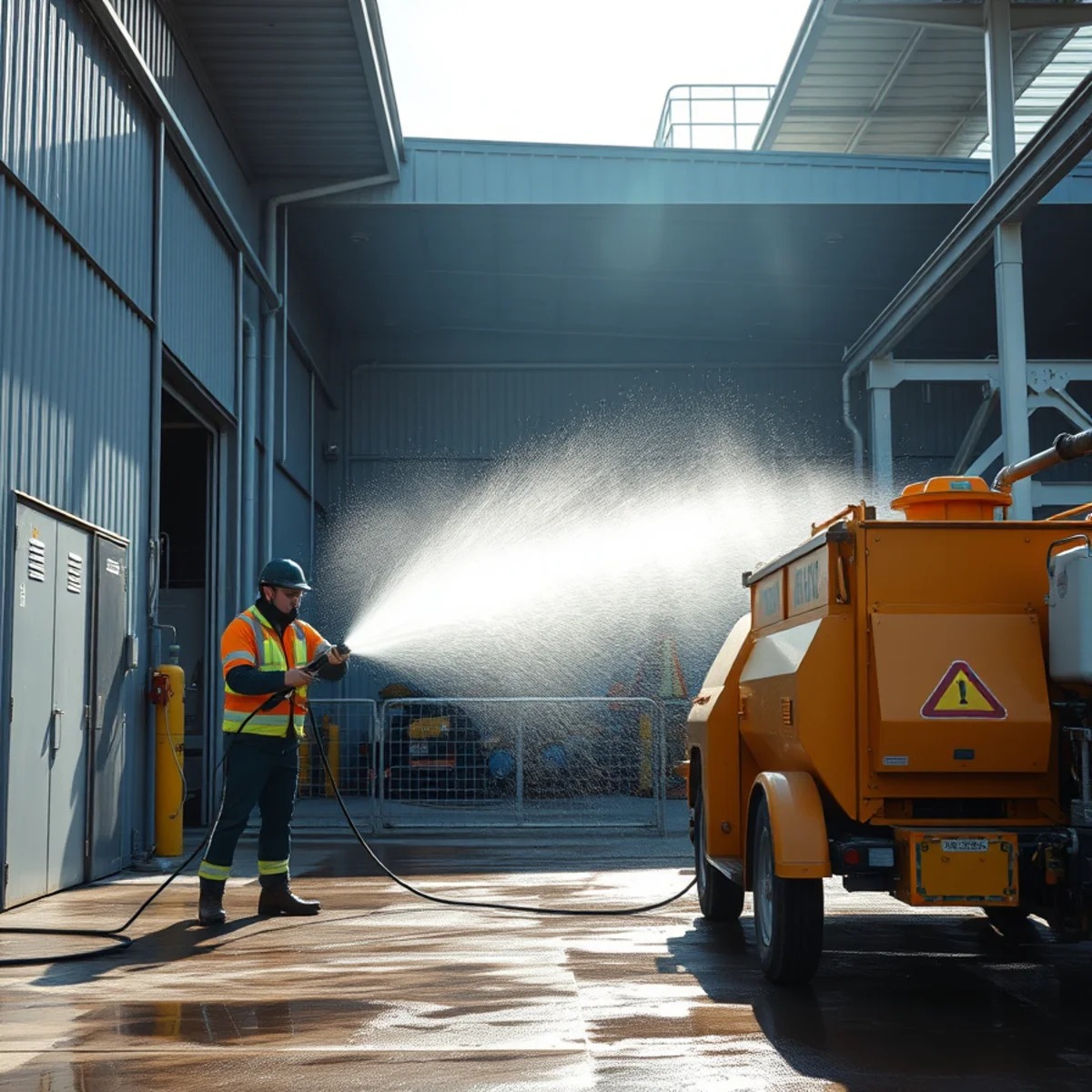
Every site starts with a walk, not a wand. We assess the substrates, identify the soils, locate every storm drain and floor drain, flag electrical and sensitive equipment, and confirm where washwater will go. From there we select pressure, temperature, and chemistry by surface — a degreaser dwell on the dock concrete, a soft-wash rinse on coated panels, a hot-water flood on grease-saturated equipment pads.
We pre-treat the heavy soils and let the chemistry do the bonding work before any pressure touches the surface. Runoff containment goes down first: berms, vacuums, and reclaim where the site and the regulations call for it. Then we clean methodically, working with a rotary surface cleaner across large slabs for even, stripe-free results and switching to controlled wand work on detail and vertical surfaces.
We close every job with a walkthrough so the person who signed off sees the result and the drains are confirmed clear. That is how a facility reads as well-run the moment an inspector, a client, or a new hire comes through the gate.
Hot Water Pressure Washing & Hydroblasting for Grease, Oil & Chemical Buildup
Grease does not surrender to cold water. It smears, redeposits, and comes back the next week. Heat is the answer. Hot water pressure washing melts the bond between petroleum soils and the substrate so the contaminant lifts instead of spreading.
For the worst buildup — carbon, hardened product, coatings on equipment and tanks — high-flow hydroblasting brings the volume of water needed to flood it off without resorting to abrasive pressure that damages the metal underneath. Heat plus flow plus the correct degreaser clears soils that PSI alone will only polish.
Degreasing, Oil Spill & Chemical Residue Removal on Industrial Concrete
Industrial concrete is porous, and that is the whole problem. Oil, hydraulic fluid, and coolant wick down into the slab and sit there, feeding stains and slip hazards from below the surface. Surface scrubbing never reaches them.
Our concrete degreasing pulls the contaminant up and out. We apply a biodegradable degreaser, give it real dwell time to penetrate and emulsify the oil within the pores, then flush with hot water and high flow to carry it off the slab and into containment. Fresh spills, set-in stains, and chemical residue all get the same principle: break the bond first, rinse second. For surrounding drives, pads, and access roads, many clients pair this with our concrete cleaning service for a consistent finish across the whole footprint.
Rust, Efflorescence & Mineral Staining Removal on Industrial Surfaces
Rust bleed, efflorescence, and mineral staining are chemical problems, and they need a chemical answer — not a pressure answer. Grind rust off steel or blast efflorescence off block and you damage the surface and the stain returns.
We treat rust with oxalic-based chemistry that dissolves the iron stain and rinses clean, leaving the metal intact. Efflorescence — that white mineral crust pushed to the surface by moisture migration — gets a specialized treatment that neutralizes and removes the deposit without etching the masonry beneath it. The same controlled approach handles the hard-water and mineral staining that builds up around tanks, silos, and washdown areas. Our efflorescence removal work is built specifically for this.
OSHA Compliance, Worker Safety & Slip-and-Fall Risk Reduction
This is the angle most contractors skip, and it is the one facility managers care about most.
A grease-slick dock or an oil-glazed production floor is a slip-and-fall claim with a date stamp on it. Workers' comp, lost time, and liability all trace back to a surface that should have been cleaned. Clean concrete restores traction. Clear walkways, striping, and dock edges keep foot and forklift traffic safe. A degreased floor is a safer floor, full stop.
Our crews work to a safety standard, too. PPE including eye and face protection, controlled water and chemical handling, and scaffolding and lift access used correctly for elevated steel and tank exteriors. Wash Bros is fully insured, and a certificate of insurance is available on request — so the safety extends to your liability, not just your floors.
EPA & Massachusetts Stormwater Compliance and Water Reclamation
Here is the concern that keeps facility managers up at night, and almost no competitor addresses it. Industrial washwater is not clean water. Once it picks up oil, grease, and chemical residue, letting it run to a storm drain can violate the federal Clean Water Act and Massachusetts stormwater regulations enforced by MassDEP. The fine lands on the facility, not the contractor who left.
We treat containment as part of the job, not an afterthought. Where the site and the discharge call for it, we deploy runoff containment and a mobile water reclaim unit to capture, vacuum, and recover wastewater for proper disposal — so contaminated water never reaches the storm system. We document the process. EPA stormwater compliance and water reclamation are not upsells here; they are how responsible industrial washing is done.
Soft Washing vs. High-Pressure: Choosing the Right Method by Surface and PSI
PSI is a tool, not a setting you crank to maximum. The surface decides the number:
- Industrial concrete floors and slabs — power washing with a rotary surface cleaner, generally 2,000–3,000 PSI, the range that lifts ground-in soil from dense concrete.
- Painted or coated metal panels and siding — soft washing at low pressure, letting chemistry clean so PSI never strips the coating or drives water behind the panel.
- Structural steel and equipment — controlled pressure with hot water and degreaser, never enough force to etch the metal.
- Block and masonry walls — lower pressure with the right cleaner, because high spray on porous masonry forces water into the wall and damages mortar.
Match the method to the material and you get a clean surface that lasts. Mismatch it and you create the next repair.
How Often Should Industrial Facilities Be Pressure Washed?
Frequency follows traffic, soil load, and the New England calendar. High-traffic loading docks and production floors generally warrant quarterly cleaning to stay ahead of grease and slip hazards. Exterior walls, structural steel, and tank exteriors typically run on a semiannual schedule. Food and beverage facilities often need more frequent washdowns to hold a sanitation standard.
The Massachusetts climate sets two anchor points. Spring, to flush a winter's worth of road salt and de-icing brine off steel and concrete before it locks in corrosion. Fall, to clear summer's algae, mildew, and pollen and prep surfaces before the freeze-thaw season drives contaminants deeper. Facilities near the coast — the North Shore and South Shore — carry an added salt-air corrosion load and benefit from tighter intervals.
Industrial Pressure Washing Cost in Massachusetts
We will not invent a number, because an honest quote depends on the site. But you deserve to know what moves the price. The factors that matter most:
- Total square footage and surface type — concrete, steel, and coated panel each clean at different rates.
- Soil severity — light grime versus grease-saturated, set-in oil and chemical residue.
- Hot water and hydroblasting — heated and high-flow work for heavy degreasing.
- Water reclamation requirements — containment and wastewater recovery where regulations demand it.
- Access — scaffolding, lift access, and elevated steel or tank exteriors.
- Scheduling — after-hours or minimal-downtime windows to protect production.
- Frequency — one-time deep cleans cost more per visit than a recurring maintenance program.
A facility on a scheduled program almost always pays less per square foot than a neglected site cleaned once a year, because maintained surfaces never reach the worst-case soil load.
Scheduled Maintenance Programs & After-Hours / Minimal-Downtime Cleaning
Production cannot stop for a cleaning crew, and it does not have to. We schedule industrial work for nights, weekends, and shift changes — minimal-downtime windows that keep your lines running and your team safe from wet floors mid-shift.
Recurring maintenance programs are where facilities win. Preventative cleaning on a set cadence keeps grease, salt, and biological growth from ever reaching the damaging stage, smooths your budget into predictable line items, and keeps the site inspection-ready year-round. We build the schedule around your operation, not the other way around.
Licensing, Insurance, Bonding & Safety Credentials
Be direct about this when you vet any industrial contractor. Wash Bros is fully insured, and a certificate of insurance is available on request — name your facility as a certificate holder and we will provide it before we mobilize.
Anyone who cannot hand you a COI before the rig pulls in is a liability you do not want on your property. An uninsured crew that gouges a slab, etches structural steel, or sends contaminated washwater to a storm drain leaves you holding the damage and the violation. Insurance and a documented, safety-driven process are not paperwork. They are the difference between a clean facility and a costly mistake.
Massachusetts Service Areas
We are a local, family-run operation — brothers Louis and Dominic founded Wash Bros in 2023 — and we service industrial sites across the Commonwealth:
- Greater Boston and the Route 128 corridor
- Worcester County and the Central Massachusetts manufacturing base
- North Shore — Salem, Peabody, and the surrounding industrial towns
- MetroWest — Framingham, Natick, and the I-495 logistics belt
- South Shore and the coastal corridor
From Quincy on the South Shore to Framingham in MetroWest, we cover the corridors where Massachusetts industry actually operates.
Why Choose Wash Bros for Industrial Pressure Washing
Most exterior cleaners are residential-first and treat "commercial" as a footnote. We built a real industrial process: surface-appropriate PSI, hot water and hydroblasting for grease, biodegradable degreasers, runoff containment and water reclamation, and a safety standard that protects your workers and your liability. We are fully insured, we hold a 5.0 average across 130 Google reviews, and we are satisfaction-focused on every site we touch.
Your facility's surfaces are an asset and a liability at the same time. Clean them right and they stay safe, compliant, and presentable. Neglect them and the bill always comes due — in corrosion, in claims, or in a violation notice.
Call Wash Bros at +1 (351) 242-0666 for an industrial pressure washing assessment anywhere in Massachusetts.
Problems We Solve
- Grease, oil, and hydraulic fluid saturating porous industrial concrete and creating slip-and-fall hazards
- Road salt and de-icing brine corroding structural steel and dock plates after New England winters
- Carbon buildup, chemical residue, and product soil on equipment, conveyors, and tank exteriors
- Stormwater violations from contaminated washwater running to drains without containment or reclamation
- Rust bleed, efflorescence, and mineral staining on steel, block walls, and masonry
- Production downtime when cleaning crews cannot work around shift schedules
Our Cleaning Process
- 1
Inspect the surface and identify problem areas
- 2
Protect nearby landscaping, fixtures, and finishes
- 3
Apply the correct cleaning method for the surface
- 4
Wash and rinse thoroughly with professional equipment
- 5
Final quality check and walkthrough with you
Why Choose Wash Bros
- Affordable, upfront pricing
- Dependable scheduling
- Experienced exterior cleaning team
- Surface-safe process, every job
- Residential & commercial options
- 5.0 stars across 130 reviews
Industrial Pressure Washing Across Massachusetts
We provide industrial pressure washing in 351 Massachusetts cities, including:
Industrial Pressure Washing FAQs
Related Services
Commercial Pressure Washing
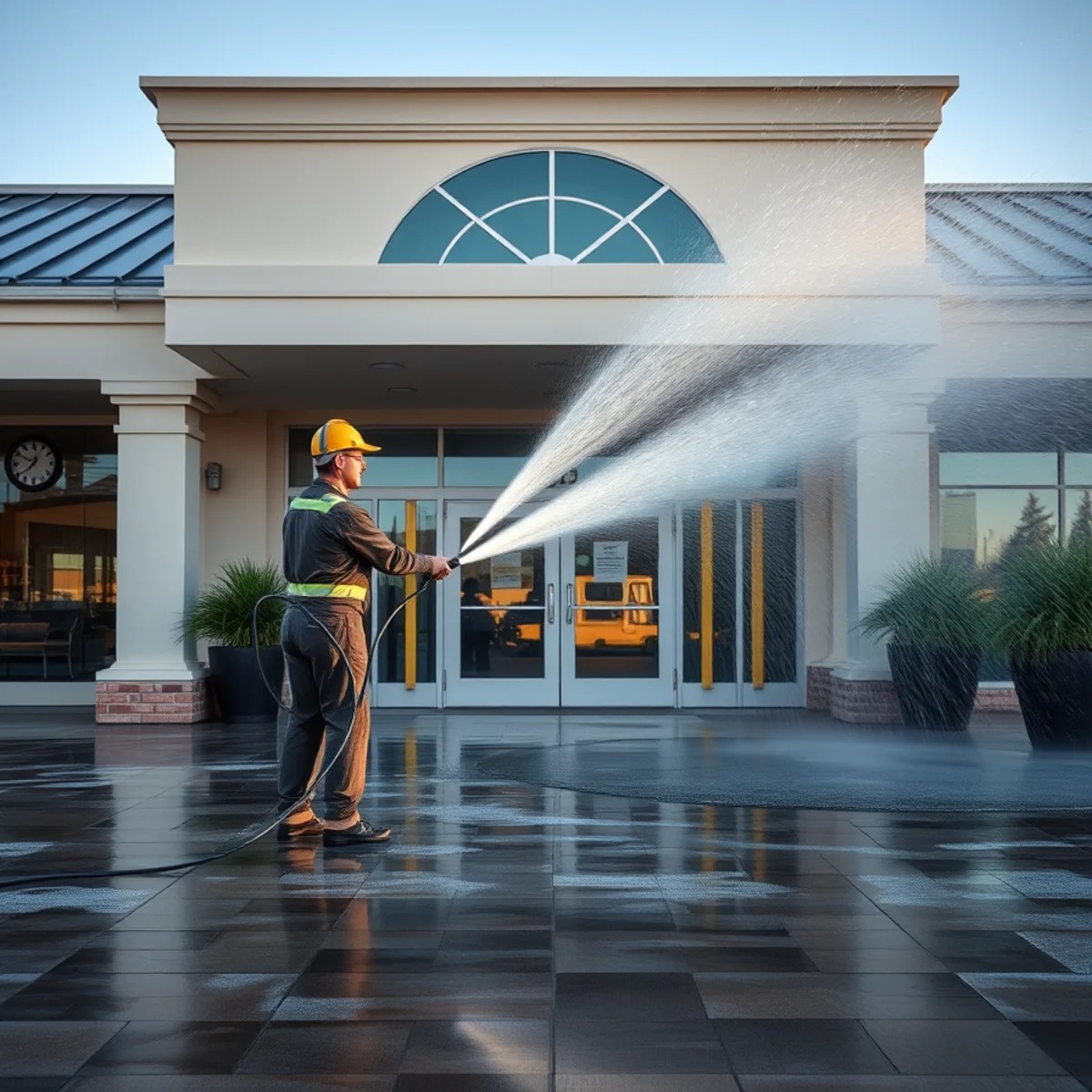
Fully insured commercial pressure washing across Massachusetts. Soft wash and hot water for storefronts, lots, docks, and dumpster pads, scheduled around your hours.
Read More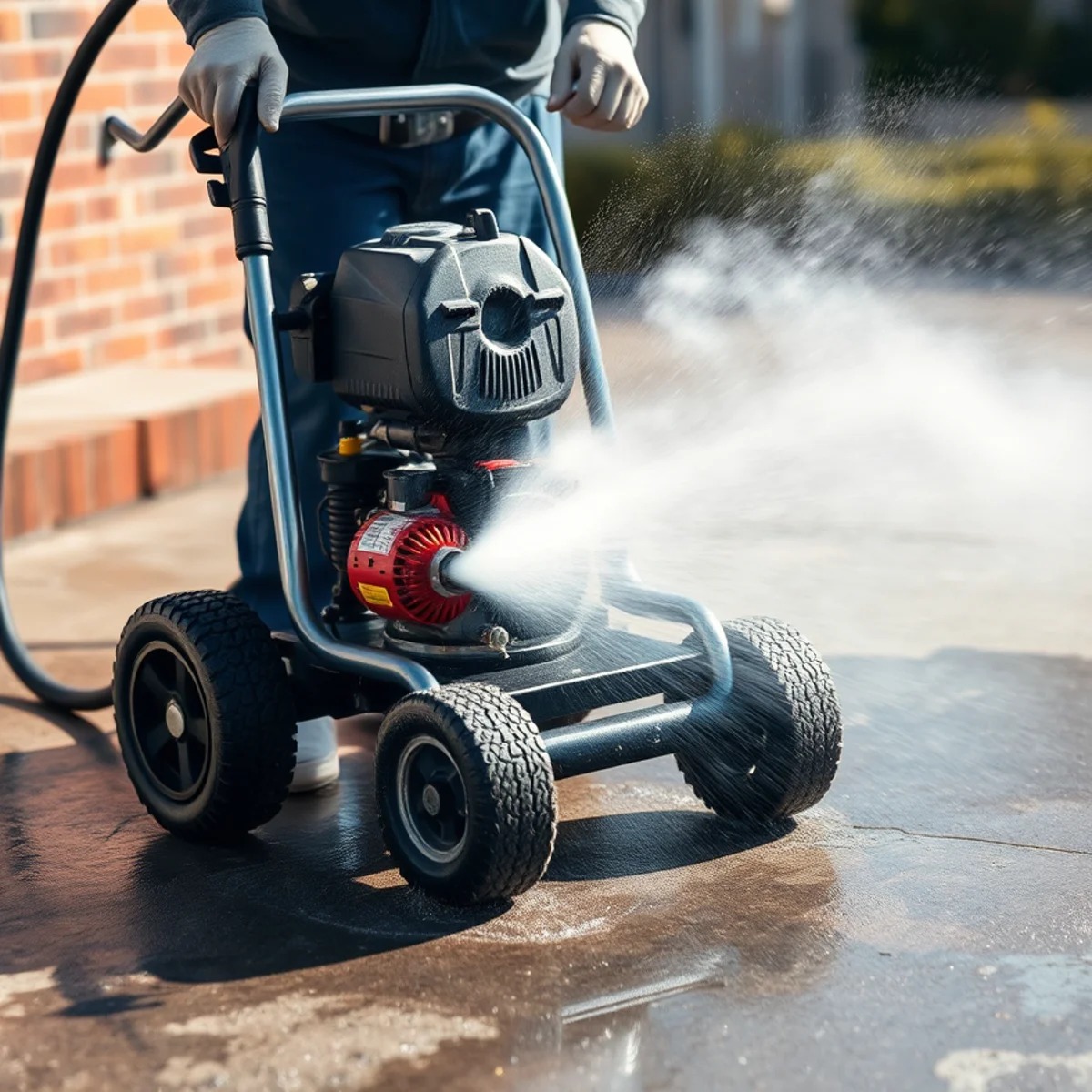
Hot Water Pressure Washing
Truck-mounted hot water pressure washing across Massachusetts that emulsifies grease, oil, gum, and sap on concrete and commercial flatwork.
Read More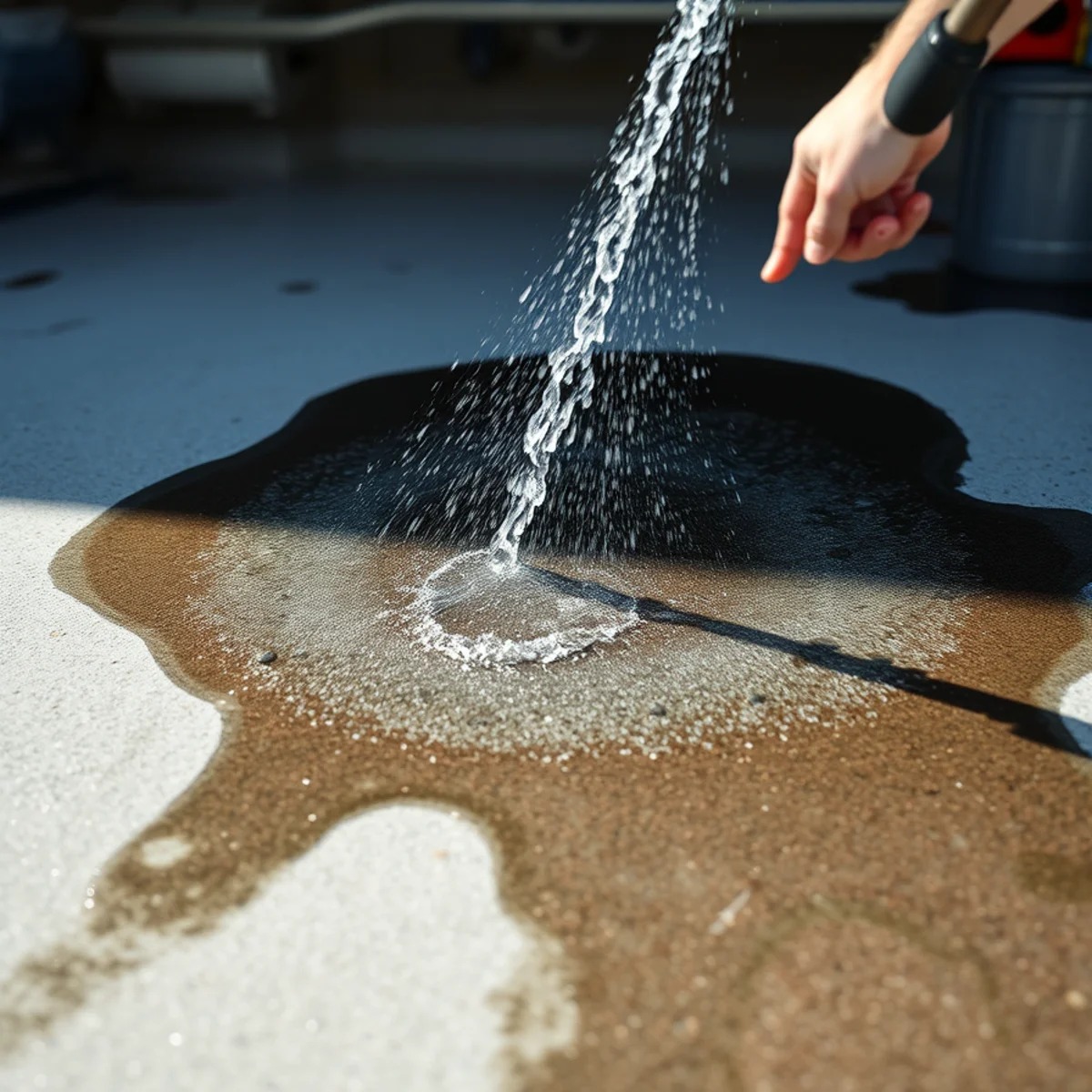
Oil Stain Removal
Hot-water degreasing that lifts motor oil, grease, and fuel stains out of MA concrete, pavers, and asphalt, not just over them.
Read More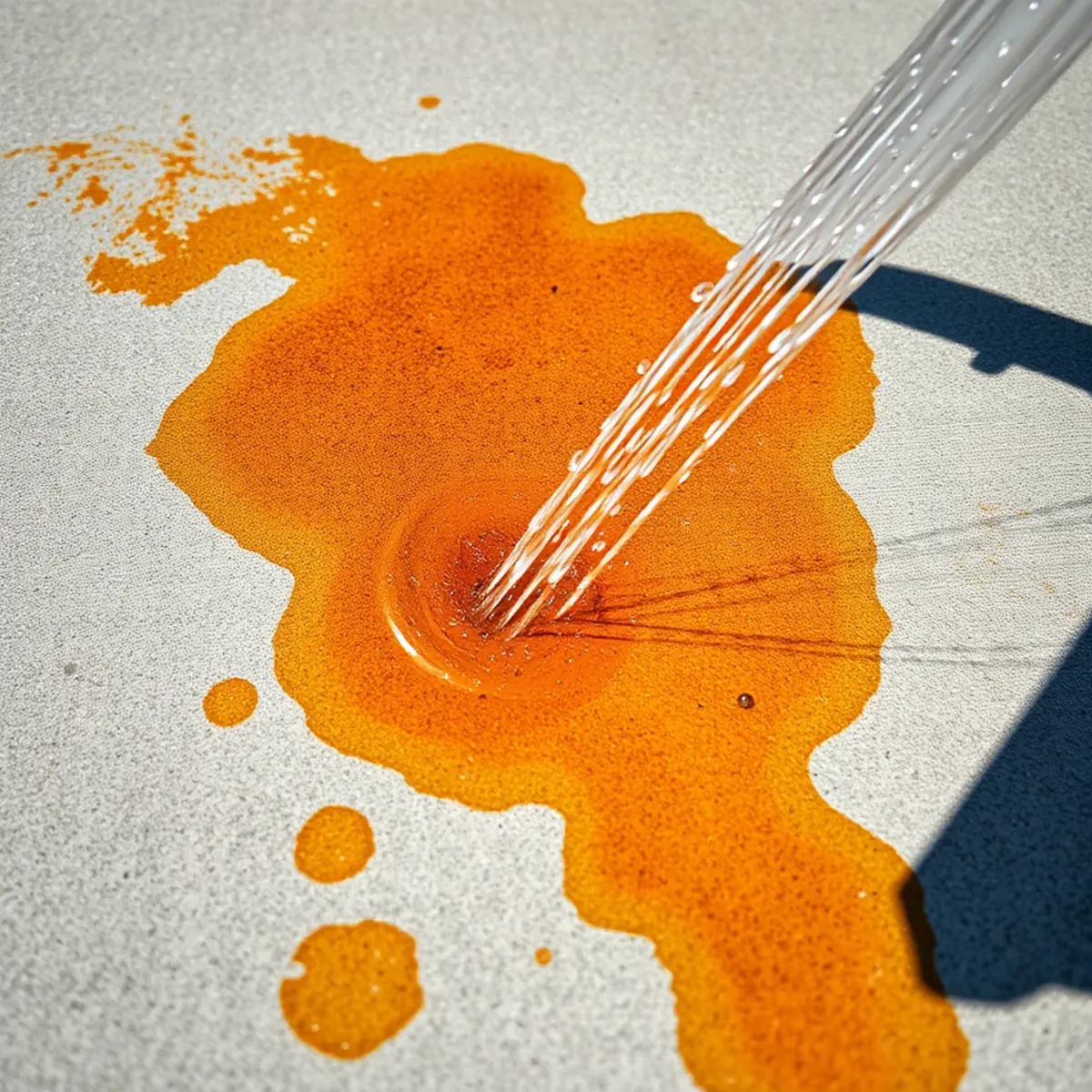
Rust Removal
Rust is a chemical stain, not dirt. Wash Bros lifts iron, fertilizer, and battery-acid stains from MA surfaces without etching.
Read More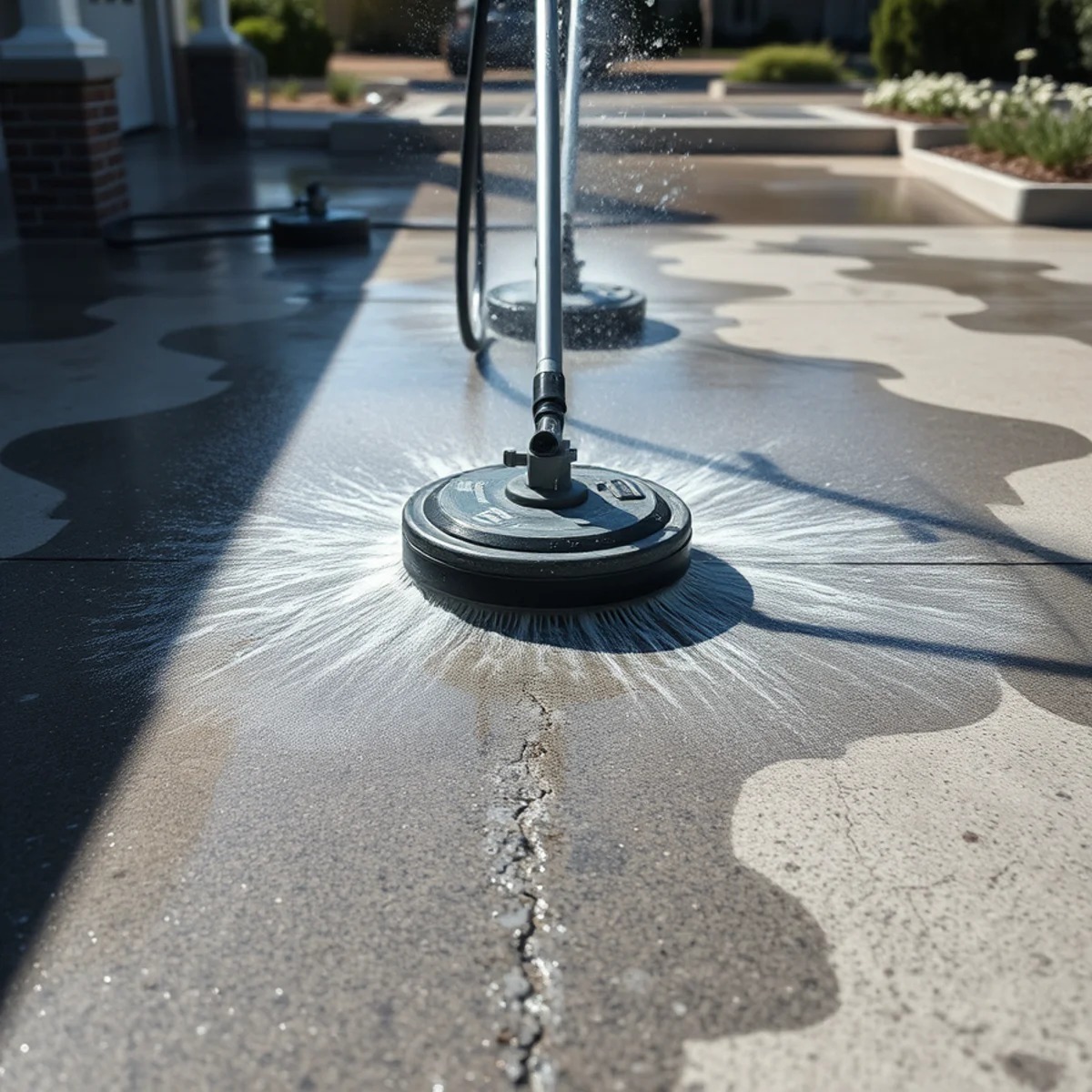
Concrete Cleaning
Expert concrete cleaning in Massachusetts: surface-cleaner flatwork, hot-water degreasing, and chemistry that removes salt, algae, oil, and efflorescence.
Read MoreReady to Schedule Industrial Pressure Washing?
Contact Wash Bros today for a free industrial pressure washing estimate anywhere in Massachusetts.