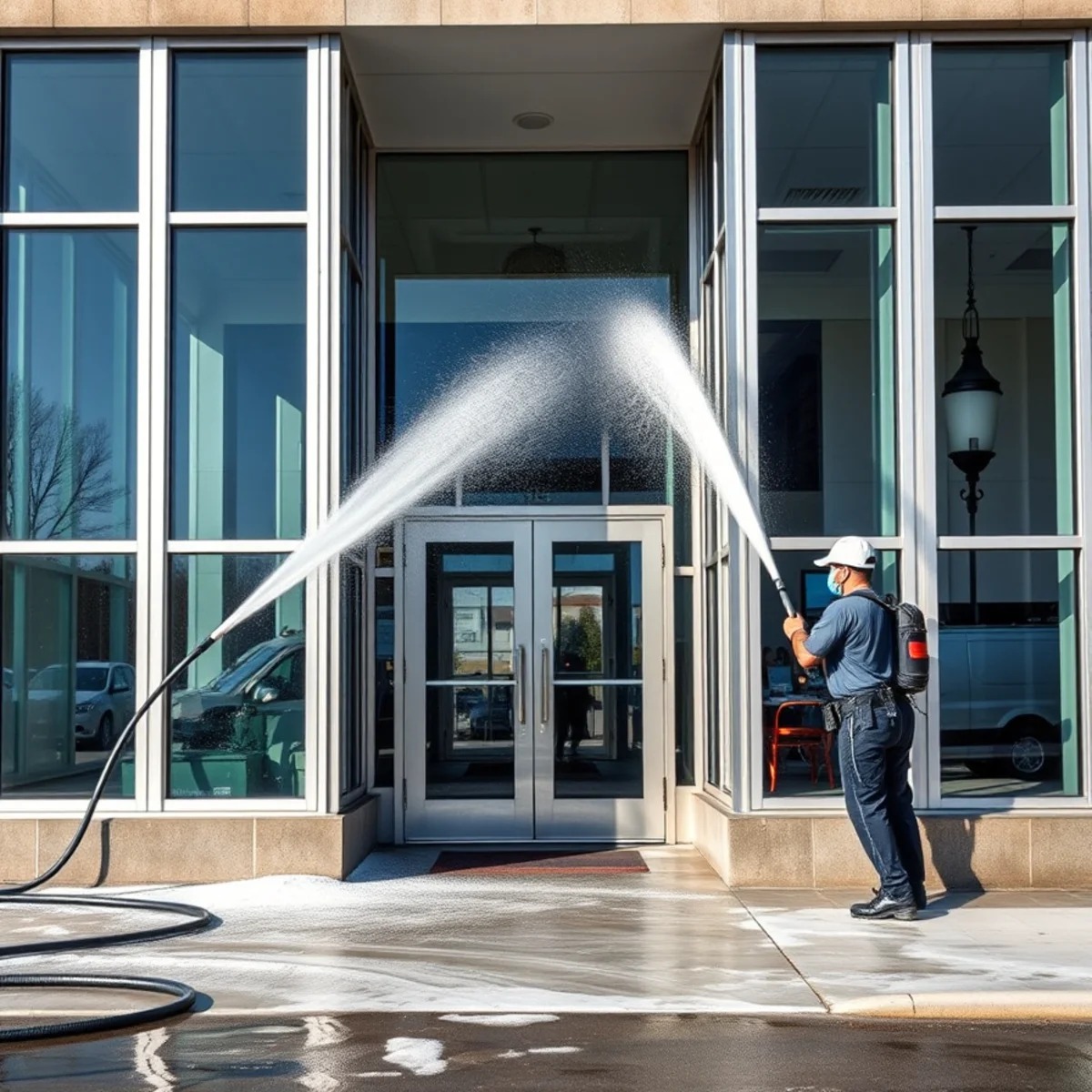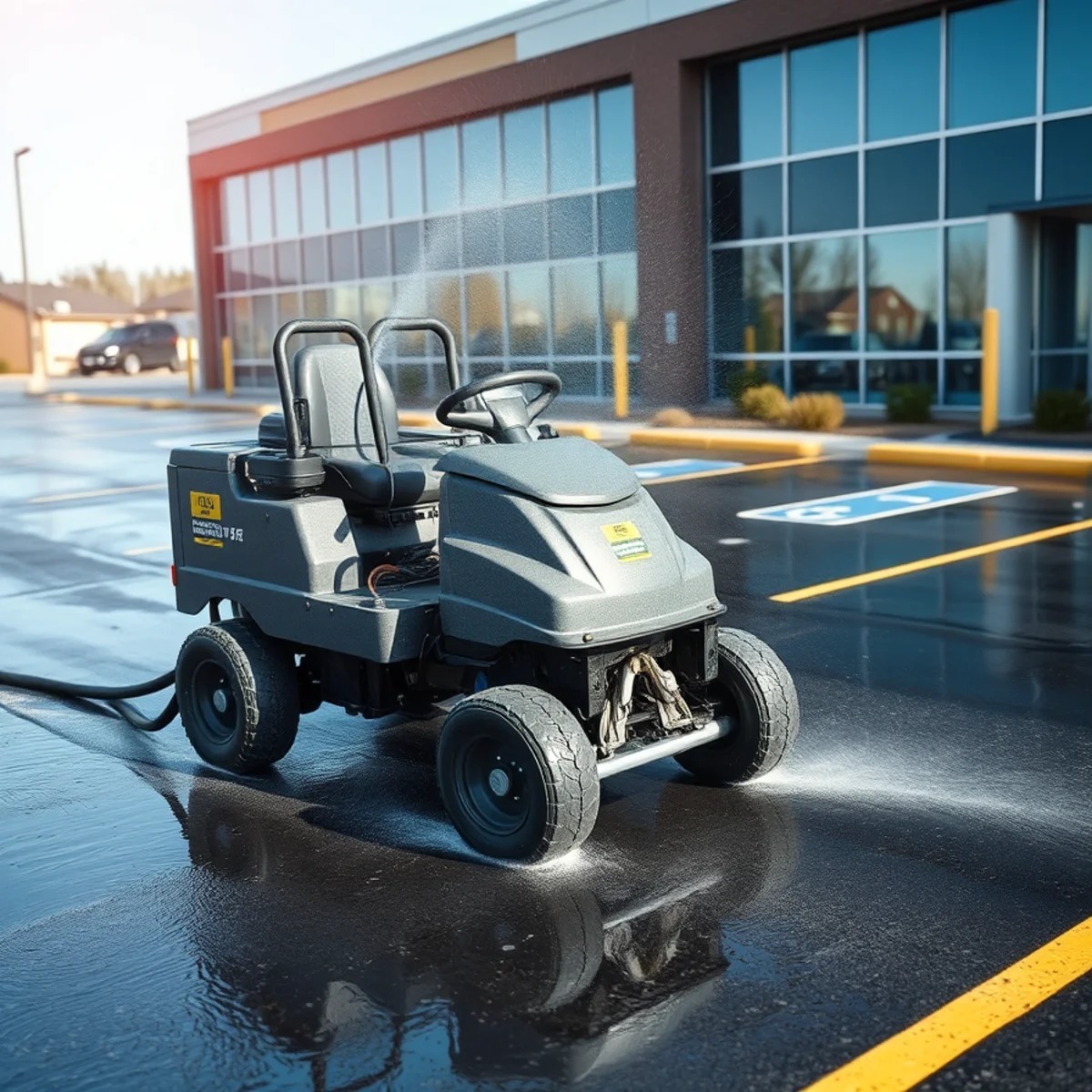
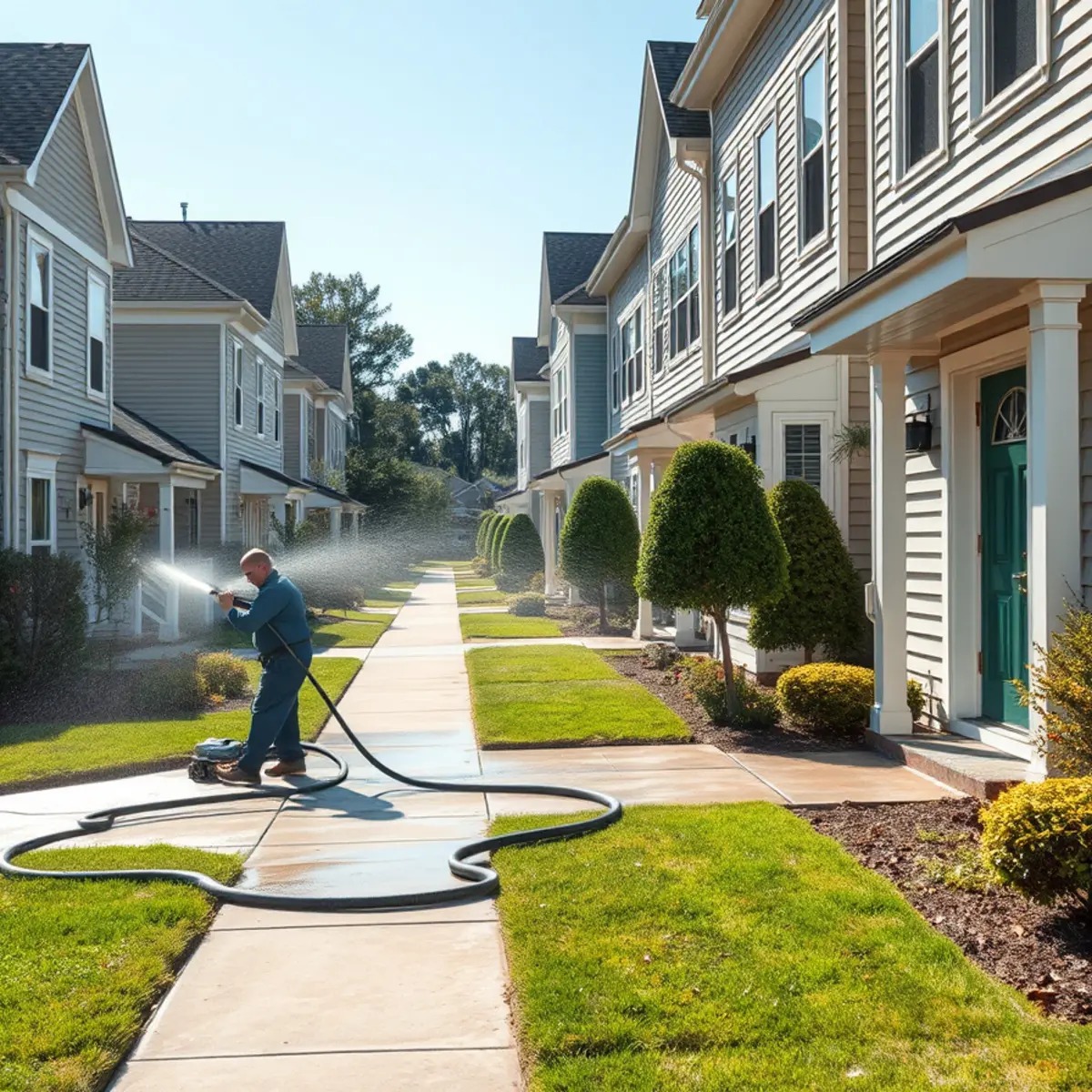
How Massachusetts HOA boards and property managers build a pressure washing plan: responsibilities, soft washing, costs, c.183A duties, and seasonal timing.
A clean community is not a luxury line item. For a Massachusetts HOA or condo association, scheduled exterior cleaning protects shared assets, reduces slip-and-fall liability, and keeps the board on the right side of its fiduciary duty. This guide shows boards and property managers how to build a practical maintenance plan that holds up to New England's salt, pollen, and freeze-thaw extremes.
Why HOA and Condo Communities in Massachusetts Need a Maintenance Plan
In a drier climate you can get away with washing a community building every few years. In Massachusetts, you cannot. Dense tree coverage, high summer humidity, heavy spring pollen, and long stretches of winter moisture all feed biological growth fast. North-facing walls and shaded walkways go green with algae and slick with organic film while the sunny side still looks fine.
A documented plan turns a reactive scramble into a predictable budget item. It gives the board four concrete advantages:
- Predictable budgeting. Scheduled cleanings forecast cleanly inside HOA dues. Emergency remediation after years of deferred maintenance does not.
- Asset protection. Algae, moss, mildew, and lichen do not just look bad. They hold moisture against siding, shingles, and concrete, and over time they shorten the lifespan of every surface they colonize.
- Liability reduction. Slick walkways, entry steps, and pool decks are a documented fall risk. Routine cleaning is a reasonable, defensible step toward keeping common areas safe.
- Resident goodwill. Dues-paying homeowners want visible proof their money is working. Clean entrances and buildings are the most visible proof there is.
Curb appeal matters too, and it is tied directly to property value. But for a board, the stronger case is risk: deferred maintenance compounds, and so does the cost of fixing it.
What HOA Pressure Washing Actually Means (Soft Washing vs. Pressure Washing)
"Pressure washing" is the catch-all term residents use, but most community surfaces should never see high pressure. The work splits into two methods, and matching the method to the material is the single most important decision your contractor makes.
Soft washing uses low pressure, typically under 500 PSI, combined with biodegradable detergents and surfactants that kill biological growth at the root. It is the correct method for vinyl siding, stucco, EIFS, Hardie board (fiber cement), painted building exteriors, wood, and roofs. The chemistry does the cleaning. The water just rinses.
Pressure washing (power washing) uses concentrated water force and suits durable horizontal hardscape: concrete sidewalks, parking areas, curbing, and dumpster pads. Even here, "high" is relative. A concrete walkway tolerates 2,000 to 3,000 PSI; a pool deck or paver surface needs far less.
Here is the key message every board should internalize: you don't need more pressure, you need the right chemistry. Pressure alone does not kill algae roots. It blasts off the visible top layer, the green comes back in months, and meanwhile high pressure has forced water behind siding or stripped the protective granules off asphalt shingles. Biodegradable surfactants kill the organism, so results last seasons, not weeks. Learn more about how soft washing protects delicate surfaces.
Who Is Responsible: Association Common Areas vs. Individual Homeowner Surfaces
This is the question that stalls more board discussions than any other. The short answer: it depends on what your governing documents define as common area versus limited common element versus individually owned.
As a general rule:
- The association is responsible for common areas: clubhouses, pool houses, entry monuments, shared sidewalks, parking lots, perimeter fencing, mailbox clusters, and the exterior building envelope in most condo arrangements.
- The individual homeowner is typically responsible for surfaces inside their own lot or unit boundary, which in many townhome and condo structures still includes things like a private deck, patio, or entry stoop.
In a typical Massachusetts condominium, the building exteriors, roofs, and grounds are common areas the association maintains. In a planned single-family HOA, more of the exterior may fall to the homeowner, with the association enforcing standards rather than performing the work. Your CC&Rs and master deed are the final word. Read them before assigning a single dollar.
Can an HOA Require a Homeowner to Pressure Wash?
Yes, in most cases. If your CC&Rs grant authority over exterior appearance standards, the association can require a homeowner to clean algae-stained siding or a moss-covered roof and can issue a violation if they refuse. The cleaner path is often to fold individually owned surfaces into a community-wide wash at a group rate, so standards stay uniform and nobody is left to hire their own crew.
How CC&Rs and Massachusetts Condo Law (M.G.L. c.183A) Shape Maintenance Duties
Two documents govern who does what. Your CC&Rs (Covenants, Conditions & Restrictions) and master deed assign maintenance responsibility surface by surface. And in Massachusetts, General Laws Chapter 183A, the state condominium statute, places responsibility for the maintenance, repair, and replacement of common areas on the organization of unit owners, typically acting through its trustees or board.
That last point carries real weight. Under c.183A, the trustees and association are responsible for the condition of common areas. A slip-and-fall on a slick, algae-coated common walkway, or premature siding failure from years of neglected biological growth, is not just a maintenance miss. It can become a liability and fiduciary question for the board. Proactive, documented exterior cleaning is part of how a prudent board discharges that duty.
None of this is legal advice, and your association's attorney should interpret your specific documents. But the principle is simple: in Massachusetts, common-area upkeep is a board obligation, not an optional amenity.
Common Area Surfaces an HOA Should Schedule for Cleaning (Full Checklist)
Most plans miss surfaces because nobody walked the property with a list. Inventory all of these:
- Building exteriors — clubhouse, pool house, gatehouse, leasing or management office, maintenance buildings (vinyl, stucco, Hardie, brick, painted)
- Roofs — clubhouse and common-building shingles, especially north-facing slopes
- Sidewalks and walkways — every shared path, including shaded sections under tree cover
- Entry monuments and community signage — the first thing every visitor and prospective buyer sees
- Mailbox clusters / kiosks — high-touch, high-visibility, often overlooked
- Pool deck and surround — sunscreen, leaf tannin, and standing moisture build fast
- Parking lots, drive lanes, and curbing — oil drips, tire marks, winter salt and sand
- Parking garages — concrete decks and stairwells that trap grime and exhaust film
- Dumpster pads and trash enclosures — odor, grease, and stain magnets
- Fences, gates, and pergolas — perimeter and amenity structures
- Gutters and downspouts — function and appearance, on shared buildings
- Tennis, pickleball, and sport-court surfaces — where present
Print this, walk the property, and check off what applies. The list itself becomes the backbone of your scope of work.
Recommended Cleaning Frequency by Surface
Frequency depends on tree cover, sun exposure, and traffic, but these are sensible Massachusetts baselines. Treat them as estimates and adjust to what you see on site.
| Surface | Suggested frequency |
|---|---|
| Building exteriors (siding) | Annual, or every 12–18 months |
| Roofs (asphalt shingle) | Every 2–3 years, sooner on shaded north slopes |
| Sidewalks & walkways | Annual; high-traffic or shaded paths twice a year |
| Pool deck | Annually, before swim season opens |
| Entry monuments & signage | Annual, with a spring touch-up |
| Parking lots & garages | Annual to biennial |
| Dumpster pads | Twice a year or quarterly |
| Mailbox clusters | Annual |
On the South Shore and in humid inland communities, asphalt shingles can show black streaks in as little as three years. Shaded sidewalk cleaning often needs a second pass because organic film returns fastest where the sun never reaches.
Why Soft Washing Is Right for Vinyl, Stucco, and Painted Exteriors
High pressure and building exteriors do not mix. The PSI that cleans concrete will crack vinyl seams, drive water behind panels, etch stucco and EIFS, and gouge wood. Soft washing solves this by letting chemistry, not force, do the work.
Surface-appropriate pressure for community building envelopes:
- Vinyl siding — 100–500 PSI, soft wash
- Stucco and EIFS — under 150 PSI, soft wash only
- Hardie board / fiber cement — soft wash, low pressure
- Painted exteriors — soft wash to protect the coating
- Cedar and wood — under 200 PSI
- Historic brick — under 400 PSI; older mortar is fragile
Does pressure washing damage vinyl or stucco? It absolutely can, when the wrong method is used. Soft washing does not, because it pairs low pressure with vinyl siding cleaning detergents that lift algae and oxidation without stress on the surface. For brick clubhouse facades, dedicated brick cleaning restores color without spalling the masonry.
Roof Cleaning and Black Streak Removal for Community Buildings
Those dark streaks running down a clubhouse roof are not dirt. They are Gloeocapsa magma, a blue-green algae that feeds on the limestone filler in asphalt shingles. In Massachusetts humidity it spreads readily, and it does more than look neglected. It holds moisture against the shingle, degrades the granules that protect against UV, and shortens roof life.
The fix is low-pressure soft washing under 100 PSI, never high pressure. Blasting a shingle roof strips the protective granules, voids many manufacturer warranties, and trades a cosmetic problem for a structural one. A proper roof cleaning applies a biodegradable solution that kills the algae, moss, and lichen at the root and rinses gently.
For a board, this is a reserve-protection issue. Extending the service life of a community roof through periodic soft washing is far cheaper than pulling forward a full replacement in your capital plan. Coastal communities near Quincy and the South Shore see this growth fastest.
Seasonal HOA Maintenance Schedule for Massachusetts
The biggest mistake associations make is treating exterior cleaning as a one-time event. A rolling seasonal schedule spreads the work and the cost and keeps surfaces from ever getting badly fouled.
- Spring (late April–June). The heavy-lift season. Winter leaves behind road salt, sand, and grime, and the first warm, damp weeks accelerate algae. This is also peak pollen, pine debris, and tree sap that coat siding, walkways, and pool decks. Time the main building wash for late May into June, after pollen drops, and get pool decks done before swim season opens.
- Summer (July–August). Focus on amenities and high-traffic zones: pool deck, clubhouse entrances, patios. A mid-year touch-up keeps the busiest areas presentable.
- Fall (September–November). Clean walkways and entrances to remove the slick organic film that turns dangerous once temperatures drop, and address gutters as leaves fall. Decks clean well in early fall. Finish concrete work before road-salt season.
- Winter (December–March). Most washing pauses during hard freezes; you should not soft wash when solutions can freeze on the surface. Use this window to plan, bid, and budget for the coming year.
The honest framing: MA seasonal extremes are exactly why a recurring annual or biannual contract beats one-off calls. Many associations set two anchor cleanings, spring and fall, with summer amenity touch-ups. For a deeper seasonal breakdown, see our spring exterior cleaning checklist for Massachusetts.
How Much Does HOA Pressure Washing Cost?
Cost depends on square footage, surface mix, building height, water access, and how much soft washing versus hardscape cleaning the property needs. No honest contractor quotes a community sight unseen. That said, boards searching for benchmarks can use these industry estimates to frame a budget:
- Per square foot: roughly $0.15 to $0.40 for most exterior and flatwork cleaning, varying by surface and difficulty.
- Per unit, per month: many recurring community contracts land in the range of $15 to $30 per unit monthly when amortized across a full annual program.
- Annual contracts typically price below the sum of equivalent one-off visits, because the crew schedules efficiently and books the work in advance.
These are general market figures, not Wash Bros prices. Your actual number comes from a site walk and an itemized, line-item quote. Be cautious of any vendor who throws out a flat figure without seeing your common areas, and insist on pricing broken out by surface so the board can compare bids fairly and justify the expense to members.
The Benefits of an Annual or Recurring Contract
A standing agreement does more than save money, though it usually does that too. It:
- Locks in availability during the spring rush, when good contractors book solid and last-minute jobs get squeezed out.
- Keeps surfaces from ever getting badly fouled, which is cheaper than rescuing a neglected property.
- Smooths the budget into predictable installments instead of lumpy one-off invoices.
- Builds institutional knowledge, because a returning crew already knows your water spigots, gate codes, and problem spots.
- Protects reserves, by extending roof and siding life through consistent care.
For a board operating on member dues, predictability is the whole game. A recurring program turns exterior cleaning into a planned line item rather than a recurring emergency.
How to Plan a Community-Wide Project
Property managers care about logistics as much as results. A well-run community wash follows a clear sequence:
- Site walk. The contractor and a board or management representative walk the entire property, inventory surfaces, and flag access challenges, fragile plantings, and problem growth.
- Scope of work. Every surface, the method (soft wash vs. pressure), and the schedule go in writing. This is your line-item quote.
- Water access. Confirm working spigots and adequate flow, or arrange for the contractor to supply water. Large communities often need multiple fill points.
- Timeline and phasing. Big properties get cleaned in zones over several days so no area is fully disrupted at once.
- Single point of contact. One on-site contact for the crew prevents mixed messages and keeps the project moving.
A contractor who walks you through this process is showing you they have done community work before. One who skips straight to a price probably has not.
Resident Communication: Notifying Homeowners Before Service
Nothing sours a community wash faster than a resident whose car got oversprayed or whose patio furniture was soaked because nobody warned them. Build communication into the plan:
- Advance notice, ideally 7 to 10 days, by email and posted flyers in common areas and lobbies.
- Door hangers or unit-specific notices for buildings being cleaned that day.
- Signage at entrances and around active work zones.
- Clear resident instructions: move vehicles from named lots, close windows, retract awnings, bring in cushions and pet bowls, keep pets and kids clear of wet surfaces.
- Low-traffic scheduling for amenities, so the pool deck gets cleaned before peak weekend use, not during it.
Good notice converts a disruption into a sign the board is on top of things.
Protecting Landscaping, Vehicles, and Property from Overspray and Runoff
This is where an experienced crew separates itself. Before any solution is applied, plantings and shrubs near the work area should be pre-soaked with water so they cannot absorb cleaning solution, and sensitive beds are rinsed again afterward. A professional crew plans runoff containment, keeps chemical runoff out of storm drains and waterways, and stays mindful of any community on well water.
Vehicles get moved or covered. Overspray gets controlled with proper technique, wind awareness, and the right nozzles. Done correctly, a community wash leaves the landscaping greener than it found it, not scorched.
Safety and Liability: Reducing Slip Hazards
The organic film that makes a shaded walkway look dingy is the same film that makes it dangerously slick when wet. Algae and moss on entry steps, pool decks, and shaded paths are a genuine slip-and-fall hazard, and under Massachusetts c.183A the association owns the condition of those common surfaces.
Routine cleaning is both a safety measure and a documented act of due diligence. Pool decks deserve particular attention because they combine constant moisture, bare feet, and high traffic; professional pool deck cleaning removes the biofilm that water alone leaves behind. For the board, every documented cleaning is a line in the record showing the association acted reasonably to keep residents safe.
How HOA Pressure Washing Prevents Violations, Fines, and Repairs
Most associations enforce exterior-appearance standards on their own members. The irony is that neglected common areas put the board itself out of compliance with its own governing documents. Algae-streaked common buildings, dingy monuments, and stained walkways undercut the very standards the HOA asks homeowners to meet.
The cost math favors prevention twice over. First, deferred biological growth becomes deferred maintenance, and deferred maintenance becomes premature siding, roof, and concrete replacement, the most expensive line items a community faces. Second, consistent upkeep keeps the board enforcing standards from a position of credibility rather than hypocrisy. A modest annual cleaning budget is cheap insurance against far larger repair and reserve hits down the road.
How to Choose a Fully insured Contractor in Massachusetts
Common-area work means crews on shared property, often near pools, vehicles, and residents. Vet hard:
- Confirm full insurance and request a certificate of insurance for the association's records before any crew sets foot on site. This protects the association from liability if something goes wrong.
- Look for HOA, condo, or multi-unit experience specifically, not just residential driveways.
- Check verified reviews and ask for references from other community clients.
- Favor local crews who understand New England conditions: coastal salt air near Boston and heavy tree cover and pollen around Worcester demand different timing and chemistry than a job in Florida.
- As a homeowner-protection note, verifying a contractor's Home Improvement Contractor (HIC) registration where it applies is reasonable diligence on bigger structural-adjacent work.
Wash Bros is fully insured, and we are happy to provide a certificate of insurance on request. We are a local, family-run company started by brothers Louis and Dominic in 2023, with a 5.0 average across 130 Google reviews.
Questions Property Managers and Boards Should Ask
Bring these to every bid walk:
- Which method, soft wash or high pressure, will you use on each surface, and why?
- Can you provide a certificate of insurance for our records?
- Have you serviced HOAs or condo associations before? References?
- How do you protect landscaping, vehicles, and storm drains from overspray and runoff?
- Are your cleaning solutions biodegradable and safe for pets, kids, and plants?
- What is the itemized, line-item scope, and how is pricing structured?
- How do you handle resident notification and water access?
- Who is our single on-site point of contact during the project?
The answers separate experienced community contractors from operators who treat every job like a one-off driveway.
Eco-Friendly Solutions Safe for Residents, Pets, and Plants
Are HOA cleaning chemicals safe? They should be. A responsible community program uses biodegradable detergents and surfactants chosen for the surface and diluted correctly, with plantings pre-soaked and runoff managed. The goal is to kill algae, mildew, and moss on the building and hardscape, not to harm the landscaping, the family dog, or a child playing nearby.
This is also why method matters. Because soft washing relies on targeted chemistry rather than brute force, it uses solutions that break down in the environment and rinse away cleanly when handled by a crew that knows what it is doing. Ask any contractor to confirm their products are biodegradable and to explain how they keep runoff out of storm drains and waterways.
Putting Your Community's Plan in Place
A clean, well-maintained community signals pride, protects property values and reserves, keeps shared spaces safe, and keeps the board on solid footing under its CC&Rs and Massachusetts c.183A obligations. With a seasonal plan and the right local partner, exterior cleaning becomes a predictable, defensible line item instead of a recurring headache.
Wash Bros works with HOAs, condo associations, and property managers across Massachusetts, from MetroWest and Greater Boston to the South Shore and Worcester County, building dependable HOA pressure washing and broader commercial pressure washing programs tailored to each community. If your board is ready to put a maintenance plan in place, we will walk your property and prepare a clear, itemized proposal at no cost. Contact us for a free estimate, or call +1 (351) 242-0666 to talk through your community's needs.
Frequently Asked Questions
Need Professional Exterior Cleaning?
Wash Bros provides affordable, dependable pressure washing across Massachusetts. Get your free estimate today.
Get a Free Estimate