Tiger stripes and oxidation make clean gutters look filthy. Here's what gutter brightening is, how it works, what it costs in Massachusetts, and why bleach fails.
Your gutters can be perfectly clean inside and still look filthy from the curb. Those dark vertical streaks running down the front of the gutter have a name, and so does the process that removes them: gutter brightening. This guide explains exactly what gutter brightening is, why Massachusetts homes are so prone to the stains, what it costs, and how the work is done safely without denting your gutters or stripping the finish.
What Is Gutter Brightening? A Plain-English Definition
Gutter brightening is a specialized exterior cleaning process that removes stains and oxidation from the outside face of your gutters to restore the original aluminum finish. It is not painting. It is not scooping leaves out of the trough. It is targeted stain removal that lifts the dark film off the metal and brings back a clean, uniform look.
Most residential gutters in Massachusetts are seamless aluminum with a baked-on factory finish. Over time that finish dulls, oxidizes, and collects a stubborn coating that a garden hose will not touch. Brightening, sometimes called gutter whitening, uses gutter-safe cleaning solutions plus gentle agitation to break the bond between that grime and the metal, so the original color shows through again.
Two things gutter brightening is not:
- It is not painting. Brightening restores the existing finish. It does not add a new coat of color. If a gutter's factory finish is worn through, brightening can clean it but cannot recreate paint that is no longer there.
- It is not a function repair. A bright gutter is a cosmetic result. The water still has to flow, which is a separate job (more on that next).
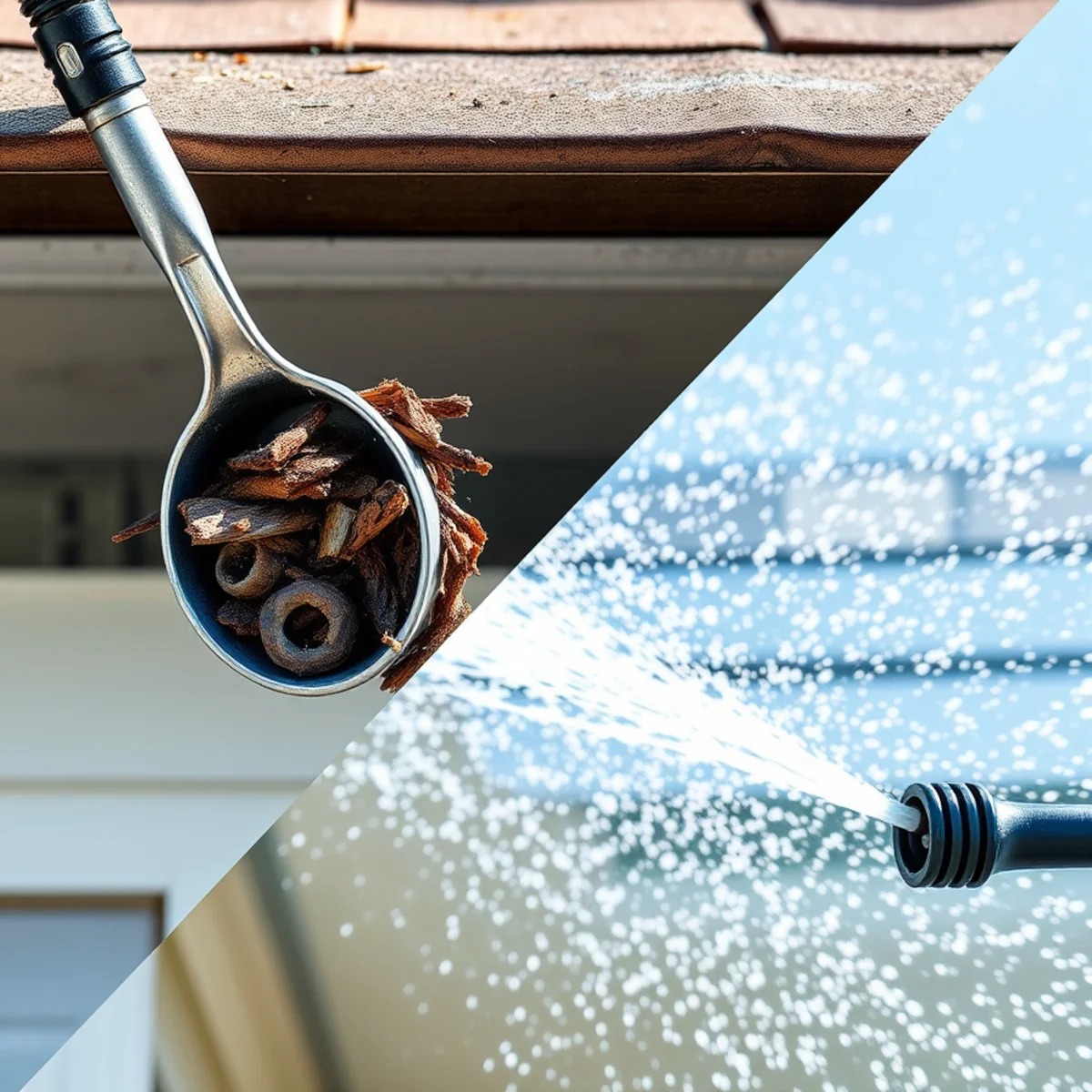
Gutter Brightening vs. Gutter Cleaning
This is where homeowners get confused, so let's be precise. The two services solve completely different problems, and plenty of homes need both.
Gutter Cleaning Is About Function (the Inside)
Gutter cleaning deals with the interior of the gutter system: removing leaves, pine needles, roof granule residue, and debris so water drains freely to the downspouts. In New England this is non-negotiable maintenance. Clogged gutters back up, overflow behind the fascia and soffit, and feed ice dams once the freeze-thaw cycle sets in. Cleaning is about keeping water moving.
Gutter Brightening Is About Appearance (the Outside)
Gutter brightening deals with the exterior surface, the face you actually see from the street. The goal is purely cosmetic: remove the black streaks and oxidation so the gutters match a freshly washed house. You can have perfectly clear, free-flowing gutters that still look terrible because the outside is striped. Brightening fixes that.
In short: cleaning keeps water flowing, brightening makes the metal look right. We cover this split in more detail in our companion article, Gutter Cleaning vs. Gutter Brightening. If you want both the inside flowing and the outside looking new, you want both services, and they pair nicely in a single visit.
What Are Those Black Streaks? Understanding "Tiger Stripes"
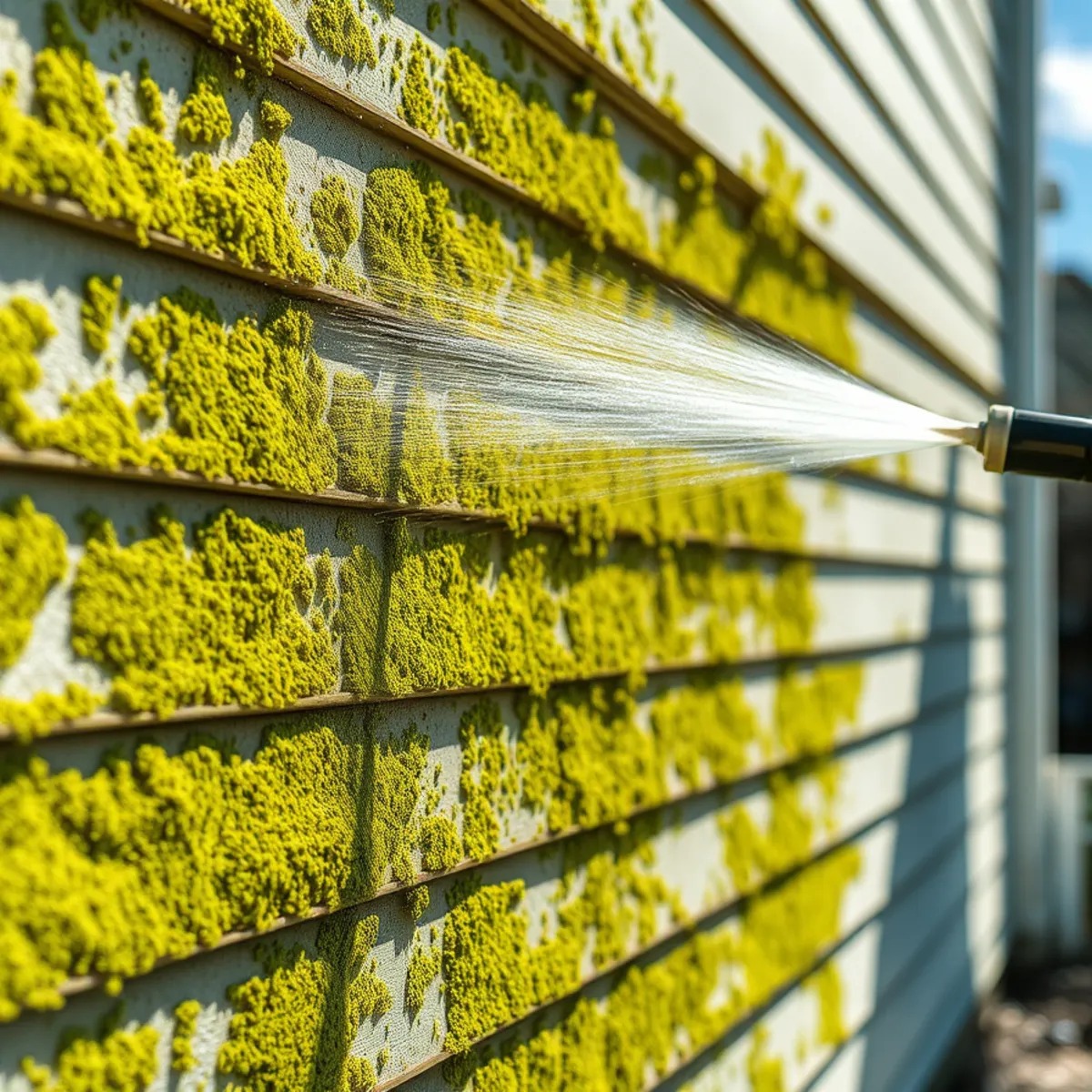
Those dark vertical streaks on the gutter face have a nickname: tiger stripes, also called zebra stripes. They run top to bottom in irregular dark bands, which is exactly why people compare them to an animal's coat. They show up most on the long horizontal runs under the roofline and are usually worst directly below valleys and roof seams where runoff concentrates.
People often assume tiger stripes are mold or mildew. Organic growth is part of the picture, but the core of the stain is mineral and chemical, not just biological. That distinction matters, because it explains why the stains shrug off the bleach-based treatments that handle ordinary green and black algae elsewhere on the house.
What Causes Tiger Stripes and Gutter Oxidation
Tiger stripes are a stacked problem. Several sources layer onto the gutter face and bond together over years:
- Asphalt shingle runoff. Massachusetts roofs are overwhelmingly asphalt shingle. As shingles age, rainwater carries fine asphalt, roof tar, and roof granule residue down onto the gutter below. This sticky, carbon-rich film is the main ingredient in tiger stripes.
- Aluminum oxidation. Bare and anodized aluminum oxidizes when exposed to air and moisture, leaving a dull, chalky residue on the surface that traps everything else.
- Electrostatic and chemical bonding. Here is the part most articles skip. The oxidized aluminum surface develops a slight electrostatic charge, and the airborne pollutants and shingle residue bond to it chemically. The grime is not sitting loosely on top of the gutter; it is fused to it.
- Pollen, algae, and mildew. New England's damp shoulder seasons feed algae and mildew that cling to the already-oxidized surface, and heavy spring pollen adds a yellow-green layer that locks in.
- Road dust and traffic film. Homes near busy roads collect grime, and winter brings road salt spray that compounds the buildup on lower exterior surfaces.
Because these conditions repeat every year, the staining is cumulative. The longer it sits, the more stubbornly it bonds, which is precisely why a hose rinse eventually stops doing anything.
Why Regular House Washing Won't Remove These Stains
Standard house washing uses a sodium hypochlorite (SH) solution to kill algae, mildew, and mold across siding and trim. That chemistry is excellent at what it does, and it will brighten the biological component of a dirty gutter a little. But it does not dissolve oxidized aluminum or the bonded asphalt and tar film.
The reason is the bond. SH algaecides work on organic growth, breaking it down so it rinses away. Tiger stripes are mostly an oxidized-metal and petroleum-residue problem held on by an electrostatic and chemical bond. Bleach has nothing to grab there. You can soft wash a house twice and the gutter faces will still read dark, because the stain was never algae in the first place.
Removing it takes a different tool: a mildly acidic aluminum brightener or a dedicated degreaser that chemically releases the oxidation and film, followed by agitation and a thorough rinse. That is a separate step, with separate products, from washing the siding.
How Professional Gutter Brightening Works, Step by Step
Done correctly, brightening is methodical and safe for the gutter finish, the siding underneath, and the landscaping below. A typical job looks like this:
- Inspect and set expectations. The technician checks the gutter material, finish, and condition. Severely oxidized or very old runs get flagged up front so nobody expects factory-new from a 30-year-old gutter.
- Pre-wet vegetation and gutters. Plants, shrubs, and the gutter surface get a pre-soak. Wetting foliage first dilutes any drift and protects the landscaping; wetting the gutter keeps the solution from flashing off too fast.
- Apply a gutter-safe brightener or degreaser. The cleaning solution is applied to the gutter face, usually low on the wall first and worked upward to avoid streaking.
- Allow controlled dwell time. The product needs minutes, not seconds, to release the oxidation and bonded film. Dwell time is judged by the technician, not rushed and not left to dry on the surface.
- Hand-agitate with a soft-bristle brush. A soft brush works the solution into stubborn tiger stripes. Agitation is what finally breaks the last of the bond on heavy stains, and a soft brush does it without scratching the finish.
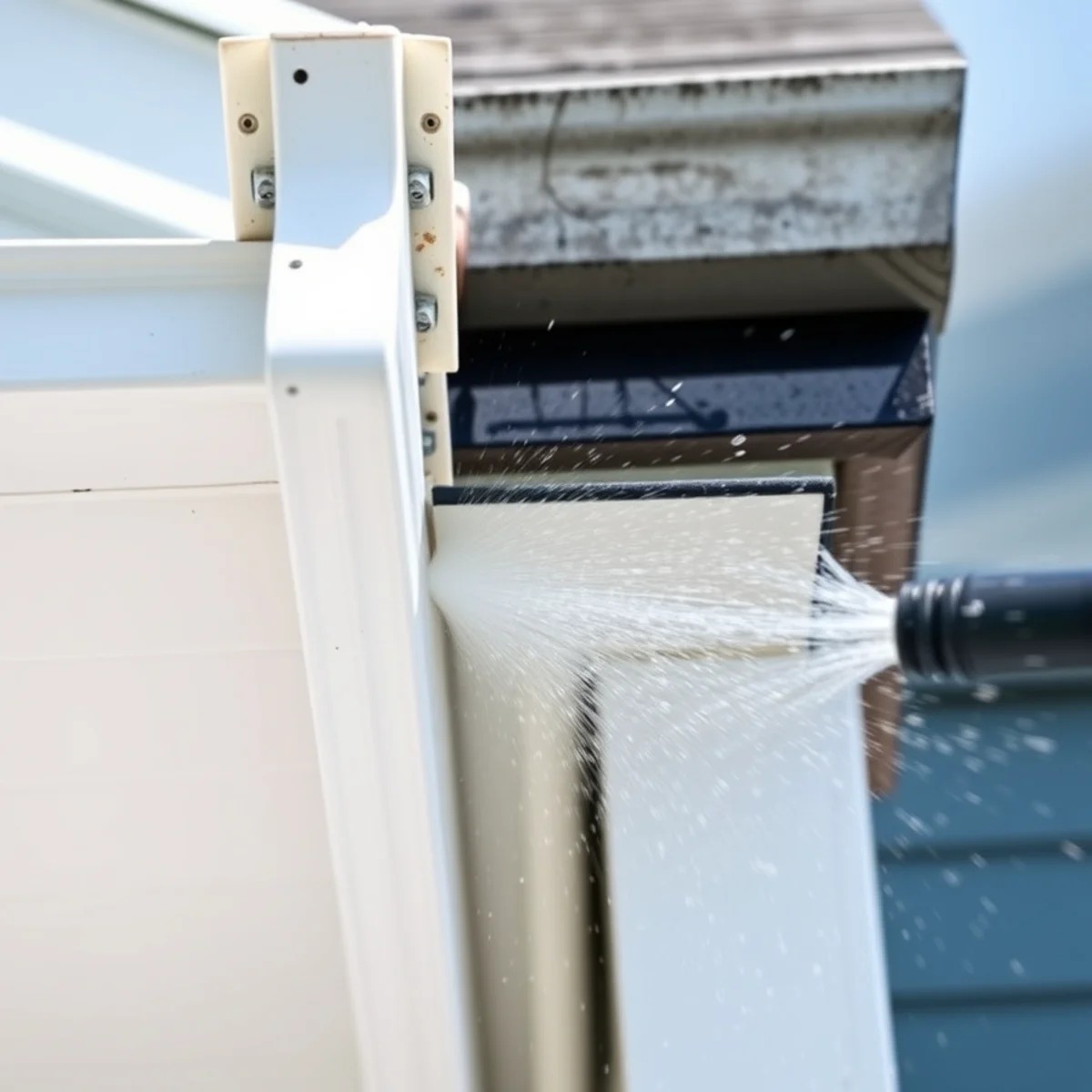
- Low-pressure rinse. The face is rinsed thoroughly at low pressure, lifting the dissolved residue and revealing the brighter metal. Downspouts get the same treatment.
- Work in sections. Pros move along the run a section at a time so the product never dries on the surface and the whole gutter line comes out even.
The same low-pressure, chemistry-first discipline drives our soft washing work, and it is exactly the right mindset for thin aluminum.
Products and Solutions Used
Gutter brightening relies on chemistry, not muscle. The product categories include:
- Aluminum brighteners and oxidation removers. Mildly acidic formulas that release the oxidized layer and chalky residue from the metal. This is the same family of chemistry behind dedicated oxidation removal on other surfaces.
- Dedicated gutter cleaners and degreasers. Surfactant-based cleaners and degreasers that cut the asphalt, tar, and petroleum film. Heavier degreasers may use butyl, sodium hydroxide, or potassium hydroxide to break down greasy bonded grime.
- Metal-safe, eco-conscious formulas. The right products are matched to aluminum and applied at the right dilution. We favor biodegradable surfactants and pre-soak the landscaping, because runoff containment and well-water awareness matter on a lot of Massachusetts properties.
The skill is in matching the product to the gutter and controlling dwell time. Too aggressive, or left on too long, and you can etch or blotch a finish. That is one of the biggest arguments for hiring a pro rather than improvising with whatever acid is in the garage.
Soft Washing vs. Pressure Washing for Gutters
Short version: gutters should never be blasted with high pressure. Aluminum gutters are thin and dent easily, and the staining is a surface-chemistry problem, not a layer of dirt you can power off.
For reference, asphalt shingles and the delicate finishes near a roofline call for soft washing under 100 PSI; even vinyl siding tops out around 500 PSI. A pressure washer cranked up to driveway settings (2,000 to 3,000 PSI) aimed at a gutter will dent the face, drive water behind the gutter into the fascia and soffit, and strip the very finish you are trying to restore. The result is often worse than the stain.
The correct method is low pressure plus the right chemistry. As we tell every customer: you don't need more pressure, you need the right solution. The brightener does the work; the rinse just carries it away.
Benefits of Gutter Brightening
For most homeowners this is one of the highest-impact, lowest-cost improvements you can make to a home's exterior:
- Curb appeal. Streaked gutters undercut an otherwise clean house. Brightening completes the look so the whole exterior reads as well-maintained, which matters in towns from Newton to the South Shore.
- Slows further oxidation. Removing the oxidized layer and bonded film gives the finish a cleaner starting point and slows how fast the next round builds up.
- Extends gutter lifespan. Clean metal weathers better than metal buried under acidic, salt-laden grime, which helps protect functional gutters from premature aging.
- Protects resale and home value. If you are listing or refinancing, bright gutters help photos and showings present a cared-for property.
- Uniform finish. Brightening evens out the whole run so there are no dark bands left behind on the seamless aluminum.
- Cost-effective restoration. It is far cheaper to brighten functional gutters than to replace gutters that simply look bad.
It is the natural finishing touch on a house wash, since dingy gutters are usually the one thing still looking neglected after the siding is clean.
Does Gutter Brightening Damage Gutters?
No, not when it is done professionally with the right product, the right dwell time, and a proper rinse. The whole method is built around being gentle: gutter-safe chemistry, soft-bristle agitation, and low-pressure water.
Damage happens when the basics are skipped. Using an industrial acid at full strength, letting product dry on the surface, scrubbing with a stiff brush, or hitting the gutter with high pressure can all etch, blotch, dent, or strip a finish. Those are technique failures, not a problem with brightening itself. A careful operator pre-wets, controls dwell time, agitates softly, and rinses completely, and the gutters come out cleaner and undamaged.
How Long Do Results Last, and How Often Should You Brighten?
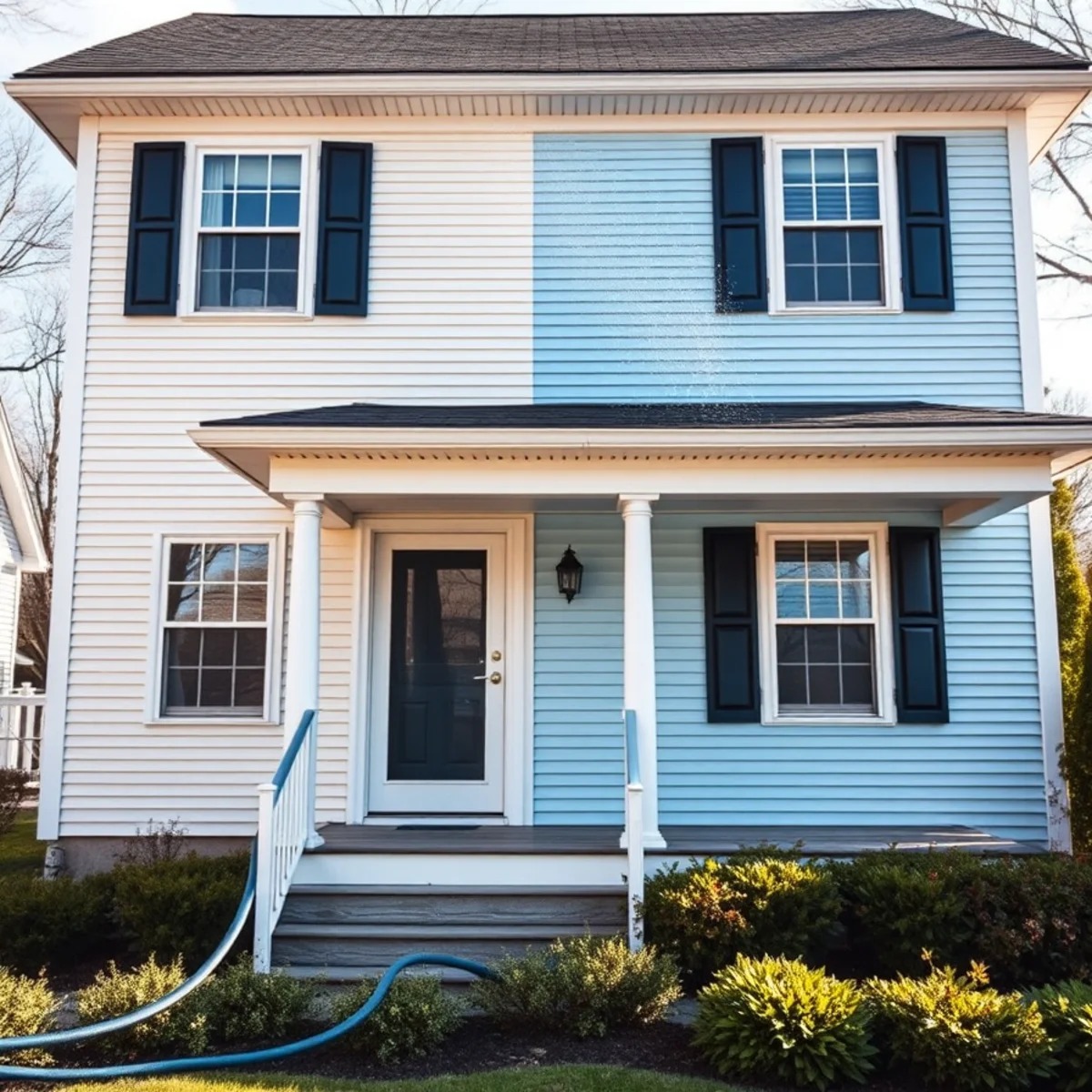
Results are visible immediately. The gutter face goes from dark and striped to clean and uniform in the same visit, which is why before-and-after photos are so dramatic with this service.
How long it lasts depends on your roof, tree cover, and exposure, but a practical rule for Massachusetts is to brighten about once a year, or as needed when streaks return. That pairs naturally with an annual or twice-yearly gutter cleaning. Many homeowners simply add brightening to the same visit as their fall gutter cleaning or their annual house wash, so the entire exterior gets refreshed in one trip.
Does It Always Work? Realistic Expectations
Honest answer: brightening is not an exact science, and it does not turn every gutter back to factory-new. What you get depends on the finish you started with.
- Lighter and newer gutters respond best. Standard oxidation and tiger stripes on a gutter in decent shape usually clean up dramatically, often restoring most of the original appearance (a field estimate, not a guarantee).
- Severe oxidation only partially improves. When the finish itself is degraded and chalky from years of neglect, brightening lifts the film but cannot rebuild a finish that has worn through.
- Very old, 30-plus-year painted finishes may improve noticeably yet still read dull, and sometimes a great result simply reveals that the gutters are near the end of their life.
The key point: brightening is not repainting. It restores what is there; it does not add new color. A reputable cleaner looks at your specific gutters and sets these expectations before starting, rather than overpromising and creating a dispute later.
How Much Does Gutter Brightening Cost?
Most residential gutter brightening jobs land in a typical range of roughly $80 to $240, with about $160 as a common average (industry estimates, not a Wash Bros quote). Pricing depends on the property, so the right number for your home comes from an on-site look.
| Cost factor | Effect on price |
|---|---|
| Gutter length (linear feet) | More linear feet of gutter means more product, time, and labor |
| Stain severity | Heavy tiger stripes and deep oxidation need longer dwell time and more agitation |
| Height and access | Second- and third-story runs and tricky rooflines raise the labor and setup |
| Labor and time | Hand-agitating stubborn sections is slower than a light pass |
| Solutions used | Heavier degreasers and brighteners cost more than a basic cleaner |
The smartest way to save is to bundle. Because the crew is already set up and on a ladder for gutter cleaning, adding brightening to the same visit usually costs less than booking it as a standalone trip. Pairing it with a full house wash works the same way.
DIY Gutter Brightening vs. Hiring a Pro
You can attempt this yourself, but weigh the trade-offs honestly:
- Ladder and height safety. Brightening means working a full gutter run from a ladder, repositioning constantly, often two stories up. Most homeowner injuries in exterior work are ladder falls. This is the single biggest reason to hire out.
- Chemical handling. Aluminum brighteners are acidic, and degreasers with sodium hydroxide or potassium hydroxide are caustic. Wrong dilution or dwell time can etch the finish, burn skin, or kill landscaping. Pros control all three.
- Time and physical effort. Hand-agitating tiger stripes along an entire house is slow, tiring work, and one missed section leaves an obvious dark band.
- Results. Pros match the product to the finish, control dwell time, and rinse properly, which is why professional results are usually more even and complete.
If you have a single-story ranch, sound footing, and you are comfortable with the chemistry, a careful DIY pass is reasonable. For anything two stories or with heavy oxidation, the cost of doing it right and safely usually beats the cost of a fall or a blotched finish.
Gutter Brightening in Massachusetts: Local Considerations
Massachusetts is almost a perfect storm for tiger stripes, which is why this service is in steady demand here:
- Asphalt-shingle roofs everywhere. Homeowners across the state choose asphalt shingles for nor'easter and snow durability, and that same shingle runoff is the primary source of the residue that bonds to aluminum gutters.
- Humidity and heavy pollen. New England's damp summers and intense spring pollen season accelerate oxidation and feed the algae and mildew that cling to oxidized gutter faces, especially inland in Worcester County and MetroWest.
- Coastal salt air. South Shore towns like Quincy, Scituate, Cohasset, Marshfield, Duxbury, and Plymouth get salty coastal air that speeds metal oxidation and streaking.
- Harsh winters and freeze-thaw. Nor'easters and repeated freeze-thaw cycles degrade gutter finishes and intensify staining year over year.
- Older housing stock. A lot of Massachusetts homes carry aging, 30-plus-year gutters where oxidation is advanced. Brightening greatly improves them, but on the oldest finishes it may not fully restore them.
Brightening fits best as one piece of a full seasonal exterior routine alongside house washing, roof cleaning for roof black streaks, and gutter cleaning, so the whole house stays ahead of the New England climate.
When to Schedule Gutter Brightening
Timing matters here. The two best windows in Massachusetts are:
- Late spring, after peak pollen winds down and the threat of hard frost has passed, to clear off winter and early-season buildup. This lines up neatly with the post-pollen house washing season in late May and June.
- Late summer or early fall, before leaf drop, often combined with a fall gutter cleaning so the system is both clear and clean heading into winter.
Avoid scheduling during freezing weather, when cleaning solutions and rinse water don't behave well in the cold. Pairing brightening with your annual house wash or fall cleaning means one setup, one visit, and a fully refreshed exterior.
Why Choose Wash Bros for Gutter Brightening in Massachusetts
Gutter brightening looks simple, but the wrong chemical or too much pressure can streak siding, harm landscaping, or dent the gutters. Wash Bros was founded in 2023 by brothers Louis and Dominic, and we are fully insured, with a certificate of insurance available on request. We use surface-appropriate, low-pressure soft-wash methods and biodegradable solutions, pre-soak the landscaping, and stay mindful of runoff and well water. With a 5.0 average across 130 reviews, homeowners across Worcester County, MetroWest, the South Shore, and Greater Boston trust us to get the details right.
If your gutters are streaked, oxidized, or just not matching your clean siding, we would be glad to take a look, set honest expectations, and brighten them back to a fresh, finished look. Request a free, no-obligation estimate through our contact us page or call +1 (351) 242-0666.
Frequently Asked Questions
Need Professional Exterior Cleaning?
Wash Bros provides affordable, dependable pressure washing across Massachusetts. Get your free estimate today.
Get a Free Estimate